Artist's Conk
Ganoderma applanatum
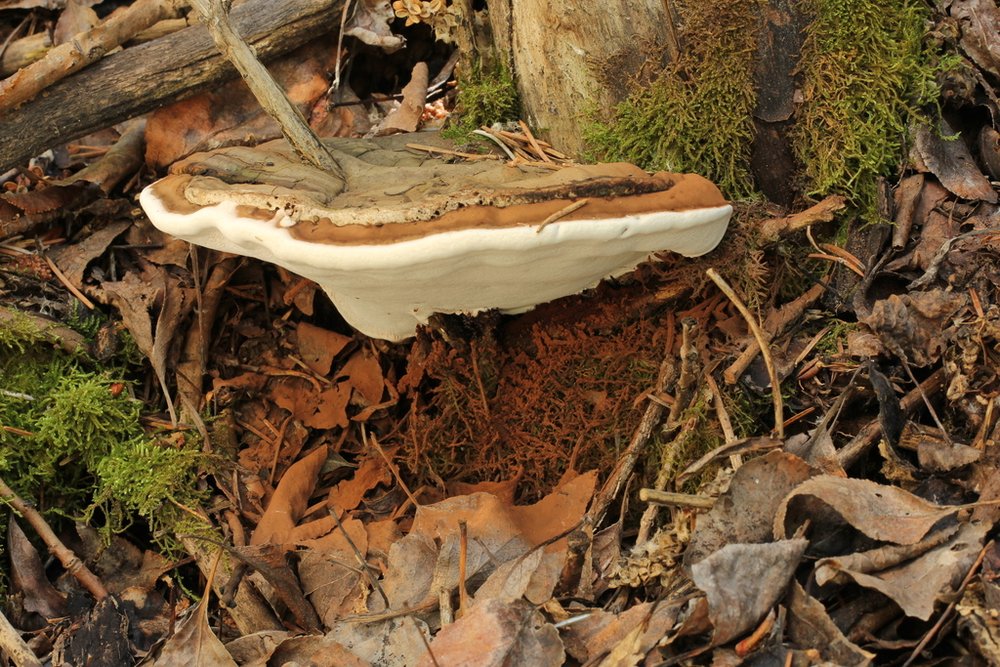
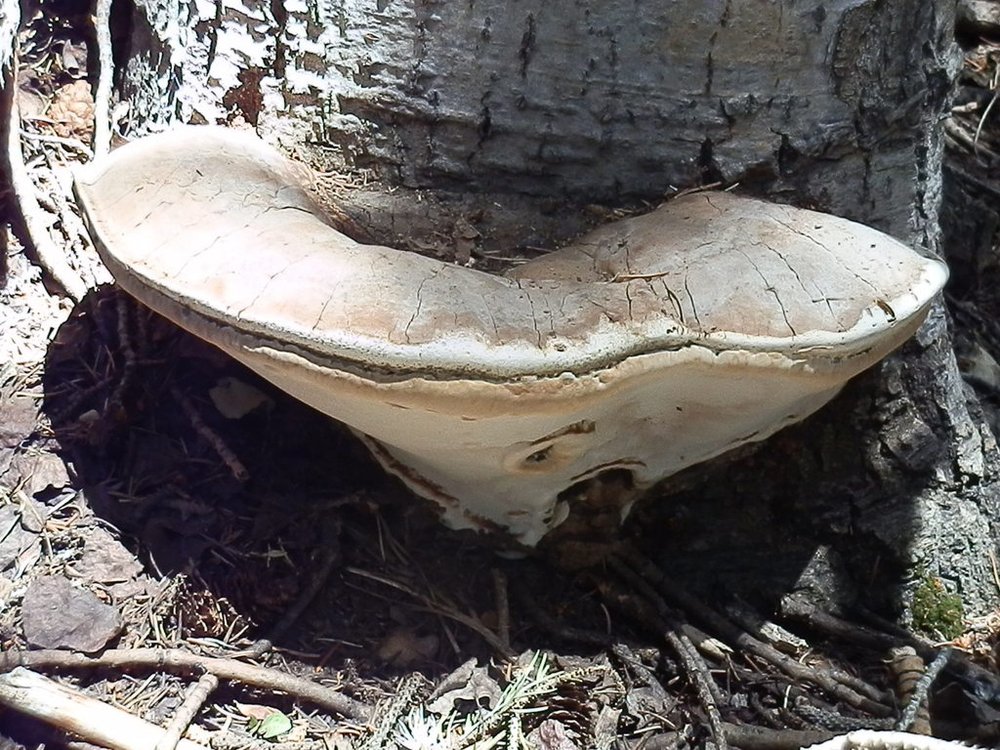
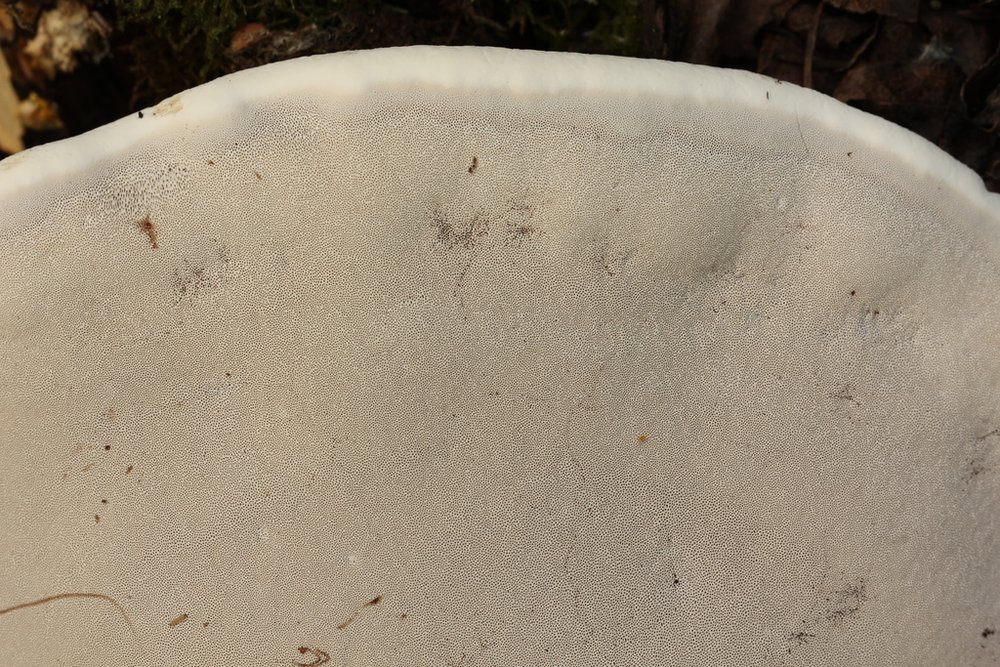
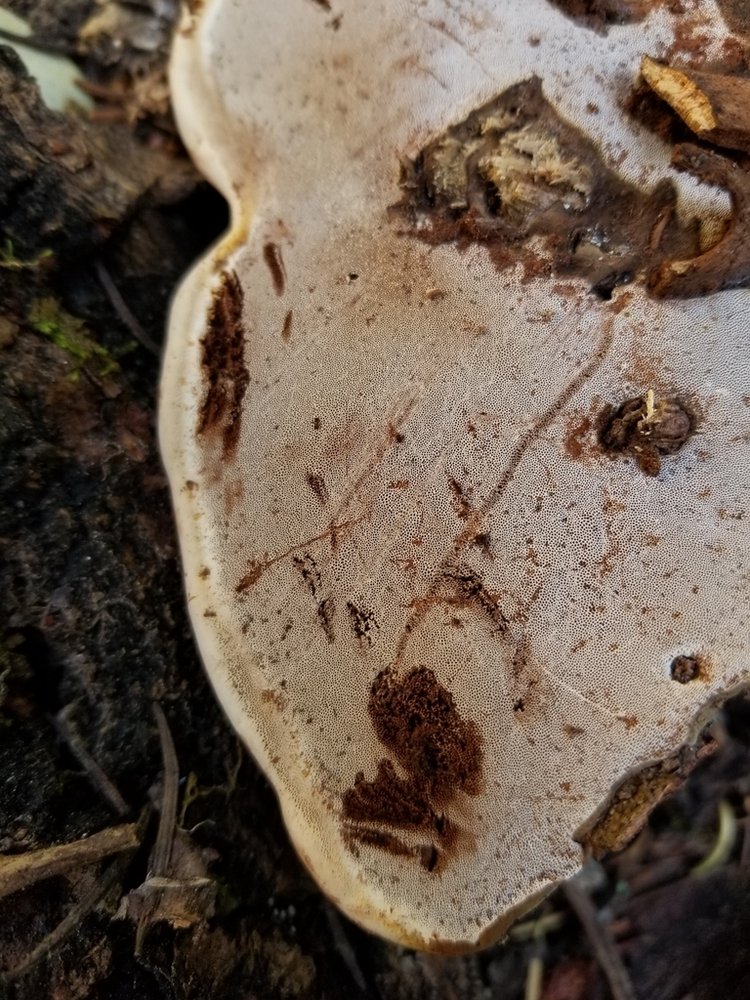
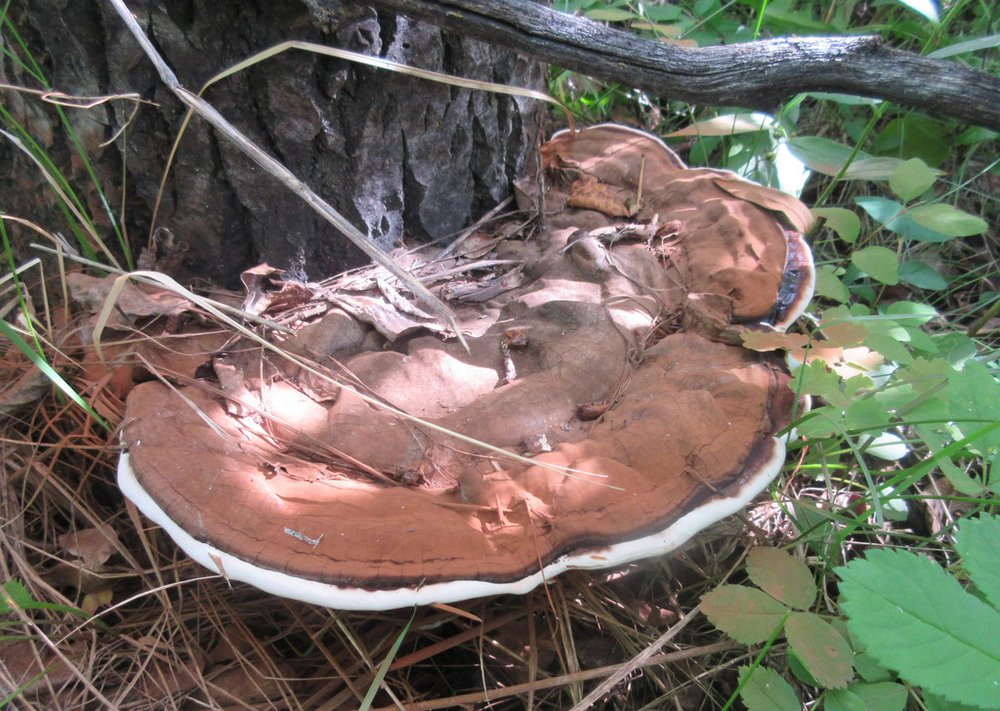
Artist's Conk (Ganoderma applanatum) is a flat, woody shelf with a dull brown to gray top, a white rim and a white underside that turns dark brown wherever it's scratched. In the Rocky Mountains it grows mainly at the base of living aspen; Black Hills records are few, on aspen and poplar, and the conks last for years.
Free photos from other sources
| Family | Polyporaceae · Polypore |
|---|---|
| Type | Shelf fungus |
| Season | All year; the conks live for years and add a pore layer each year |
| Size | Shelf 10–30 cm (4–12 in) wide |
| Grows on | Base of living aspen; also dead hardwood logs and stumps |
| Spore print | Brown to orange-brown |
| Also called | Artist's Bracket, Artist's Fungus |
| Synonym | Fomes applanatus, Elfvingia applanata, Polyporus applanatus |
| Eating | This guide doesn't say which mushrooms are safe to eat. |
How it lives
A white-rot fungus and root-rot parasite. On aspen it rots the large roots and the base of the trunk, leaving wood mottled with small white and light tan patches that becomes spongy, sometimes with black zone lines. Infected trees usually fall over while still alive, often with healthy-looking crowns, snapping at the roots; the Forest Service ties it to about 90% of windthrow of live aspen in the West. A conk is the only useful sign of infection in a standing tree. Each year the conk adds a new pore layer under the old one, and a 10 by 10 cm (4 by 4 in) patch of pores can release billions of spores in a day.
How do you identify Artist's Conk?
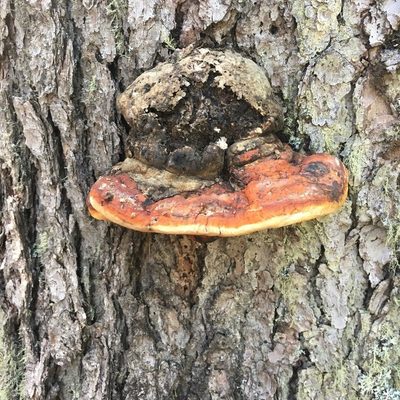
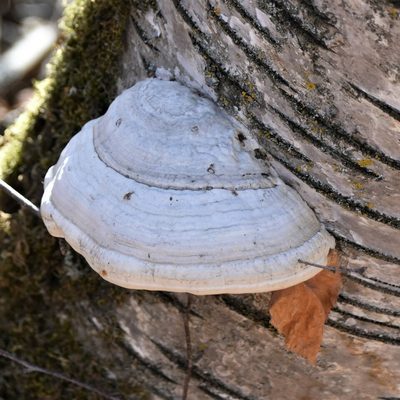
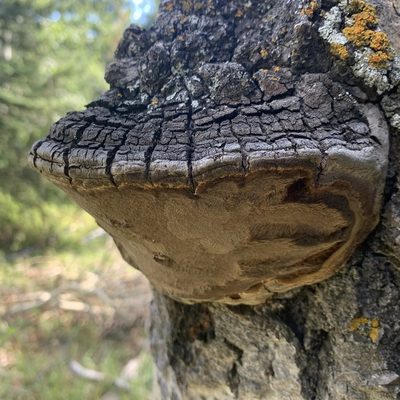
A hard, flat to slightly hoof-shaped shelf with no stem, usually 10–30 cm (4–12 in) wide. The top is dull, not varnished, brown to gray, lumpy and often furrowed in zones. The rim is white and blunt while the conk is growing. The underside is white when fresh, with tiny pores, 4–6 per mm, and turns dark brown at once and for good where you scratch it, which is why people draw on it. The flesh is brown and woody, and the spore print is brown. On aspen it sits at the base of the trunk, usually within about 30 cm (12 in) of the ground. Red-belt Conk usually has a red-orange band and a shiny, resinous top, pale flesh and a cream pore surface, and grows on dead conifers. Tinder Conk is a gray hoof on birch with a brownish pore surface. Aspen Bracket is also on aspen, but higher on the trunk at old branch stubs, with a black, cracked top and a brown pore surface.
When can you find it?
All year; the conks live for years and add a pore layer each year.
Where does it grow?
In the Rocky Mountains it grows mainly on living aspen, at the base of the trunk, and can persist for a while after the tree dies; it also grows on cottonwood and on dead hardwood logs and stumps. Forest Service work found it in almost all aspen stands, more often on moist sites with deep soil. Black Hills records are few: a 1965 Forest Service record, herbarium specimens from Lawrence County (1917, on a poplar) and Crook County, Wyoming (1941, on dead aspen), and 3 research-grade iNaturalist records from 2022 to 2025.
Other mushrooms to compare
Sources: Field Guide to Diseases & Insects of the Rocky Mountain Region (RMRS-GTR-241, 2010) — USDA Forest Service; Hinds 1985, Diseases, in Aspen: Ecology and Management in the Western United States (RM-119) — USDA Forest Service; Ganoderma applanatum (M. Kuo) — MushroomExpert.com; Lundquist 1991, Fungi Associated with Pines in the Black Hills (Technical Report R2-50) — USDA Forest Service; Ganoderma applanatum, synonymy — Species Fungorum (Index Fungorum); Ganoderma applanatum, common names (artist's bracket) — iNaturalist; Ganoderma applanatum: research-grade records in the six Black Hills places — iNaturalist; Specimens filed as Fomes applanatus, South Dakota — GBIF; Specimens filed as Fomes applanatus, Wyoming — GBIF; Fomitopsis mounceae (M. Kuo) — MushroomExpert.com; Fomes fomentarius (M. Kuo) — MushroomExpert.com; Phellinus tremulae (M. Kuo) — MushroomExpert.com.