Chaga
Inonotus obliquus
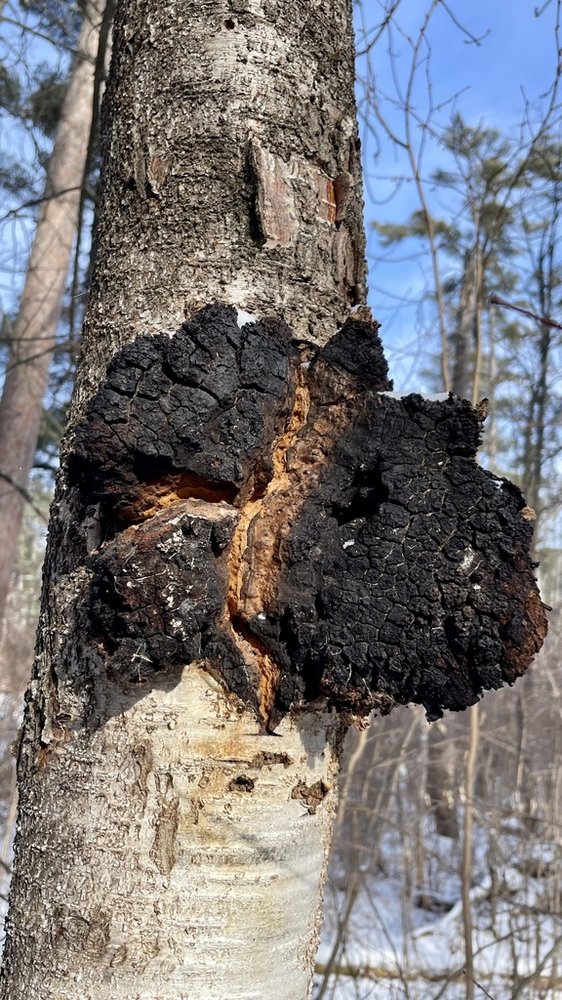
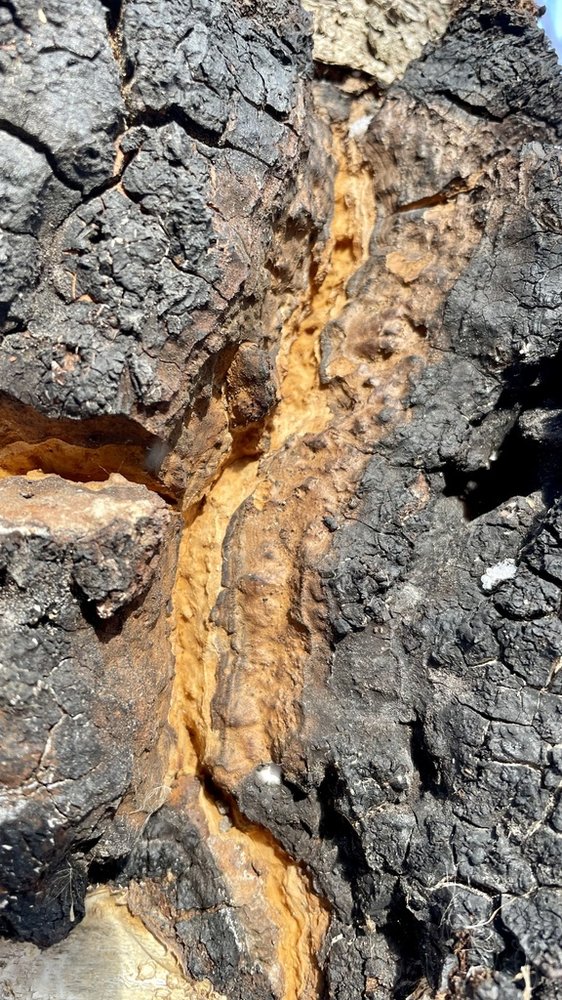
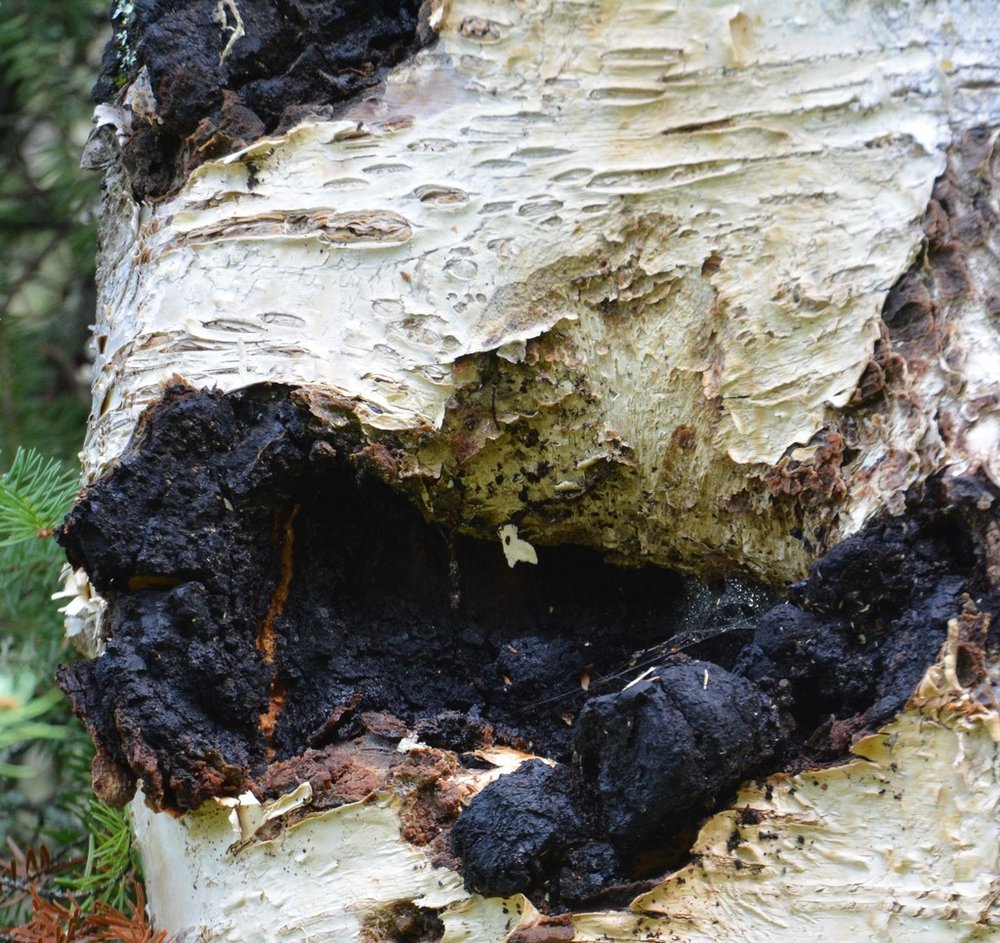
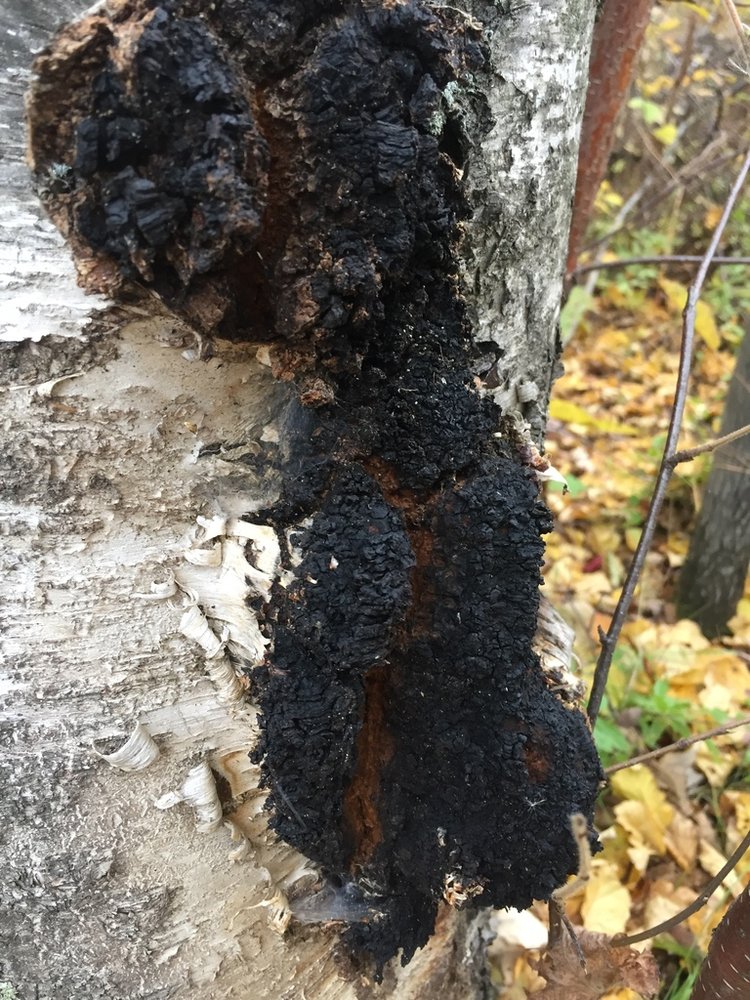
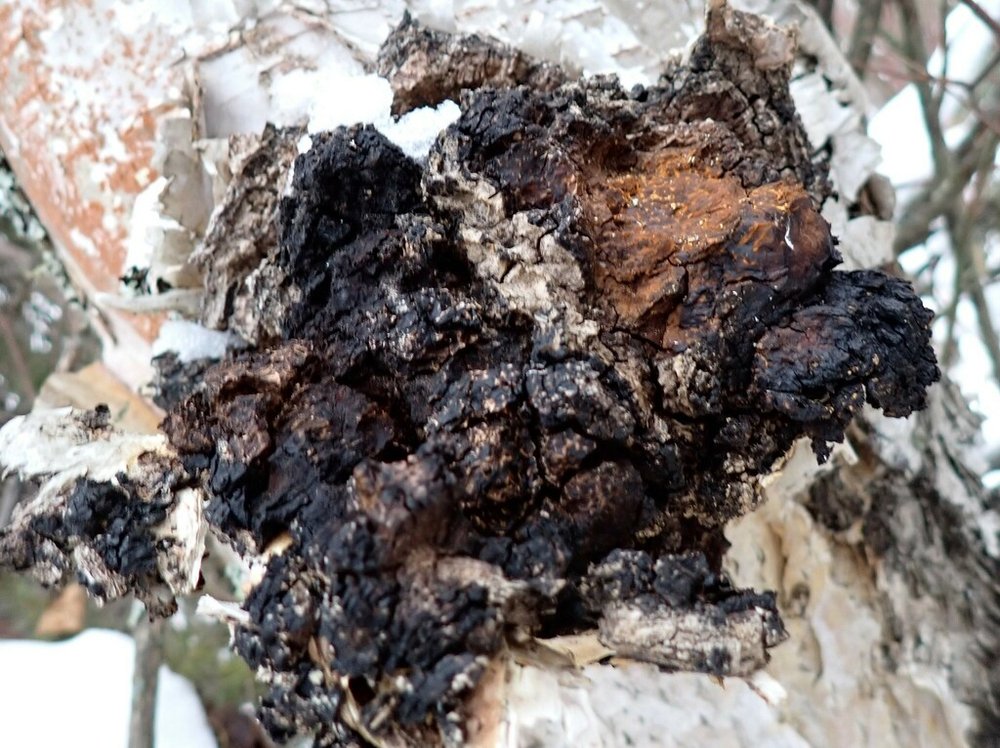
Chaga (Inonotus obliquus) is a black, deeply cracked, charcoal-like lump on the trunk of a living birch, corky and orange-brown inside. It isn't a mushroom cap but a sterile mass of fungus; in the Black Hills it is known from a few iNaturalist records on birch, and it can be seen all year.
Free photos from other sources
| Family | Hymenochaetaceae · Hymenochaete |
|---|---|
| Type | Canker |
| Season | All year; a lump can stay on the tree for decades |
| Size | Black lump 10–40 cm (4–16 in) across |
| Grows on | Trunks of living paper birch |
| Also called | Cinder Conk, Sterile Conk, Clinker Polypore, Birch Canker Polypore |
| Synonym | Poria obliqua, Fomes obliquus, Polyporus obliquus |
| Eating | This guide doesn't say which mushrooms are safe to eat. |
How it lives
A parasite of living birch that causes a white heart rot. The wood inside turns mottled white and reddish brown, and infected trees often snap at the lump. A single lump means the trunk is extensively decayed, and the Canadian Forest Service counts such trees as 50 to 100% cull. The disease is called canker rot or sterile conk trunk rot. A tree can carry a lump for decades; once the tree dies, the fungus becomes a decayer of the dead wood and makes its spore-bearing layer under the bark.
How do you identify Chaga?
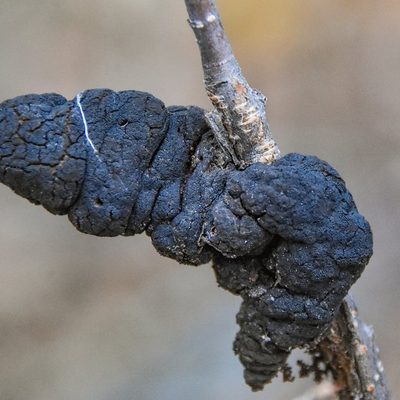
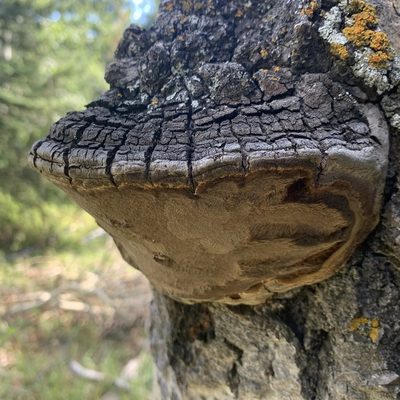
Look for an irregular black lump bursting through the bark of a birch trunk, usually 10–40 cm (4–16 in) across, often at an old wound or branch stub. The surface is hard and dry and breaks up into charcoal-like blocks. Where it cracks or breaks, the inside is corky and bright orange-brown to yellow-brown. It has no cap, no pores and no stem: it is a sterile conk that makes no spores. The spore-making stage is a spreading patch of pores, whitish then brown, that forms under the bark only after the tree dies, and it is rarely seen. Black Knot also makes hard, black swellings, but on twigs and small branches of chokecherry and other cherries and plums, not on birch trunks. Aspen Bracket can look black and cracked from the front, but it is a hoof-shaped shelf with a brown pore surface underneath, on aspen. On aspen, rough bark makes fissured bands of grayish-black, corky bark, and some trunk galls look like clinkers.
When can you find it?
All year; a lump can stay on the tree for decades.
Where does it grow?
Trunks of living birch, usually where the fungus got in through an old wound or branch stub. Elsewhere it is also reported on alder, and the Canadian Forest Service lists poplars and aspens among its secondary hosts. Paper birch grows in the Black Hills as an outlying population, apart from its main range. Evidence here is thin: iNaturalist has 3 research-grade records from Lawrence and Pennington counties, 2023 to 2025, all three on birch. No herbarium specimen or published Black Hills report was found.
Other mushrooms to compare
Sources: Inonotus obliquus (M. Kuo) — MushroomExpert.com; Inonotus obliquus (G. Emberger), Fungi on Wood — MushroomExpert.com; Birch: branches and trunk with growths (canker rot, sterile conk) — University of Minnesota Extension; Sterile conk trunk rot of birch, Inonotus obliquus — Natural Resources Canada, Canadian Forest Service; Inonotus obliquus, synonymy — Species Fungorum (Index Fungorum); Inonotus obliquus: research-grade records in the six Black Hills places — iNaturalist; Inonotus obliquus in Black Hills counties (no specimens) — GBIF; Betula papyrifera (paper birch), Fire Effects Information System — USDA Forest Service; Mushrooms and Other Fungi, Jewel Cave National Monument — National Park Service; Hinds 1985, Diseases, in Aspen: Ecology and Management in the Western United States (RM-119) — USDA Forest Service; Phellinus tremulae (M. Kuo) — MushroomExpert.com; Field Guide to Diseases & Insects of the Rocky Mountain Region (RMRS-GTR-241, 2010) — USDA Forest Service.