Common Earthball
Scleroderma citrinum
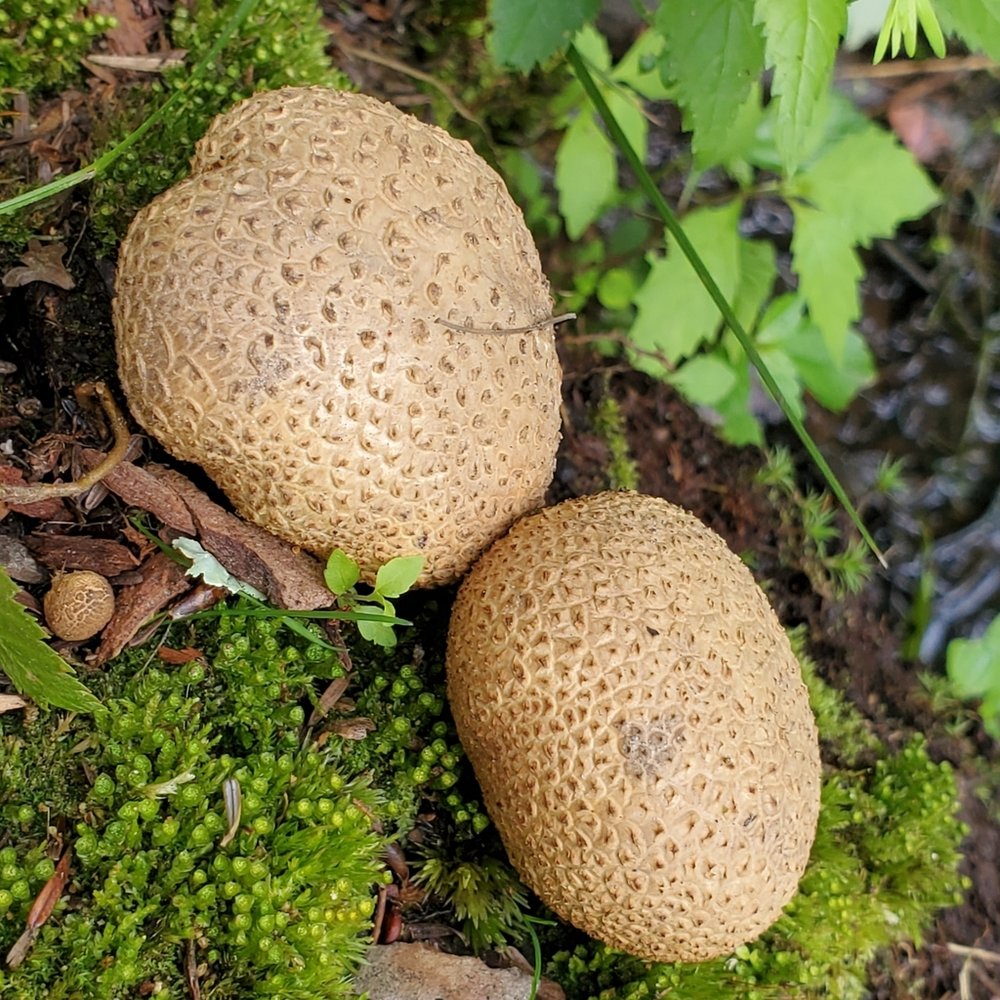
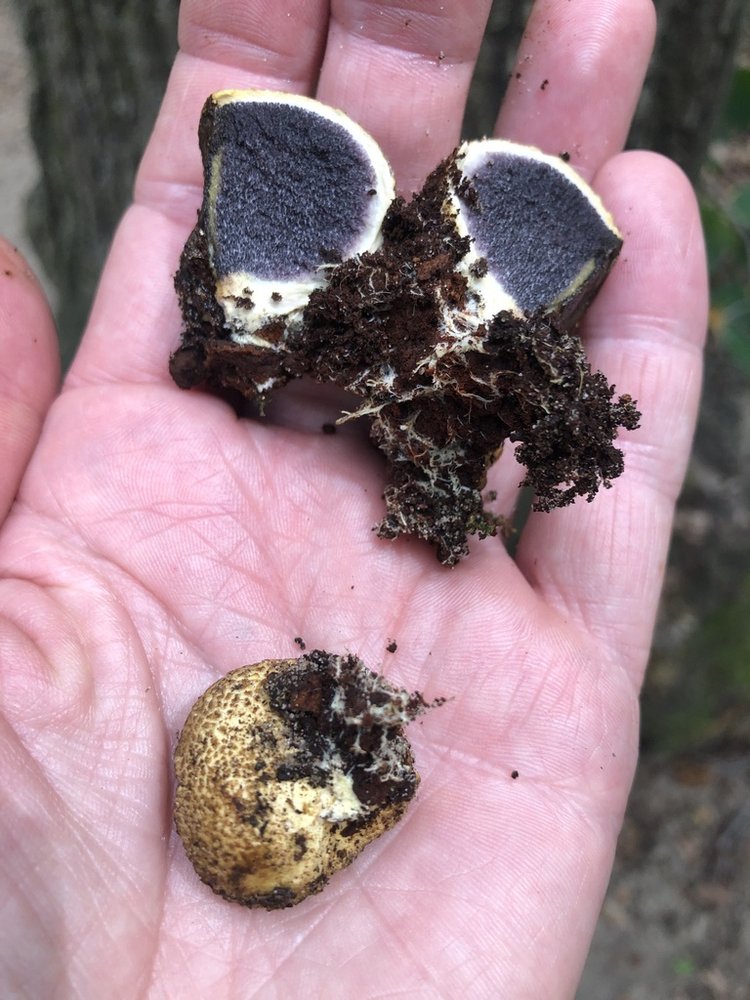
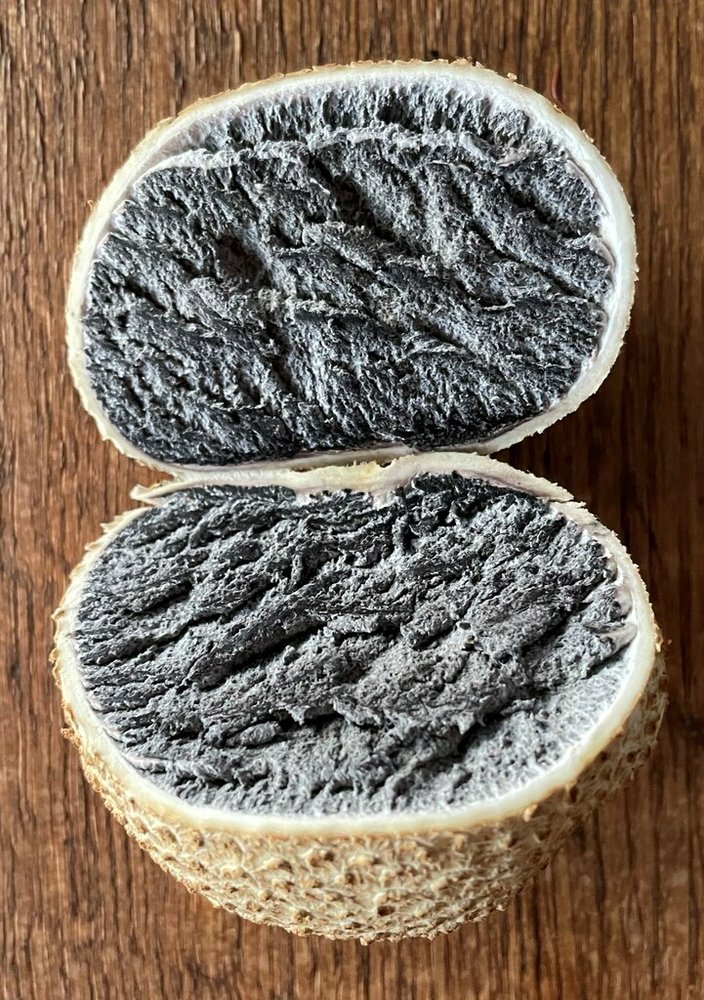
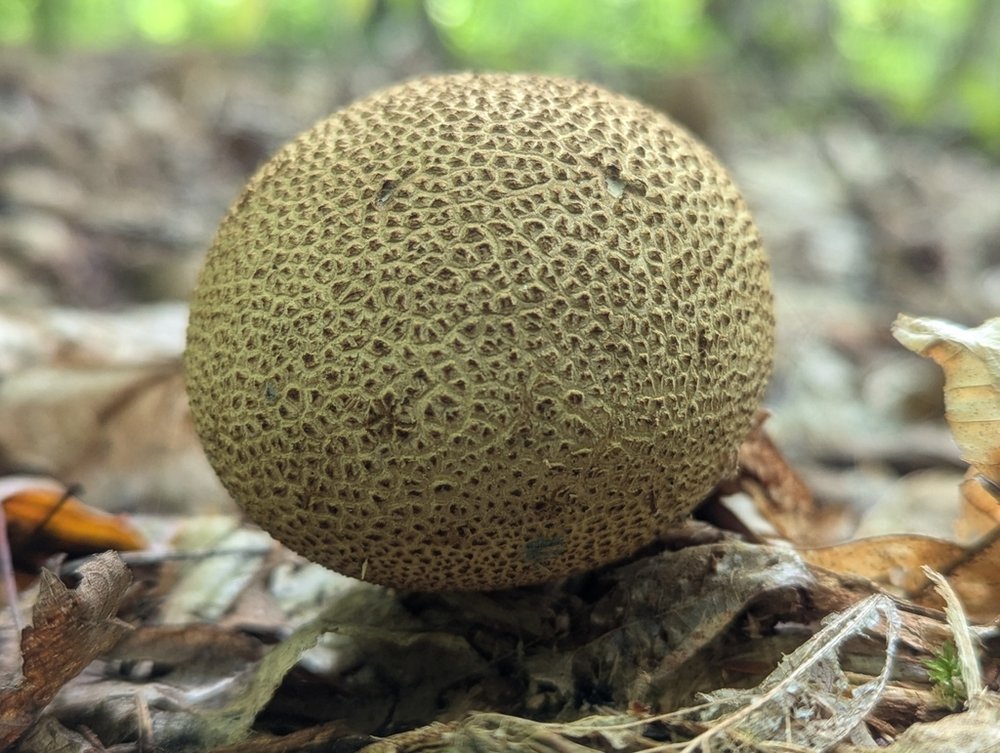
The Common Earthball (Scleroderma citrinum) is a hard ball 2–5 cm (¾–2 in) across, with a tough, yellowish to yellow-brown skin covered in large, darker scales and a purplish gray to purple-black inside. It grows on the ground in woods, mainly with oaks and other hardwoods, in summer and fall; in the Black Hills it is only reported, from three iNaturalist records from May and June that no one has yet confirmed.
Free photos from other sources
| Family | Sclerodermataceae · Earthball |
|---|---|
| Type | Earthball |
| Season | Summer and fall; the three Black Hills iNaturalist reports are from May and June |
| Size | 2–5 cm (¾–2 in) across |
| Grows on | The ground and moss in woods, with oaks and other hardwoods |
| Spore print | Blackish to dark brown (spore powder) |
| Also called | Pigskin Poison Puffball |
| Synonym | Scleroderma vulgare |
| Toxicity | Poisonous: cases in the North American Mycological Association's poisoning registry list stomach and gut illness in five adults in Oregon and Pennsylvania, and nausea and vomiting in a Massachusetts man in 2019 who had mistaken it for a puffball, Lycoperdon pyriforme. It has given a dog vomiting and diarrhea, and a pot-bellied pig in California died several hours after swallowing one. |
| Eating | This guide doesn't say which mushrooms are safe to eat. |
How it lives
It is mycorrhizal: it trades nutrients with the roots of living trees, mainly oaks and other hardwoods. Earthballs look like puffballs but are related to the boletes. This species is the only host of Pseudoboletus parasiticus, a small bolete that grows on the earthball as a parasite.
How do you identify Common Earthball?
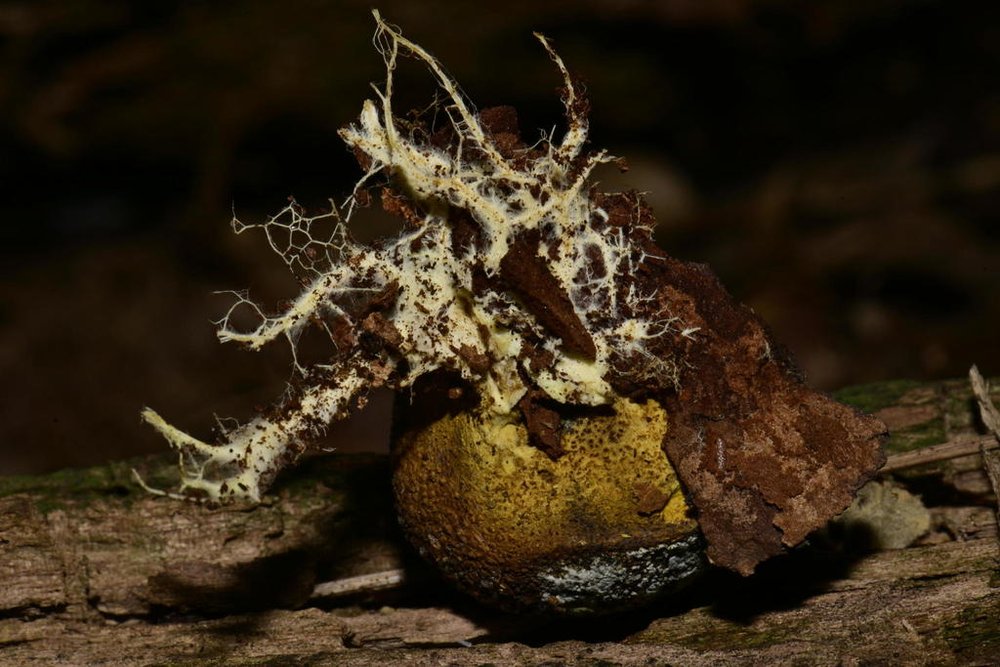
Look for a hard, round or slightly flattened ball 2–5 cm (¾–2 in) across, usually with no stem-like base, pinched where it is attached, with whitish to yellowish cords at the base. The tough, yellowish to yellow-brown skin is covered with large, well-separated scales, darker than the skin between them, and is often cracked; when fresh it usually bruises yellowish, pink or red. Slice a fresh one from top to bottom: a whitish rind 1–3 mm (1/16–1/8 in) thick, which may blush yellowish or reddish, surrounds a hard, purplish gray to purple-black inside mottled with white. With age the inside turns into blackish to dark brown spore powder. Earthballs are often mistaken for puffballs, and two simple tests tell them apart. Press it: an earthball is firm, while a puffball feels more like a marshmallow. Cut it from top to bottom: an earthball's rind is about 2 mm (1/16 in) thick, and its inside may be whitish when very young but soon turns purple to black; a puffball's skin is only about as thick as an eggshell, and a young puffball is pure white and soft inside. Among the earthballs, MushroomExpert's key picks this one out by its yellowish skin with prominent, raised, well-separated scales and the lack of a substantial stem-like base; in the other species any scales are not raised and separated.
When can you find it?
Summer and fall; the three Black Hills iNaturalist reports are from May and June.
Where does it grow?
On the ground in woods, often in mossy places and occasionally on well-rotted wood, alone, scattered or in groups. MushroomExpert says it partners with oaks and other hardwoods but is often found in mixed woods, and that it grows mainly east of the Rocky Mountains, though it is present in the West. In the Black Hills it is only reported: iNaturalist has three records under this name, from Fall River, Pennington and Custer counties in May and June of 2019, 2024 and 2025, none yet confirmed, and no earthball of any kind has a research-grade Black Hills record. No herbarium specimen from South Dakota or Wyoming turned up in GBIF.
Other mushrooms to compare
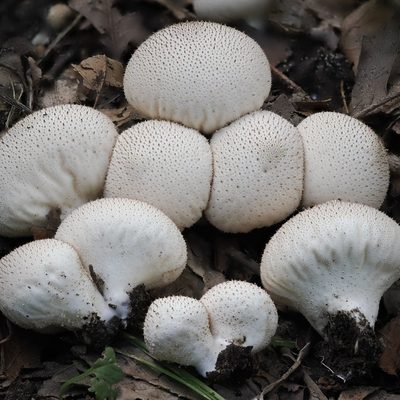
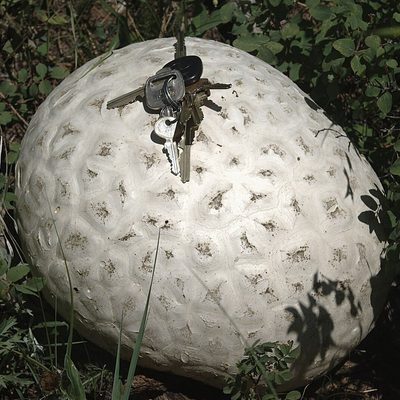
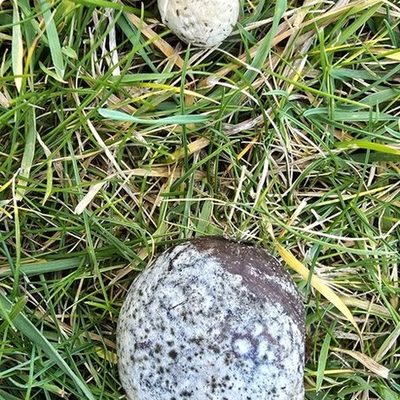
Sources: Scleroderma citrinum (M. Kuo, June 2025) — MushroomExpert.com; The Genus Scleroderma, with a key to 15 North American species (M. Kuo, July 2025) — MushroomExpert.com; Scleroderma bovista, potato earthball (earthball and puffball compared) — Beaty Biodiversity Museum, University of British Columbia (Mushrooms Up!); Thirty-Plus Years of Mushroom Poisoning: Summary of the Approximately 2,000 Reports in the NAMA Case Registry (Beug, Shaw & Cochran, McIlvainea 16, 2006) — North American Mycological Association; 2018–2020 Summary of Mushroom Poisoning Reports — North American Mycological Association; Mushroom Poisoning in North America, 2015 and 2016 (M. W. Beug) — North American Mycological Association; Scleroderma citrinum: synonymy and classification — Species Fungorum (Royal Botanic Gardens, Kew); Scleroderma citrinum records in the Black Hills places (3, all needs ID) — iNaturalist API; Earthball (Scleroderma) records of any species in the Black Hills places — iNaturalist API; Scleroderma citrinum, names (Pigskin Poison Puffball) — iNaturalist API; Scleroderma citrinum records from South Dakota (none) — GBIF; Scleroderma citrinum records from Wyoming (none) — GBIF.