Tumbling Puffball
Bovista plumbea
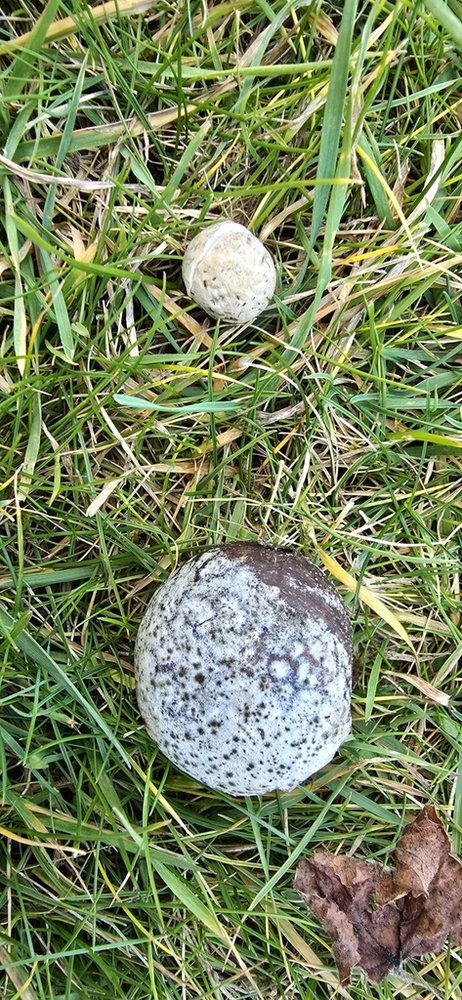
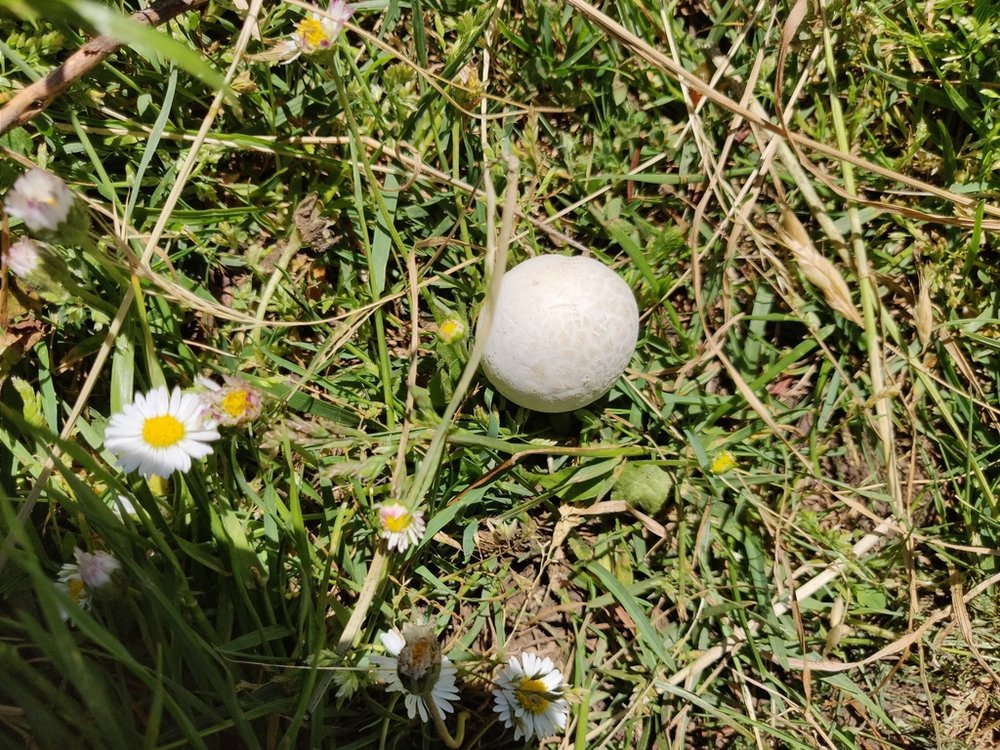
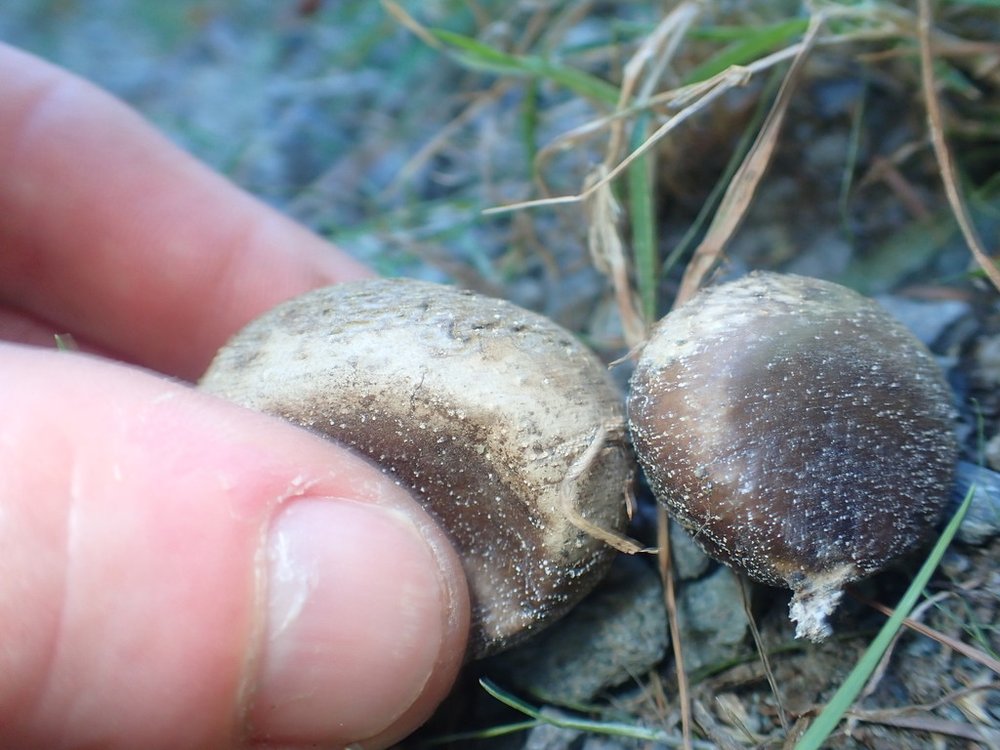
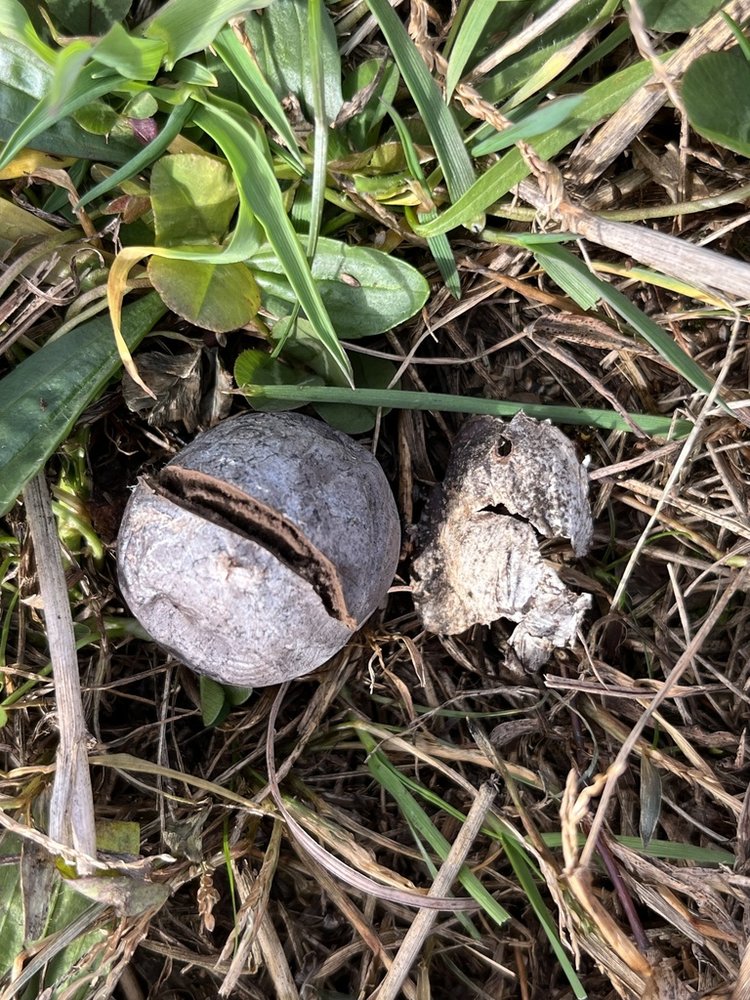
The Tumbling Puffball (Bovista plumbea) is a small, round puffball 1.5–3.5 cm (½–1½ in) across, white when young, whose thin outer skin flakes or peels away to bare a smooth, lead-gray inner case that opens by a round hole at the top. It grows on the ground in sparse grass and disturbed places; in the Black Hills a 1980 University of Wyoming herbarium specimen comes from Weston County, Wyoming, and iNaturalist has two Custer County reports that no one has yet confirmed.
Free photos from other sources
| Family | Lycoperdaceae · Puffball |
|---|---|
| Type | Puffball |
| Season | June into September in iNaturalist records from South Dakota and nearby states |
| Size | 1.5–3.5 cm (½–1½ in) across |
| Grows on | Soil in sparse grass and disturbed places |
| Spore print | Dark brown (spore powder) |
| Also called | Lead-grey Puffball, Grey Puffball, hokší čhekpá (Lakota) |
| Eating | This guide doesn't say which mushrooms are safe to eat. |
| Traditional use | Sitting Bull College's 1998 Culturally Important Plants of the Lakota calls it hokší čhekpá and the tumbling puffball. It records that once the puffball was brown and dried, its powdery spores were used as a styptic to stop bleeding from wounds, especially on a newborn's navel before it had healed. The book gives the same Lakota name to the Purple-spored Puffball. |
How it lives
It belongs to the puffball family (Lycoperdaceae), which sits in the gilled-mushroom order. Its inside ripens into a mass of spore dust, and the spores leave through the opening at the top when raindrops strike the case or air moves it.
How do you identify Tumbling Puffball?
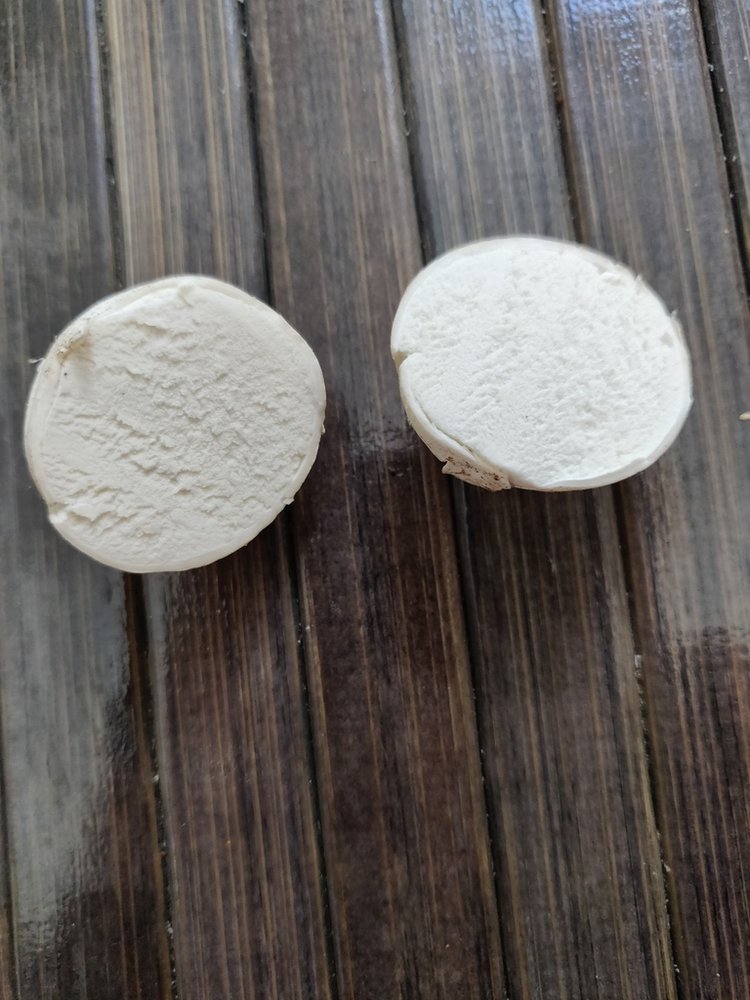
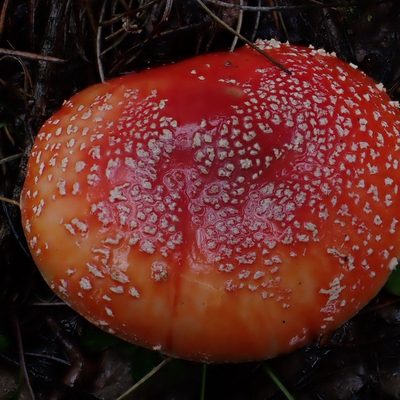
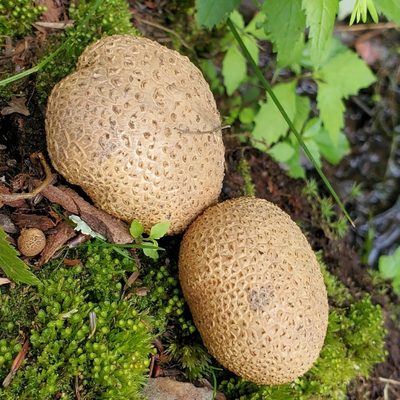
A small, round or slightly flattened puffball 1.5–3.5 cm (½–1½ in) across, with no stem or sterile base, attached by a tuft of threads (mycelium). The outer skin is white and smooth at first, then buff to pale tan; it flakes away or peels off in sheets, leaving a thin, smooth, lead-gray to mouse-gray inner case with a round opening at the top. Inside, a young one is white; it turns dingy yellowish, then olive brown and finally dark brown as the spores ripen. Cut any puffball from top to bottom. An Amanita button, such as a young Fly Agaric, the most recorded Amanita in the Black Hills on iNaturalist, shows the outline of a cap, gills and stem inside, while a puffball holds only flesh or spore dust. Earthballs (Scleroderma), reported on iNaturalist in the Black Hills, are poisonous and often mistaken for puffballs: they feel firm, not soft like a marshmallow, have a rind about 2 mm (1/16 in) thick, and the Common Earthball is purplish gray to purple-black inside even when young.
When can you find it?
June into September in iNaturalist records from South Dakota and nearby states.
Where does it grow?
On the ground in sparse grass and disturbed places, scattered or in clusters (MykoWeb). Wyoming herbarium labels record it in dry grassland in Yellowstone National Park and on soil in sagebrush. In the Black Hills, a specimen in the University of Wyoming's Solheim Mycological Herbarium was collected in Weston County in 1980, growing on cow dung. iNaturalist has two Black Hills reports, from Custer County in July 2025 and September 2026, neither yet confirmed. Elsewhere in South Dakota it was collected in Hyde County in 1913 and Spink County in 1930.
Other mushrooms to compare
Sources: Bovista plumbea (M. Wood & F. Stevens) — California Fungi, MykoWeb; The Gasteromycetes of the Eastern United States and Canada (W. C. Coker & J. N. Couch, 1928), Bovista plumbea, p. 99 — Internet Archive; Culturally Important Plants of the Lakota (L. S. Black Elk & W. D. Flying By, Sitting Bull College, 1998), entry 55, filed with the South Dakota PUC; Bovista plumbea, specimen RMS0027219 (Weston County, Wyoming, 1980, on cow dung) — University of Wyoming Solheim Mycological Herbarium, on MyCoPortal; USGS GNIS feature 1602035, the specimen's locality, in Weston County, Wyoming — HometownLocator; Bovista plumbea records from Wyoming (13, incl. Yellowstone dry grassland and sagebrush specimens) — GBIF; Bovista plumbea records from South Dakota (Hyde County 1913, Spink County 1930) — GBIF; Bovista plumbea records in the Black Hills places (2, needs ID) — iNaturalist API; Bovista plumbea, research-grade records in SD, WY, MT, NE, ND and CO by month — iNaturalist API; Bovista plumbea, names (Lead-grey Puffball, Grey Puffball) — iNaturalist API; Bovista plumbea: synonymy and classification — Species Fungorum (Royal Botanic Gardens, Kew); The Puffballs (M. Kuo) — MushroomExpert.com; Amanita species recorded in the Black Hills places — iNaturalist API; Scleroderma citrinum (M. Kuo, June 2025) — MushroomExpert.com; Scleroderma bovista, potato earthball (earthball and puffball compared) — Beaty Biodiversity Museum, University of British Columbia (Mushrooms Up!).