Black-footed Polypore Picipes badius
Also called Bay Polypore
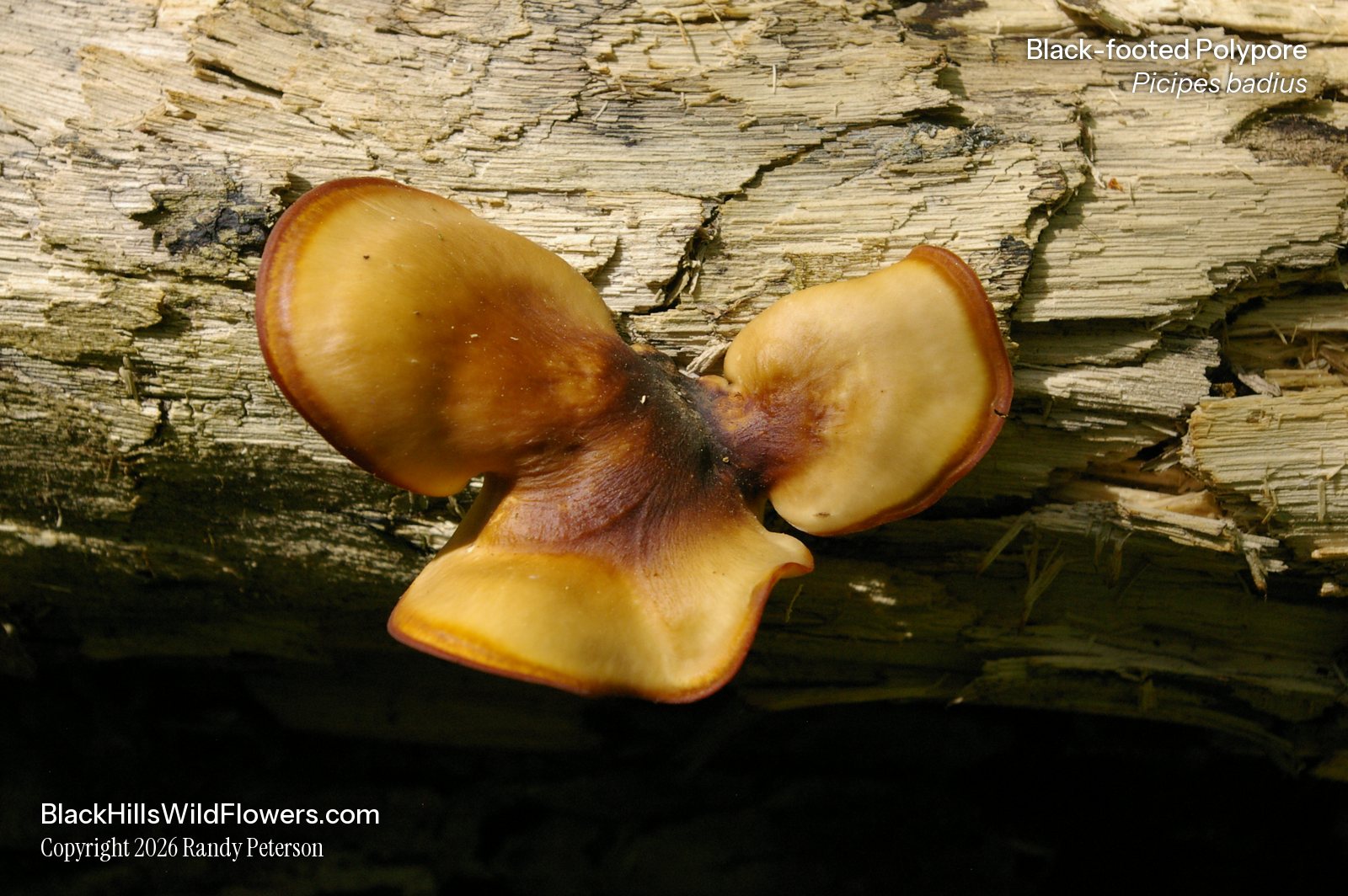
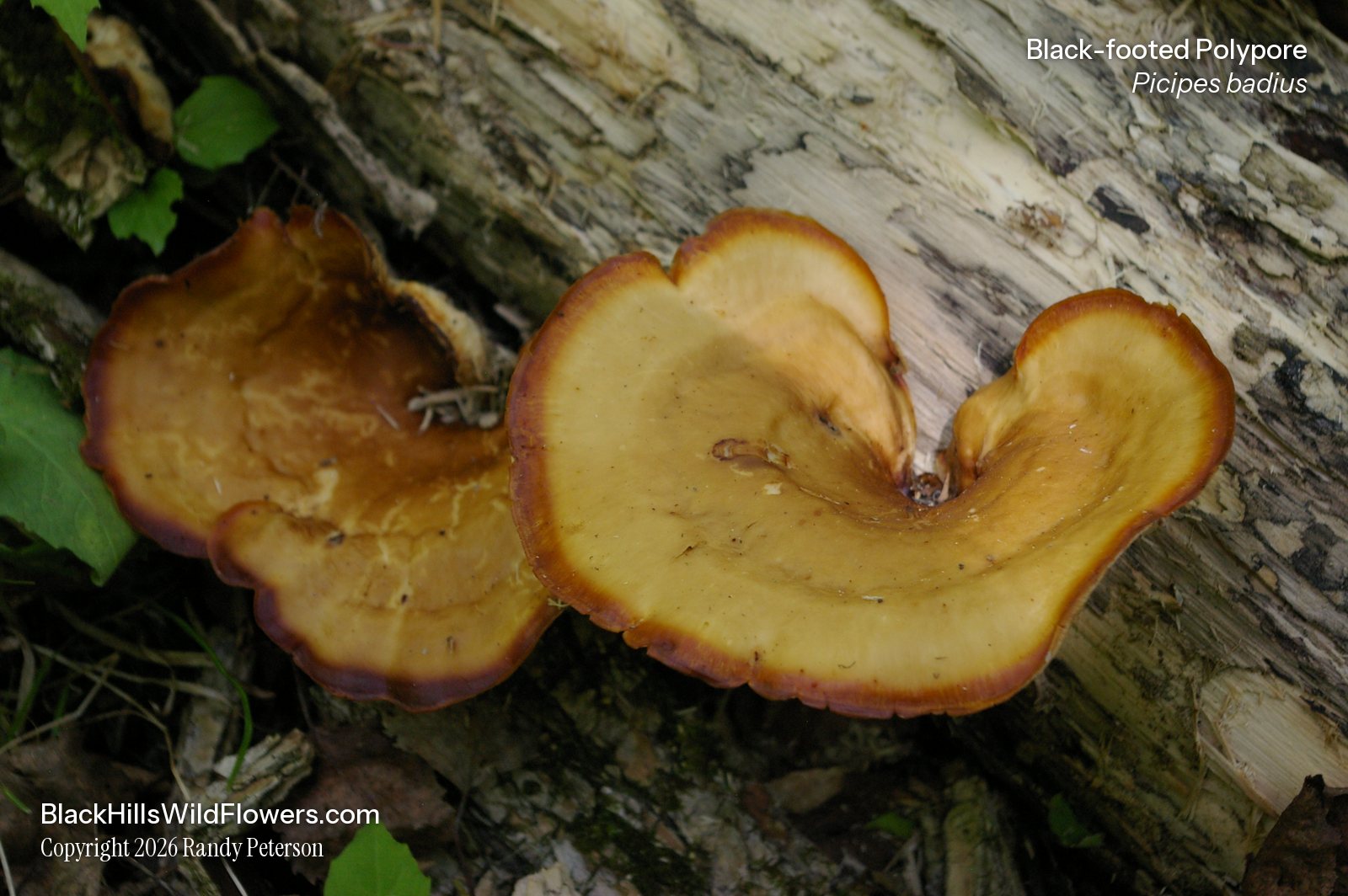
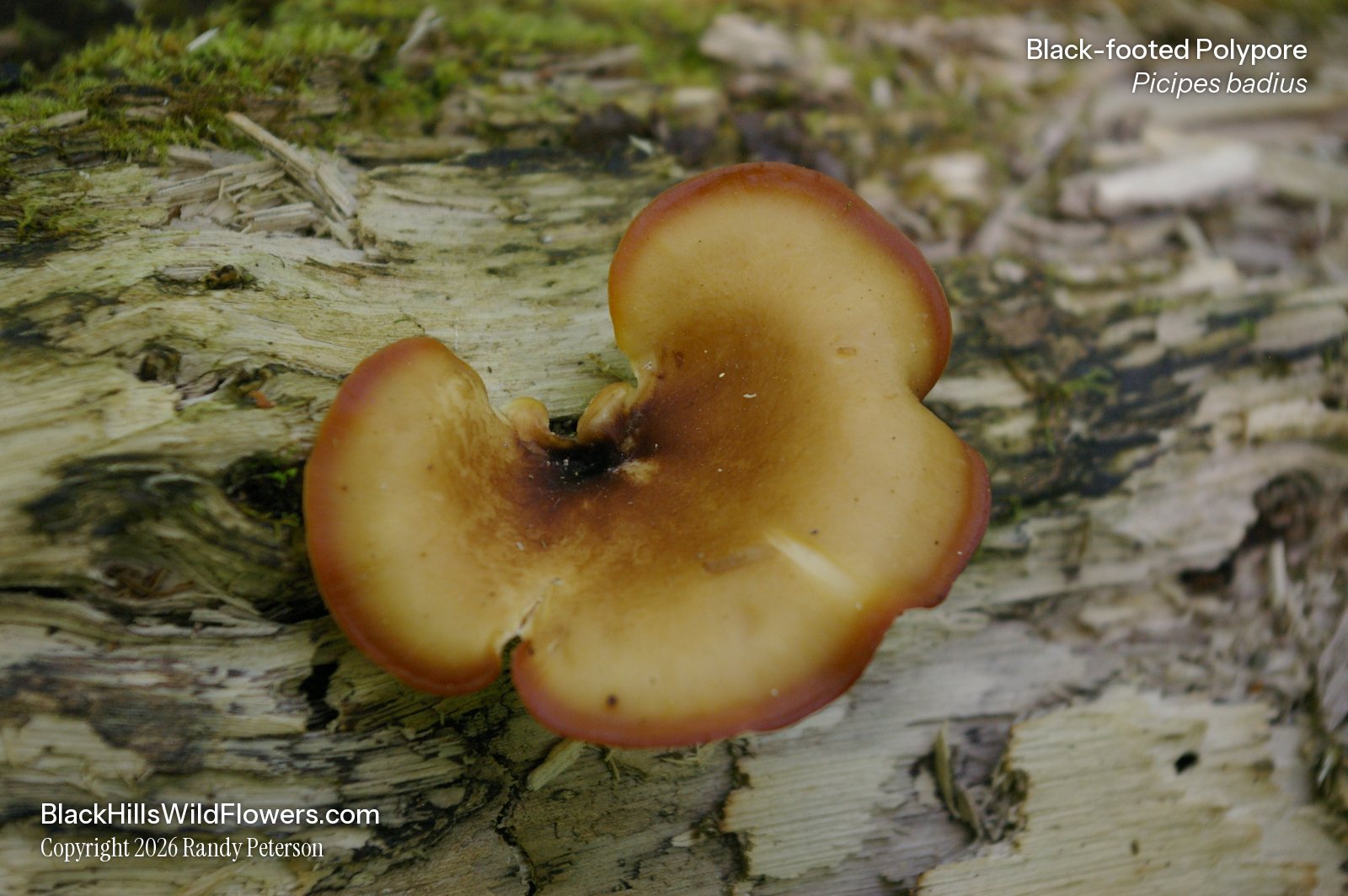
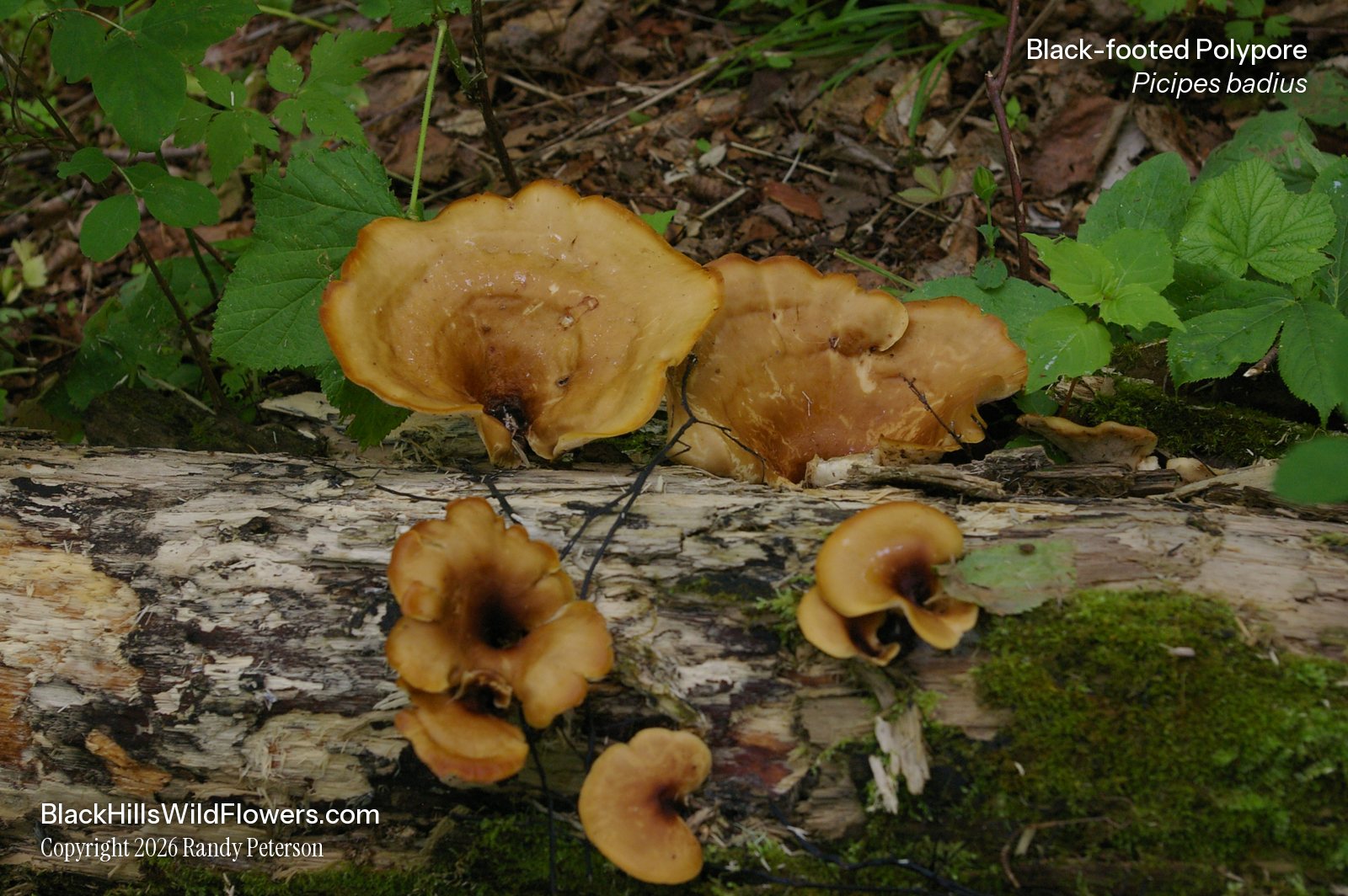
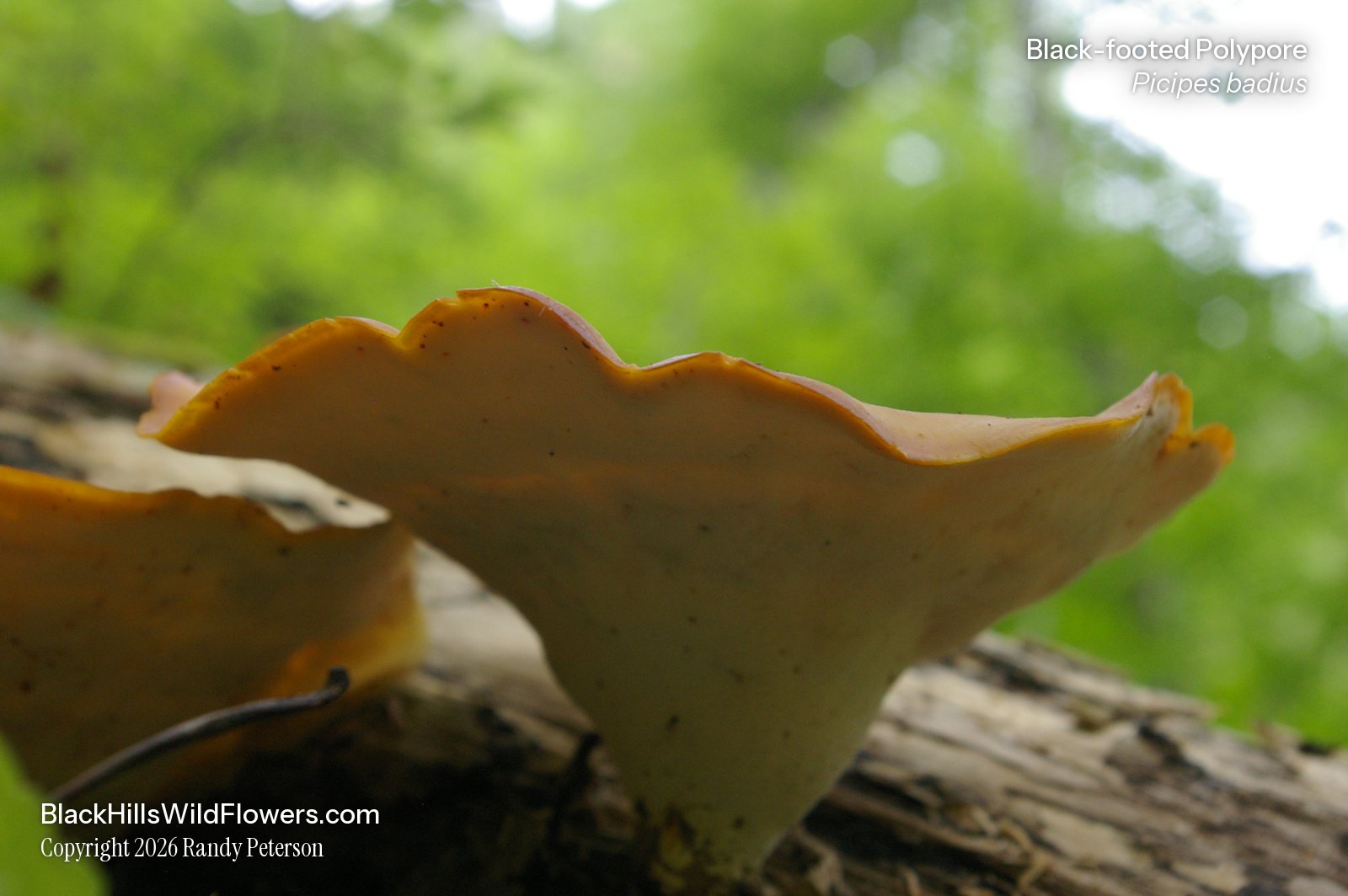
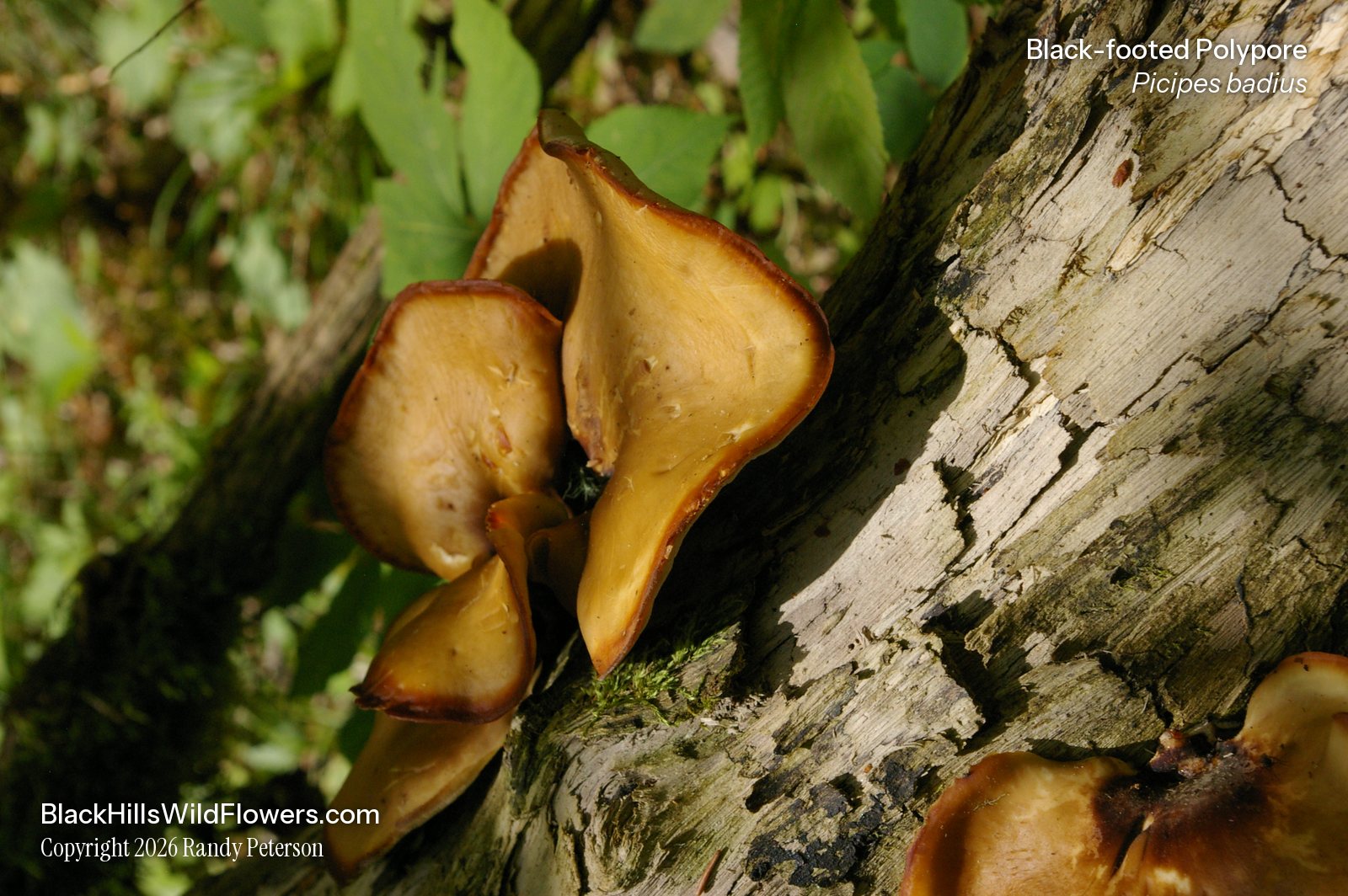
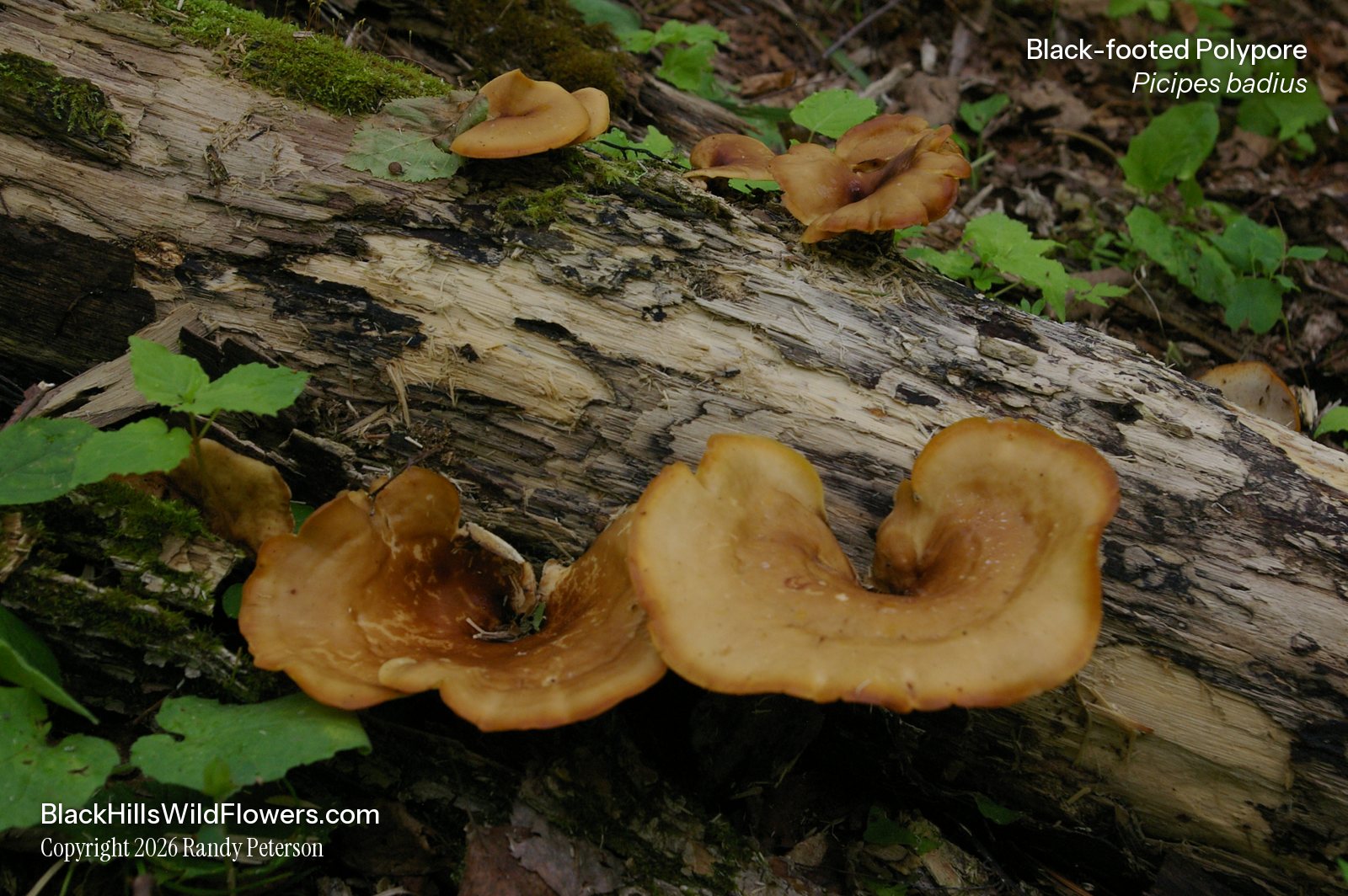
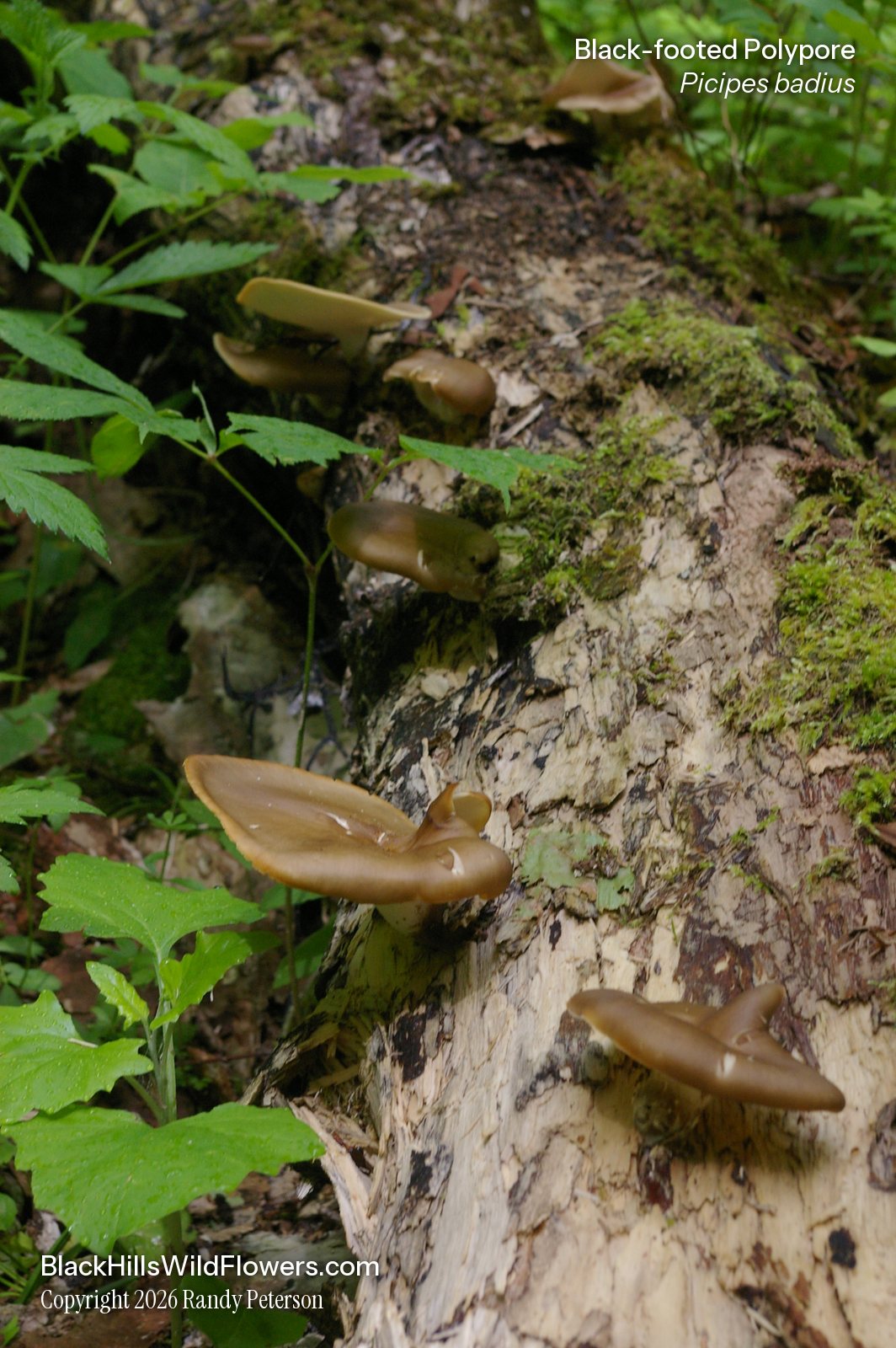
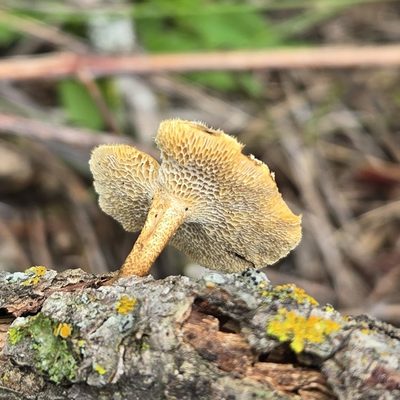
Black-footed Polypore (Picipes badius, long called Polyporus badius) is a tough, stalked polypore with a smooth cap 4–20 cm (1½–8 in) wide, tan-brown to chestnut or reddish brown and usually darkest at the center, tiny white pores underneath, and a short stem that turns black toward the base. It grows on dead hardwood logs and branches, usually once the bark has begun to rot or has fallen away. No Black Hills specimen or iNaturalist record of this species has been found; iNaturalist records from South Dakota and neighboring states, most of them from Minnesota, peak in August and September. Photographed in the Black Hills.
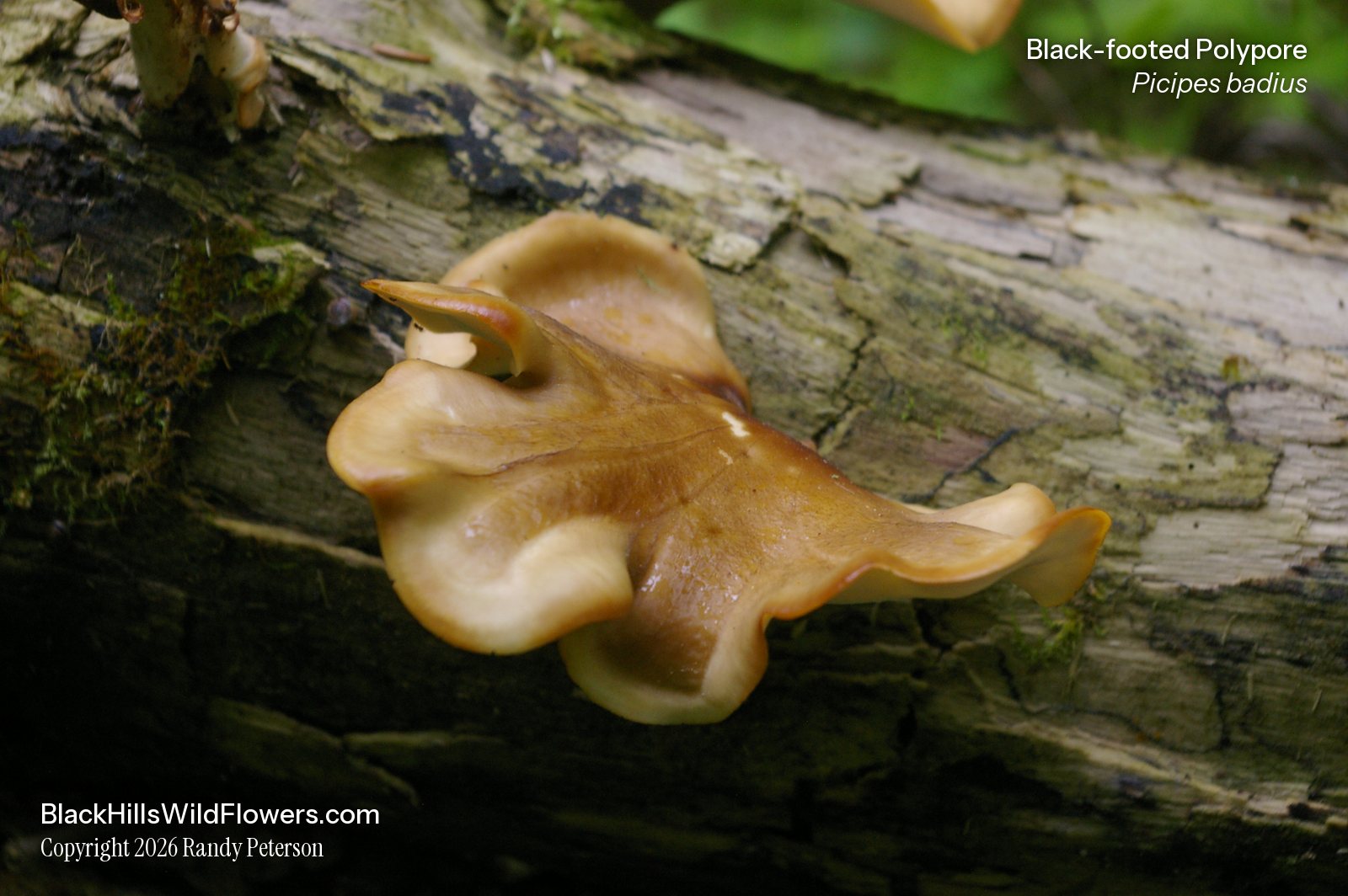
Free photos from other sources
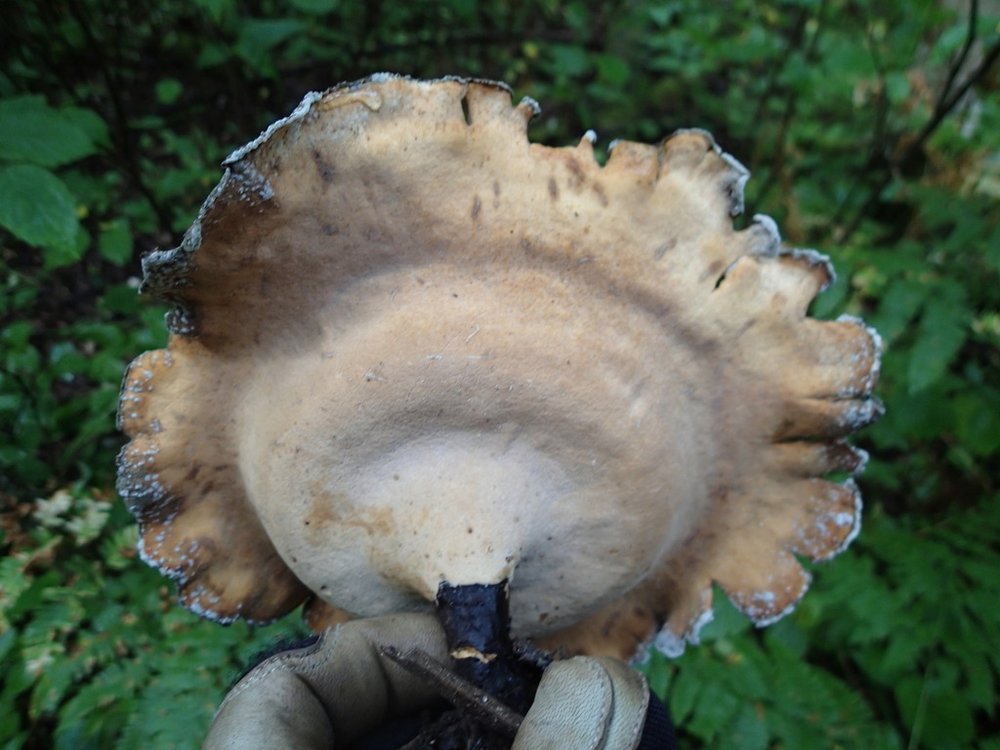
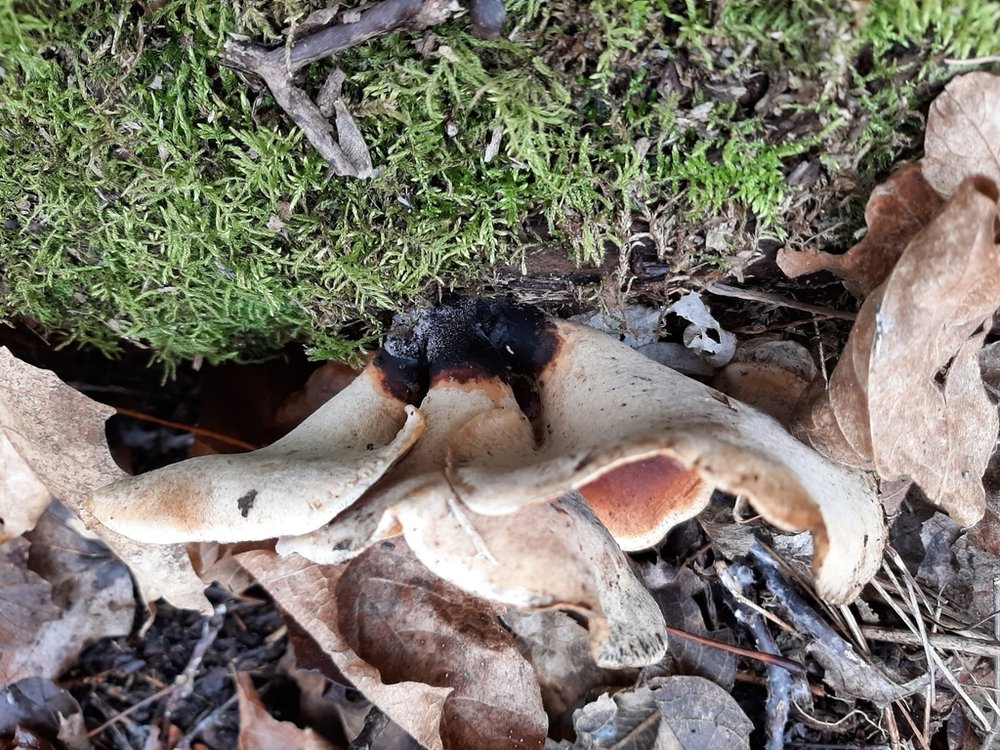
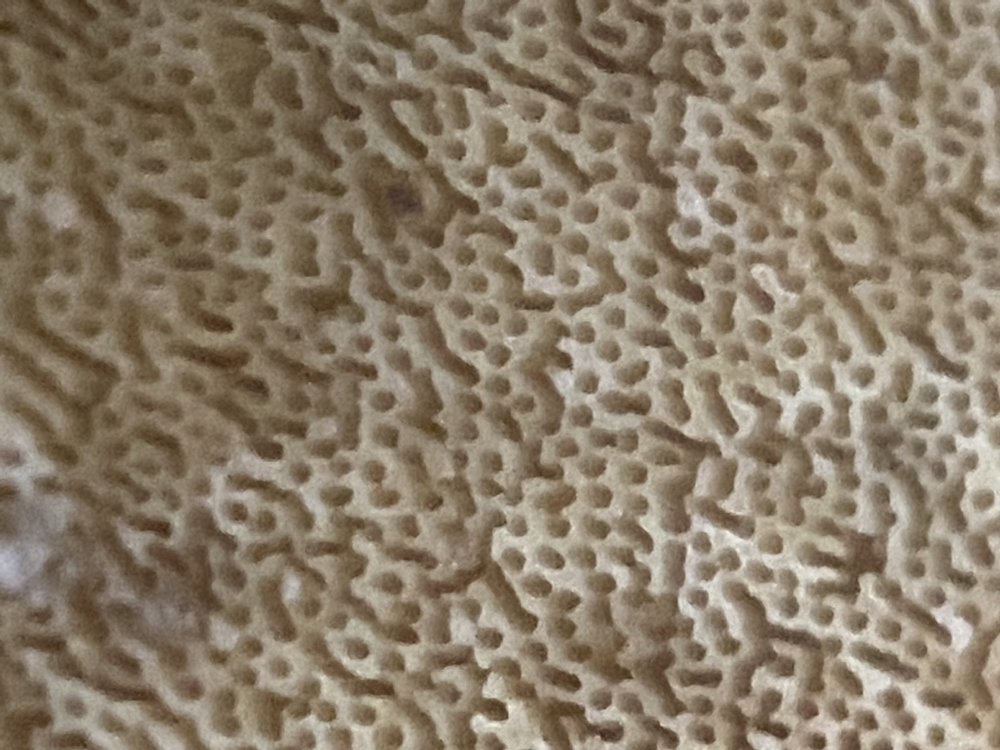
| Family | Polyporaceae · Polypore |
|---|---|
| Type | Shelf fungus |
| Season | Spring to fall (Kuo); regional iNaturalist records run mostly May to October, most often August and September |
| Size | Cap 4–20 cm (1½–8 in) wide, stem 1–4 cm (½–1½ in) long |
| Grows on | Dead hardwood logs and branches that have lost their bark, occasionally conifer wood |
| Spore print | White |
| Also called | Bay Polypore |
| Synonym | Polyporus badius, Royoporus badius, Polyporus durus |
| Eating | This guide doesn't say which mushrooms are safe to eat. The wrong one can kill you. Treat every little brown mushroom as poisonous. |
How it lives
A saprobe: it lives on dead wood, and it causes a white rot of hardwood. Kuo notes that it usually appears after the bark has begun to decay or is gone.
How do you identify Black-footed Polypore?
The cap is round, kidney-shaped or lobed, broadly convex to shallowly sunken, often slightly funnel-shaped with a wavy edge when mature. It is dry, smooth and bald, usually dark reddish brown and paler toward the edge, sometimes nearly white with a reddish-brown center. It darkens from the center outward with age and often looks a little streaked. Underneath, the white to dingy pore surface has round pores so small (about 4 to 8 per mm) that they are often invisible without a hand lens. The stem is central, off-center or to one side, 1–4 cm long, pale at the top and dark brown to black and velvety below. Flesh white, thin and very tough. Spore print white. Look-alikes: Kuo says Cerioporus varius (as Polyporus varius) is smaller, with a pale brown, tan or yellowish cap, and usually grows on smaller branches and sticks, while this species is larger, redder and proportionally shorter-stemmed. MykoWeb says Cerioporus leptocephalus (as Polyporus leptocephalus) has a cream to tan-brown cap only 2–5 cm across (Emberger gives 1–12 cm) and is typically smaller than this species; Emberger separates the two Cerioporus by radial streaks on the cap of C. varius. Picipes melanopus grows from the ground (Kuo), often from buried wood (MykoWeb). Spring Polypore, also in this guide, has a finely fringed, hairy cap edge, large angular pores 0.5–2 mm across and a scaly brown stem. Under a microscope this species has no clamp connections on its hyphae, a mark that separates it from the Cerioporus species.
When can you find it?
Spring to fall (Kuo); regional iNaturalist records run mostly May to October, most often August and September.
Where does it grow?
It grows alone or in groups on dead hardwood, and has occasionally been reported on conifer wood, usually once the bark has begun to decay or is gone. A 1999 specimen from Teton County, Wyoming, was on aspen wood. No herbarium specimen or iNaturalist record of this species from the Black Hills was found. iNaturalist has 3 research-grade South Dakota records, all east of the Missouri River, and its research-grade records from South Dakota and its neighbors, mostly Minnesota, peak in August and September. Two look-alikes do have Black Hills records: two 1918 specimens from Custer County filed as Polyporus elegans (now Cerioporus leptocephalus), and one research-grade iNaturalist record of Cerioporus varius from Meade County, in 2025.
Other mushrooms to compare
Sources: Polyporus badius — MushroomExpert.com (Michael Kuo, 2021); Polyporus varius — MushroomExpert.com (Michael Kuo, 2020); Picipes badius — Fungi on Wood (Gary Emberger), at MushroomExpert.com; Cerioporus leptocephalus — Fungi on Wood (Gary Emberger), at MushroomExpert.com; Polyporus badius — The Fungi of California, MykoWeb (Michael Wood and Fred Stevens); Polyporus leptocephalus — The Fungi of California, MykoWeb (Michael Wood and Fred Stevens); Polyporus durus, Bay Polypore — First Nature; Polyporus arcularius — MushroomExpert.com (Michael Kuo); Picipes badius synonymy — Species Fungorum (Kew); Polyporus badius specimen WTU-F-059022, Teton County, Wyoming — GBIF; Polyporus elegans specimen BPI 208252, Custer County, South Dakota — GBIF; Polyporus elegans specimen BPI 208295, Custer County, South Dakota — GBIF; Picipes badius research-grade records in South Dakota — iNaturalist; Picipes badius records by month, South Dakota and neighboring states — iNaturalist; Cerioporus varius records in the Black Hills — iNaturalist.