Spring Polypore
Lentinus arcularius
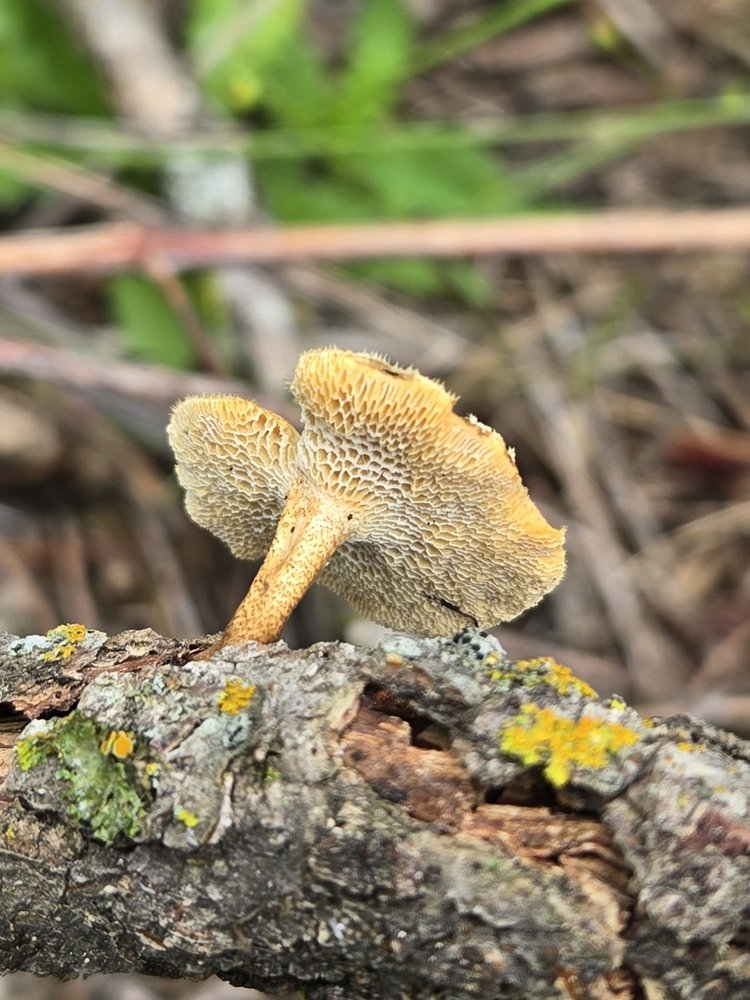
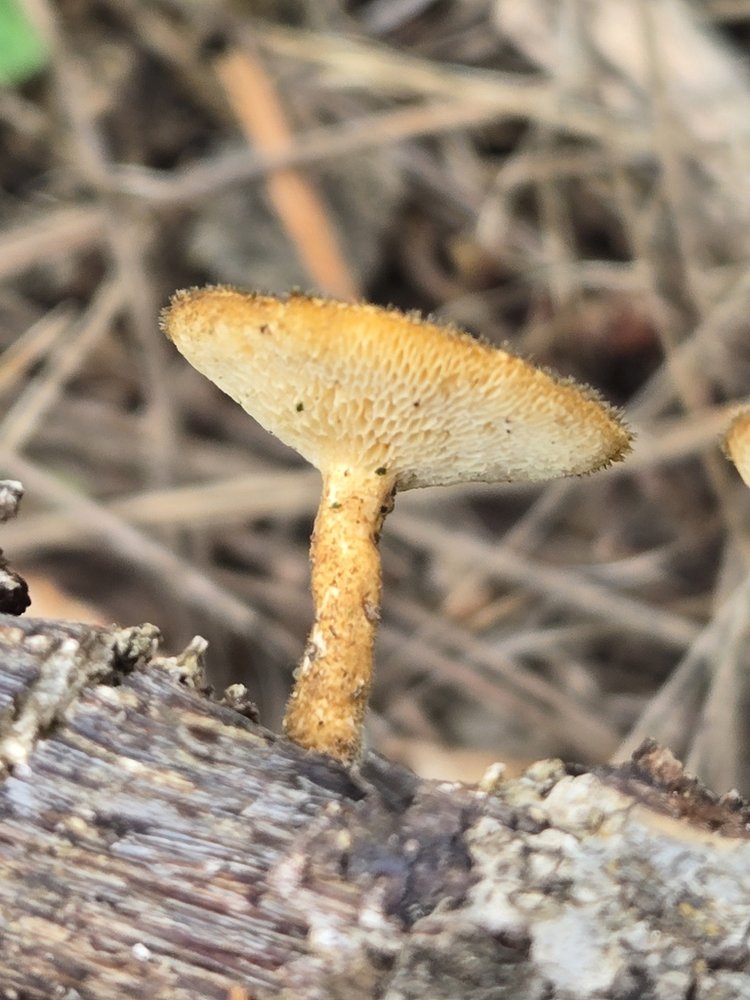
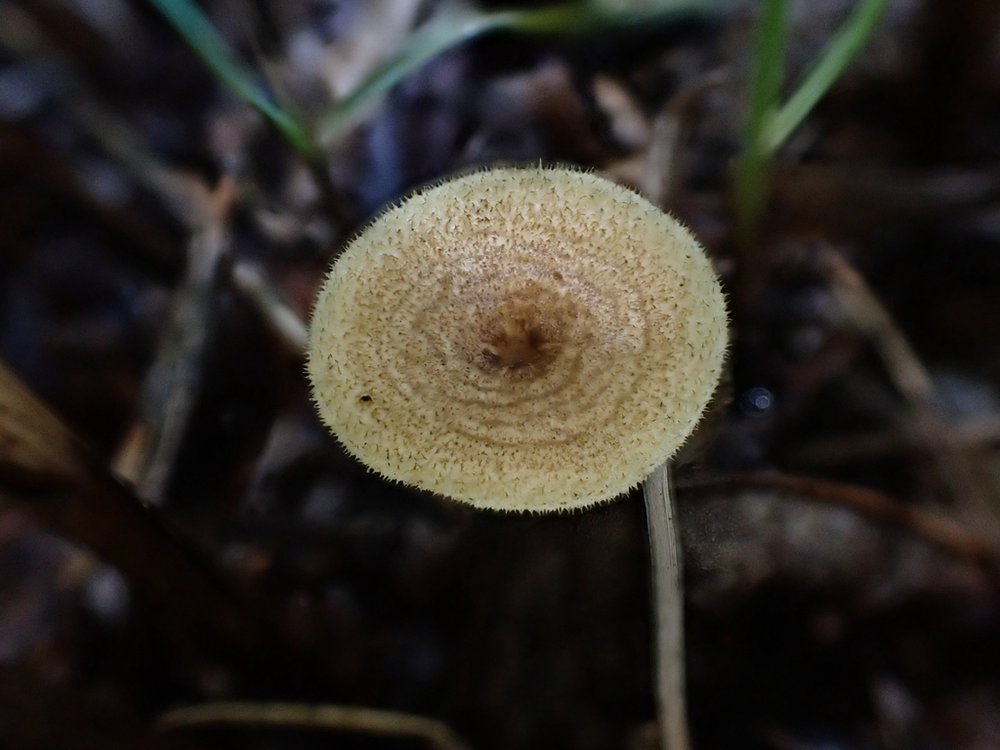
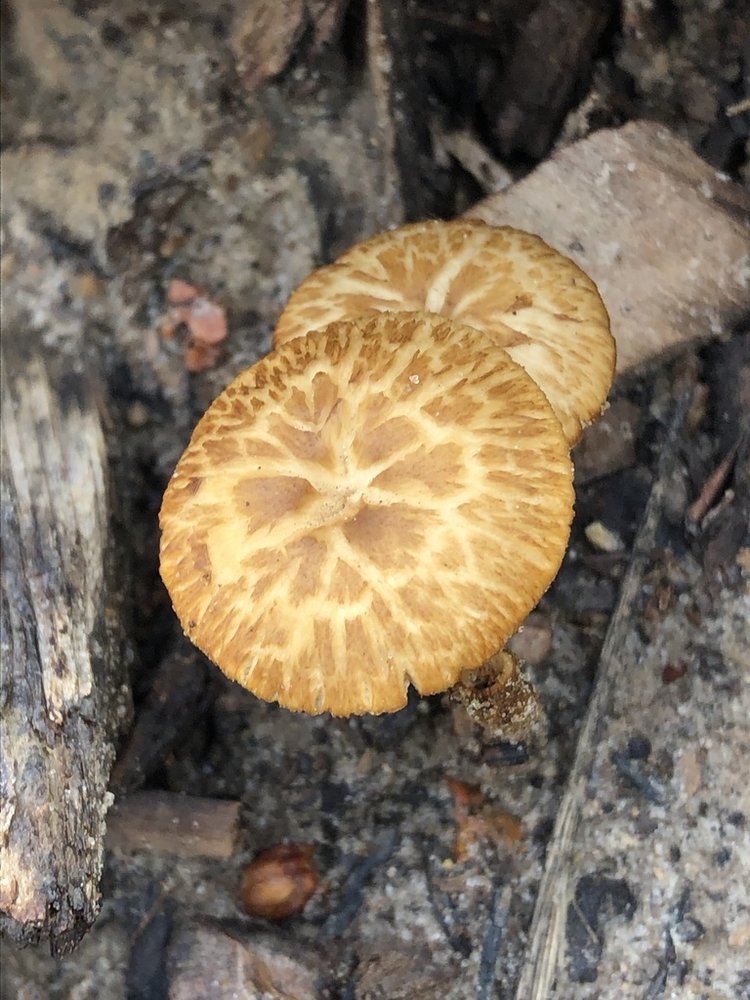
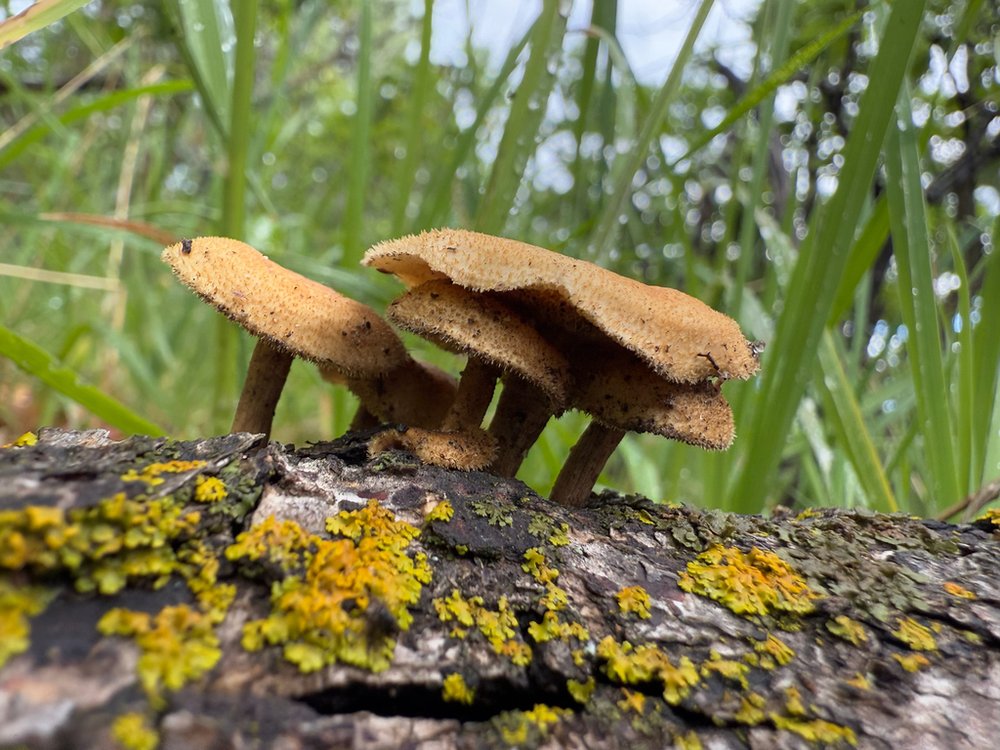
Spring Polypore (Lentinus arcularius, long known as Polyporus arcularius) is a small stalked mushroom with pores instead of gills: a tan to golden-brown, finely scaly cap 1–4 cm (½–1½ in) wide with a fringe of tiny hairs at the edge, over large, honeycomb-like pores. It grows on dead hardwood, and iNaturalist has 10 research-grade Black Hills records, May to August, most from the northern Hills.
Free photos from other sources
| Family | Polyporaceae · Polypores |
|---|---|
| Type | Shelf fungus |
| Season | May to August in the Black Hills' research-grade iNaturalist records, most in May and June, with records still awaiting ID into mid-September. East of the Rockies it is a spring mushroom; in the Rockies it comes in summer and fall |
| Size | Cap 1–4 cm (½–1½ in) wide, stem 2–4 cm (¾–1½ in) long |
| Grows on | Dead hardwood, especially oak; sometimes buried wood |
| Spore print | Creamy white |
| Also called | Stipitate Polypore |
| Synonym | Polyporus arcularius |
| Eating | This guide doesn't say which mushrooms are safe to eat. |
How it lives
A saprobe: it lives on dead hardwood and causes a white rot, in which the wood turns pale as the fungus breaks down all of it, including lignin, the stiff material that binds wood fibers. DNA studies put it closer to the gilled Lentinus mushrooms than to other Polyporus, which is why its scientific name changed.
How do you identify Spring Polypore?
Look for a small, thin cap, flat or with a shallow dip in the center, dry and covered in fine brown to golden-brown scales over a tan background. The best mark is the edge, fringed with tiny hairs. Underneath, the whitish pores are big enough to see easily, 0.5–2 mm across, angular or six-sided, in rows that radiate from the stem and run down it. The stem is central, tough, brown to yellowish brown and scaly to hairy. Winter Polypore (Lentinus brumalis) has a darker cap with no fringe and smaller pores, and comes up from fall to early summer. Cerioporus varius (also called Polyporus varius), which has one research-grade Black Hills record on iNaturalist, has a smooth or very finely streaked, dull yellow to pale tan cap, tiny pores (3–5 per millimeter) and a stem that turns dark brown to black from the base up. Dryad's Saddle (Cerioporus squamosus) also has large pores, but its cap grows 6–40 cm (2½–16 in) wide with big, flat, dark scales.
When can you find it?
May to August in the Black Hills' research-grade iNaturalist records, most in May and June, with records still awaiting ID into mid-September. East of the Rockies it is a spring mushroom; in the Rockies it comes in summer and fall.
Where does it grow?
On dead hardwood, especially oak, sometimes rising from buried wood so it seems to grow from the soil. One Black Hills iNaturalist record notes it growing out of birch. iNaturalist has 25 Black Hills records, 10 of them research grade: 7 from Lawrence County in the northern Hills, 1 from Pennington County and 2 from Custer State Park. Records still awaiting ID come from Wind Cave National Park and Crook County, Wyoming. Mount Rushmore National Memorial's species list includes it as Polyporus arcularius, and the New York Botanical Garden holds a specimen collected in the Black Hills in 1929.
Sources: Polyporus arcularius — MushroomExpert.com (Michael Kuo); Lentinus arcularius — Fungi on Wood (Gary Emberger); Lentinus brumalis — Fungi on Wood (Gary Emberger); Cerioporus squamosus — Fungi on Wood (Gary Emberger); Polyporus varius — MushroomExpert.com (Michael Kuo); Lentinus arcularius — Species Fungorum, Royal Botanic Gardens, Kew; Mount Rushmore National Memorial fungi checklist — NPSpecies, National Park Service; Field Guide to Diseases and Insects of the Rocky Mountain Region, RMRS-GTR-241 (2010), Table 3, white and brown rot — USDA Forest Service; Black Hills records of Lentinus arcularius — iNaturalist; Black Hills records by month — iNaturalist; Observation 238192847, 'Growing out of birch', Lawrence County, 2024 — iNaturalist; Cerioporus varius, Black Hills records — iNaturalist; Specimen NY 1970723, Black Hills, 1929 — GBIF.