Blewit
Collybia nuda
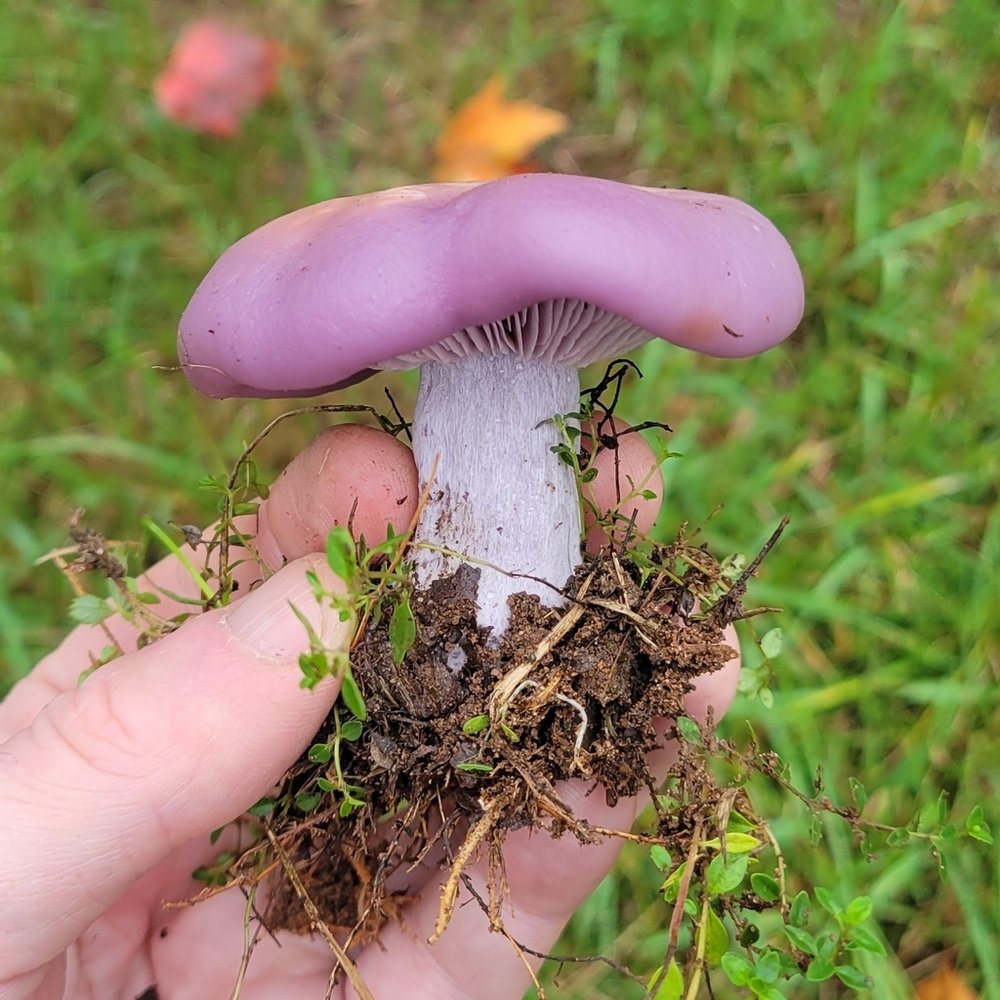
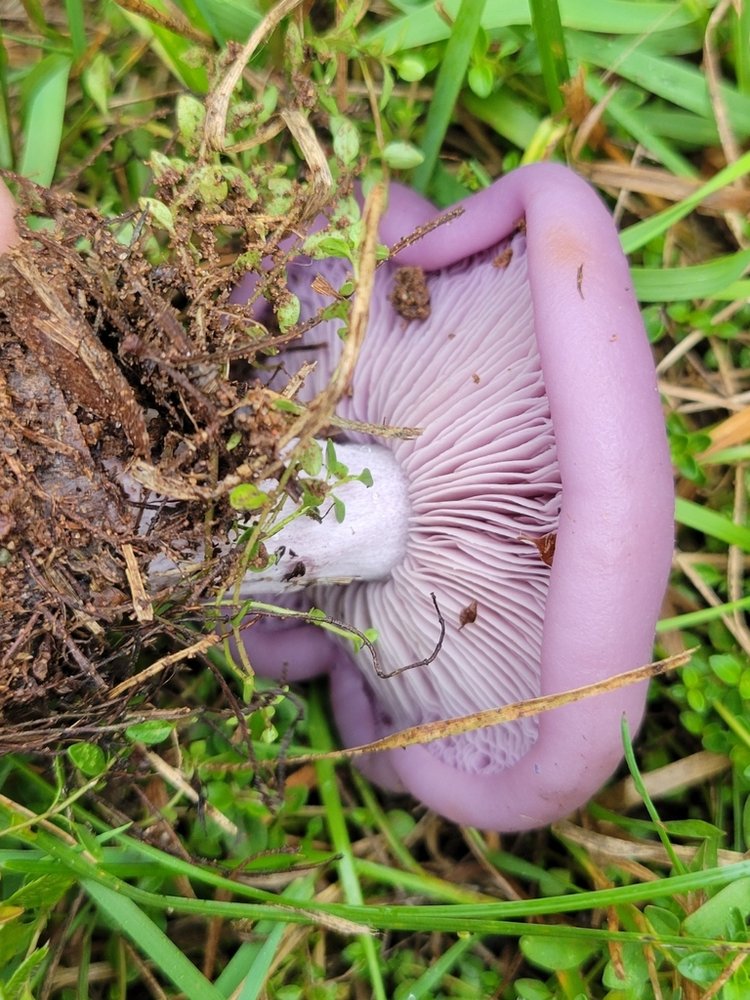
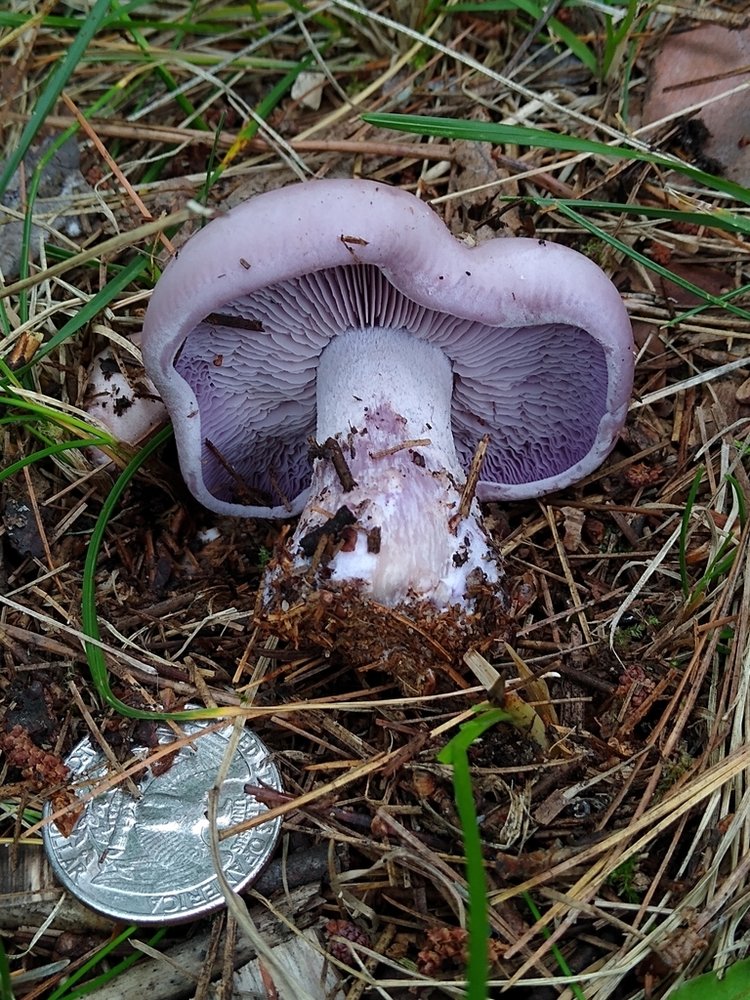
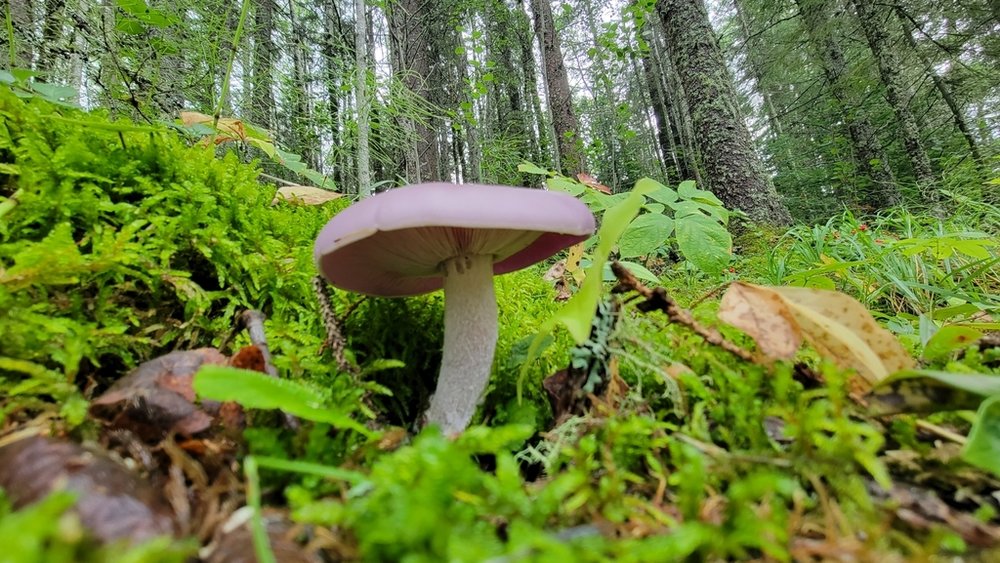
Blewit (Collybia nuda) is a stocky mushroom with a smooth, dull purple cap that fades to tan or brown, lilac gills and a lilac stem, growing on the ground in forest litter. iNaturalist has 5 research-grade Black Hills records, all from August and September.
Free photos from other sources
| Family | Clitocybaceae · Clitocybe |
|---|---|
| Type | Gilled mushroom |
| Season | August into October |
| Size | Cap 3–12 cm (1–5 in) wide, stem 4–6 cm (1½–2½ in) tall |
| Grows on | Rotting organic debris on the forest floor |
| Spore print | Pinkish |
| Also called | Wood Blewit |
| Synonym | Lepista nuda, Clitocybe nuda |
| Toxicity | It has poisoned a dog: a 2019 case reported to the North American Mycological Association lists vomiting and bloody diarrhea. |
| Eating | This guide doesn't say which mushrooms are safe to eat. |
How it lives
A saprobe: it lives on rotting organic debris instead of trading nutrients with tree roots, so it isn't tied to any particular tree (it isn't mycorrhizal). It grows alone, scattered, in groups or in clusters.
How do you identify Blewit?
Fresh caps are 3–12 cm (1–5 in) wide, smooth, slightly tacky when wet, and dull purple or purplish brown, fading to tan or brown with age; some are brownish from the start. The crowded gills are pale lavender to lilac, fading to buff, and attach to the stem, sometimes with a notch. The stem is thick, 4–6 cm (1½–2½ in) tall, pale purple or the color of the gills, even or wider toward the base, where the fuzz is white to lilac. There is no ring, and it smells sweet and fragrant. The pinkish spore print separates it from webcaps (Cortinarius): many look very similar but leave a rusty-brown print. The Violet Webcap (Cortinarius violaceus), reported on iNaturalist from Pennington County, is deep purple with a dry, hairy to scaly cap, a purple veil (cortina) over the young gills and a club-shaped base. A few webcaps contain orellanine, which damages the kidneys.
When can you find it?
August into October.
Where does it grow?
On the ground in rotting organic debris in woods, and sometimes in grassy or urban places. iNaturalist has 5 research-grade Black Hills records, all in August and September, from Lawrence and Pennington counties, all inside the national forest boundary. No herbarium specimen or published Black Hills source was found.
Sources: Kuo, Clitocybe nuda (blewit) (2022) — MushroomExpert.com; Kuo, Cortinarius violaceus (2017) — MushroomExpert.com; Mushroom Poisoning Syndromes — North American Mycological Association; Species Fungorum: Collybia nuda — Royal Botanic Gardens, Kew; Species Fungorum: Lepista nuda (synonyms) — Royal Botanic Gardens, Kew; New Zealand Organisms Register: Collybia nuda (He et al. 2023, Fungal Diversity); Catalogue of Life, 2026-10-14 release: Lepista nuda (ChecklistBank); iNaturalist: Collybia nuda in the Black Hills places (Black Hills ecoregions, Black Hills National Forest, Wind Cave NP, Custer SP); iNaturalist: Cortinarius violaceus in the Black Hills places (Black Hills ecoregions, Black Hills National Forest, Wind Cave NP, Custer SP); iNaturalist month histogram, Collybia nuda, research grade within 500 km of the Black Hills; Beug, Summary of the Poisoning Reports in the NAMA Mushroom Poisoning Case Registry: 2018 through 2020 — North American Mycological Association; Species Fungorum: Clitocybe nuda (synonym) — Royal Botanic Gardens, Kew.