Wood Horsetail Equisetum sylvaticum
Also called Woodland Horsetail
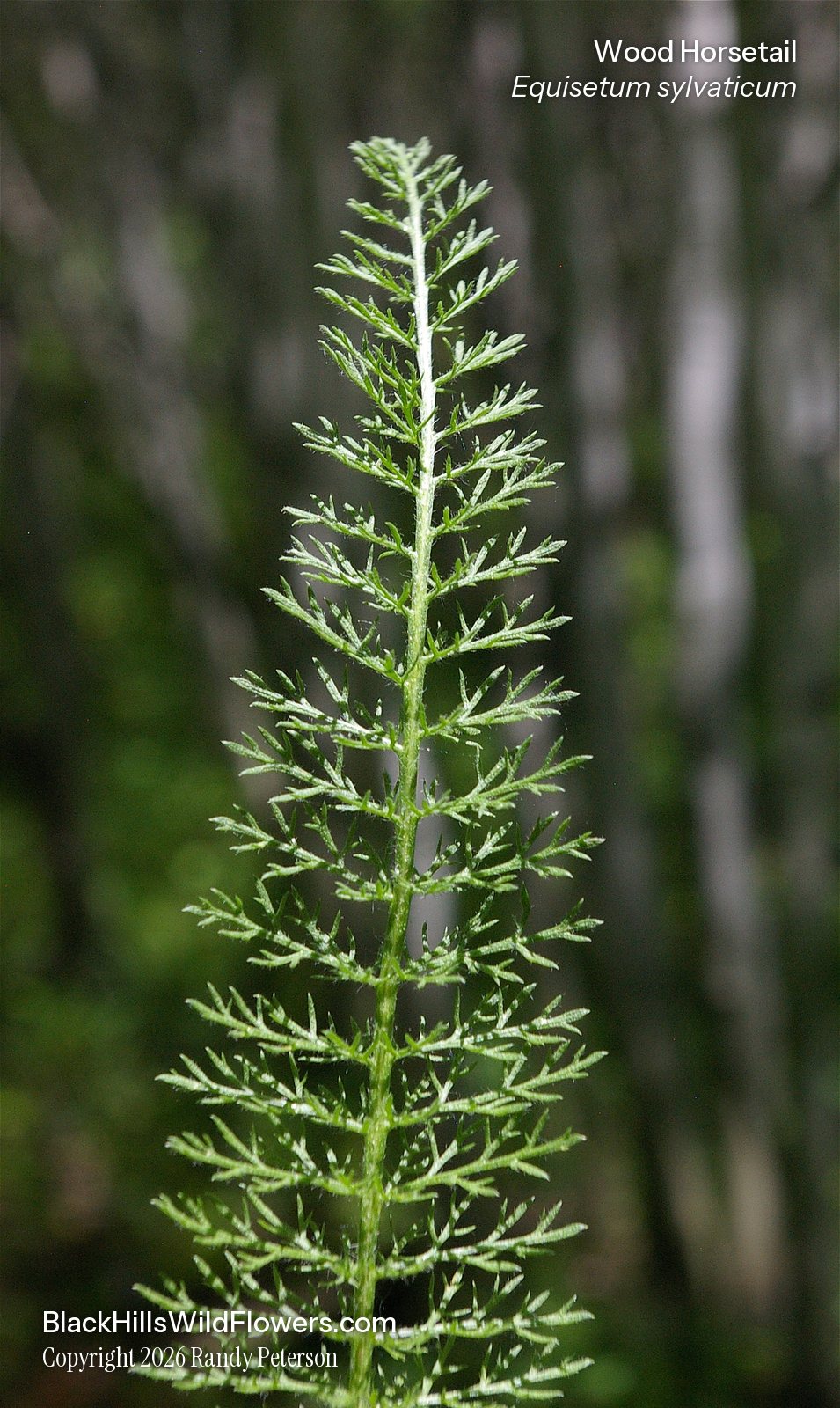
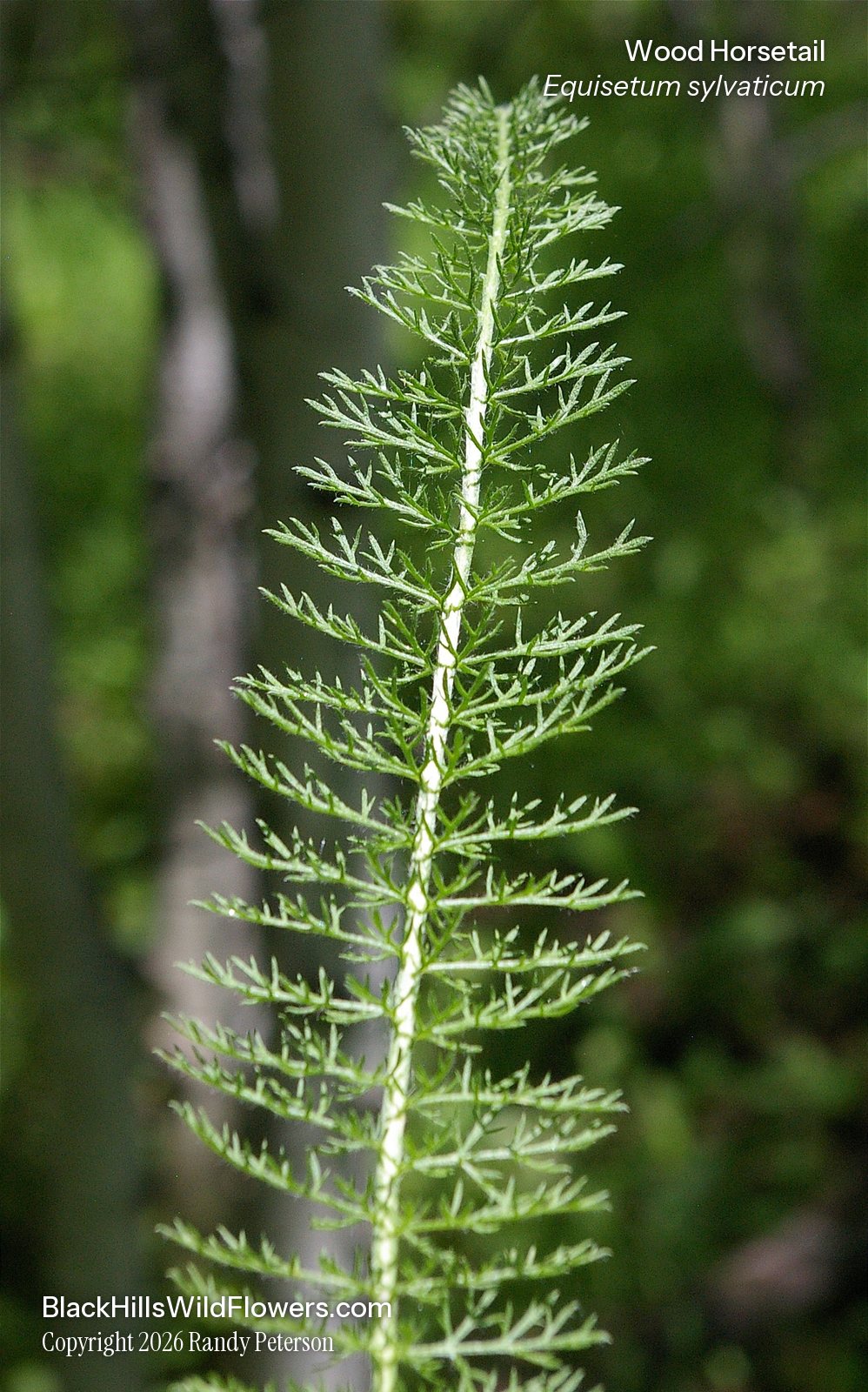
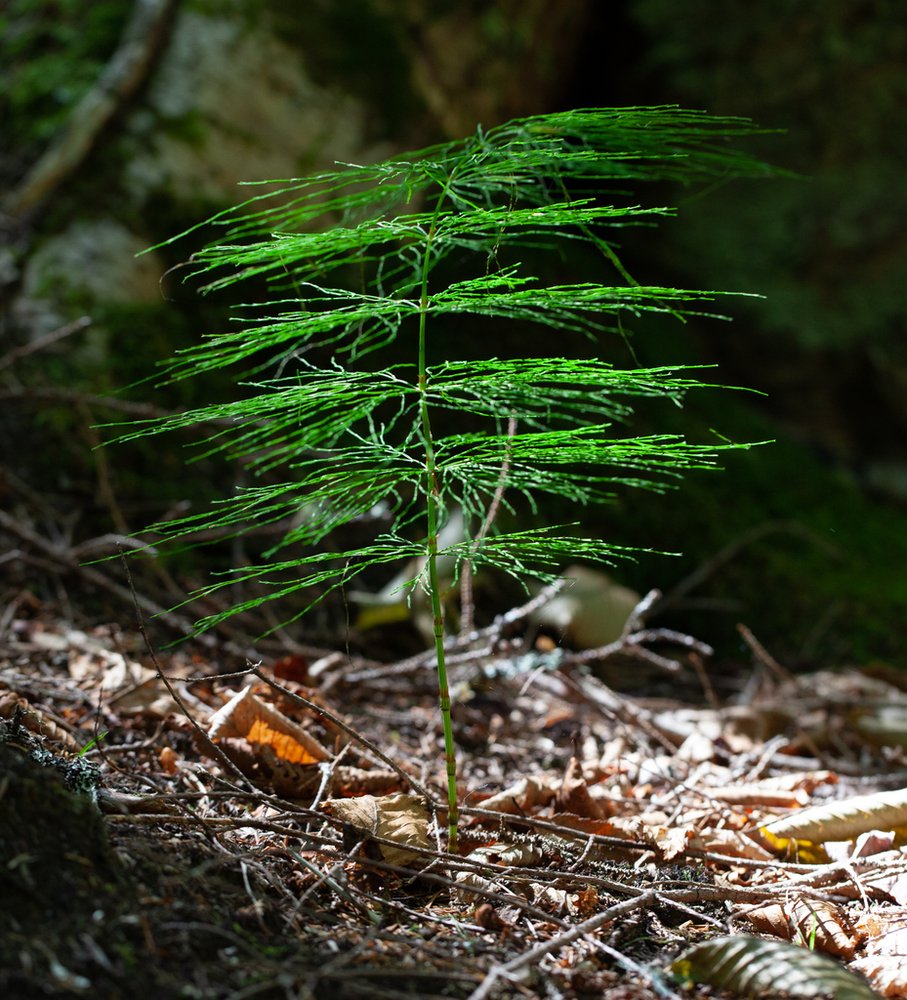
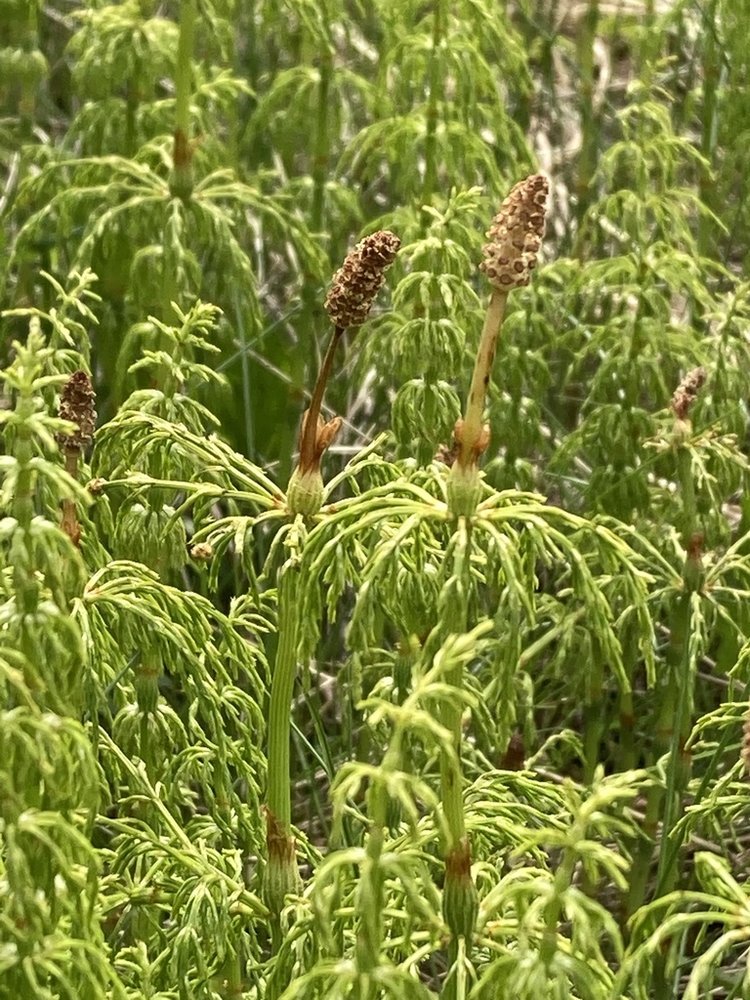
Wood Horsetail (Equisetum sylvaticum) is a native, spore-bearing perennial 25–70 cm (10–28 in) tall whose green stems carry whorls of arching branches that are branched again, giving the plant a lacy, feathery look. It has no flowers; its cone-tipped spring stems shed spores in mid to late spring, and herbarium specimens show it in moist forest along creeks and seeps in the Black Hills. Photographed in the Black Hills.
Free photos from other sources
| Family | Equisetaceae · Horsetail |
|---|---|
| Status | Native perennial |
| Blooms | No flowers; spore cones ripen in mid to late spring |
| Height | 25–70 cm (10–28 in) |
| Where | Moist forest along creeks, springs and seeps |
| Also called | Woodland Horsetail |
| Traditional use | Huron Smith recorded the Menominee using a poultice of the crushed stem to stop bleeding (1923) and the Ojibwe drinking an infusion of the plant for kidney trouble (1932). |
Roots, seeds & germination
Root: It spreads by rhizomes, underground stems, and can form large colonies.
Seed: It makes no seeds. It reproduces by spores from the cones on the spring stems, and spreads by its rhizomes.
How do you identify Wood Horsetail?
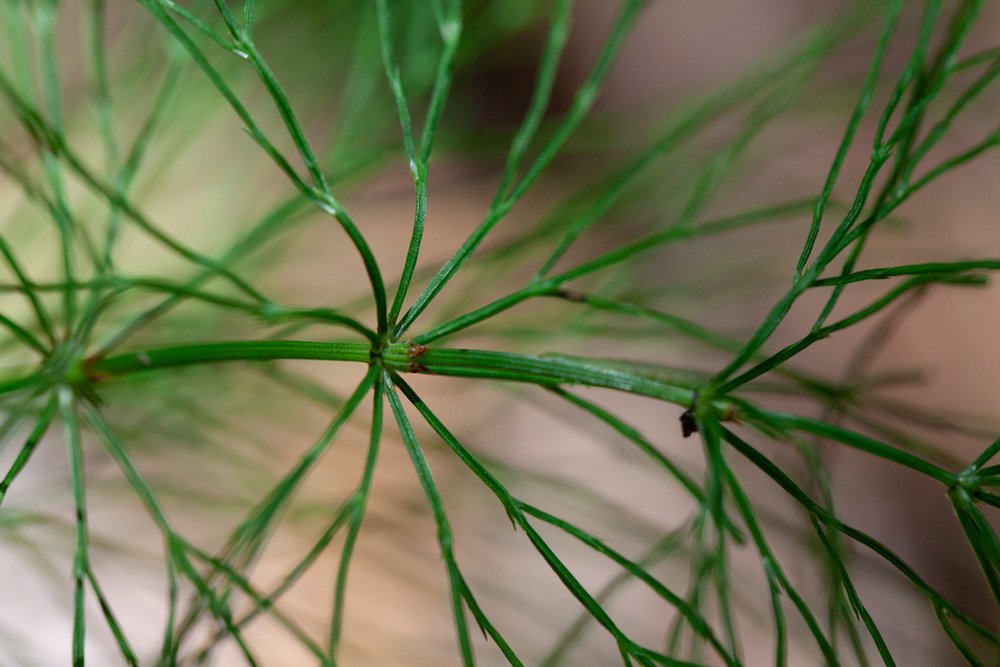
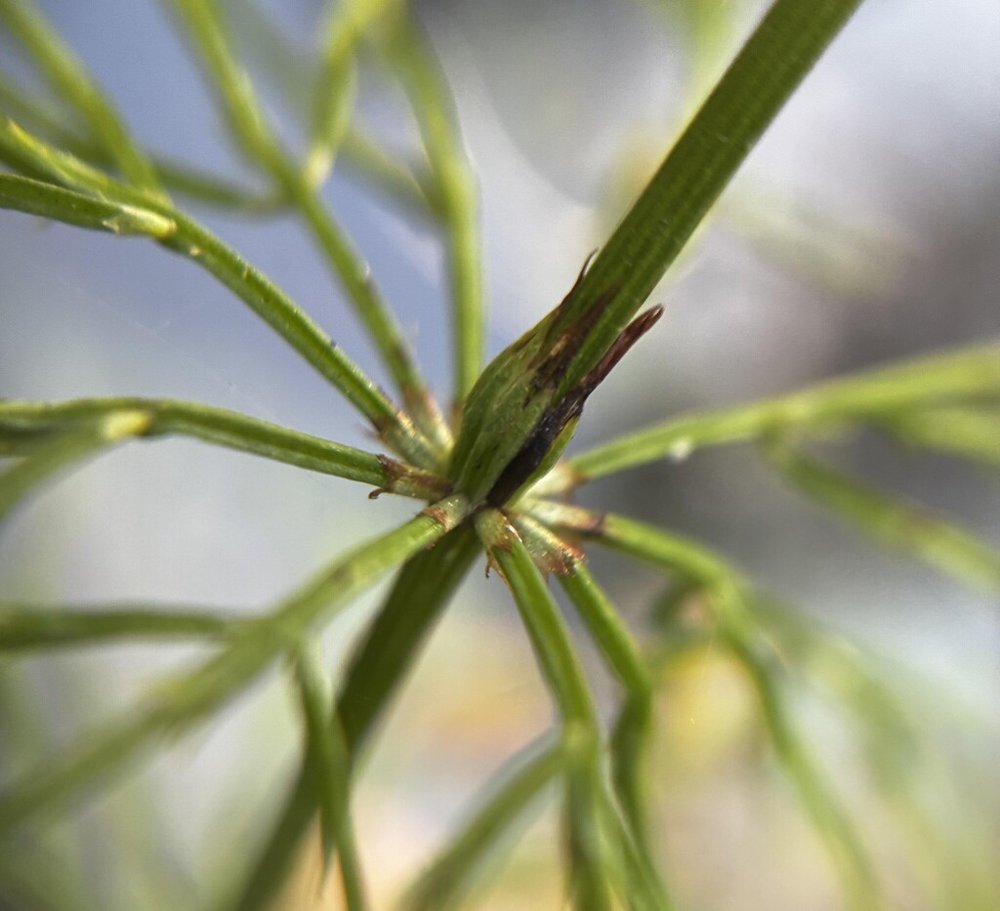
Look at the branches: they grow in regular whorls at each joint of the green stem, spread and often arch, and are themselves branched, and Minnesota Wildflowers says no other horsetail in North America has both branched branches and reddish sheath teeth. The sheath around each stem joint ends in 8 to 18 papery, reddish teeth stuck together in 3 or 4 large groups. In spring the fertile stems are pale pink to brownish and unbranched, with a blunt cone 2.5–4 cm (1–1½ in) long at the tip; after the spores are shed they turn green, grow branches and drop the cone. In the Flora of North America key, field horsetail and the other branched horsetails have dark, firm sheath teeth, separate or joined in more than 4 small groups, and branches that are not branched again, and field horsetail's fertile stems die back after shedding their spores.
When does it bloom?
No flowers; spore cones ripen in mid to late spring.
Where does it grow?
Moist forest, mostly along creeks, springs and seeps. In the Black Hills, herbarium labels record it on boggy and wet sandy ground along creeks, wooded creek banks with moist, rich, rocky soil, wet leaf mold in forest, saturated peat in a seepage area, low terraces shaded by birch and spruce, the openly wooded floodplain of a creek, and wet meadows, at about 1,220 to 2,130 m (4,000 to 7,000 ft). GBIF lists 52 Black Hills specimens, collected from 1892 to 2018.
Other horsetails in this guide
Sources: Flora of North America Vol. 2: Equisetum sylvaticum (R. L. Hauke), eFloras; Flora of North America Vol. 2: genus Equisetum, with key to species, eFloras; Minnesota Wildflowers: Equisetum sylvaticum (Woodland Horsetail); USDA PLANTS Database: Equisetum sylvaticum (EQSY); GBIF occurrence search: Equisetum sylvaticum, South Dakota and Wyoming herbarium specimens; Native American Ethnobotany Database (BRIT): Equisetum sylvaticum.