Stiffstem Flax Linum rigidum
Also called Large-flowered Yellow Flax, áta sosapina (Lakota), nabláǧa čhaŋȟlóǧaŋ nabláǧa (Lakota)
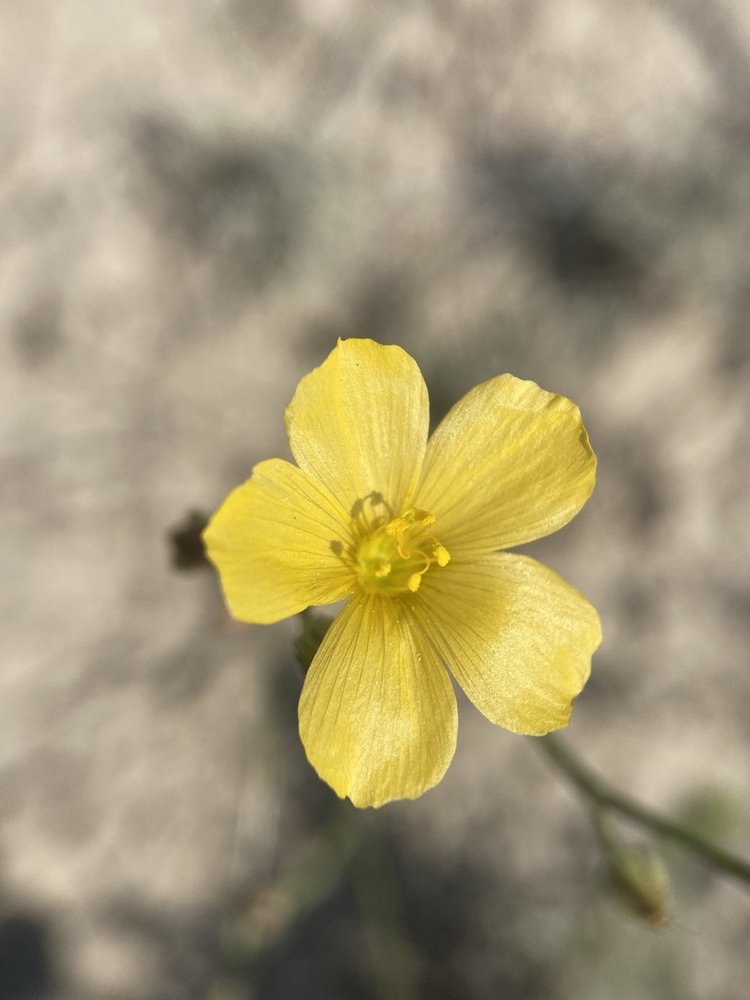
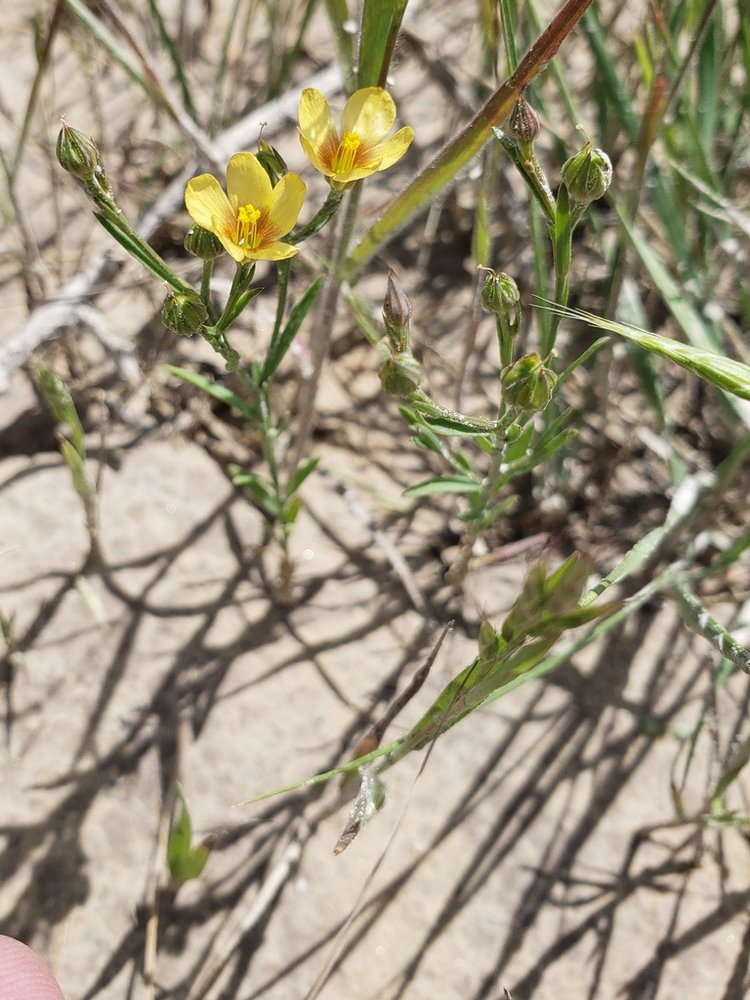
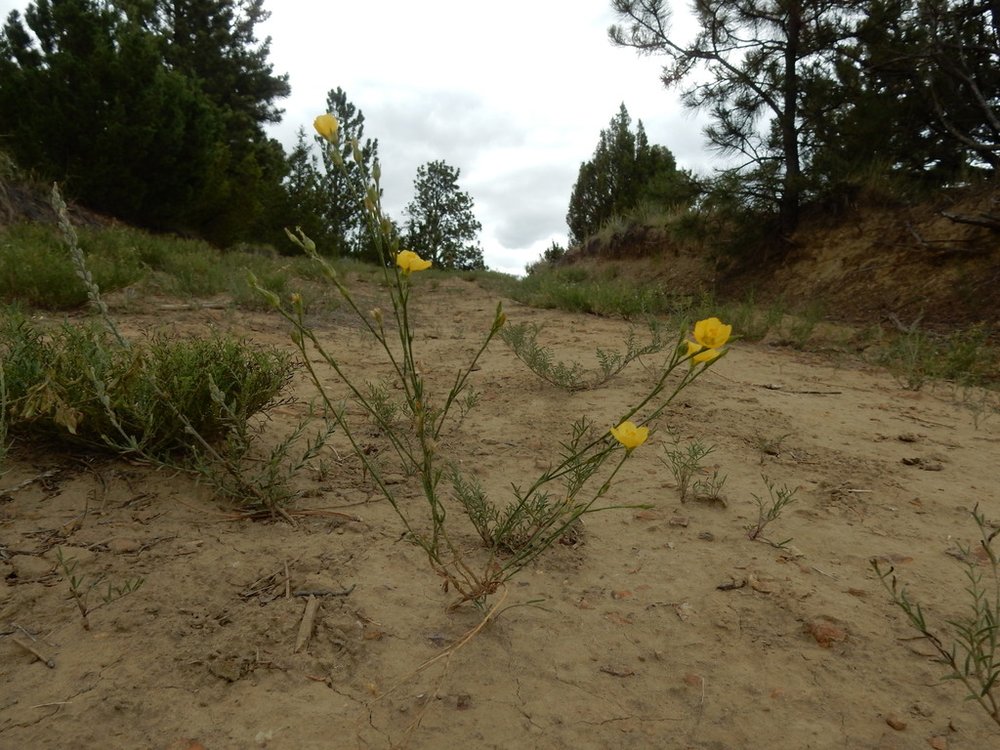
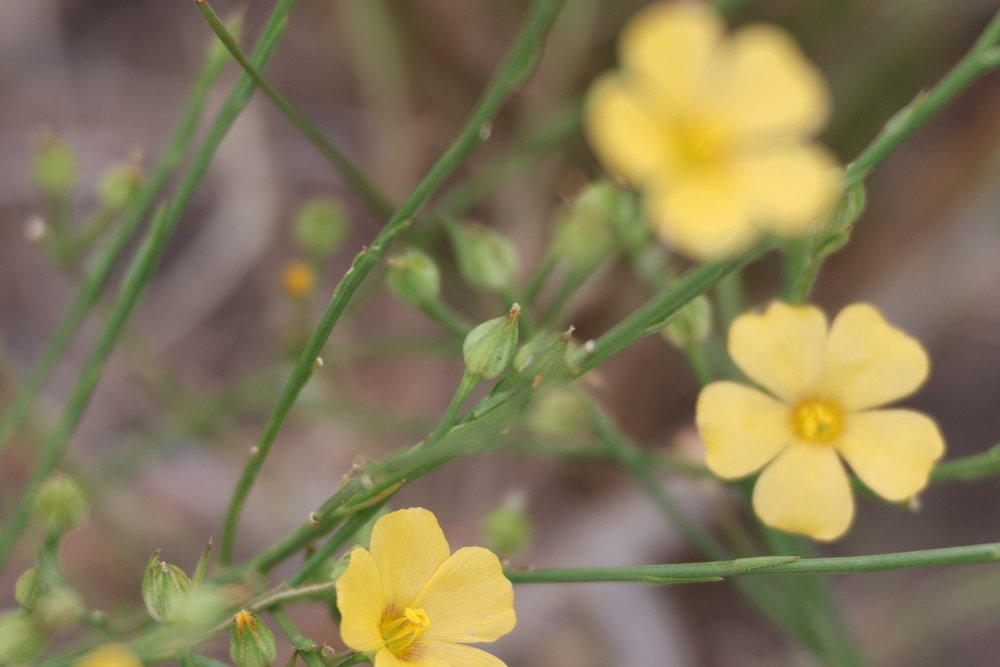
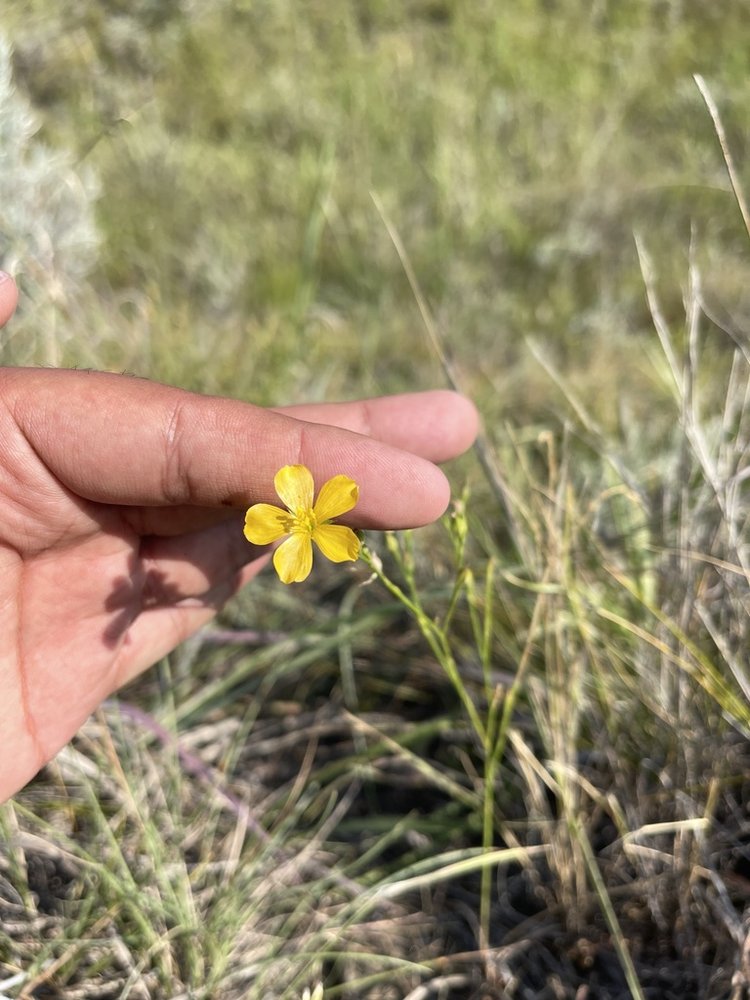
Stiffstem Flax (Linum rigidum) is a native annual with slender, branching stems and bowl-shaped yellow to coppery-orange flowers about 2–2.5 cm (¾–1 in) across, blooming from June into August. It grows in dry, open prairie and rocky grassland, and in the Black Hills the National Park Service lists it at Wind Cave National Park and Devils Tower National Monument.
Free photos from other sources
| Family | Linaceae · Flax |
|---|---|
| Status | Native annual |
| Blooms | June into August |
| Height | 15–50 cm (6–20 in) |
| Where | Dry, open prairie and rocky grassland on sandy, gravelly or rocky soil |
| Also called | Large-flowered Yellow Flax, áta sosapina (Lakota), nabláǧa čhaŋȟlóǧaŋ nabláǧa (Lakota) |
| Toxicity | Kansas Wildflowers says the plant is said to contain saponin, which can poison livestock, particularly sheep. |
| Traditional use | Black Elk and Flying By's 1998 list of Lakota plants records that the Lakota ate the seeds after roasting them. Moerman's database records that the Western Keres of Acoma and Laguna used an infusion of the plant for racers, to make them speedy (Swank 1932). |
Roots, seeds & germination
Seed: The egg-shaped capsule is 3.5–4.5 mm (about ⅛–³⁄₁₆ in) long, with walls so thin that the dark seeds show through, and splits into 5 segments with 2 seeds each. The seeds are 2.6–3.6 mm long (Flora of North America).
How do you identify Stiffstem Flax?
Look for a slender, erect plant with a loose, branching cluster of flowers near the top. Each flower has 5 broad, rounded petals, yellow to coppery yellow or orange, usually streaked or zoned with orange to red-brown at the base, with 5 narrow, glandular-toothed sepals less than half as long as the petals. The leaves are narrow, stiff and erect, about 1–3 cm (½–1¼ in) long and less than 2 mm wide, and the egg-shaped capsule splits into 5 two-seeded segments. The petals drop within a day or two, so the flowers are often gone by midday; the plant is easiest to spot in the morning. Minnesota Wildflowers separates it from Grooved Yellow Flax (Linum sulcatum) by its larger flowers, three-quarters to 1 inch across, against half an inch or less for that species.
When does it bloom?
June into August.
Where does it grow?
Dry, open ground on sandy, gravelly or rocky soil: Minnesota Wildflowers gives dry, sandy soil and open prairie, and Kansas Wildflowers gives prairies, disturbed ground and open wooded hillsides on sandy soils. Black Hills herbarium labels describe rocky open ground, rocky loam in open short-grass prairie at Wind Cave, dry pasture hills and a clay-loam south slope. The National Park Service lists it at Wind Cave and Devils Tower, and GBIF holds 17 herbarium specimens from Custer, Fall River, Pennington and Meade counties in South Dakota (1924 to 2004) and 3 from Crook County, Wyoming.
Other flaxes in this guide
Sources: Flora of North America Vol. 12: Linum rigidum (Pursh), eFloras; Minnesota Wildflowers: Linum rigidum (Stiffstem Flax); Kansas Wildflowers and Grasses: Stiffstem flax (Linum rigidum); Lady Bird Johnson Wildflower Center: Linum rigidum (Stiffstem Flax); USDA PLANTS Database: Linum rigidum (LIRI); NPSpecies checklist, Wind Cave National Park vascular plants; NPSpecies checklist, Devils Tower National Monument vascular plants; GBIF occurrence search: Linum rigidum herbarium specimens, Black Hills counties of South Dakota and Wyoming; GBIF specimen 2351147442: Fall River County 1929, rocky open ground; GBIF specimen 5103617100: Wind Cave National Park 1972, rocky loam in open short grass prairie; Culturally Important Plants of the Lakota (Black Elk and Flying By, 1998), entry 168, filed with the South Dakota PUC; Native American Ethnobotany Database (BRIT): Linum rigidum; South Dakota locally noxious weed list, updated 2024 (DANR); Wyoming Weed and Pest Council: Designated Weed List.