Scarlet Globemallow
Sphaeralcea coccinea
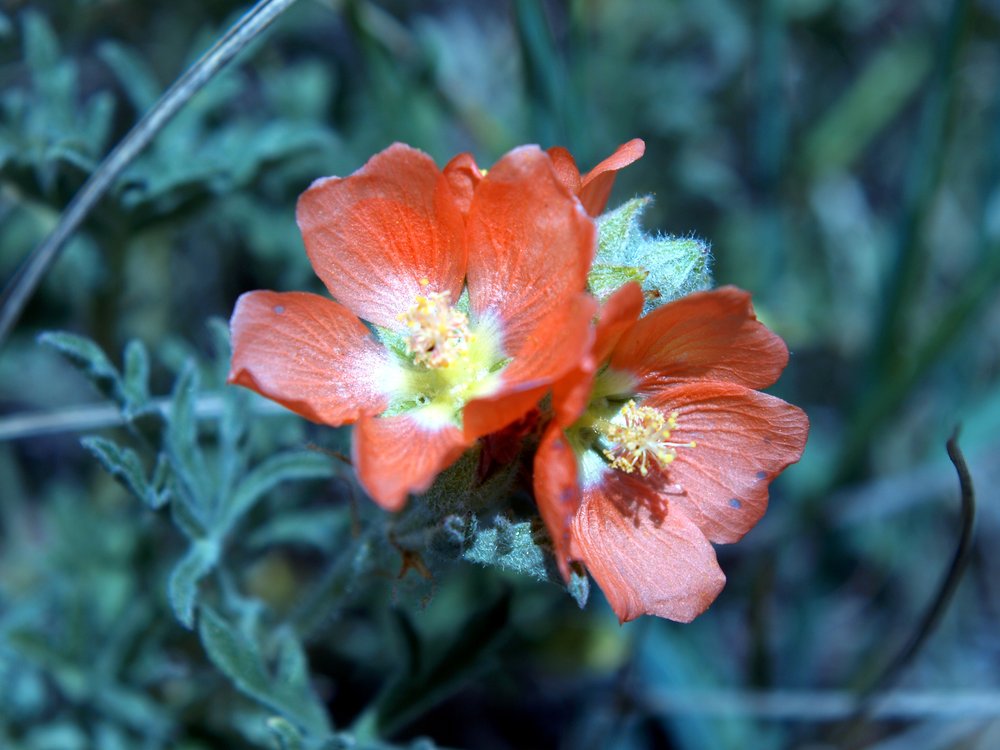
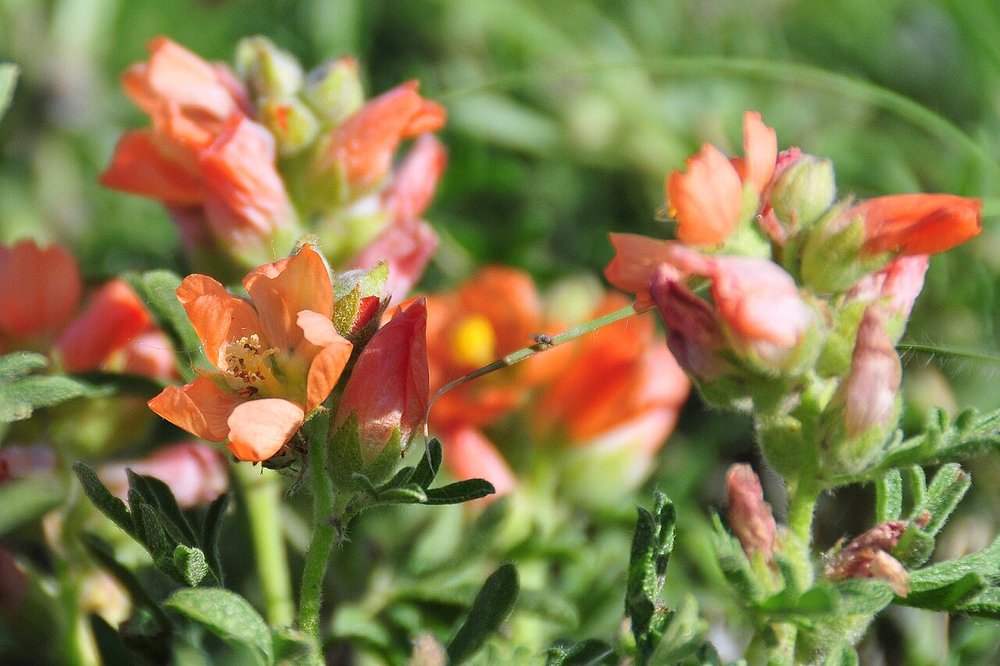
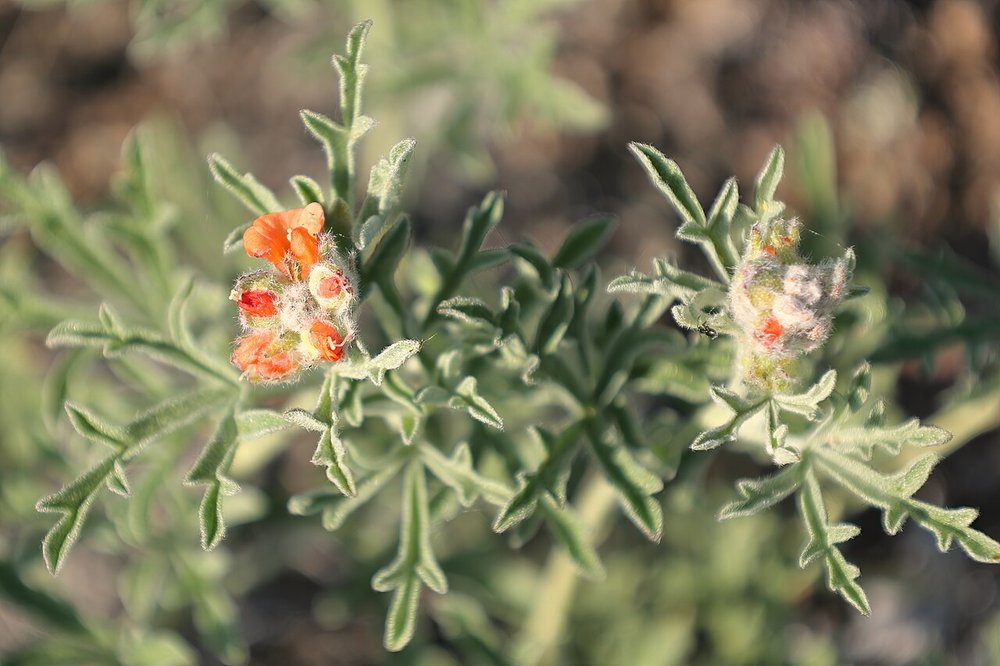
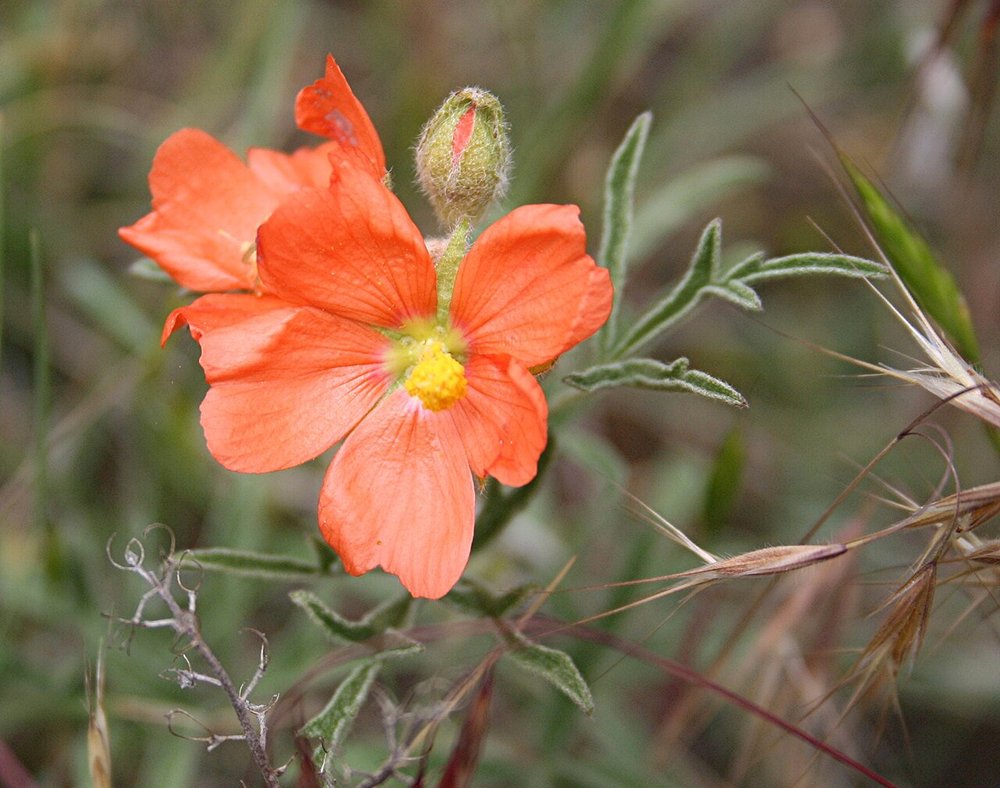
Scarlet Globemallow (Sphaeralcea coccinea) is a low native perennial of the mallow family, with gray, fuzzy, deeply cut leaves and clusters of brick-orange to salmon, cup-shaped flowers. It blooms mostly in June, from May into July, on dry, open prairie and grassy foothill slopes, and the National Park Service lists it at Jewel Cave, Wind Cave and Devils Tower in the Black Hills.
Free photos from other sources
| Family | Malvaceae · Mallow |
|---|---|
| Status | Native perennial |
| Blooms | May into July, peaking in June, with a few into September |
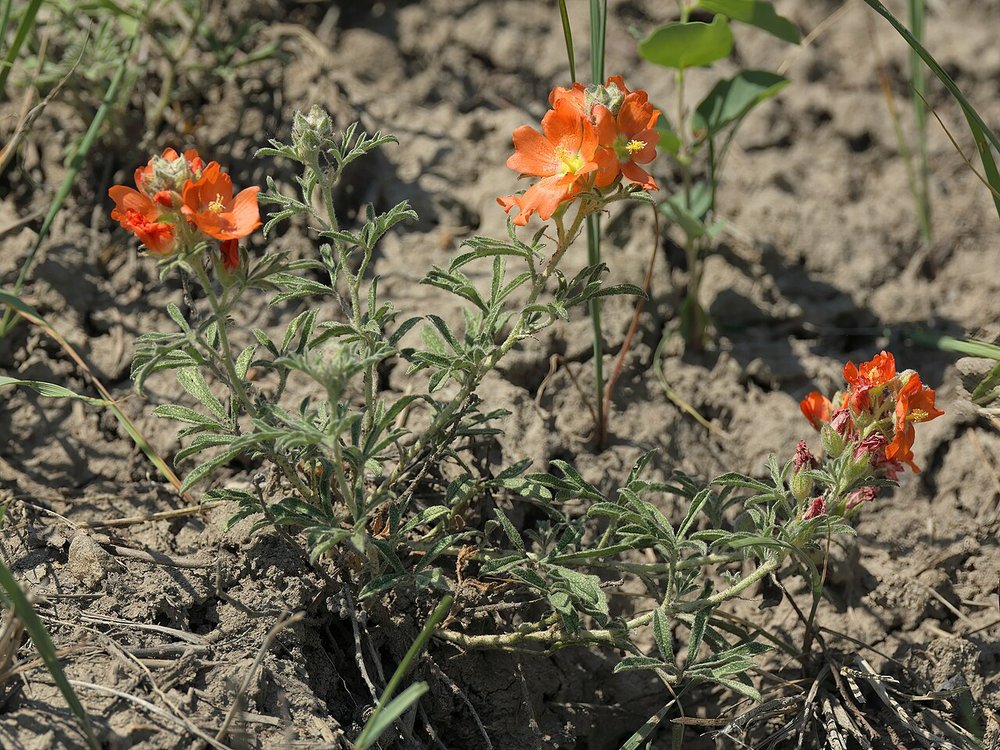
| Height | 10–40 cm (4–16 in) |
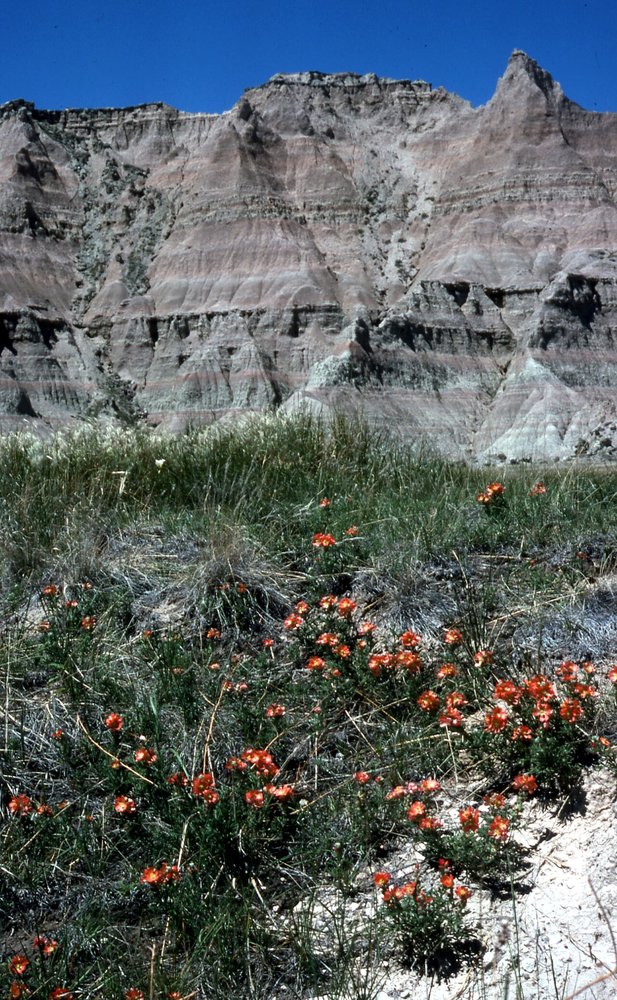
| Where | Dry, open prairie, grassy foothill slopes, prairie dog towns and roadsides, in full sun |
| Also called | Cowboy’s Delight, Red False Mallow, Copper Mallow, Common Globemallow, heyókȟa tȟapȟéžuta (Lakota) |
| Synonym | Malva coccinea, Malvastrum coccineum, Sida coccinea |
| Toxicity | The USDA plant guide says the star-shaped hairs on the seed can badly irritate the eyes. |
| Traditional use | Black Elk and Flying By’s 1998 Culturally Important Plants of the Lakota says heyoka, Lakota medicine men sometimes described as “contrary”, coated their hands and arms with a gel boiled from the root so they could reach into boiling water without being burned. Gilmore’s 1919 account of Dakota use says the plant was chewed into a paste for the same purpose and was put on inflamed sores and wounds as a cooling salve. |
Roots, seeds & germination
Root: A deep, stout, woody taproot; the main root can run about 90 cm (3 ft) down before branching. Short rhizomes 2–10 cm (1–4 in) below the surface send up new shoots, so one plant often becomes a small patch that survives drought, fire and grazing.
Seed: The fruit is a flattened, button-shaped ring of 10–14 small, hairy, wedge-shaped segments, each holding one gray to black seed. The seeds have a hard coat and ripen unevenly from July into August.
Germination: The hard seed coat keeps water out, so the seed must be scarified before it sprouts. SDSU suggests rubbing it lightly with sandpaper and then giving it 30 days of moist cold, or sowing it outdoors in fall, about 3 mm (⅛ in) deep. Germination is usually low.
How do you identify Scarlet Globemallow?
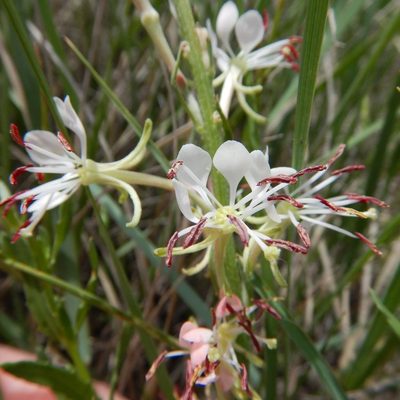
Look for brick-orange, coral or salmon flowers with five broad petals, often notched at the tip, around a short column of joined stamens with yellow anthers. The flowers come a few at a time in short, crowded clusters at the stem tips and in the upper leaf angles. The small leaves, 1–4 cm (½–1½ in), are gray-green and cut into three to five narrow, forked lobes like a bird’s foot, and the whole plant looks frosty gray from tiny star-shaped hairs. Scarlet Beeblossom grows on the same dry ground but has four narrow petals that open white and fade to pink or red, on a spike, with narrow, unlobed leaves.
When does it bloom?
May into July, peaking in June, with a few into September.
Where does it grow?
Dry, open mixed-grass and shortgrass prairie, grassy and rocky foothill slopes, open edges of ponderosa pine, roadsides and other disturbed ground, in full sun. It is especially common in prairie dog towns, where it is a favorite food of the prairie dogs. In the Black Hills it is a plant of the lower, drier, grassy country more than the high, wooded center. The 1986 Jewel Cave survey lists it, the species lists for Wind Cave and Devils Tower include it, and herbarium specimens come from all five South Dakota Black Hills counties and Crook and Weston counties, WY, including Custer State Park.
Other flowers to compare


Sources: Black Elk, L. & W. Flying By. 1998. Culturally Important Plants of the Lakota (Sitting Bull College), entry 294; Gilmore, M. R. 1919. Uses of Plants by the Indians of the Missouri River Region (33rd Annual Report, Bureau of American Ethnology), p. 103; USDA NRCS Plant Guide: Scarlet Globemallow, Sphaeralcea coccinea (St. John & Ogle); USDA PLANTS Database profile: Sphaeralcea coccinea (SPCO); Tollefson, J. 2006. Sphaeralcea coccinea. Fire Effects Information System, USDA Forest Service; Flora of North America, vol. 6: Sphaeralcea coccinea; Reese, R. N. Malvaceae: Sphaeralcea coccinea. South Dakota Native Plant Research, SDSU Open PRAIRIE; Page, Goodwin & West. 1966. Germination requirements of scarlet globemallow. Journal of Range Management 19:145–146; Native Plant Society of Texas: Scarlet Globemallow; Marriott, H. & R. Hartman. 1986. A Survey of the Vegetation of Jewel Cave National Monument; NPSpecies checklist, Wind Cave National Park vascular plants; NPSpecies checklist, Jewel Cave National Monument vascular plants; NPSpecies checklist, Devils Tower National Monument vascular plants; NPGallery: Scarlet Globemallow, Wind Cave National Park; GBIF occurrence records, Sphaeralcea coccinea in South Dakota (herbarium specimens); GBIF occurrence records, Sphaeralcea coccinea in Wyoming (herbarium specimens).