Red Elderberry Sambucus racemosa
Also called Red elder, Red-berried elder, Stinking elderberry
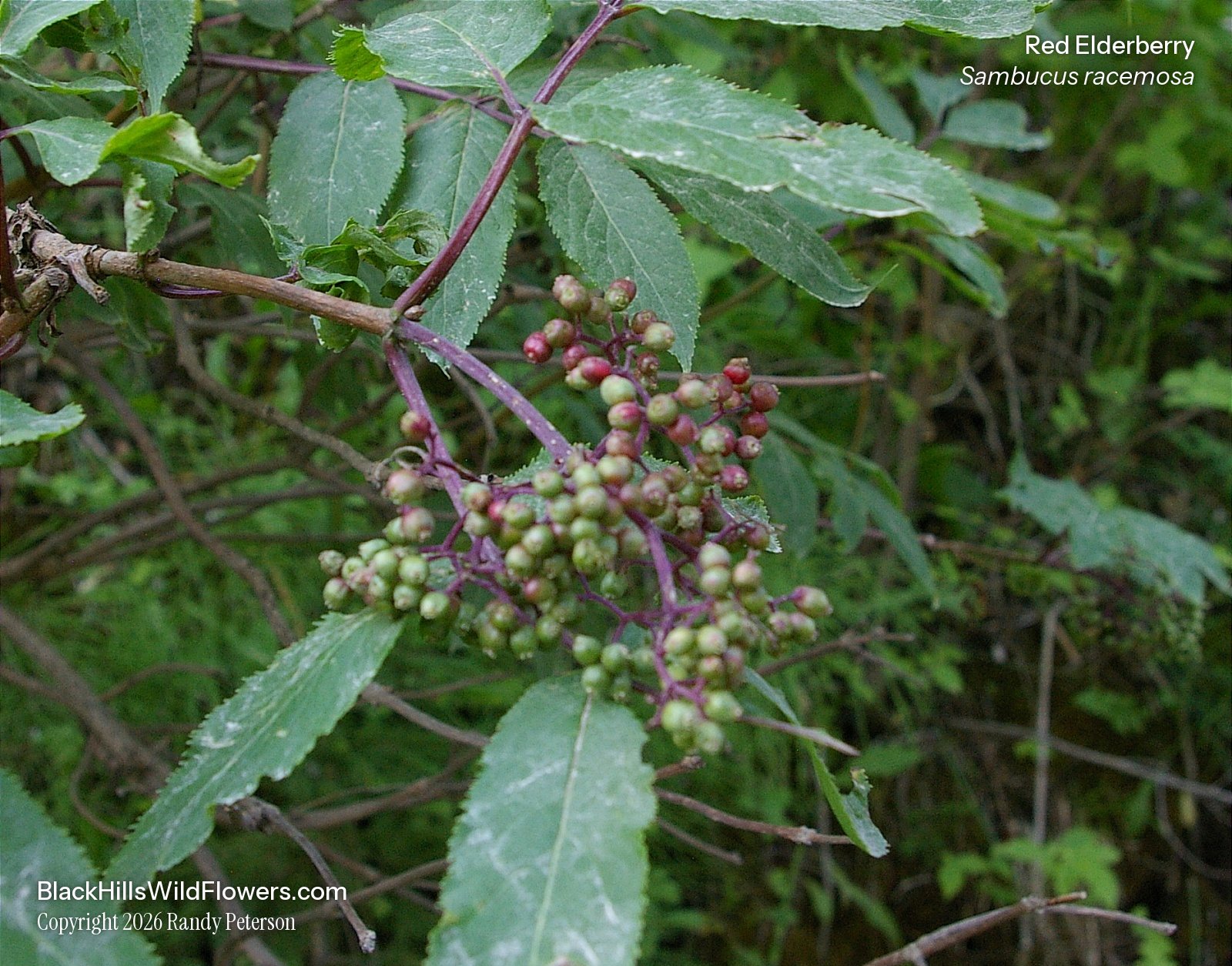
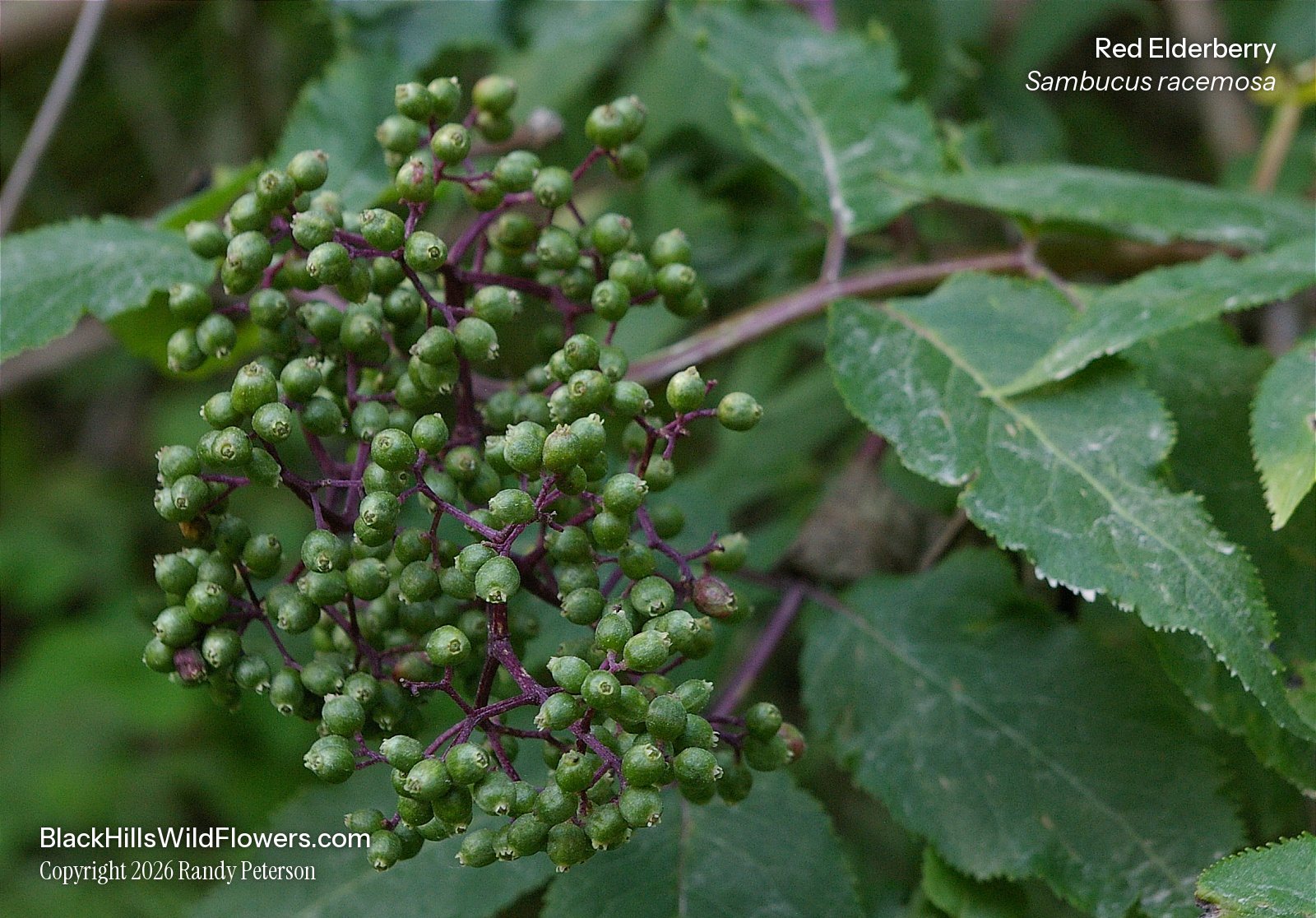
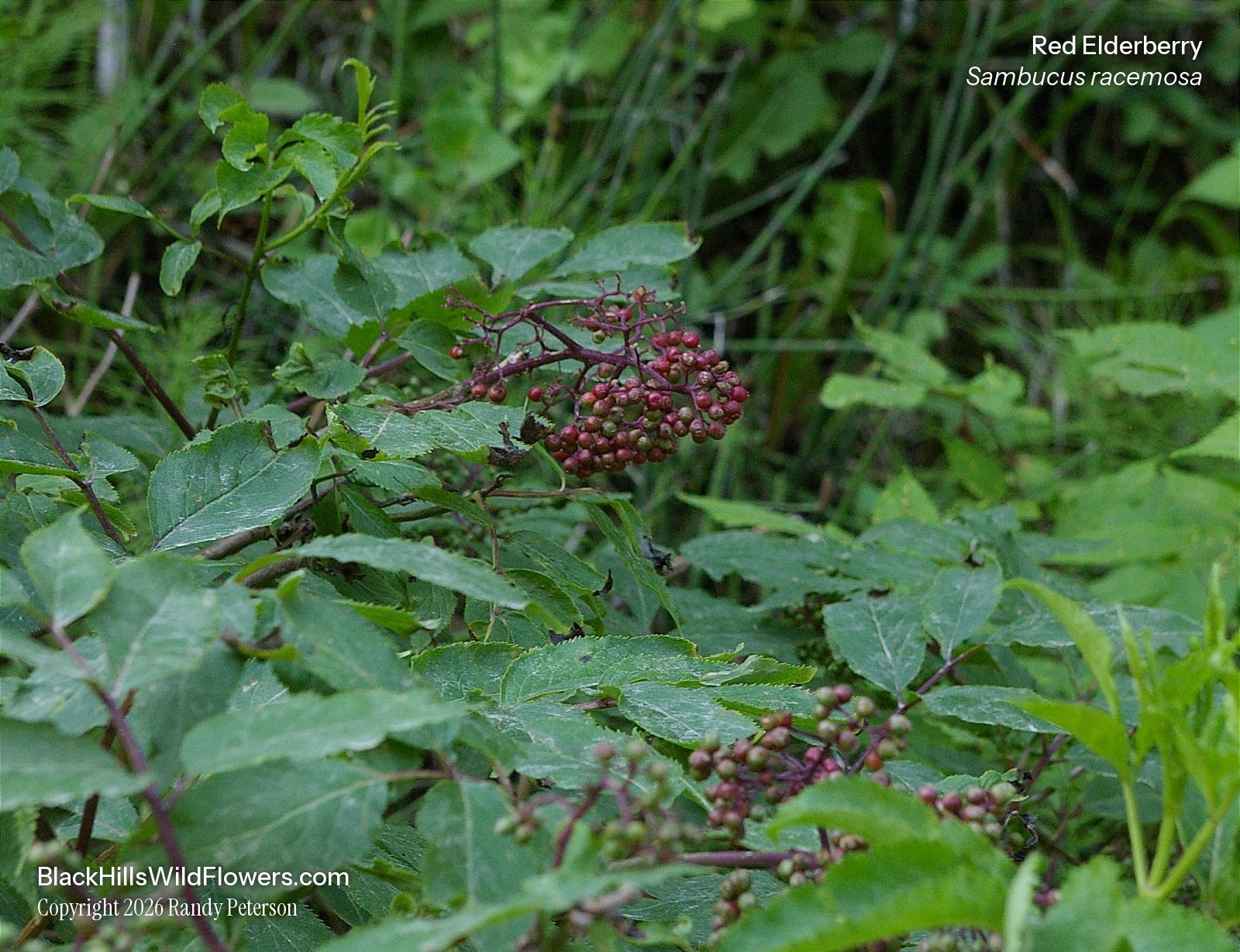
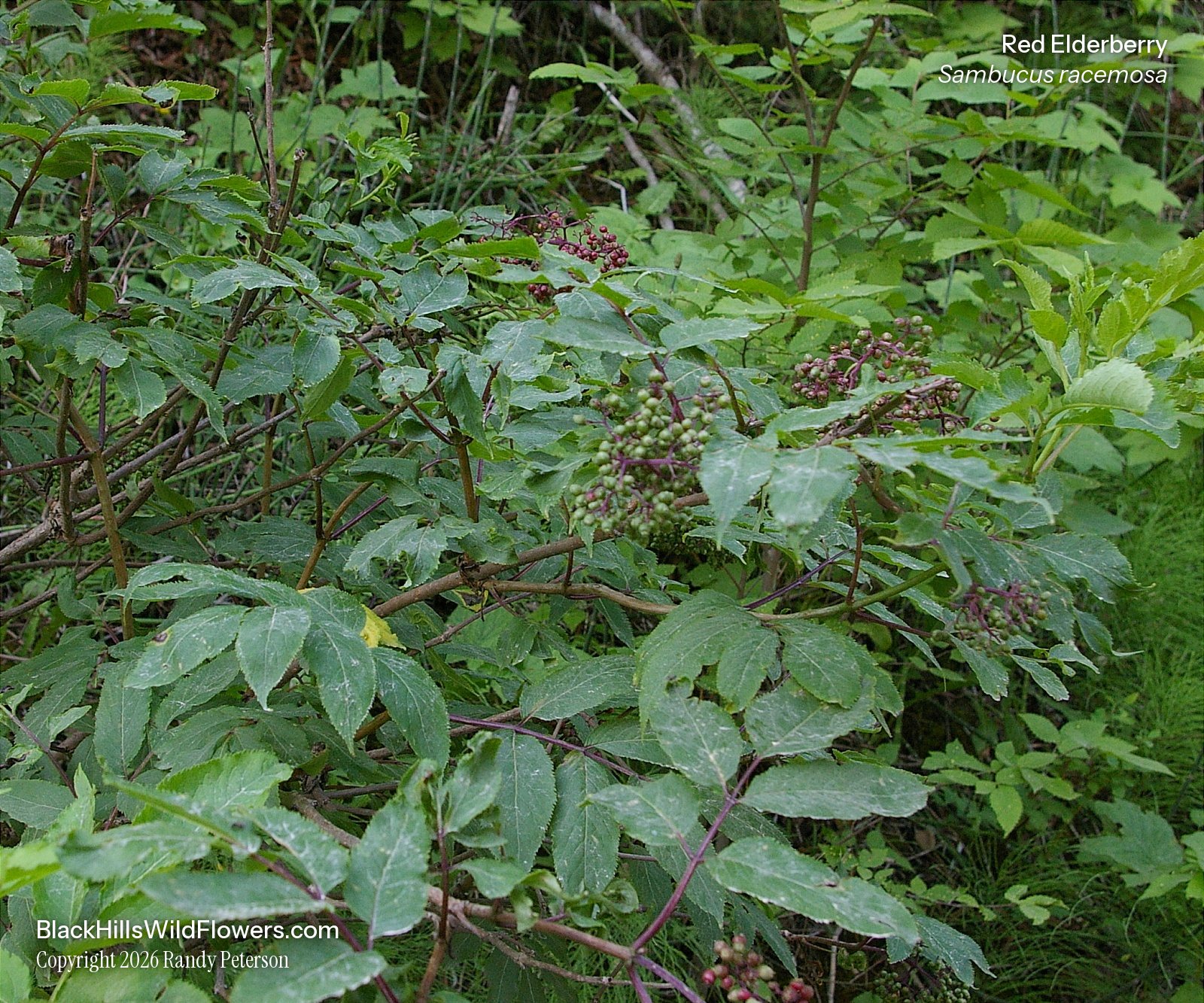
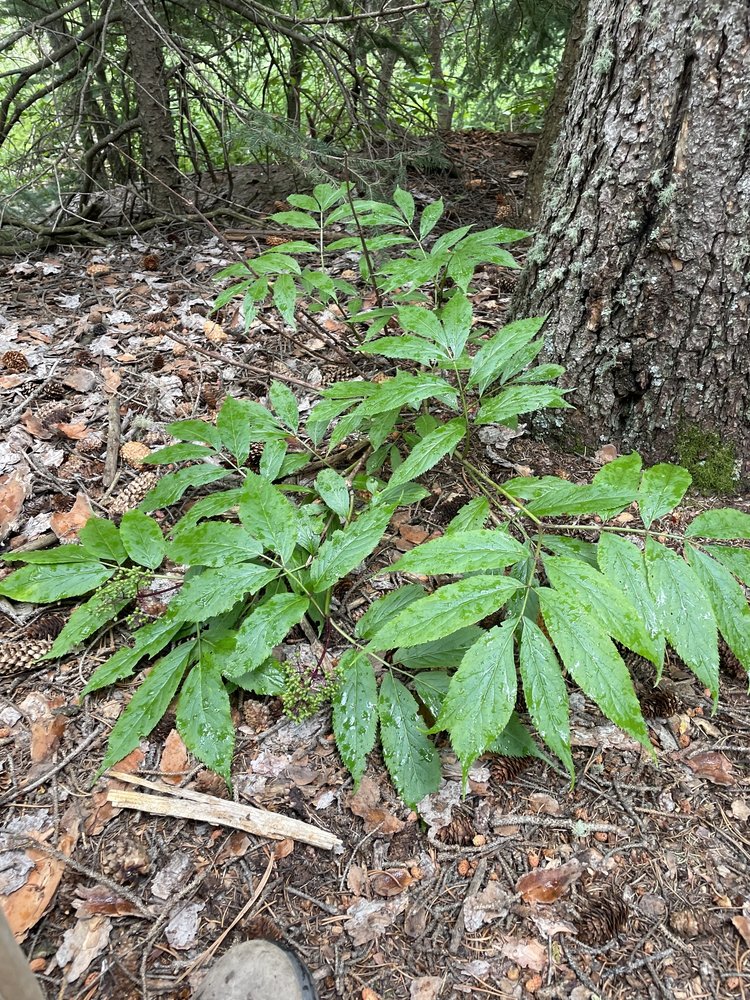
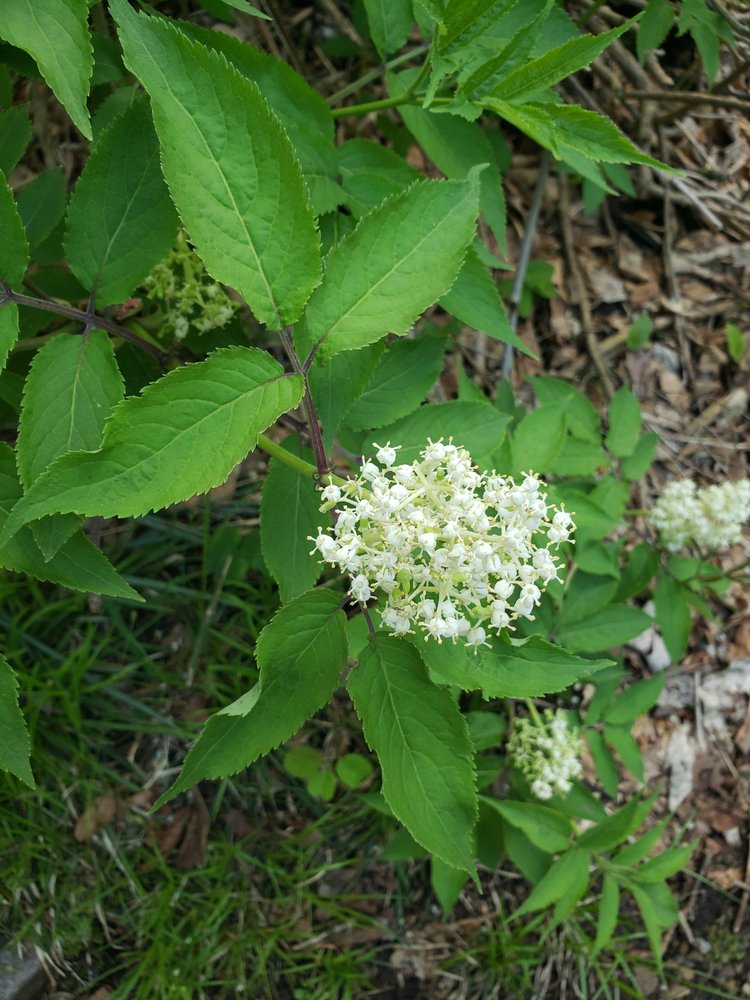
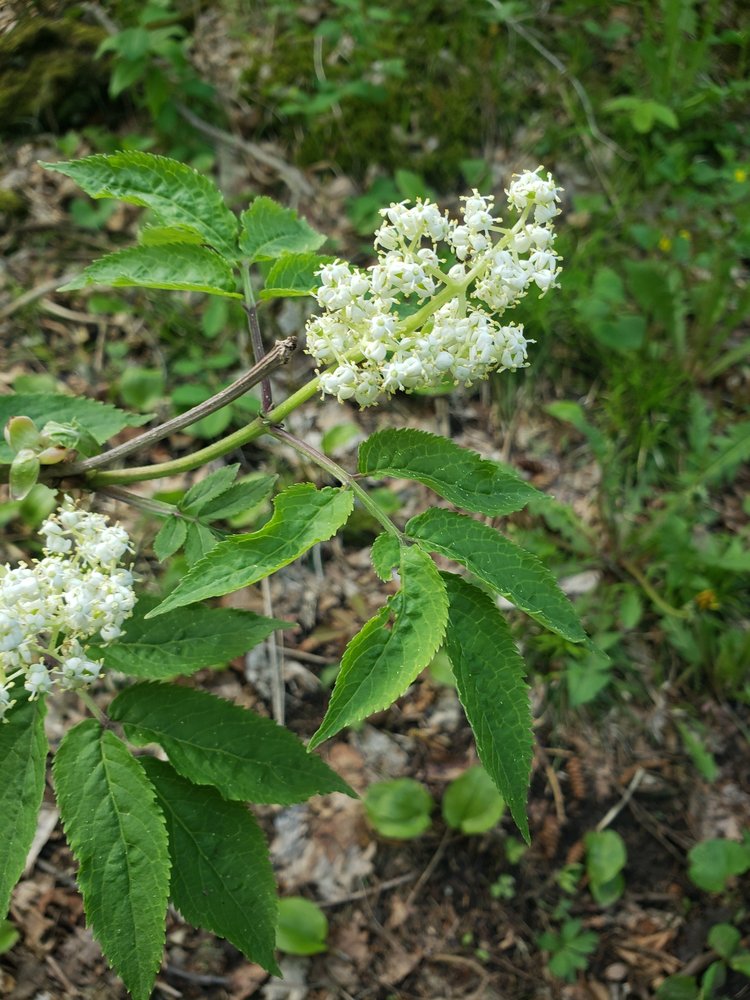
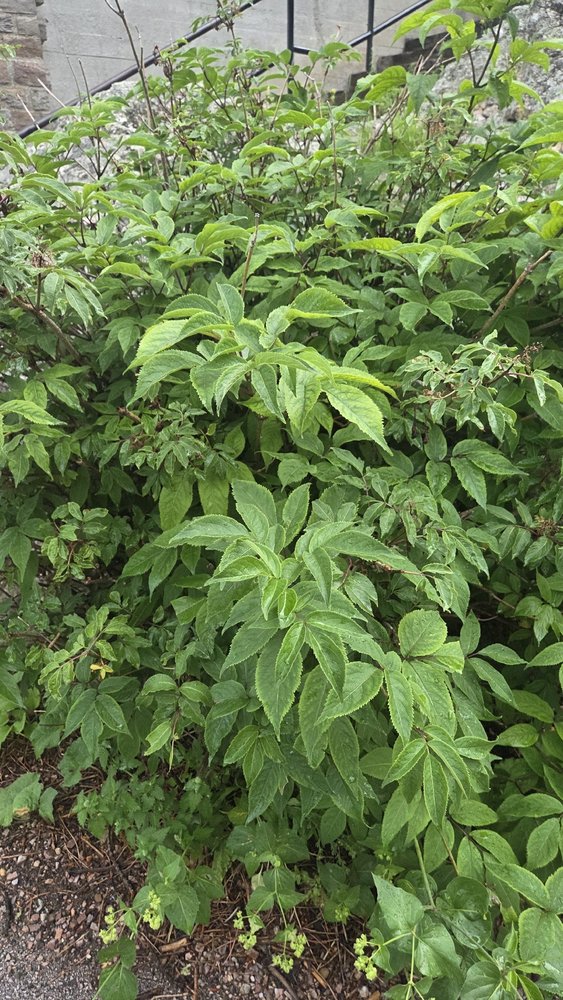
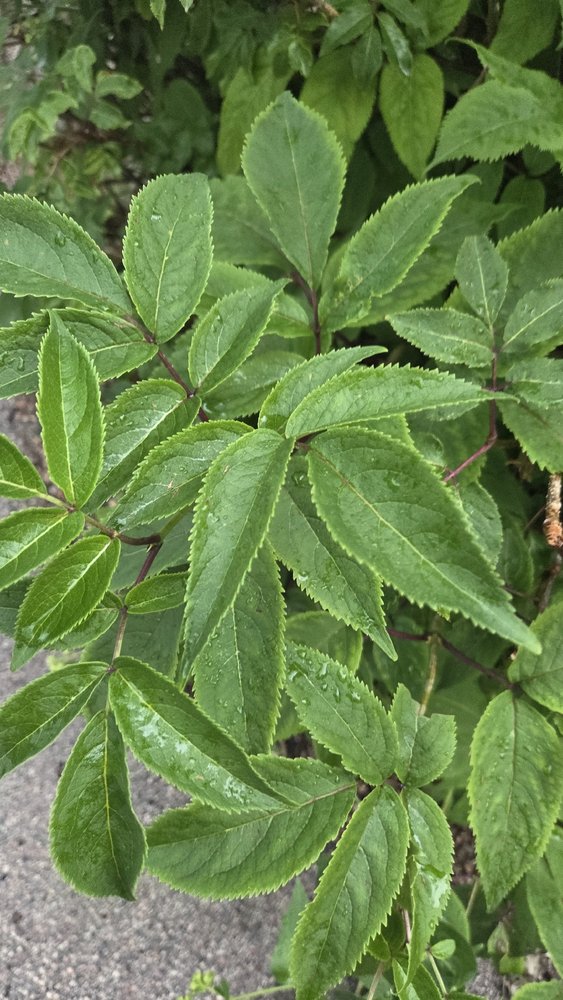
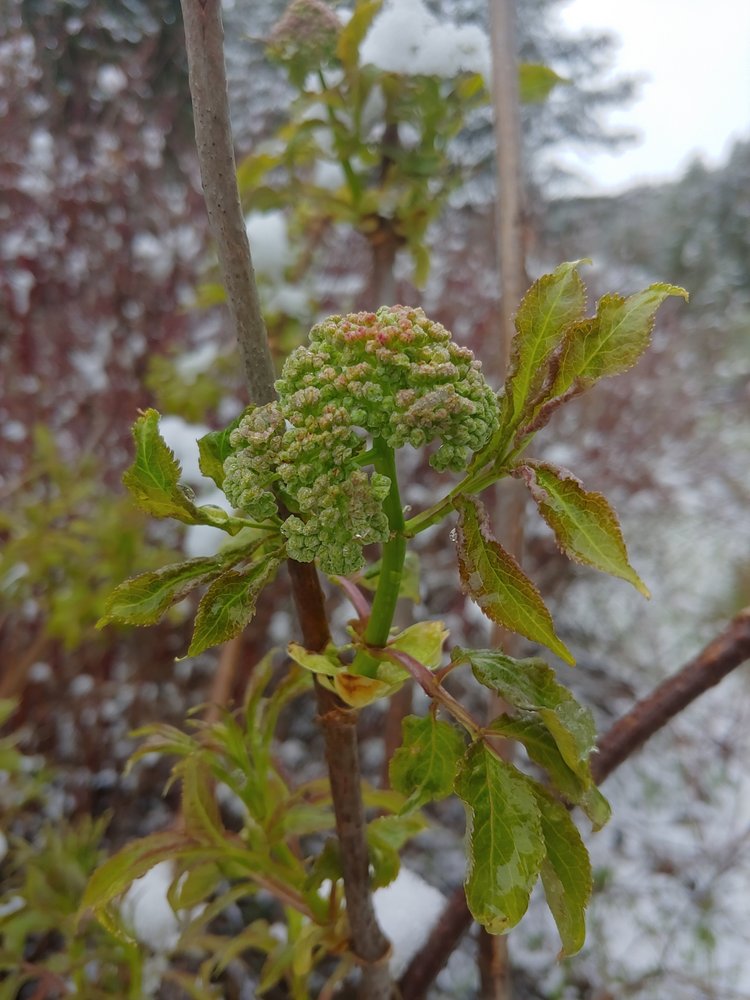
Red Elderberry (Sambucus racemosa) is a native shrub 1–4 m (3–13 ft) tall with opposite, pinnately compound leaves of 5 to 9 toothed leaflets, soft pithy stems, and cone-shaped clusters of small creamy-white flowers from May into July that become bright red berries 5–8 mm across by August. In the Black Hills it grows in moist woods, along streams and at forest edges, where herbarium specimens go back to 1892 and the National Park Service lists it at Mount Rushmore. Photographed in the Black Hills.
Free photos from other sources
| Family | Adoxaceae · Moschatel |
|---|---|
| Status | Native deciduous shrub |
| Blooms | May into July, as the leaves unfold; the red berries ripen in August and September and can hang on into winter |
| Height | 1–4 m (3–13 ft) |
| Where | Moist woods, forest edges, stream banks, seeps, canyon floors and shaded slopes |
| Also called | Red elder, Red-berried elder, Stinking elderberry |
| Synonym | Sambucus pubens, Sambucus microbotrys, Sambucus racemosa subsp. pubens, Sambucus racemosa var. microbotrys |
| Toxicity | The berries or their seeds can cause vomiting and diarrhea, especially when not fully ripe, and other parts of the plant may be poisonous year-round. |
Roots, seeds & germination
Root: A fibrous root system with occasional spreading rhizomes (underground stems), which is how one plant becomes a thicket. The roots are little studied; an Ontario study found highly branched side roots, and in northern Utah the rhizomes and roots reached 1 m (3 ft) deep. The shrub sprouts from the root crown and rhizomes after its stems are killed back, and it also layers where branches touch the ground, and sprouting, not seed, is its usual way of regenerating.
Seed: Each berry holds 3 to 5 small stone-like seeds. It usually bears a good crop every year; a Utah study counted 100 to 400 flowers per cluster, 60 to 90 percent of them setting fruit, and 74 to 91 percent of the filled seeds viable. Birds and mammals eat the berries and spread the seed, which forms a seed bank in the litter and the top 10 cm (4 in) of soil.
Germination: The seed is dormant in two ways, in the embryo and from a hard seed coat. Fire, passage through a bird or bear, or a cold, moist winter (stratification) can break the dormancy, and seed usually sprouts the spring after it falls, though seed dispersed or sown in late fall may wait until its second spring. SDSU recommends 60 to 90 days of cold, moist stratification before spring sowing, or sowing in fall, and says the shrub can also be grown from softwood cuttings, layering or root suckers.
How do you identify Red Elderberry?
Start with the leaves: they come in opposite pairs and each is pinnately compound, 15–30 cm (6–12 in) long, with 5 to 9 (usually 5 or 7) lance-shaped leaflets 5–12 cm (2–5 in) long, finely toothed and drawn to a point, paler and finely hairy on the veins beneath. The stems are soft and pithy, barely woody; a first-year twig is green with creamy white pith, and in its second year the bark turns brownish gray and the pith orange-brown. The buds are large and nearly round, the old bark is gray-brown with shallow fissures and thin plate-like scales, and crushed leaves, twigs and flowers smell foul. The flowers open as the leaves unfold, in dense egg-shaped to pyramidal clusters 3–20 cm (1–8 in) long that stand up or lean out from the branch tips, each flower creamy white, about 6 mm (¼ in) across, with 5 petals and 5 stamens. The berries are bright red, round, 5–8 mm, each with 3 to 5 stone-like seeds. Minnesota Wildflowers separates it from Common Elderberry by the flower clusters, which in Common Elderberry are large and flat-topped and bloom much later, and by the pith, which stays white in Common Elderberry's two-year-old branches but turns orange-brown in Red Elderberry's.
When does it bloom?
May into July, as the leaves unfold; the red berries ripen in August and September and can hang on into winter.
Where does it grow?
Moist woods and thickets, forest edges, stream banks, seeps, canyon floors and shaded north slopes, in rich, moist, well-drained soil under partial shade. SDSU's native plant page places it in the Black Hills in moist woodlands, forest edges, stream banks and thickets. Herbarium labels from about 1,130 to 1,800 m (3,700 to 5,900 ft) describe canyon floors and streamsides under white spruce, paper birch and ironwood, steep, moist, rocky wooded hillsides, seeps, a shaded cliff base, white spruce forest in a steep canyon, and the edge of a spring; an 1892 collection from the granite high country was labeled 6,000 to 7,000 feet. They come from Lawrence, Pennington, Custer and Meade counties, beginning in 1892, and from Crook and Weston counties in Wyoming. The National Park Service lists it at Mount Rushmore National Memorial, and iNaturalist holds 77 research-grade Black Hills records.
Sources: SDSU Open PRAIRIE: Caprifoliaceae: Sambucus racemosa (R. Neil Reese); USDA Forest Service Fire Effects Information System: Sambucus racemosa (Fryer 2008); Montana Field Guide: Black Elderberry (Red Elderberry), Sambucus racemosa; Minnesota Wildflowers: Sambucus racemosa (Red-berried Elder); NPSpecies checklist, Mount Rushmore National Memorial vascular plants; GBIF occurrence search: Sambucus racemosa, South Dakota and Wyoming herbarium specimens; GBIF specimen 5895792377: Custer County, SD, 1892, "Alt. 6000-7000 feet"; GBIF specimen 5159119242: Mount Rushmore National Memorial, 1989, "along spring"; GBIF specimen 2862184600: Lawrence County, SD, 2004, "narrow canyon with Picea glauca, Ostrya virginiana"; iNaturalist: research-grade Sambucus racemosa observations in the Black Hills.