Gilled Polypore
Trametes betulina
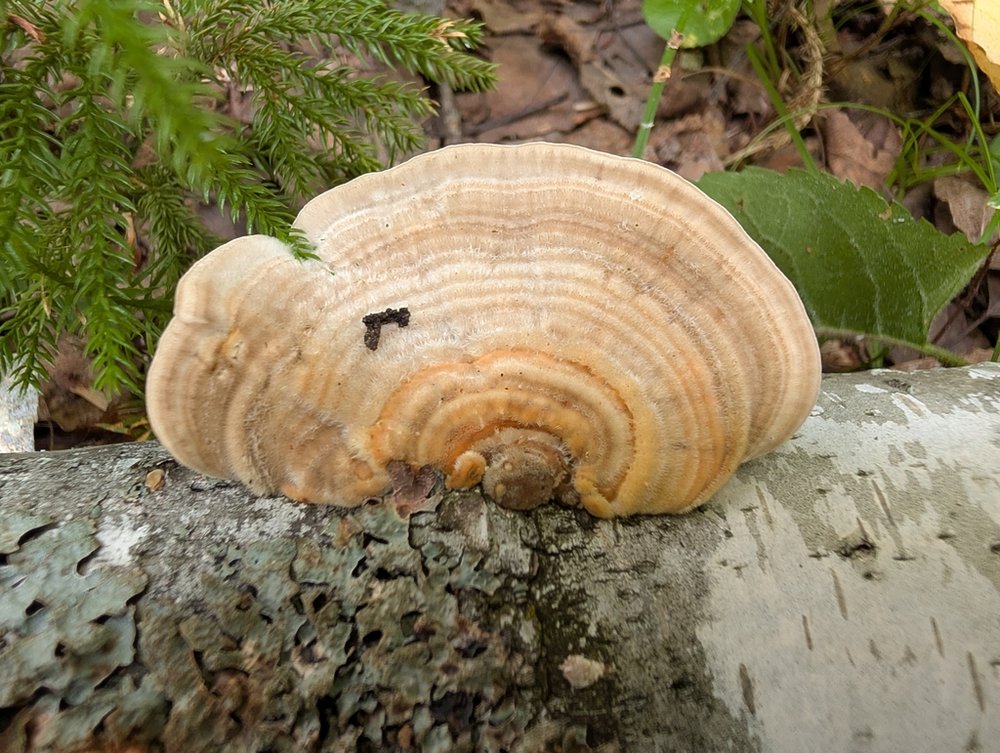
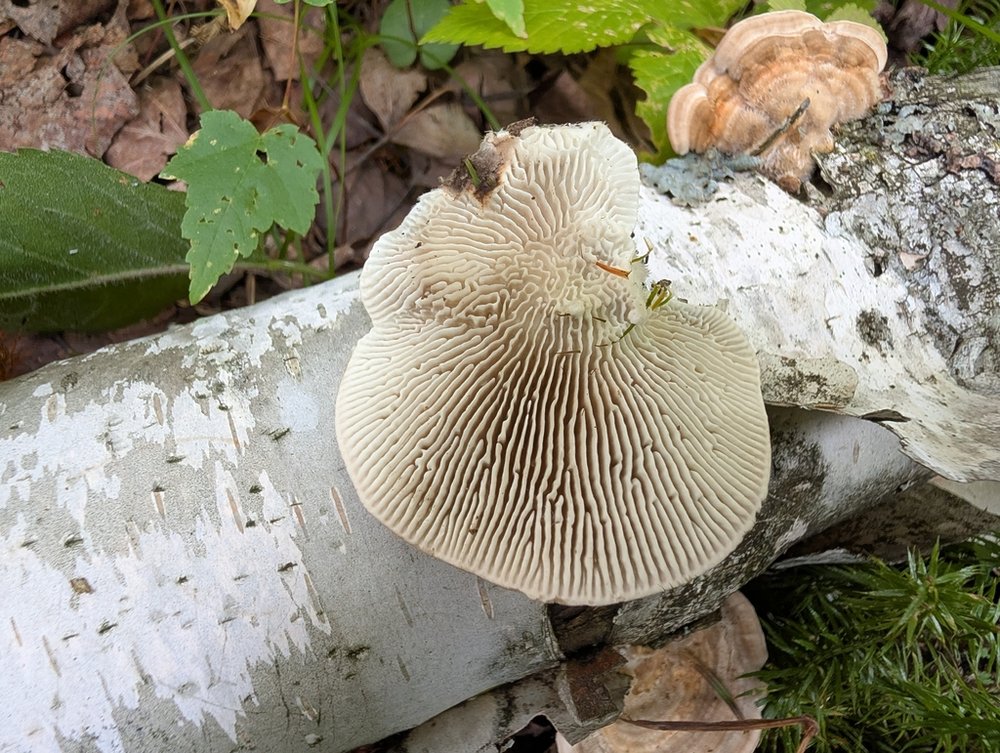
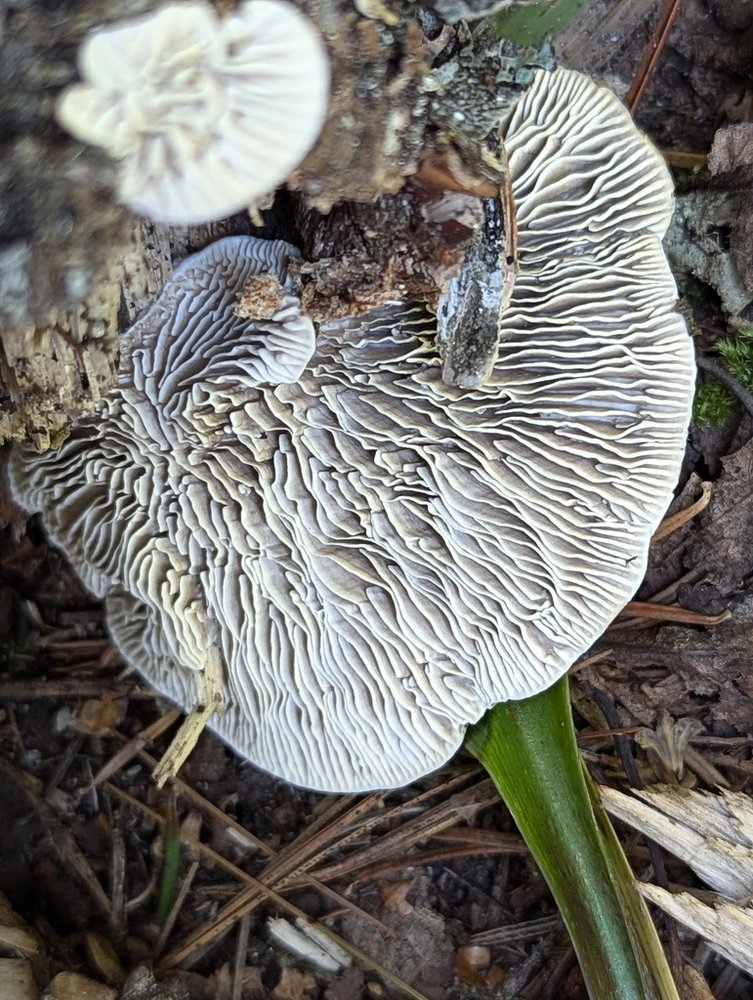
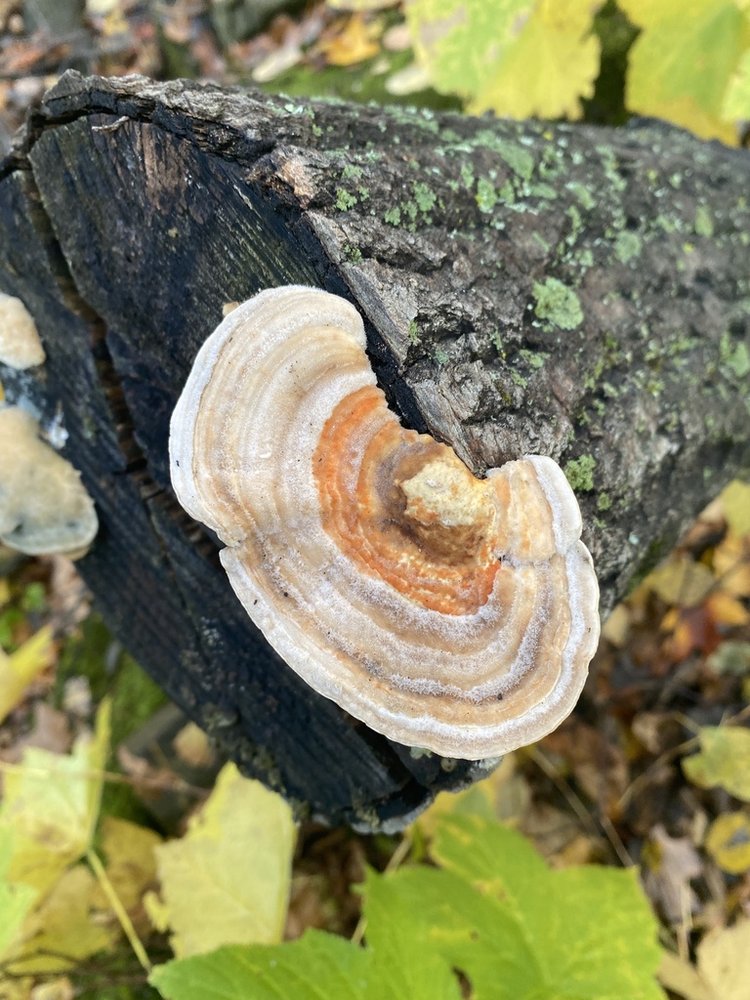
Gilled Polypore (Trametes betulina) is a tough, hairy bracket fungus whose zoned top looks like Turkey Tail, but whose underside has white gills instead of pores. It grows on dead hardwood, and Black Hills herbarium specimens from 1918 to 1960 include one on quaking aspen and one on birch; iNaturalist has 3 research-grade Black Hills records, July to September.
Free photos from other sources
| Family | Polyporaceae · Polypores |
|---|---|
| Type | Shelf fungus |
| Season | Summer into fall; Black Hills specimens and research-grade iNaturalist records date from July to September |
| Size | Cap 1–10 cm (½–4 in) across |
| Grows on | Dead hardwood logs and stumps, including aspen and birch; now and then conifer wood |
| Spore print | White |
| Also called | Multicolor Gill Polypore, Birch Mazegill |
| Synonym | Lenzites betulinus, Daedalea betulina |
| Eating | This guide doesn't say which mushrooms are safe to eat. |
| Note | Many guides call it Lenzites betulinus. |
How it lives
A saprobe: it lives on dead wood and causes a straw-colored white rot of the sapwood. White-rot fungi attack both main parts of wood, cellulose and lignin, and leave a whitish or light-colored residue. The brackets are annual.
How do you identify Gilled Polypore?
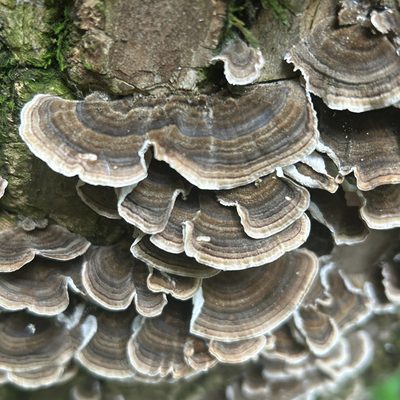
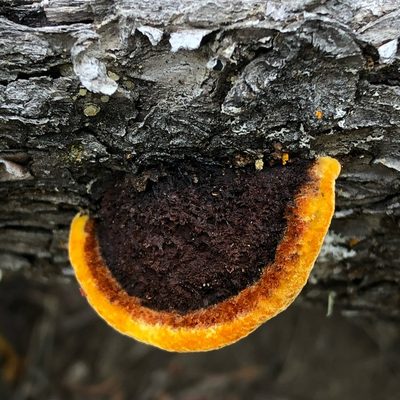
Look for a stemless bracket 1–10 cm (½–4 in) across, semicircular to kidney-shaped, flexible and very tough, alone or in overlapping clusters. The top is densely velvety to hairy, with concentric zones of whitish, gray, brown and cinnamon, often radially bumpy, and it can turn green with algae as it ages. Turn it over: the underside has true gills, not pores. They are white, becoming ivory, tough and sharp-edged, 1 cm (⅜ in) or more deep, and they don't bruise. The flesh is white and very tough and corky. From above it looks just like Turkey Tail, but Turkey Tail has pores underneath, not gills. Conifer Mazegill also has gills under a hairy cap, but its flesh is rusty brown, while Gilled Polypore's flesh is white.
When can you find it?
Summer into fall; Black Hills specimens and research-grade iNaturalist records date from July to September.
Where does it grow?
On dead hardwood logs and stumps, and now and then on conifer wood. In the Black Hills, herbarium specimens filed as Lenzites betulinus date from 1918 to 1960: one collected in 1918 in the Custer area was on quaking aspen, and one collected in Custer County in 1960 was on birch. Mount Rushmore's species list includes it, as Lenzites betulina. iNaturalist has 3 research-grade Black Hills records, from 2019 to 2025, in Meade, Pennington and Custer counties, one of them in Custer State Park.
Other mushrooms to compare
Sources: Lenzites betulinus (M. Kuo, 2024) — MushroomExpert.com; Lenzites betulinus — Fungi on Wood (Gary Emberger); Multicolor Gill Polypore — Missouri Department of Conservation Field Guide; Gloeophyllum sepiarium (M. Kuo, 2010), 'another gilled polypore' — MushroomExpert.com; Field Guide to Diseases and Insects of the Rocky Mountain Region, RMRS-GTR-241 (2010), white rot (Table 3 and glossary) — USDA Forest Service; Lenzites betulinus, synonymy (Trametes betulina, Daedalea betulina) — Species Fungorum (Index Fungorum); Trametes betulina, names (Gilled Polypore, birch mazegill) — iNaturalist; Trametes betulina, research-grade records in the six Black Hills places — iNaturalist; Lenzites betulinus specimens in South Dakota, including BPI 250731 (1918, Populus tremuloides) and WSP 50889 (1960, Custer County, Betula) — GBIF; NPSpecies checklist: Fungi, Mount Rushmore National Memorial — National Park Service.