Comandra Blister Rust
Cronartium comandrae
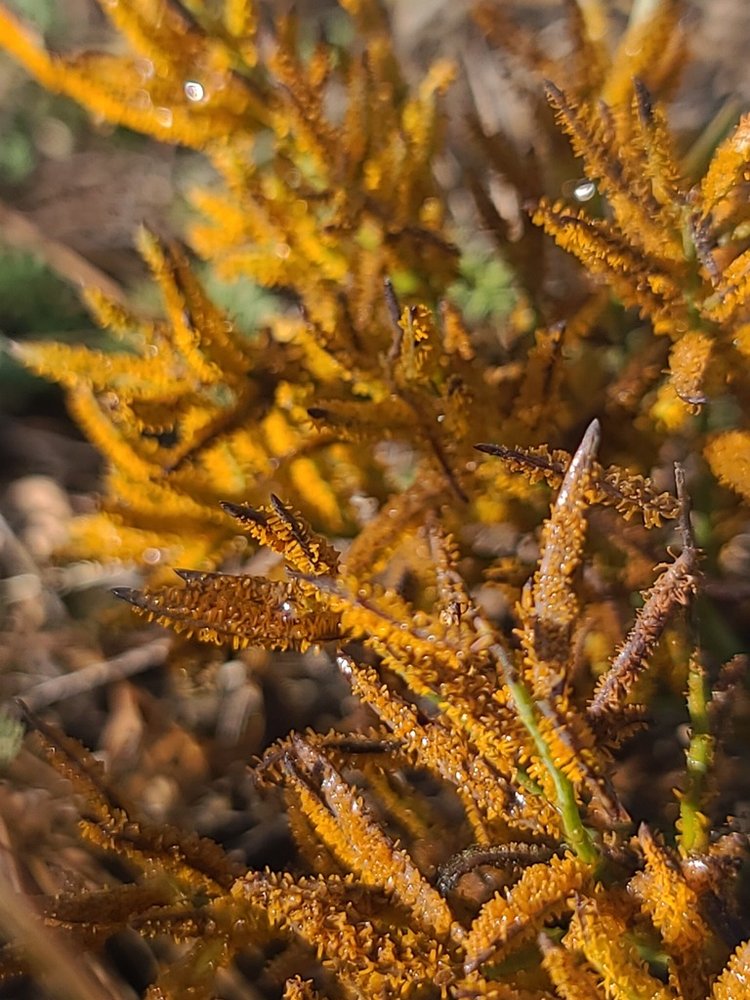
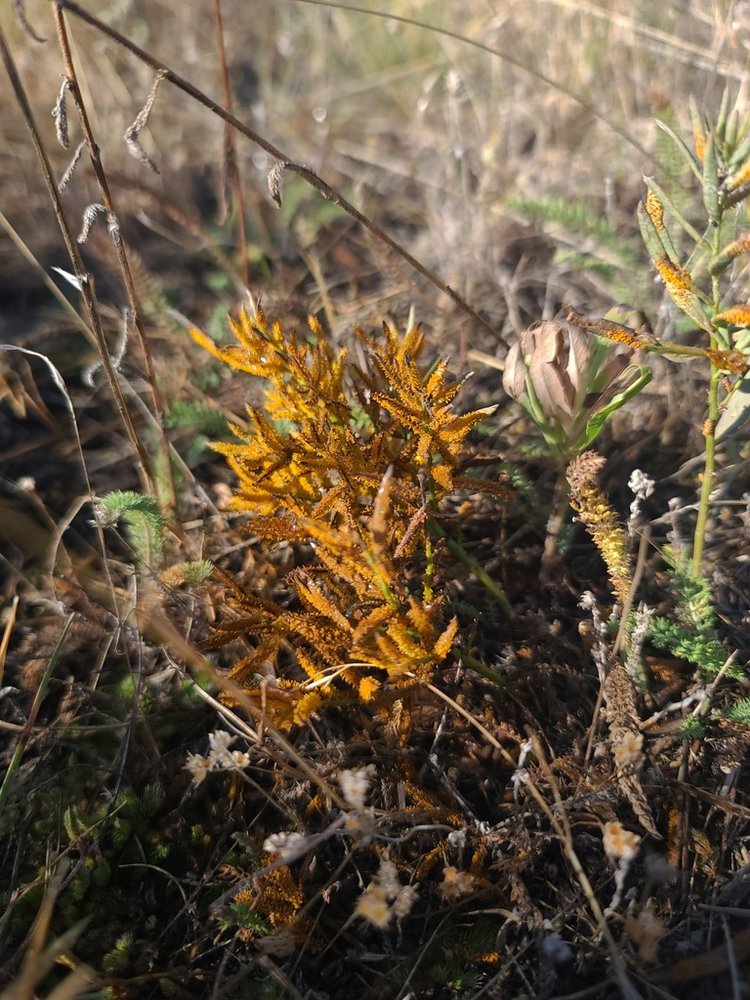
Comandra Blister Rust (Cronartium comandrae) is a rust fungus that makes long, spindle-shaped cankers with heavy resin flow on the stems and branches of young ponderosa pine; they show yellow-orange spores in late spring and early summer and often kill the treetop. It needs a second host, bastard toadflax, where it makes orange spore pustules under the leaves in summer. Herbarium specimens and Forest Service records show it in the Black Hills from 1897 to 1990.
Free photos from other sources
| Family | Cronartiaceae · Blister rust |
|---|---|
| Type | Rust |
| Season | All year; orange spores on pine cankers in late spring and early summer, rust on bastard toadflax leaves July into fall |
| Size | Spindle-shaped swellings on pine stems and branches 2–30 cm (1 in–1 ft) long |
| Grows on | Stems and branches of live ponderosa pine; leaves of bastard toadflax |
| Also called | Comandra Rust |
| Synonym | Cronartium pyriforme, Peridermium pyriforme |
| Eating | This guide doesn't say which mushrooms are safe to eat. |
How it lives
A rust fungus with two hosts. Spores from pine cankers blow in spring and early summer to bastard toadflax, the only host they can infect; there the rust makes summer spores that reinfect toadflax, and in late summer or fall it makes spores that blow back to pine needles and new shoots. Infecting pine takes long spells of humid weather, so new infections come in bursts in wet years. The fungus then lives in the pine's inner bark and growth layer, forming a canker that grows each year and can stay alive for years or decades. It girdles branches and stems, kills treetops and often kills seedlings and young trees. Bastard toadflax is itself a parasite of sagebrush and many other woody plants.
How do you identify Comandra Blister Rust?
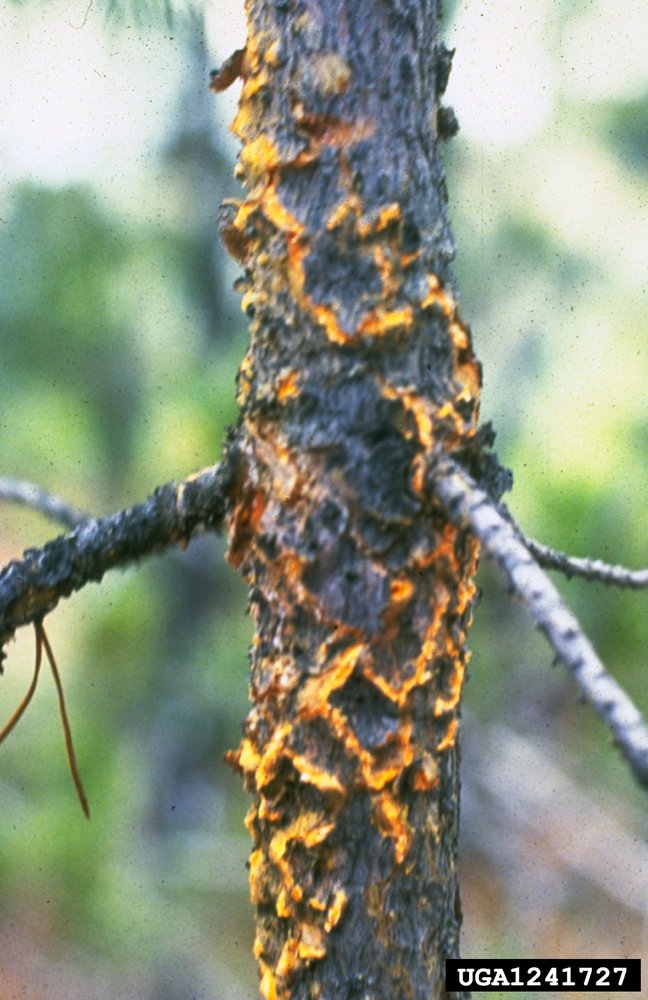
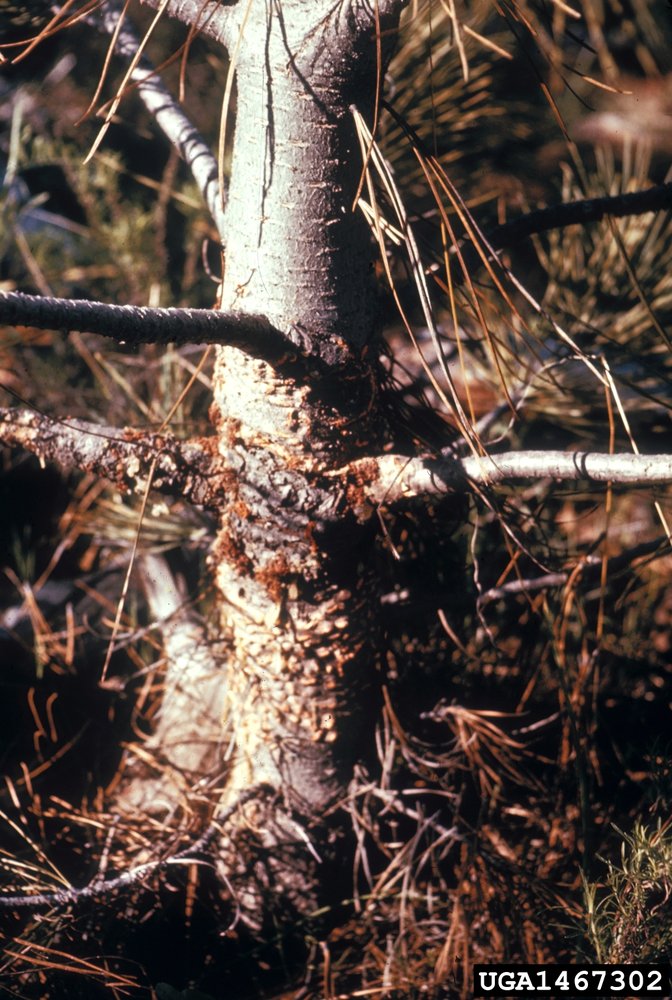
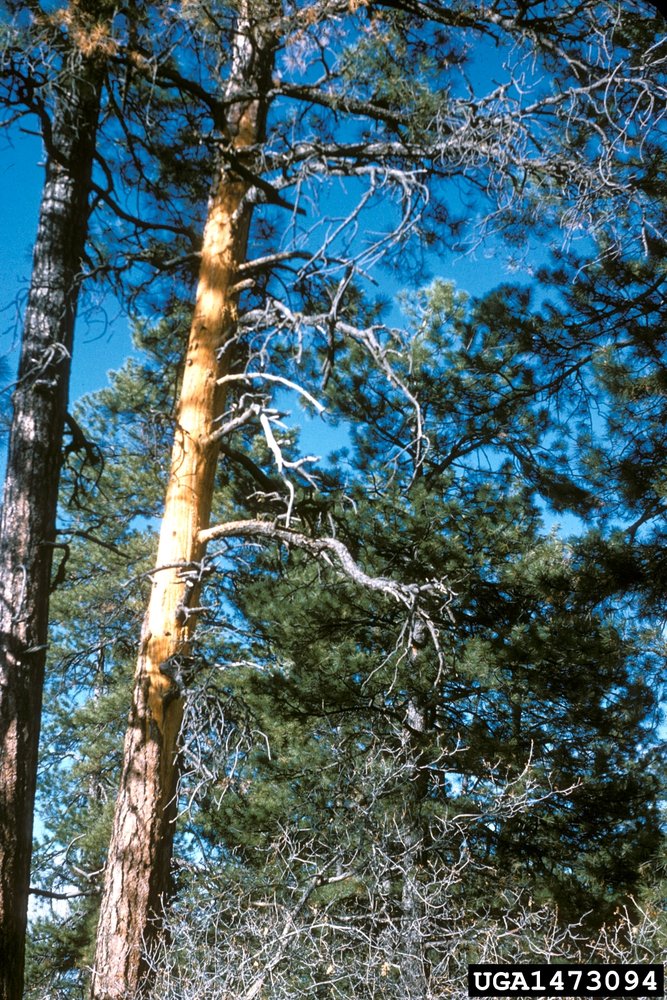
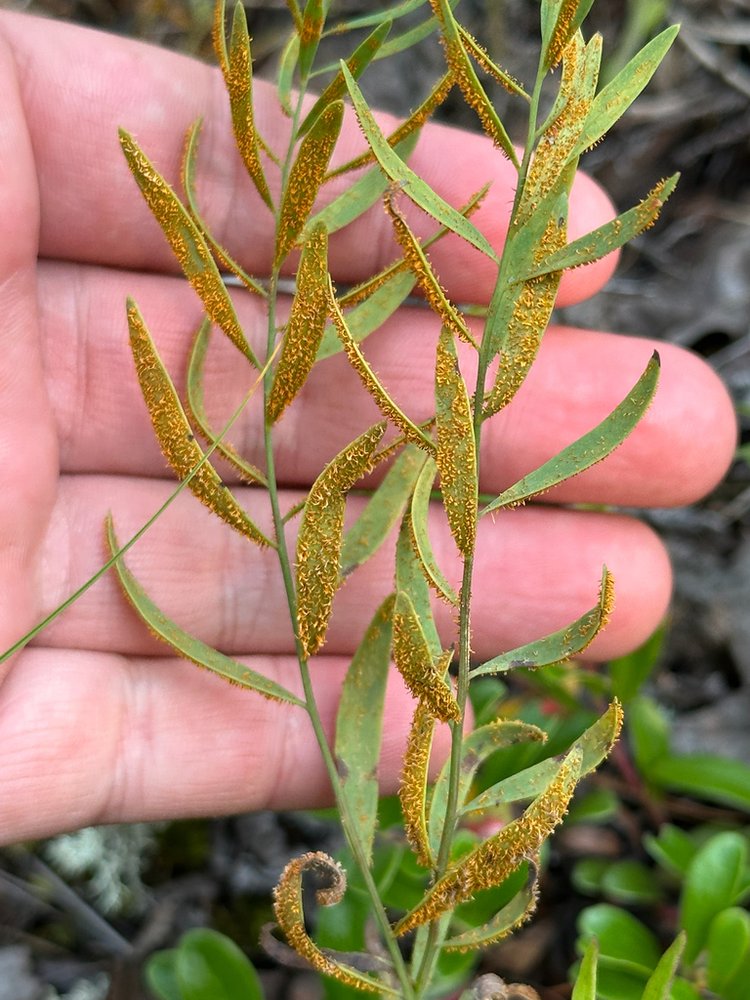
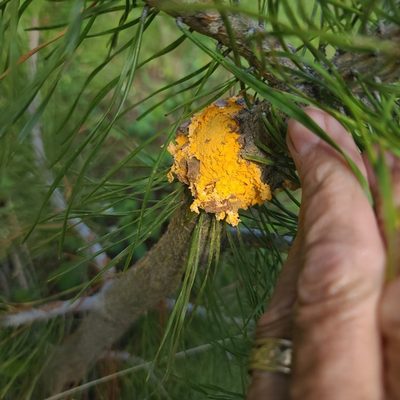
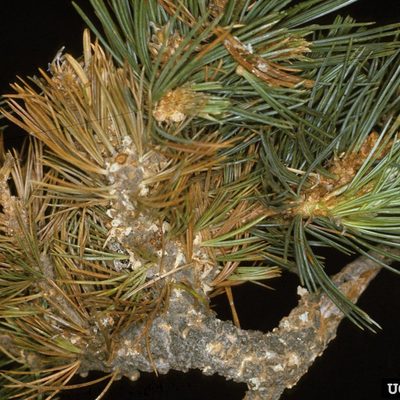
On ponderosa pine, look for a long, spindle-shaped swelling or canker on a young stem or branch, with rough bark and heavy resin flow; comandra cankers tend to be 1½ to 4 times longer than wide. In late spring and early summer, light yellow to orange blisters of spores break through the bark at the canker's edges, and the canker looks yellowish. Cankers often girdle the stem and kill the treetop, leaving a dead spike top, and rodents, especially porcupines and squirrels, chew the canker margins. Old cankers lose their dead bark and show ridges of resin-soaked wood. On bastard toadflax, the other host, it makes orange spore pustules under the leaves in summer, then rust-brown, hair-like growths later in the year. Stalactiform blister rust, also listed among Black Hills pine rusts, makes similar cankers that tend to be eight or more times longer than wide, and the two are best told apart by their spores under a microscope. Western gall rust makes round, woody galls; on seedlings, Canada's forest service notes that comandra swellings come from swollen bark, while western gall rust galls have normal bark over thickened wood.
When can you find it?
All year; orange spores on pine cankers in late spring and early summer, rust on bastard toadflax leaves July into fall.
Where does it grow?
Ponderosa pine with bastard toadflax nearby, since the rust needs both hosts; Black Hills reports describe it mostly on young pines. A 1915 USDA bulletin reported it on pine and on toadflax in the Black Hills in 1914 and young pines killed by it in Custer County that autumn, and a 1935 report called it widespread and very common and severe in young Black Hills pine stands. Herbarium specimens from 1897 to 1960 show it on ponderosa pine and on bastard toadflax in Custer, Lawrence and Pennington counties and in Crook County, Wyoming, including the Bear Lodge Mountains, and Forest Service records add finds in 1960 and 1990. A 1991 Forest Service review says it became much less severe in later years; in 1960 a pathologist found only old cankers and no new infections. iNaturalist has no Black Hills records.
Other mushrooms to compare
Sources: Lundquist 1991, Fungi Associated with Pines in the Black Hills, Technical Report R2-50 — USDA Forest Service; Lundquist 1991, Tree Disease Survey of Conifers in the Black Hills - 1990, Technical Report R2-51 — USDA Forest Service; Field Guide to Diseases & Insects of the Rocky Mountain Region, RMRS-GTR-241 (2010): Comandra and Stalactiform Blister Rusts; Western Gall Rust — USDA Forest Service; Hedgcock & Long 1915, A Disease of Pines Caused by Cronartium pyriforme, Bulletin 247 — US Department of Agriculture; Krebill 1968, Cronartium comandrae in the Rocky Mountain States, Research Paper INT-50 — USDA Forest Service; Comandra blister rust — Natural Resources Canada, Trees, insects, mites, and diseases of Canada's forests; White pine blister rust, Forest invasive alien species — Natural Resources Canada; Cronartium comandrae, record 237307 — Species Fungorum; Cronartium comandrae specimens, South Dakota — GBIF; Cronartium comandrae specimens, Wyoming — GBIF; Cronartium pyriforme specimens, South Dakota — GBIF; Black Hills observations of Cronartium comandrae (research) — iNaturalist.