Western Gall Rust
Cronartium harknessii
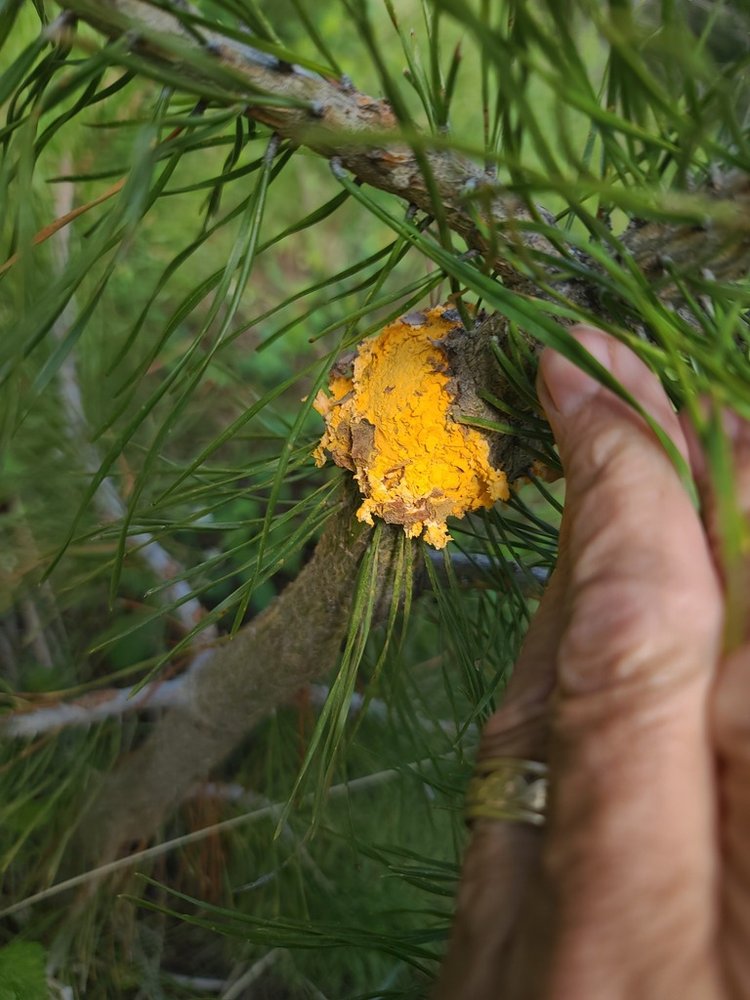
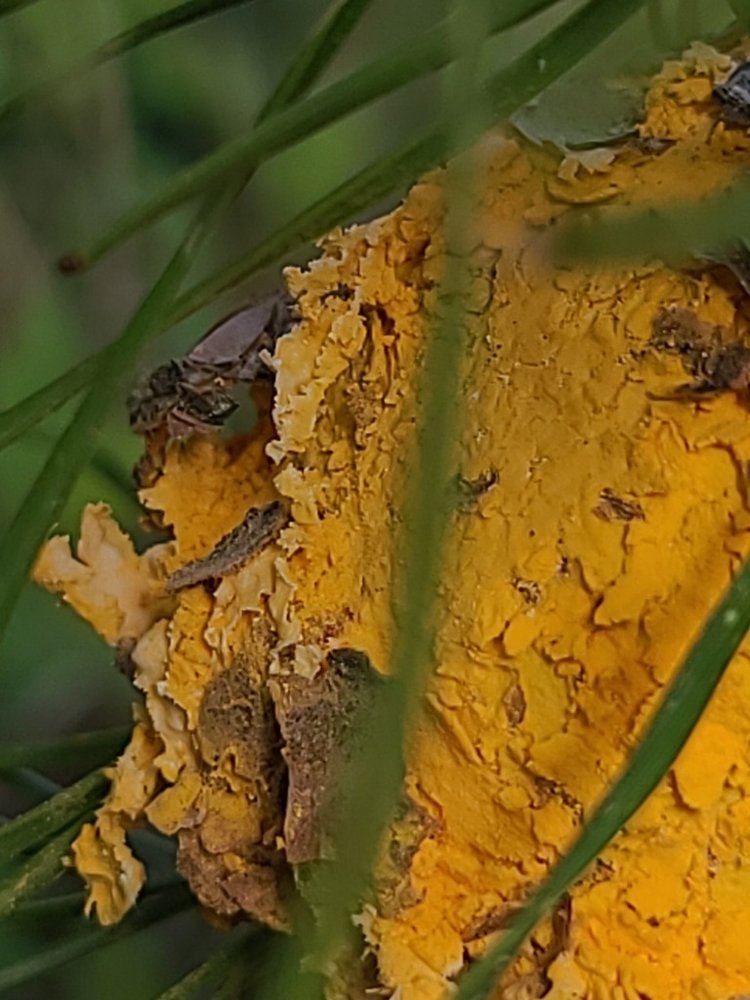
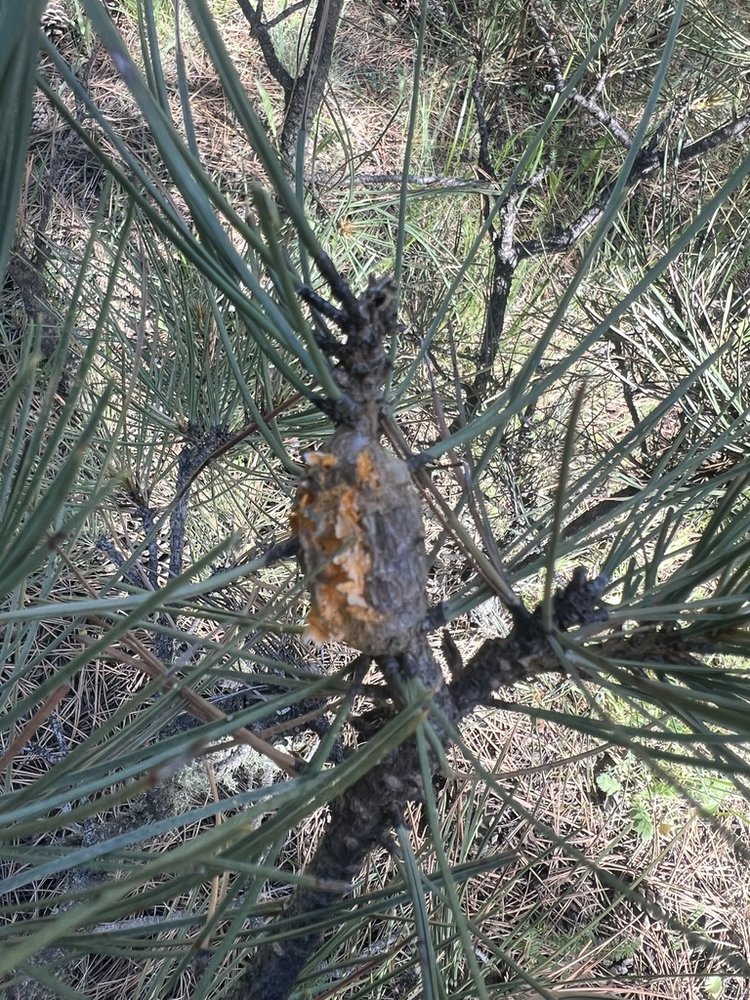
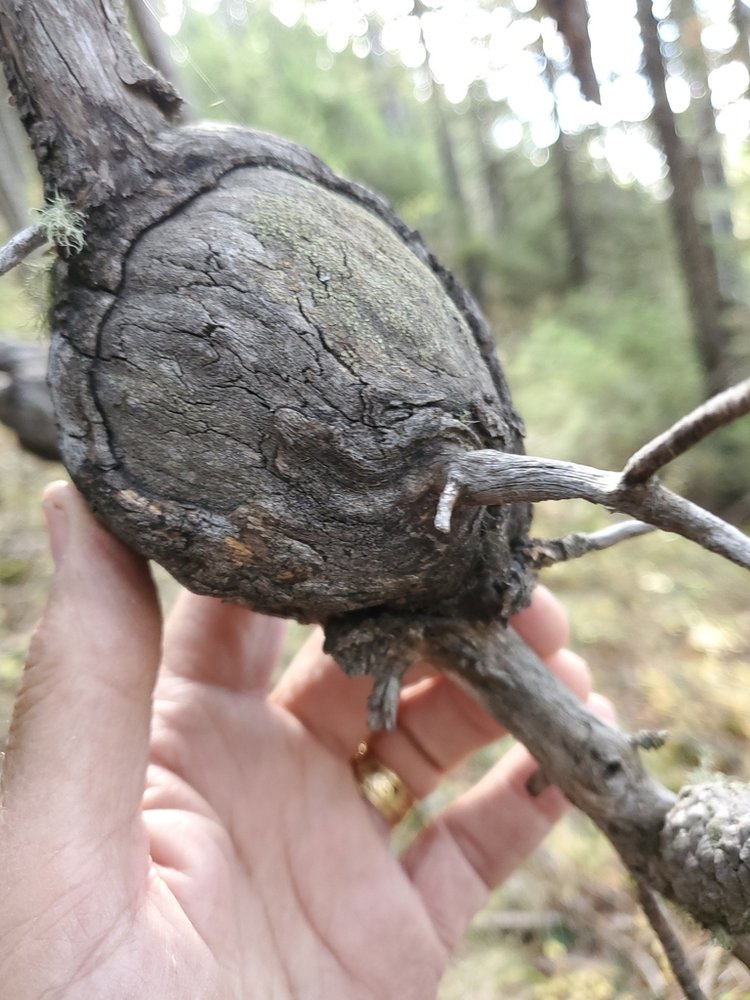
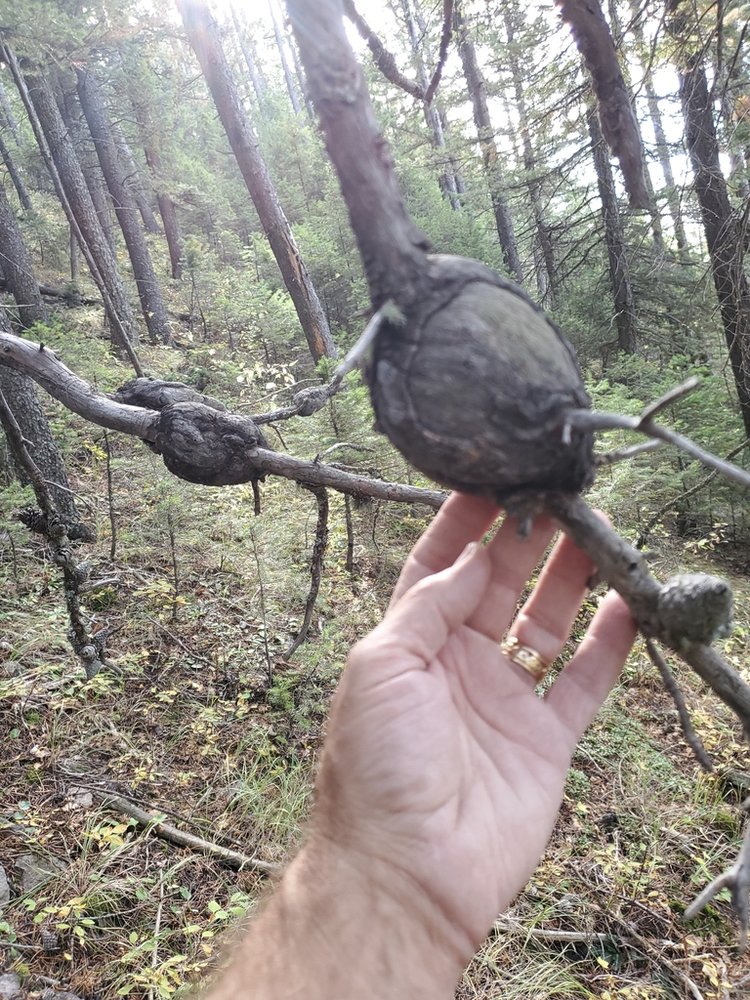
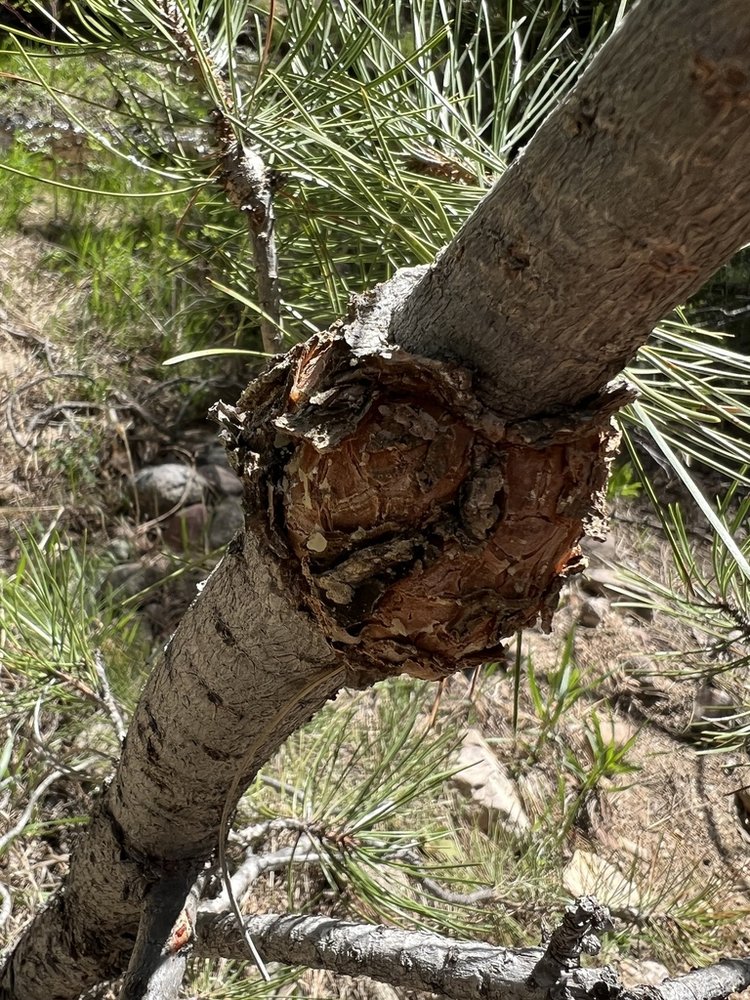
Western Gall Rust (Cronartium harknessii) is a rust fungus that makes round, woody galls on the branches and trunks of ponderosa pine. The galls stay on the tree all year, and from late May into early July their bark splits to show bright yellow-orange spore powder. Forest Service records show it across the Black Hills since the 1930s, and it is one of the main diseases of the Hills' ponderosa pine.
Free photos from other sources
| Family | Cronartiaceae · Blister rust |
|---|---|
| Type | Rust |
| Season | All year; orange spores from late May into early July |
| Size | Galls usually 5–10 cm (2–4 in) across, from marble size to softball size |
| Grows on | Branches and trunks of live ponderosa pine; also lodgepole, Scots and mugo pine |
| Synonym | Endocronartium harknessii, Peridermium harknessii |
| Eating | This guide doesn't say which mushrooms are safe to eat. |
How it lives
A rust fungus that lives in the living inner bark of two- and three-needle pines and needs no second host plant: spores from a gall blow straight to the new shoots of the same or another pine. Cool, wet springs bring wave years of heavy infection, every 5 to 15 years in this region. The fungus makes the tree's growth layer divide fast, which builds the gall, and the gall first makes spores in its second or third year, then every spring while it lives. Branch galls usually kill their branch within a few years, galls on the stems of seedlings and saplings often kill the tree, and trunk cankers weaken big trees so they snap in wind. Forest Service researchers ranked it the second most troublesome disease of Black Hills ponderosa pine.
How do you identify Western Gall Rust?
Look for a round to pear-shaped woody swelling on a pine branch or stem, usually 5–10 cm (2–4 in) across, from marble size up to softball size. For most of the year it is covered with ordinary bark, sometimes deeply cracked. In late spring and early summer, blisters under the bark break open and the gall shows yellow to orange powdery spores, sometimes over its whole surface. Branches beyond a gall often die and turn red, and galls on the trunks of older trees can grow for many years into large hip cankers, a sunken scar on one side of the trunk. Comandra blister rust and stalactiform blister rust, also recorded on Black Hills pines, make long cankers on stems instead of round galls, with rough bark and heavy resin: comandra cankers are about 1½ to 4 times longer than wide and often kill the treetop, and stalactiform cankers are 8 or more times longer than wide. Both need a second host plant, bastard toadflax for comandra and mainly paintbrush for stalactiform, while western gall rust spreads straight from pine to pine.
When can you find it?
All year; orange spores from late May into early July.
Where does it grow?
Live ponderosa pine of all ages, worst on young trees and in plantations; also lodgepole, Scots and mugo pine. A 1991 Forest Service compilation lists reports from 1935 to 1990 across the Black Hills National Forest, from the Bear Lodge Mountains to the southern Hills, including heavy infection on young pines on old burns and on planted yard trees. The 2010 South Dakota forest health report says that within the state it is found mainly in the Black Hills. iNaturalist has 7 Black Hills records (4 research grade), including Wind Cave National Park, Custer State Park and Mount Rushmore, and herbarium specimens on Black Hills pine date from 1914 to 1924.
Sources: Lundquist 1991, Fungi Associated with Pines in the Black Hills, Technical Report R2-50 — USDA Forest Service; Boldt & Van Deusen 1974, Silviculture of Ponderosa Pine in the Black Hills, Research Paper RM-124 — USDA Forest Service; South Dakota Forest Health Highlights 2010 — USDA Forest Service and South Dakota; Forest Pest Bulletin 32: Western Gall Rust (rev. 2021) — South Dakota Department of Agriculture and Natural Resources; Field Guide to Diseases & Insects of the Rocky Mountain Region, RMRS-GTR-241 (2010): Western Gall Rust; Comandra and Stalactiform Blister Rusts — USDA Forest Service; Western gall rust (B.E. Callan) — Natural Resources Canada, Trees, insects, mites, and diseases of Canada's forests; Western Gall Rust, Insect and Disease No. 13 (2023) — Idaho Department of Lands; Western Gall Rust — UC Statewide IPM Program, University of California; Cronartium harknessii, record 266820 — Index Fungorum; Name search: Peridermium harknessii, current name Cronartium harknessii — Index Fungorum; Black Hills observations of Cronartium harknessii — iNaturalist; Cronartium harknessii specimens, South Dakota — GBIF.