Threadleaf Phacelia Phacelia linearis
Also called Linearleaf Phacelia, Thread-leaf Scorpion-weed
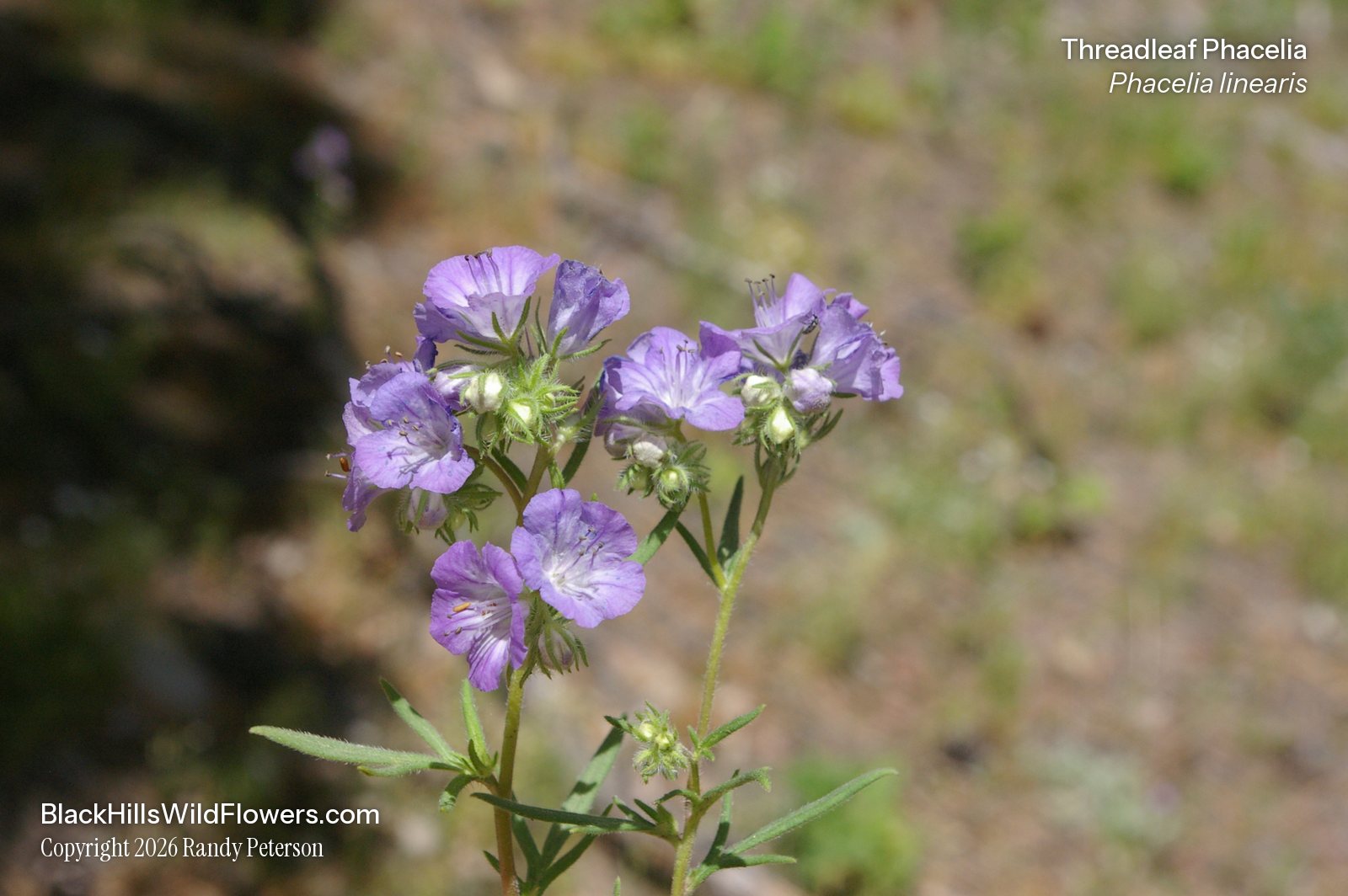
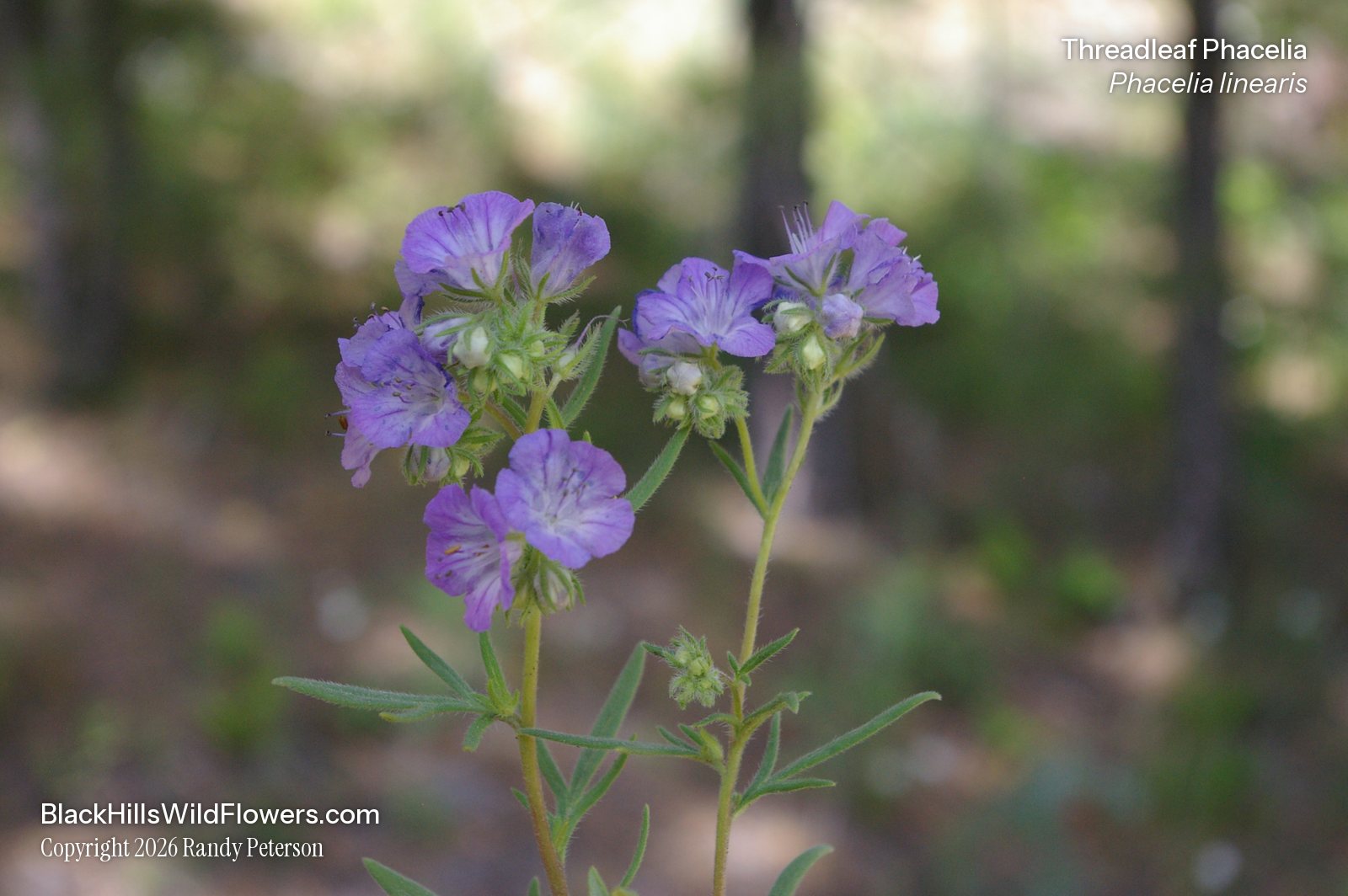
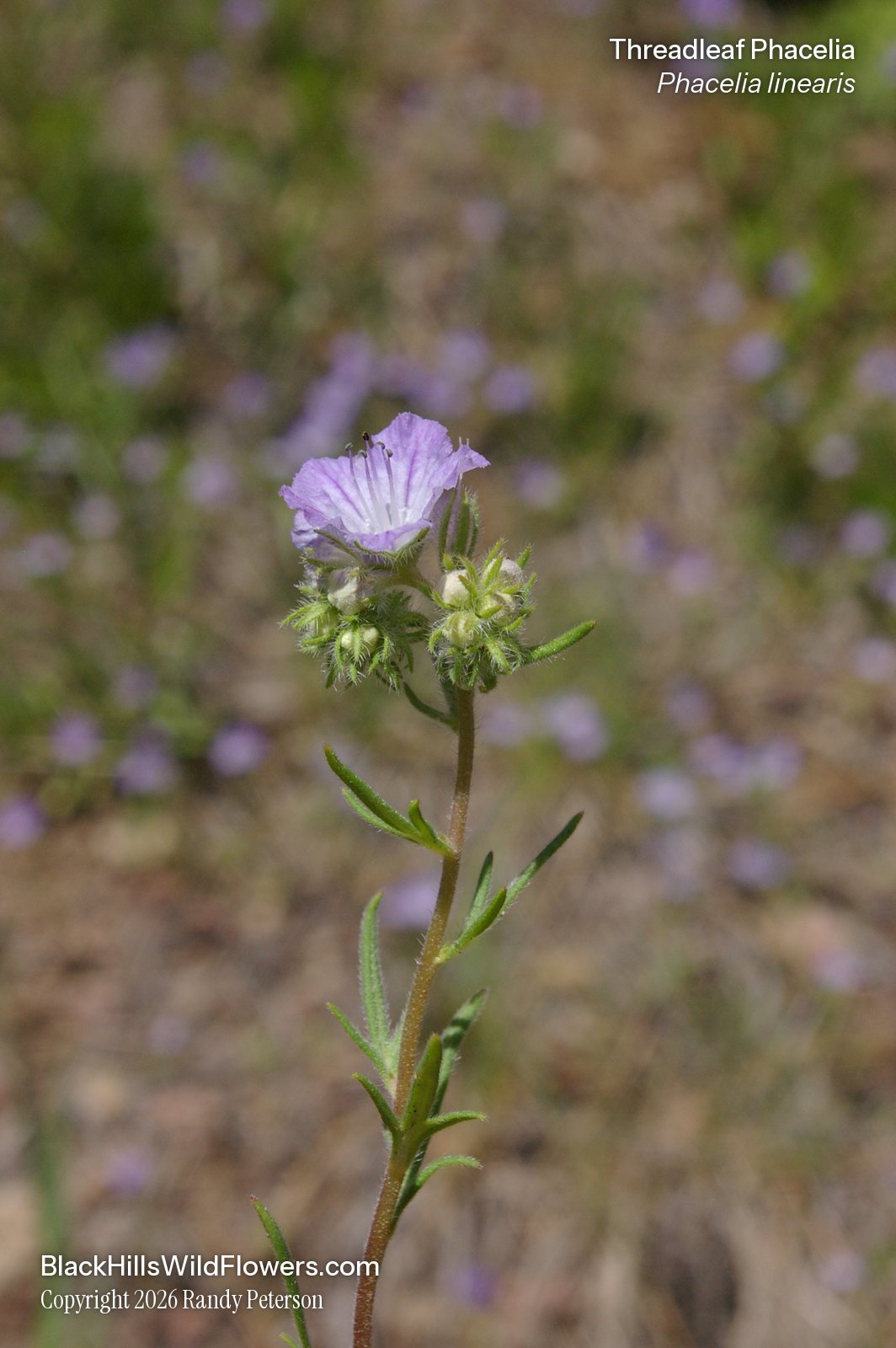
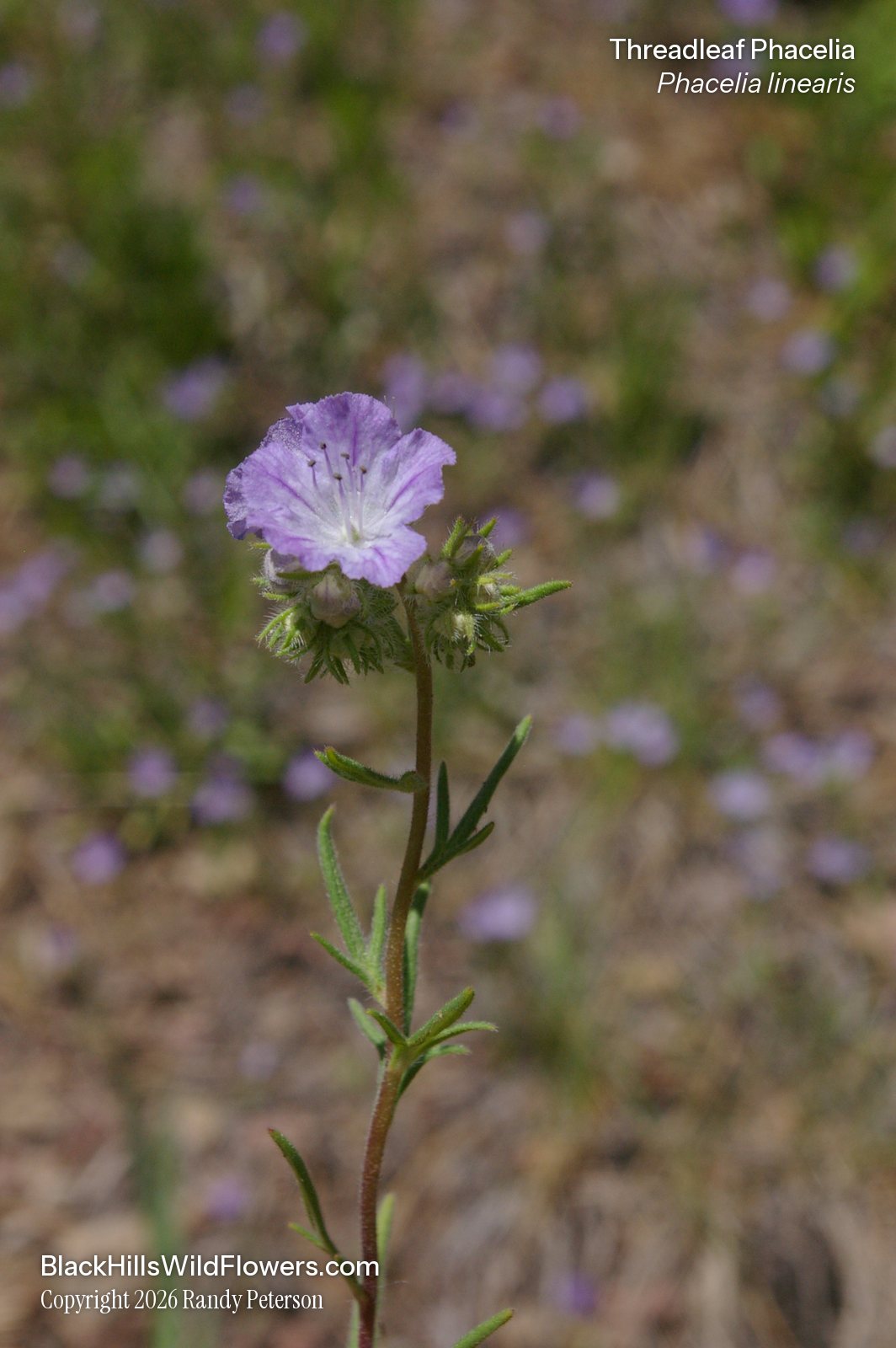
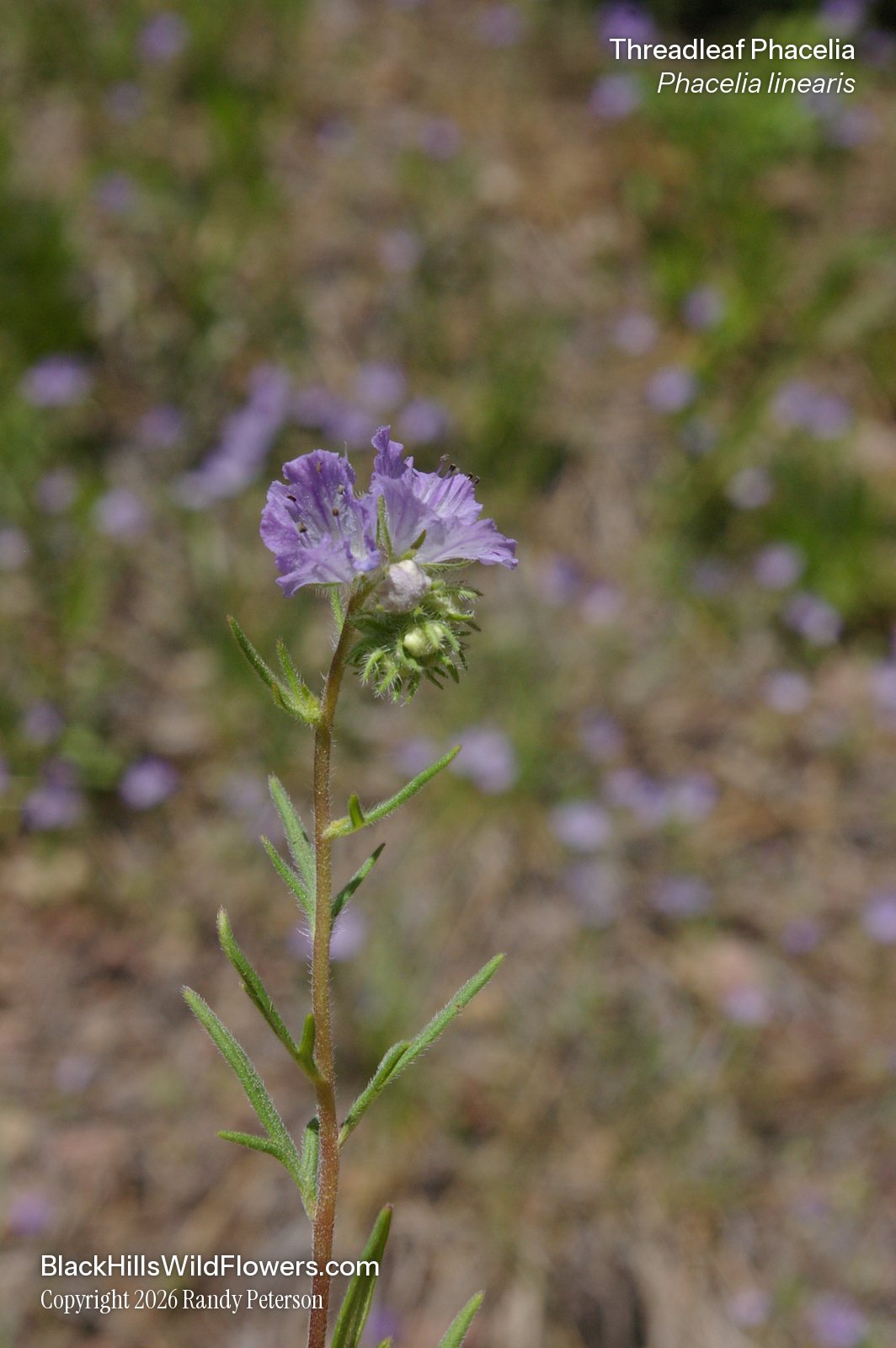
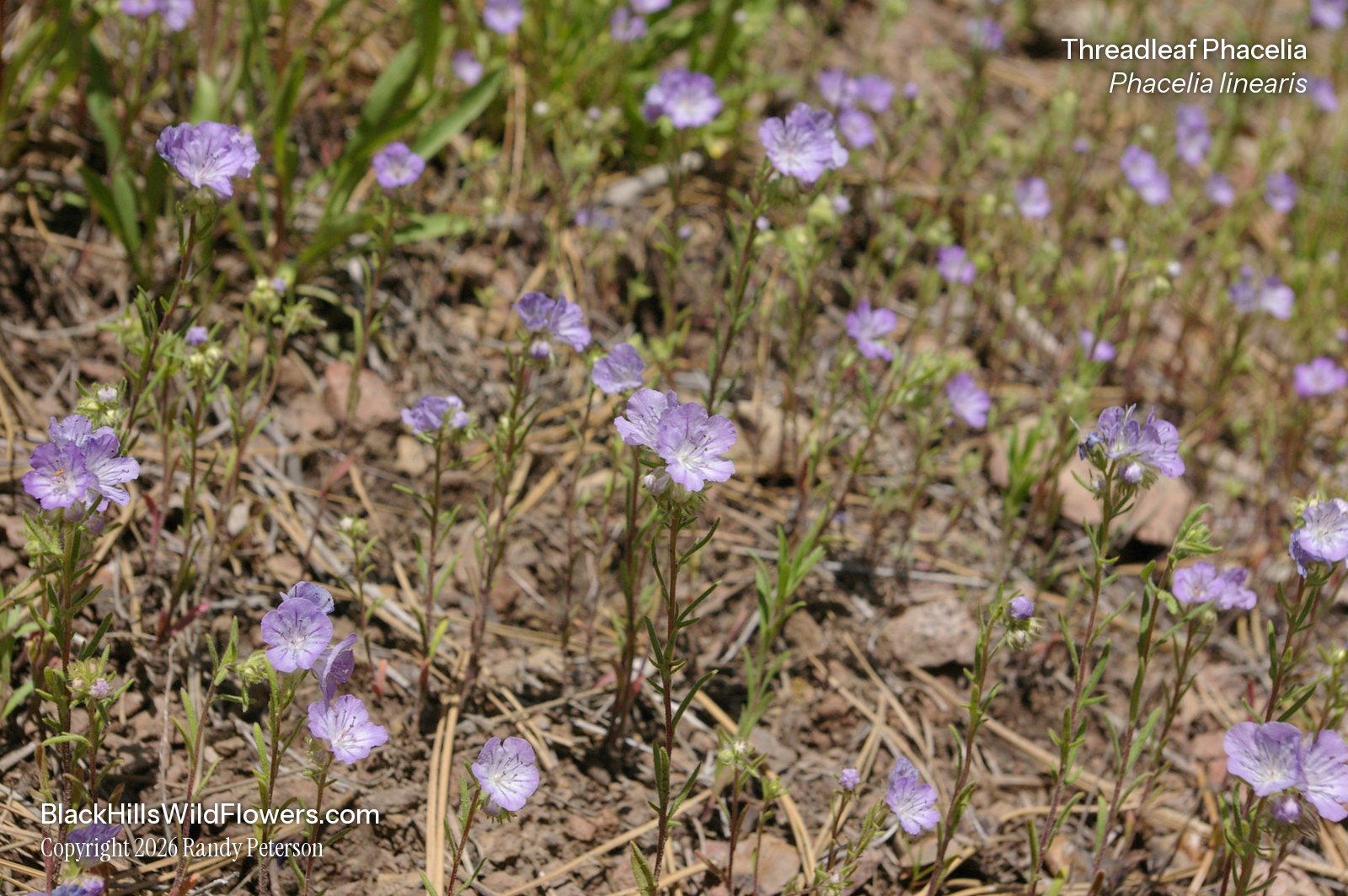
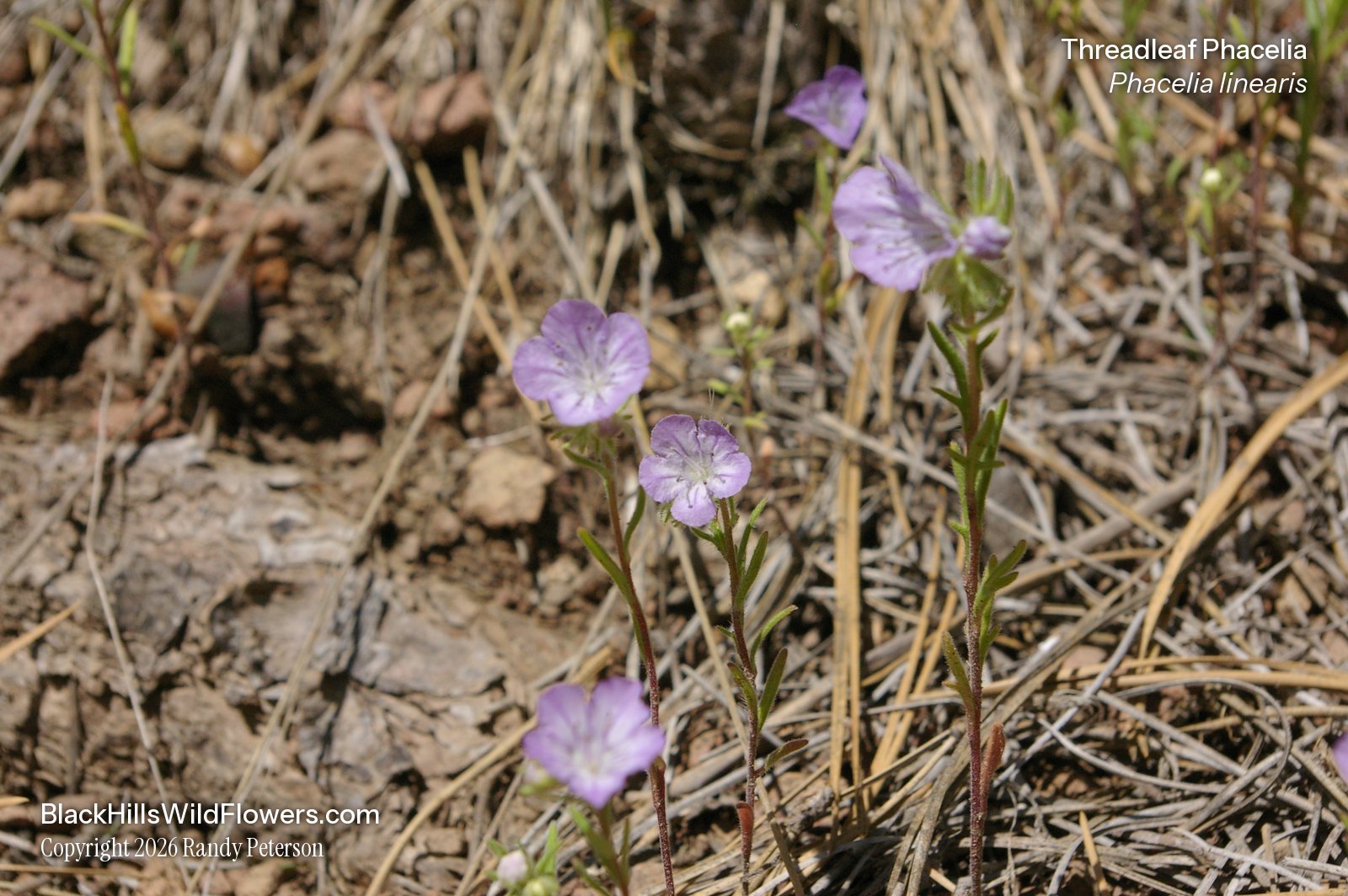
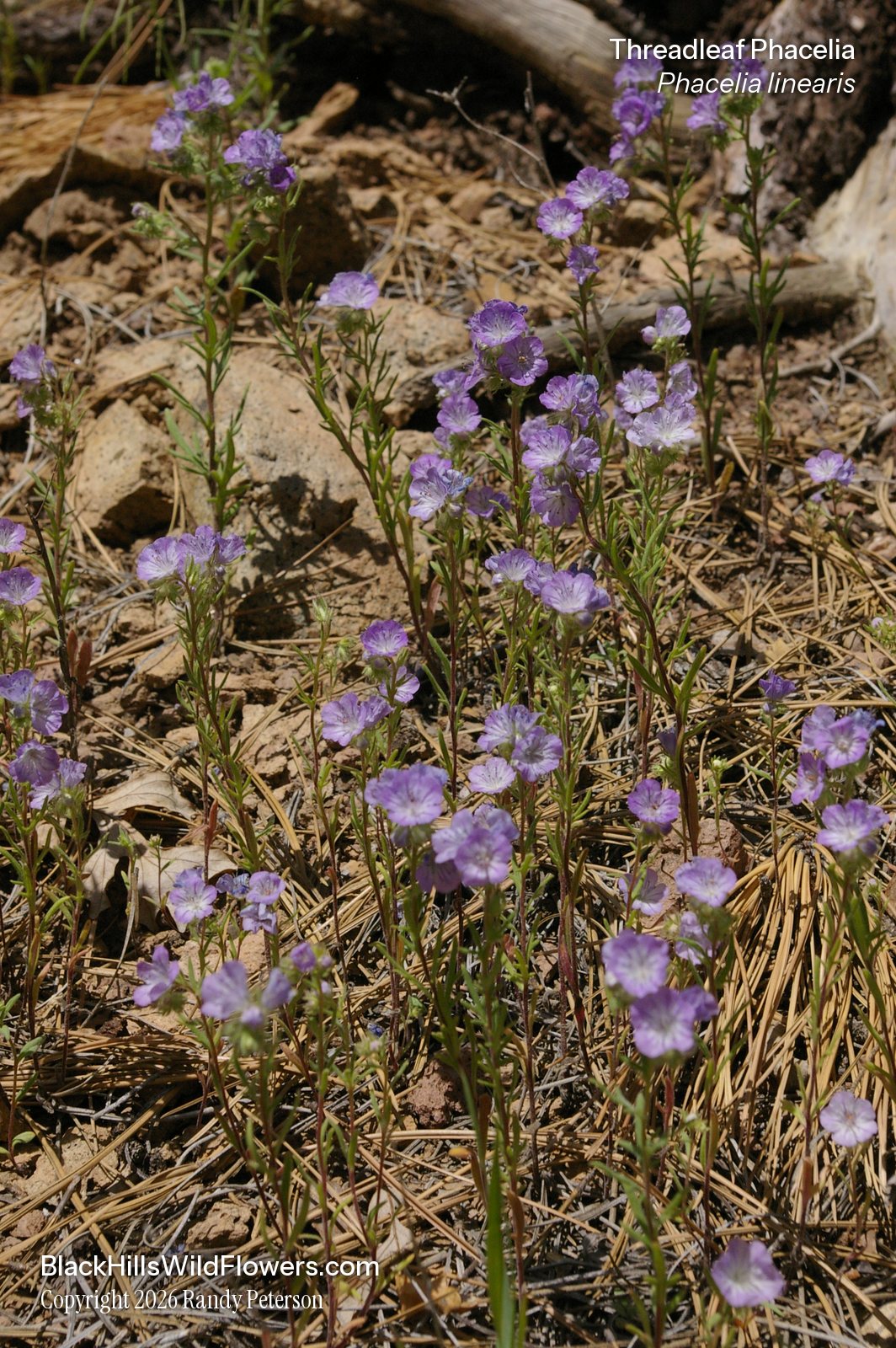
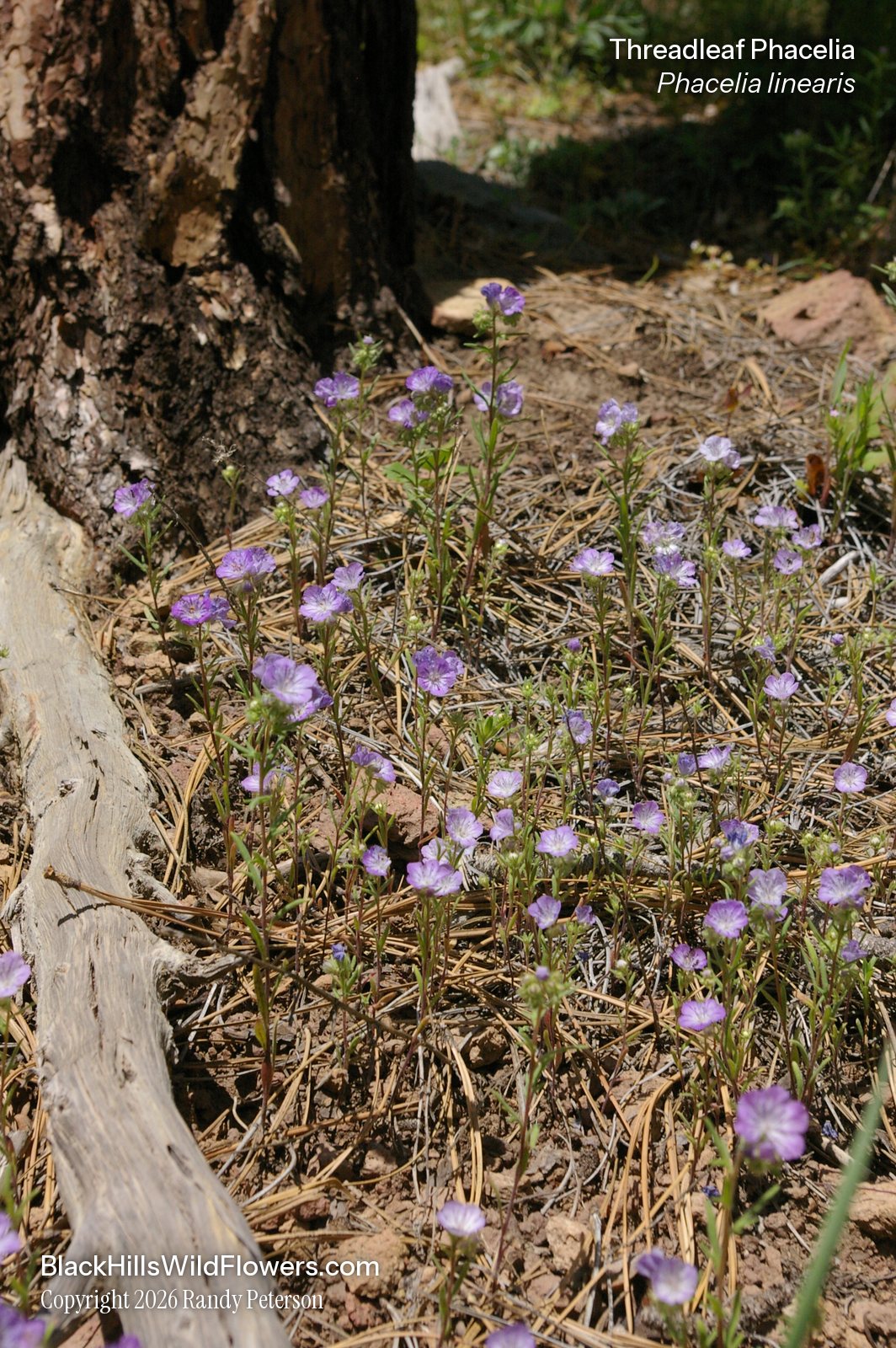
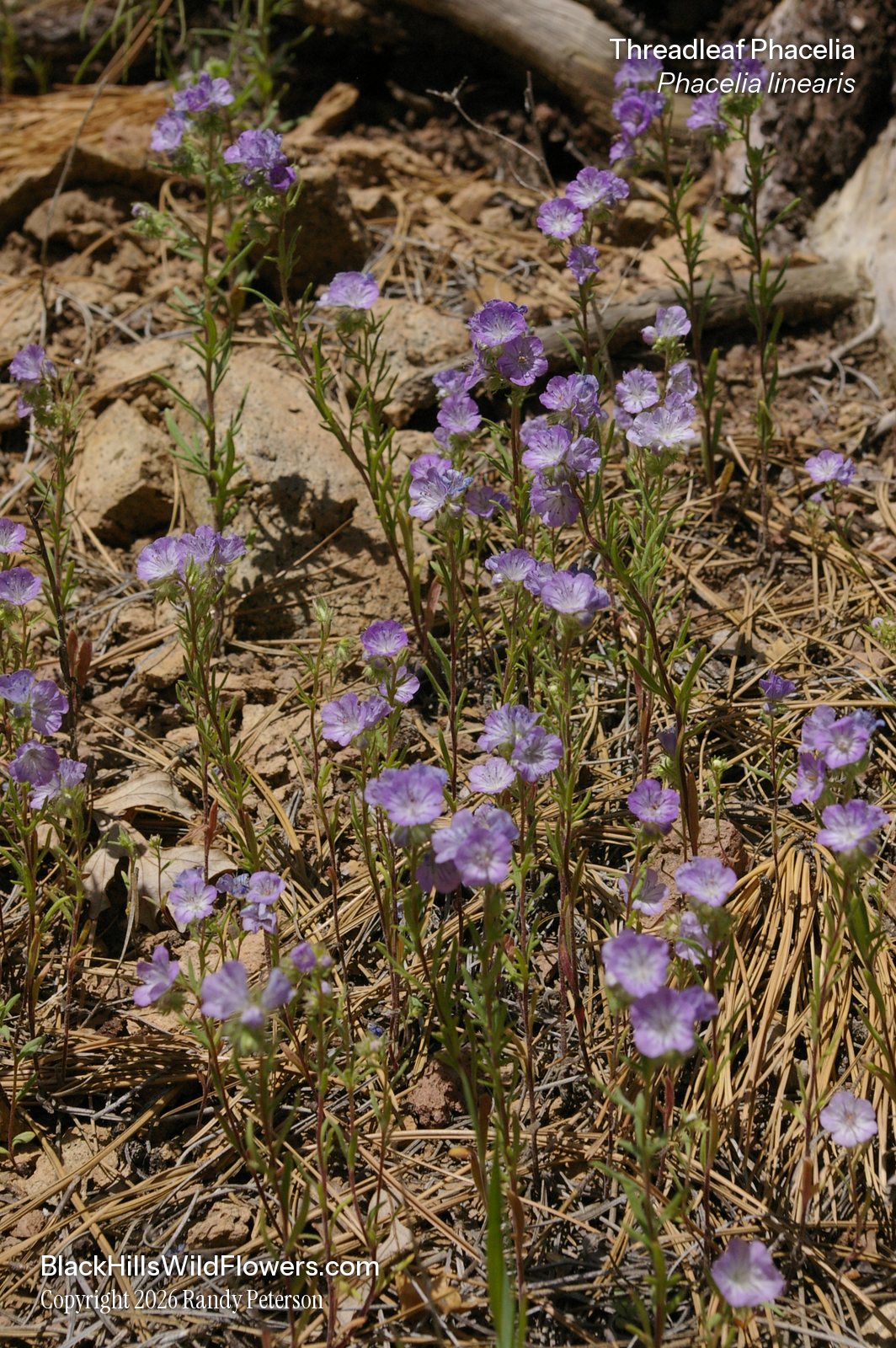
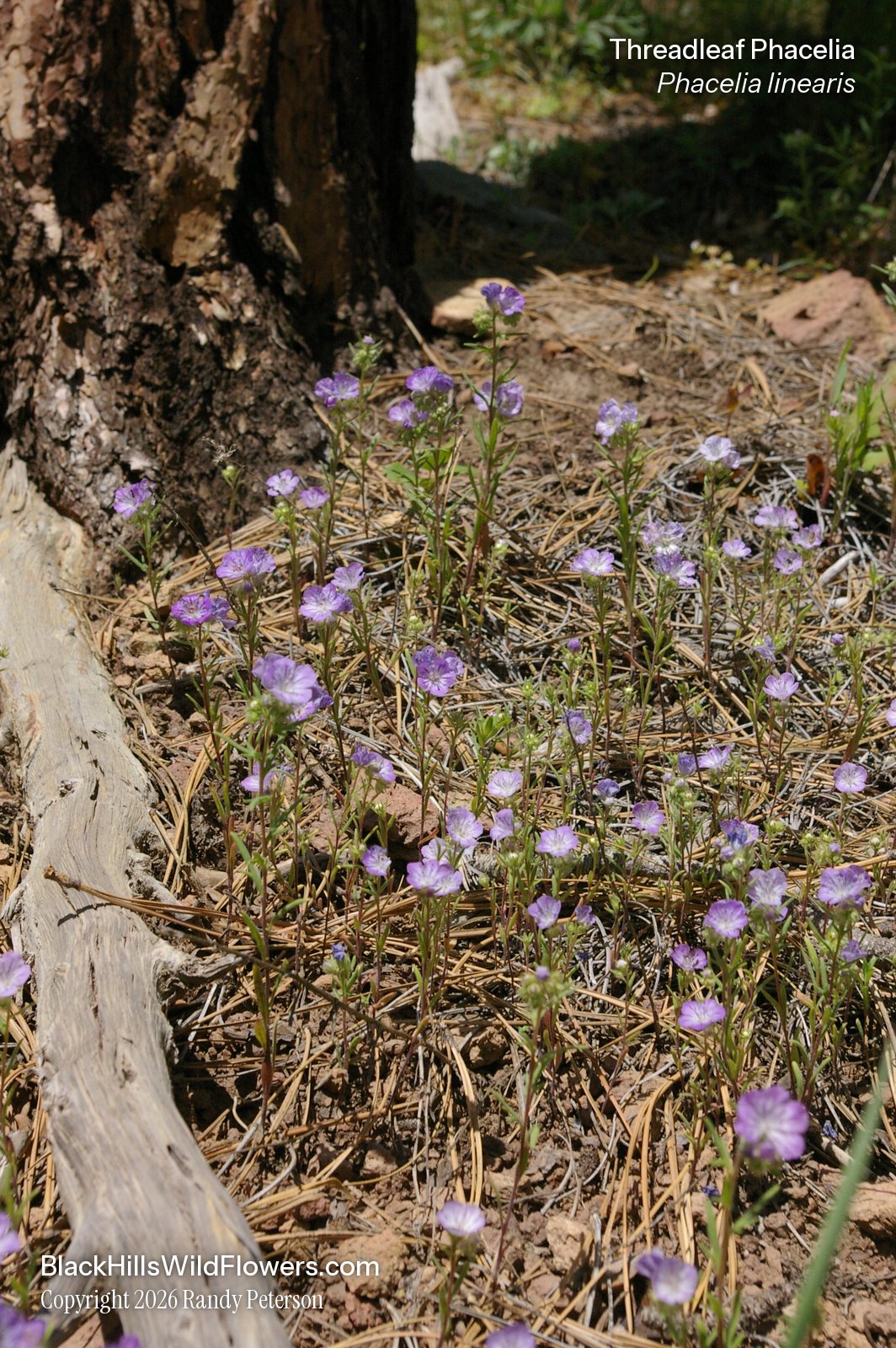
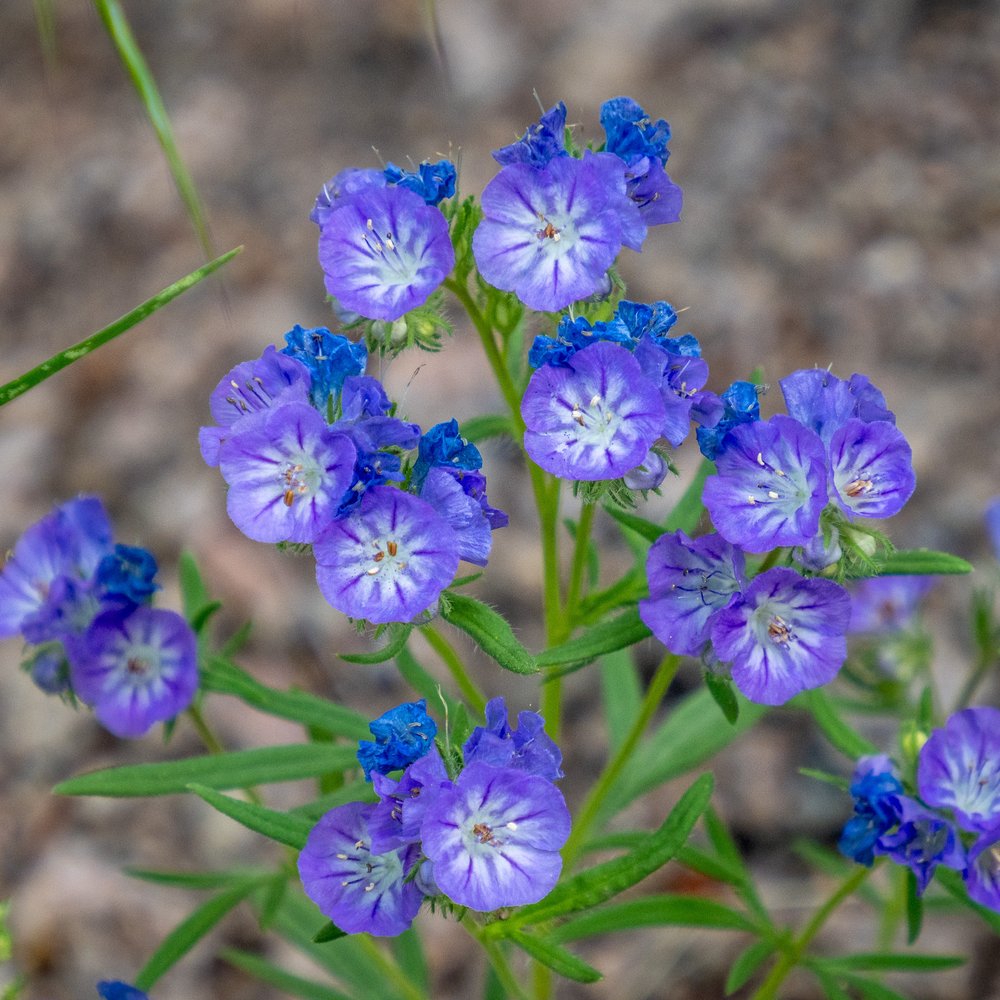
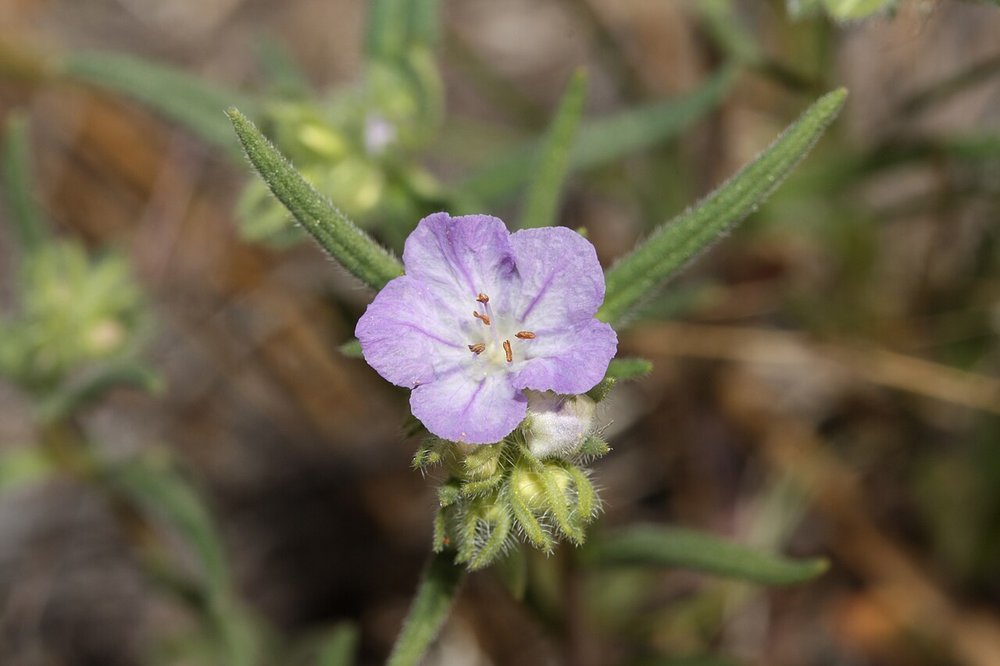
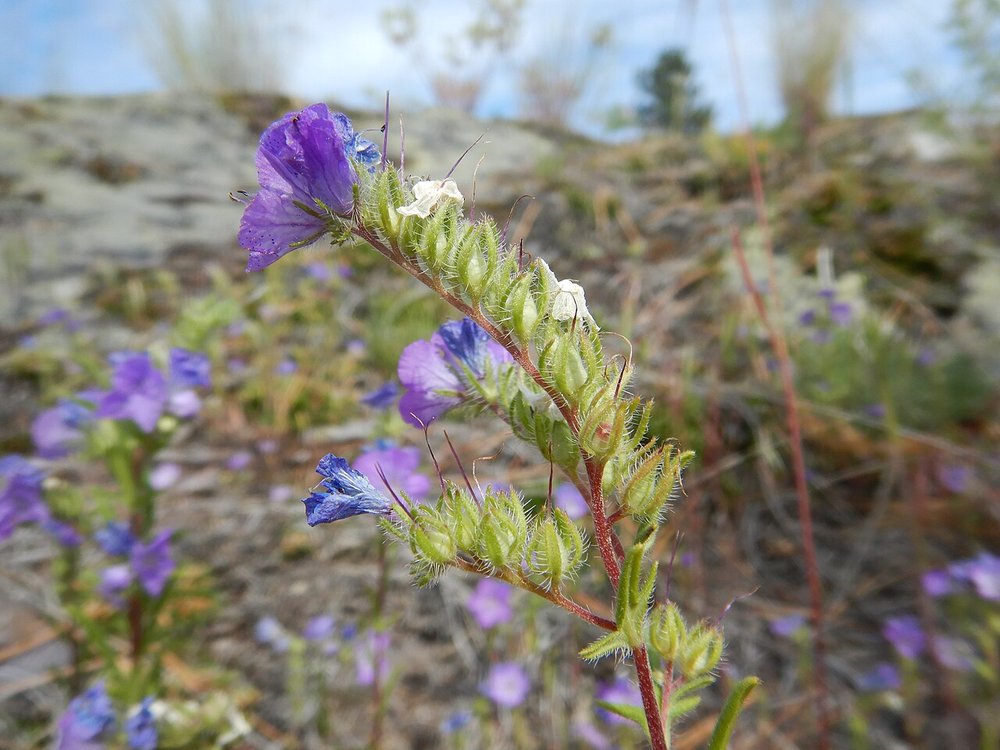
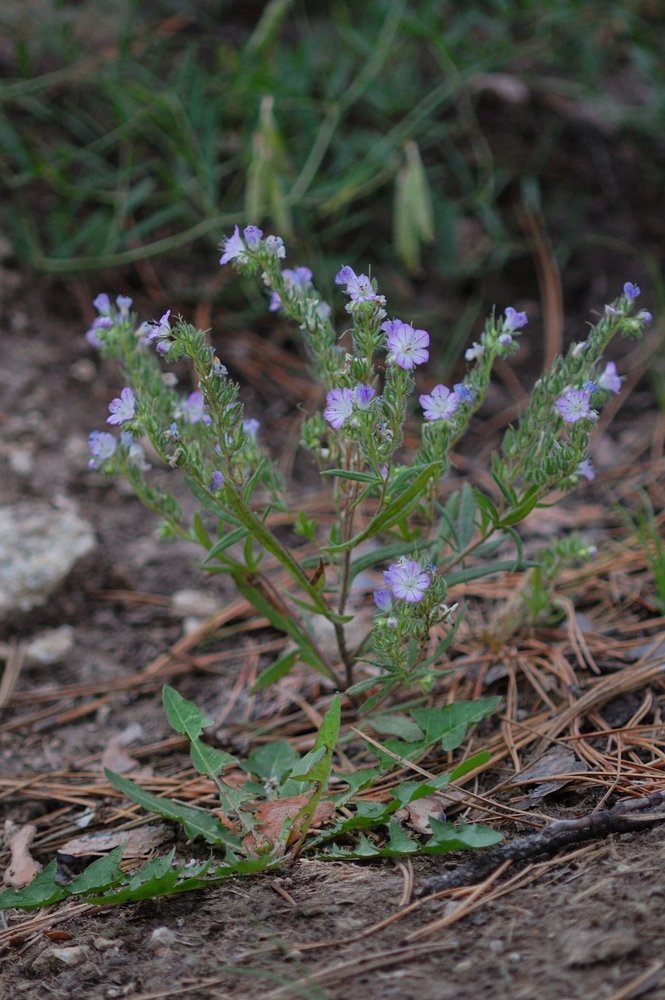
Threadleaf Phacelia (Phacelia linearis) is a small native annual, 5–50 cm (2–20 in) tall, with narrow leaves along hairy stems and bell- to saucer-shaped, lavender to blue-lavender flowers 8–18 mm (⅓–¾ in) across, crowded toward the branch tips. In and around the Black Hills it grows on dry, sunny hillsides, in grassland and in open pine woods and flowers mostly in June, and South Dakota's rare plant list says there is too little information to rank it. Photographed in the Black Hills.
Free photos from other sources
| Family | Hydrophyllaceae · Waterleaf |
|---|---|
| Status | Native annual |
| Blooms | Mostly June, from late May into mid-July, on herbarium labels from in and around the Black Hills |
| Height | 5–50 cm (2–20 in) |
| Where | Dry, sunny hillsides, grassland and open pine woods, often on loose, sandy or rocky soil |
| Also called | Linearleaf Phacelia, Thread-leaf Scorpion-weed |
| Note | South Dakota's rare plant list ranks Threadleaf Phacelia SU, unrankable for lack of information, and notes few reports. The Forest Service's 2023 draft assessment for the Black Hills forest plan lists it as a species of conservation concern. This page gives no locations. |
Roots, seeds & germination
Seed: The fruit holds many seeds with a net-patterned surface, and the bristly calyx around it grows larger as it ripens.
How do you identify Threadleaf Phacelia?
The flowers are the mark: broadly bell- to saucer-shaped, lavender to blue-lavender, 8–18 mm (⅓–¾ in) across, crowded in short clusters toward the ends of the branches and in the upper leaf joints. Under each flower the calyx is split nearly to the base into five narrow lobes covered in stiff, bristly hairs, 5–7 mm long, and it grows larger as the fruit ripens. The stems are erect, 5–50 cm (2–20 in) tall, single or branched, and finely hairy. The leaves grow along the stem on very short stalks or none and are narrow, lance-shaped to linear, 1–11 cm (½–4 in) long, often with one or two pairs of narrow lobes toward the base and otherwise smooth-edged. The fruit holds many seeds with a net-patterned surface.
When does it bloom?
Mostly June, from late May into mid-July, on herbarium labels from in and around the Black Hills.
Where does it grow?
Herbarium labels from in and around the Black Hills place it on sunny hillsides with loose soil, rocky grassland on summits, sandy ridges, sagebrush grassland, roadcuts and disturbed roadside soil, dry, open ponderosa pine woods and their edges, pine forest a year after a fire, and cliffs in pine forest, on sandstone, limestone and shale, at about 1,040–1,780 m (3,400–5,850 ft). Across its range it grows on sparsely vegetated soil in grassland, sagebrush steppe and dry open forest. iNaturalist has 55 research-grade records from the Black Hills region, April to July, 44 of them in June.
Sources: Montana Field Guide: Linearleaf Phacelia; Burke Herbarium Image Collection: Phacelia linearis; USDA PLANTS profile, PHLI (API); South Dakota Game, Fish and Parks: Rare plants table (Phacelia linearis, G5, SU); USDA Forest Service Rocky Mountain Region, Revised Forest Assessment: At-Risk Species, draft, October 2023; Culturally Important Plants of the Lakota (Black Elk and Flying By, 1998), filed with the South Dakota PUC (checked; no Phacelia listed).