Stinging Nettle
Urtica gracilis
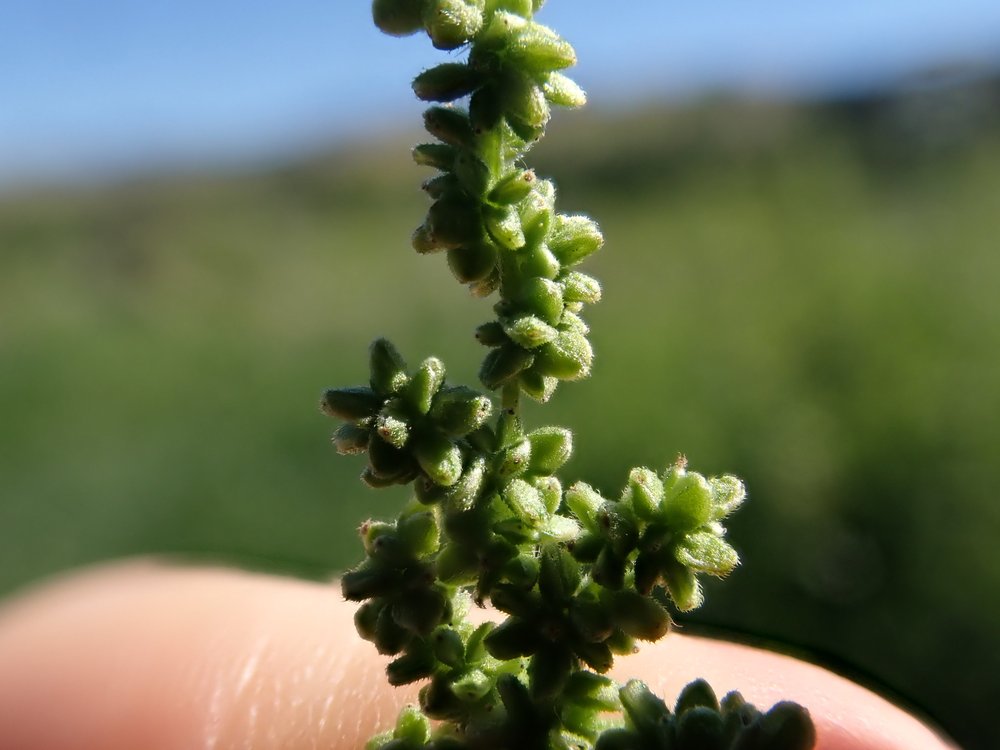
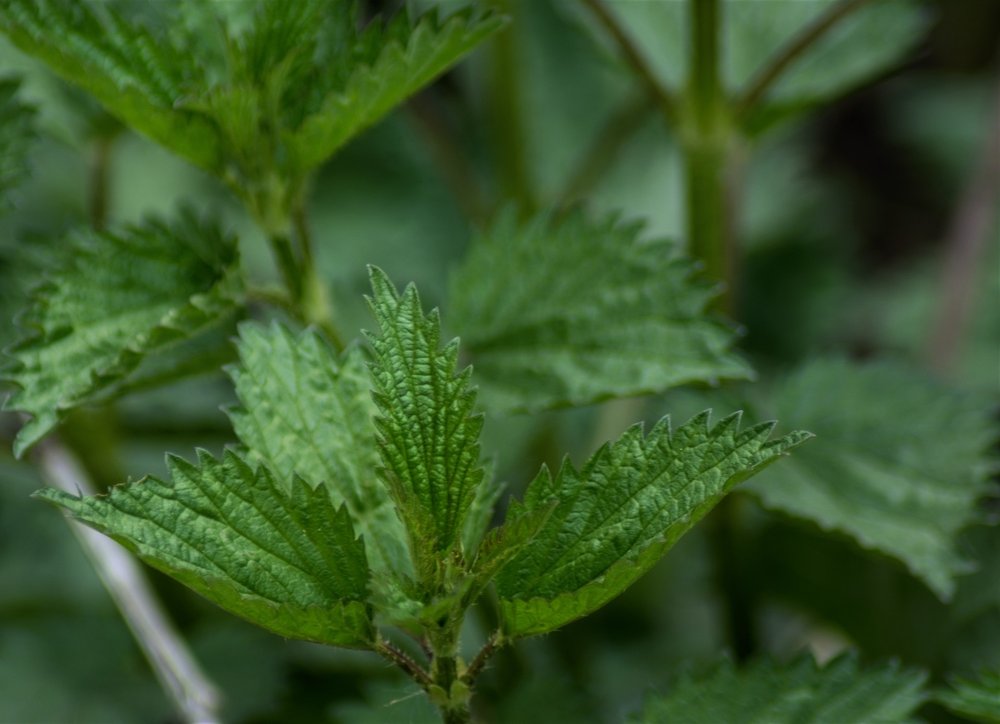
Stinging Nettle (Urtica gracilis) is a tall native perennial with opposite, coarsely toothed leaves and hollow stinging hairs, and dangling strings of tiny green flowers from June into September. It forms patches along creeks, springs, wet draws and shady canyon bottoms, and in the Black Hills it is listed at Jewel Cave, Wind Cave, Mount Rushmore and Devils Tower.
Free photos from other sources
| Family | Urticaceae · Nettle |
|---|---|
| Status | Native perennial |
| Blooms | June through September, peaking in July and August |
| Height | 50–200 cm (20–80 in) |
| Where | Creek banks, springs, wet meadows, shady draws and canyon bottoms, and moist disturbed ground |
| Also called | American Stinging Nettle, Slender Stinging Nettle, Tall Nettle, čhaŋíčaȟpehu (Lakota) |
| Synonym | Urtica dioica subsp. gracilis, Urtica dioica var. gracilis, Urtica dioica var. procera, Urtica procera |
| Toxicity | The stinging hairs cause a burning, itching sting that can last for hours, and can raise welts. |
| Traditional use | Black Elk and Flying By’s 1998 Culturally Important Plants of the Lakota says the Lakota cooked the young leaves as a potherb, made a nettle tea for stomach aches, and used the stem fiber of mature plants for rope and cordage. |
| Note | Many lists, including the National Park Service’s, still call this plant Urtica dioica subsp. gracilis. Both names mean the same Black Hills plant. |
Roots, seeds & germination
Root: Shallow, branching rhizomes, some above ground and some just below, which is why nettle grows in dense patches. One rhizome planted in late summer spread about 2.5 m (8 ft) in a year.
Seed: Each fruit is a tiny tan achene, about 1–1.3 mm long, shaped like a flattened egg and partly wrapped by two inner sepals. One stem can make about 500–5,000 seeds in shade and 10,000–20,000 in full sun, and the seeds stay on the plant until frost.
Germination: Sources disagree. The Forest Service reports that fresh seed is not dormant and can sprout 5–10 days after it ripens, while the Native Plant Network protocol calls for dry after-ripening, then warm stratification, then germination in light at 20/15 °C.
How do you identify Stinging Nettle?
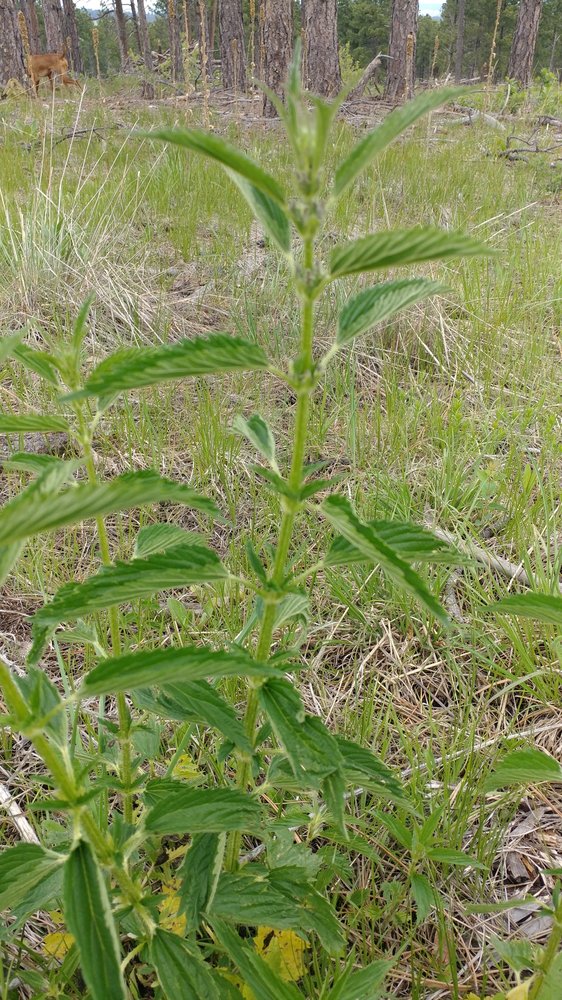
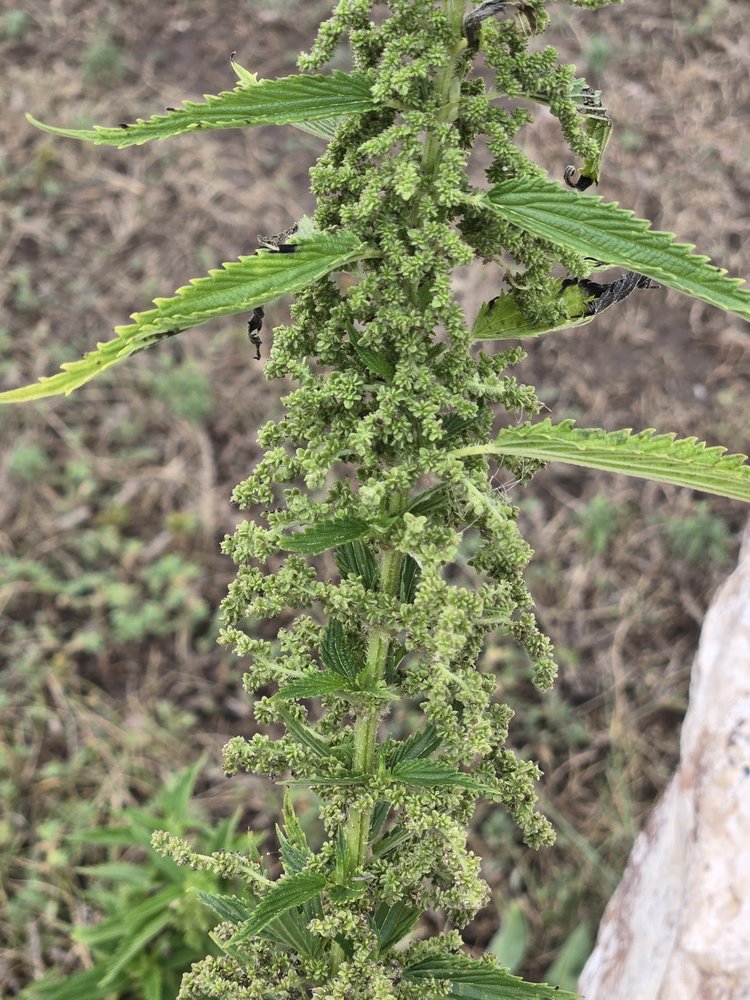
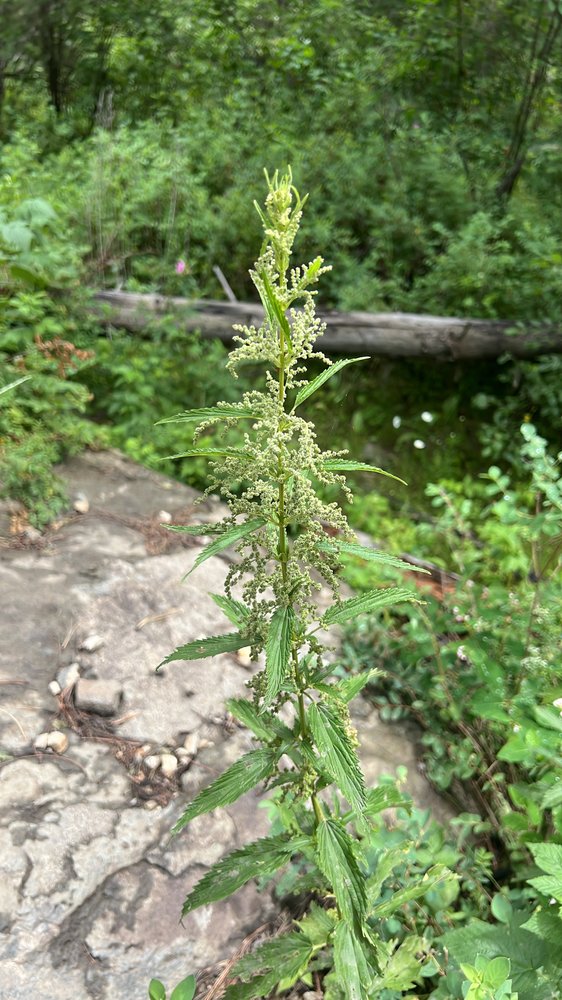
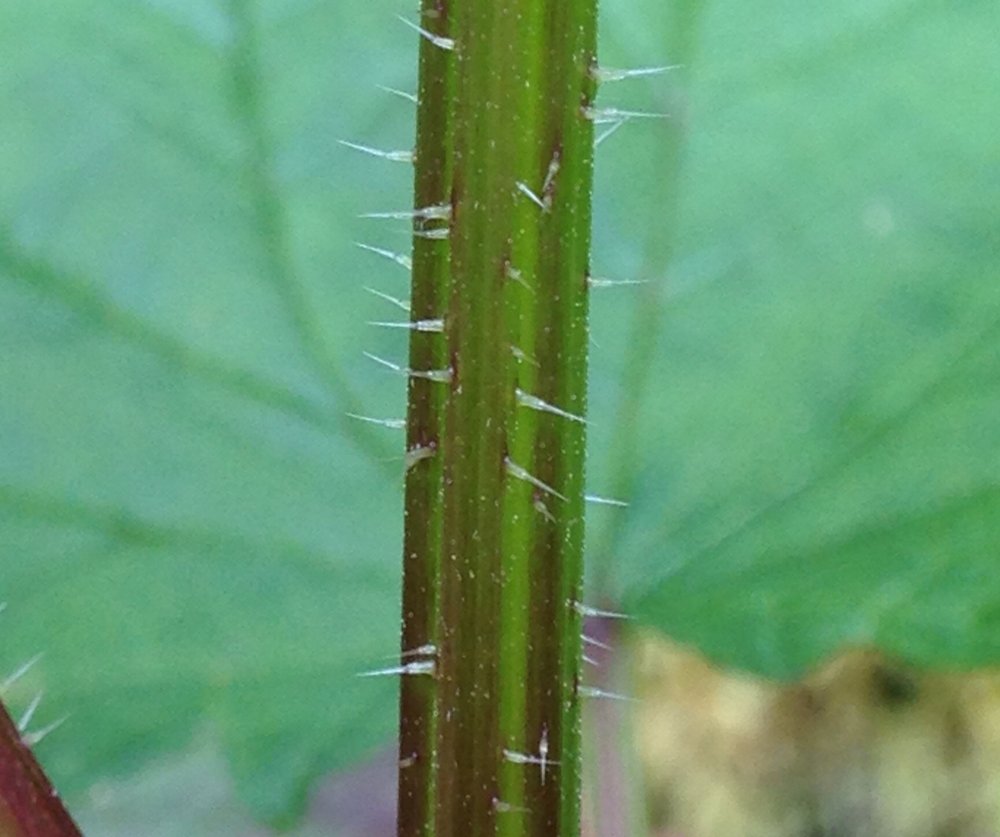
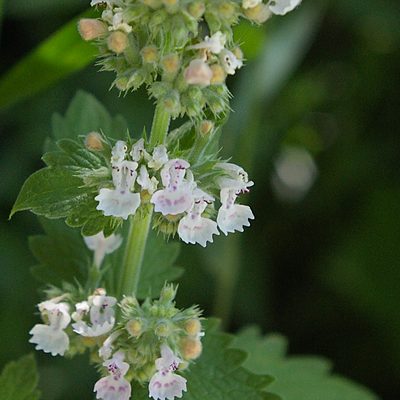
Look closely for stiff, glassy, needle-like hairs on the stem, leaf stalks and leaf undersides; American nettle has only a few on the stem, and the upper leaf surface is often nearly smooth. The leaves are opposite, lance-shaped to narrowly egg-shaped, 6–20 cm (2½–8 in) long, with coarse, saw-like teeth, a pointed tip and a pair of narrow stipules at the base of each leaf stalk. The upright stem is four-angled, and tiny green, petal-less flowers hang in branched strings from the upper leaf axils, drooping by late summer. Hedge Nettle, a mint of the same wet meadows, also has a square stem and opposite toothed leaves but is softly hairy with no sting and has a spike of pink-purple, two-lipped flowers.
When does it bloom?
June through September, peaking in July and August.
Where does it grow?
Moist, rich soil in sun or part shade: creek and spring margins, wet meadows, canyon bottoms under white spruce and paper birch, and damp disturbed ground around corrals, ditches and campgrounds. In the Black Hills it runs from about 1,100 m (3,600 ft) at Spearfish up into the high granite country. The 1986 Jewel Cave survey lists it, the species lists for Wind Cave, Jewel Cave, Mount Rushmore and Devils Tower include it, and herbarium specimens since 1887 come from Lawrence, Pennington and Custer counties, SD, and Crook County, WY, including Spearfish Canyon, Iron Creek and Castle Creek.
Other flowers to compare
Sources: Urtica gracilis Aiton — Plants of the World Online (Kew); Henning et al. 2014, Weeding the Nettles II: rehabilitation of Urtica gracilis — Phytotaxa 162(2): 61–83; Urtica dioica — Flora of North America Vol. 3 (Boufford); Urtica dioica ssp. gracilis — USDA PLANTS (URDIG); Urticaceae: Urtica dioica ssp. gracilis — R. Neil Reese, SDSU Open PRAIRIE; Black Elk & Flying By 1998, Culturally Important Plants of the Lakota — Sitting Bull College (SD PUC filing); Gilmore 1919, Uses of Plants by the Indians of the Missouri River Region — BAE 33rd Annual Report; Marriott & Hartman 1986, A Survey of the Vegetation of Jewel Cave National Monument; NPSpecies checklist — Wind Cave NP; NPSpecies checklist — Jewel Cave NM; NPSpecies checklist — Mount Rushmore NMem; NPSpecies checklist — Devils Tower NM; GBIF occurrence search — Urtica in the Black Hills; Carey 1995, Urtica dioica — USDA Forest Service Fire Effects Information System; Baskin & Baskin, Propagation protocol for Urtica dioica — Native Plant Network; Urtica dioica plant data sheet — University of Washington; Fu et al. 2006, Oxalic and tartaric acid as major persistent pain-inducing toxins in nettle stinging hairs — Annals of Botany 98: 57–65; Emmelin & Feldberg 1947, The mechanism of the sting of the common nettle — Journal of Physiology; Collier & Chesher 1956, Identification of 5-hydroxytryptamine in the sting of the nettle (Urtica dioica) — Br. J. Pharmacol.; Cummings & Olsen 2011, Mechanism of action of stinging nettles — Wilderness & Environmental Medicine; Macy et al. 2022, Wild Edibles: Stinging Nettle — Oregon State University Extension EM 9373; Stinging Nettle — NATIFS (North American Traditional Indigenous Food Systems); American stinging nettle — Minnesota Seasons; Stinging nettle — Kansas Wildflowers & Grasses.