Rocky Mountain Iris
Iris missouriensis
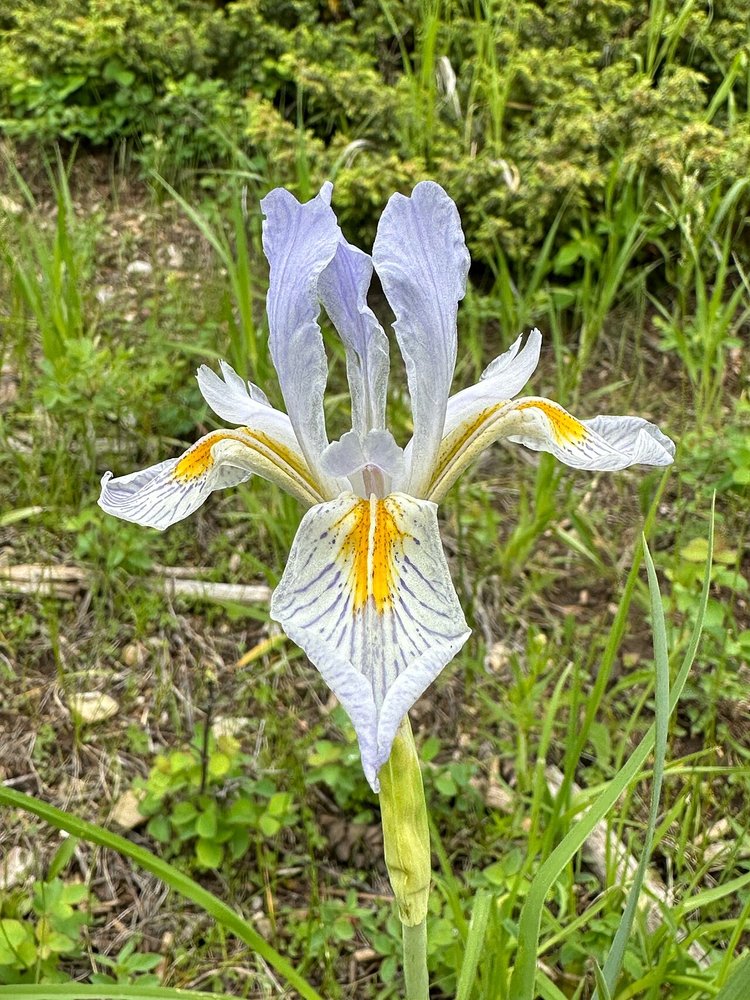
Rocky Mountain Iris (Iris missouriensis) is the only native wild iris in the Black Hills, a perennial that spreads from thick rhizomes, with pale blue to lavender flowers veined in dark purple. It blooms in late May and June, with a few into July, in wet meadows, creek bottoms and moist draws. The 1986 plant survey of Jewel Cave lists it, and the National Park Service also records it at Wind Cave and Mount Rushmore.
Free photos from other sources
| Family | Iridaceae · Iris |
|---|---|
| Status | Native perennial |
| Blooms | Late May and June, with a few into July |
| Height | 20–60 cm (8–24 in) |
| Where | Wet meadows, creek bottoms, moist draws and damp openings in pine forest |
| Also called | Western Blue Flag, Blue Flag, Wild Iris, Blue Iris, Missouri Iris |
| Synonym | Iris tolmieana, Iris longipetala, Iris montana, Iris missouriensis var. arizonica, Iris missouriensis var. pelogonus, Iris pariensis, Limniris missouriensis, Dielsiris missouriensis |
| Toxicity | All parts contain the toxin irisin, most of all the roots and rhizomes, and it can poison cattle, especially calves. |
| Traditional use | The National Park Service at Bryce Canyon says the Northern Paiute used it for toothache. |
Roots, seeds & germination
Root: A stout, creeping, branching rhizome, often 2–3 cm thick, with stringy roots underneath. The rhizome keeps growing outward, so an old patch can become a ring with bare ground in the middle.
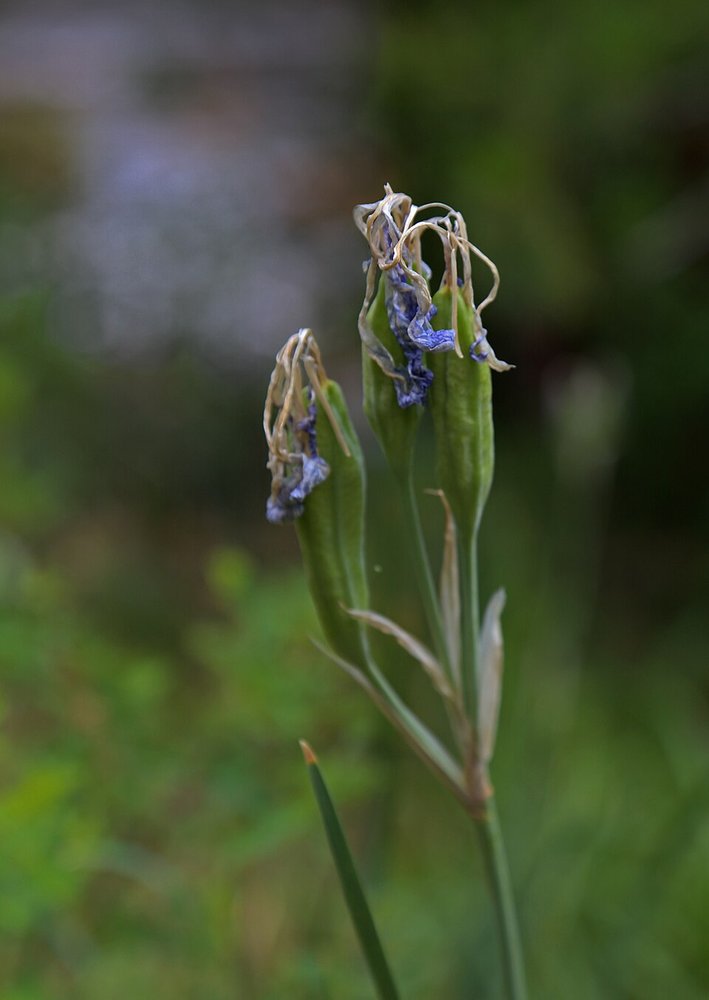
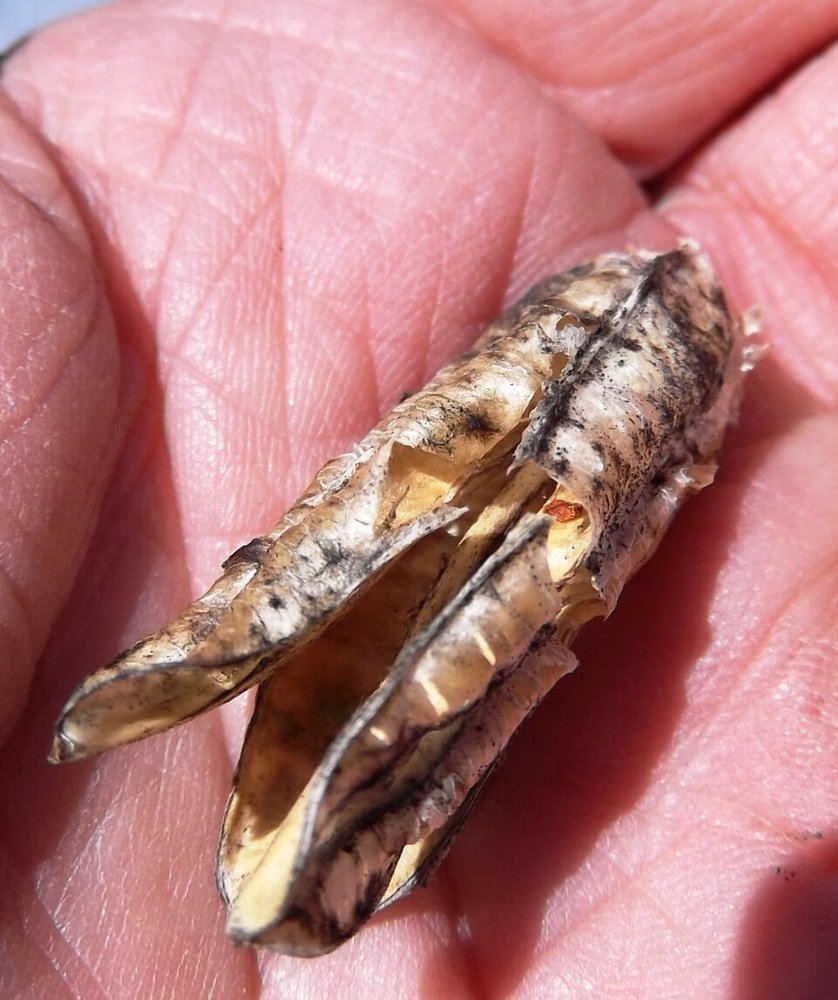
Seed: A three-sided capsule 3–5 cm long turns from green to brown and splits open at the top in late summer, holding about 20–80 large, dark reddish-brown seeds. In South Dakota, seed is collected from late July through September, once the pods turn brown.
Germination: The seed needs a long, cold, moist period before it sprouts: 30 days of cold is not enough, but about 120 days at 2 °C (36 °F), or sowing outdoors in fall, works. SDSU recommends 60–90 days of cold stratification, and some seed waits until its second spring. Seedlings may flower in their second or third year.
How do you identify Rocky Mountain Iris?
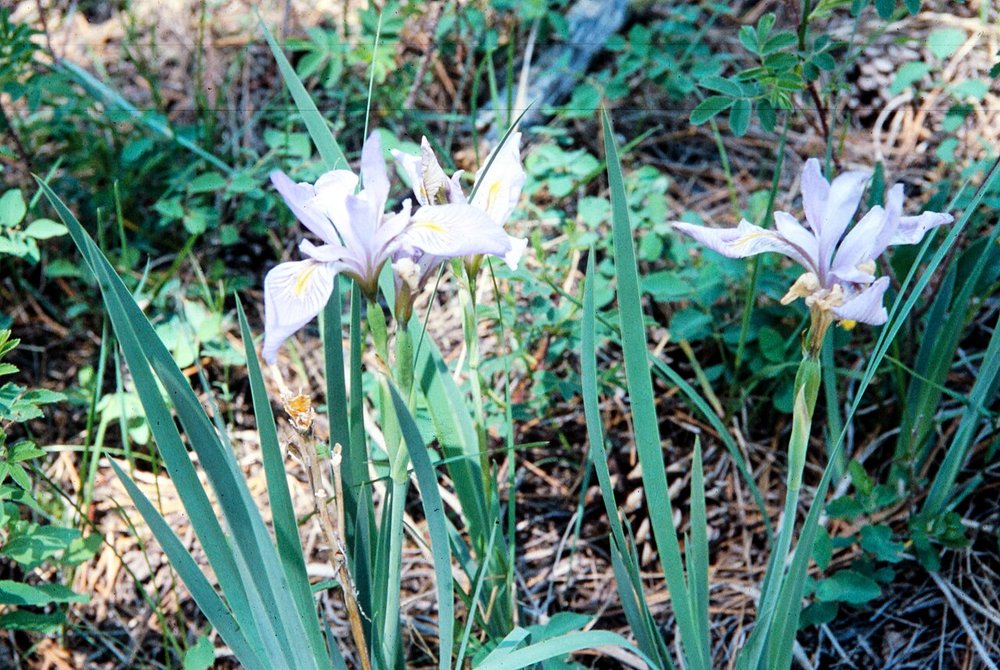
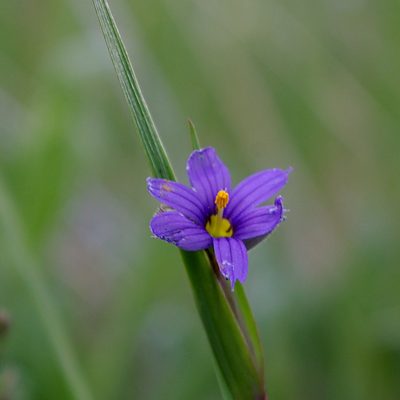
Look for a typical iris flower, 5–8 cm (2–3 in) across, with three broad, drooping pale blue to lavender sepals veined in dark purple and marked with a yellow-and-white patch at the base, and three narrower petals standing upright. The sepals have no fuzzy beard. The leaves are flat, sword-shaped and grayish-green, 3–10 mm wide, rising from the base about as tall as the leafless stalks, which carry one or two flowers. Blue-eyed Grass is much smaller, with grass-thin leaves and flat, star-shaped flowers about 1.5 cm across, and garden bearded irises that escape near cabins and roadsides have broader leaves and a fuzzy beard on each drooping sepal.
When does it bloom?
Late May and June, with a few into July.
Where does it grow?
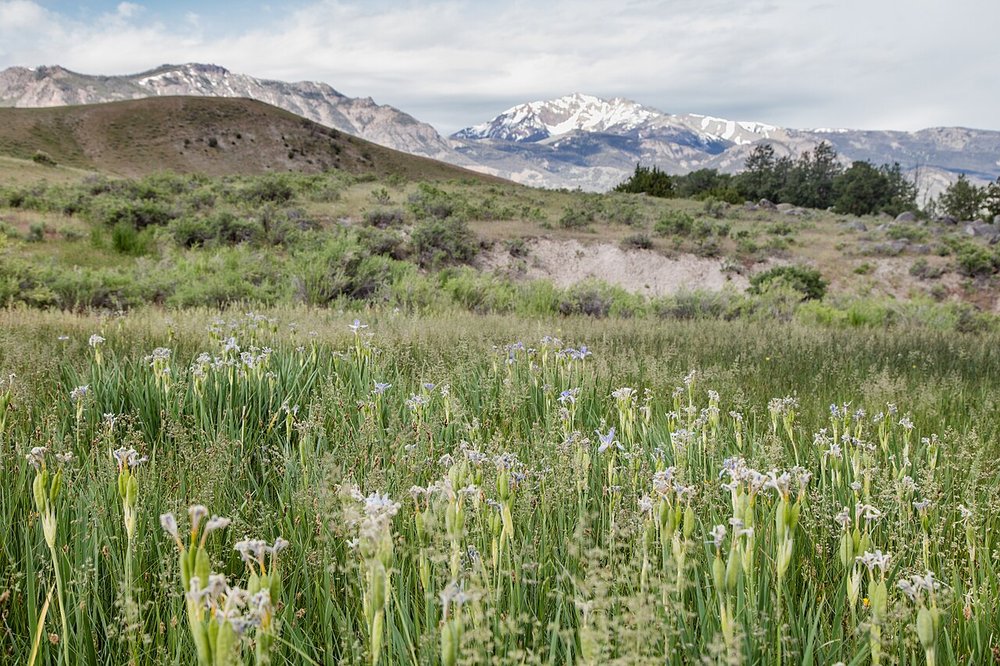
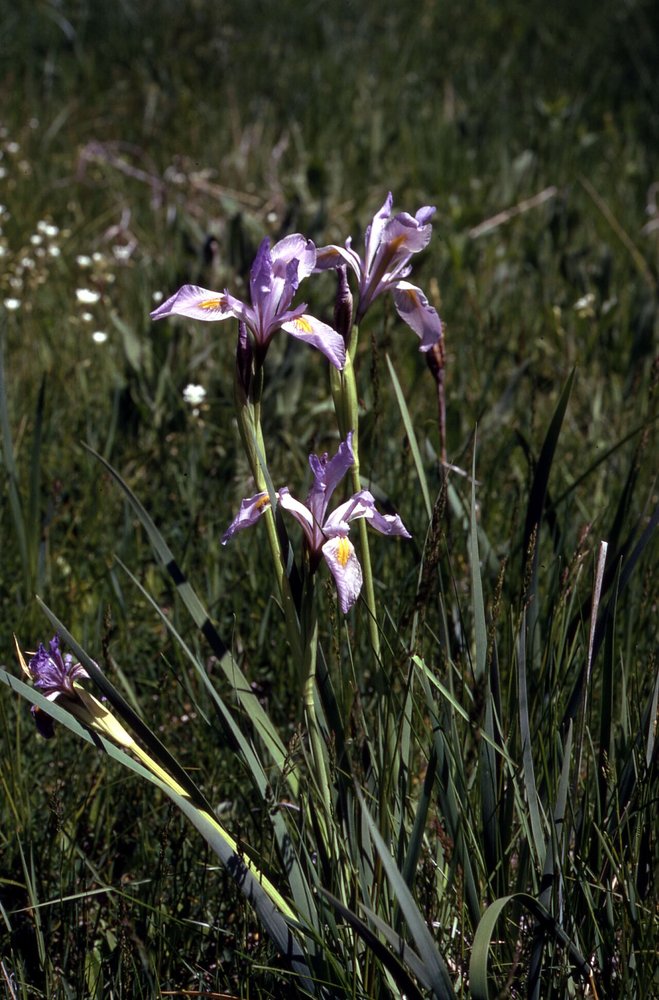
Wet meadows, creek and spring edges, moist draws and grassy swales, ditches, and damp openings in pine–birch woods. It needs water in spring but tolerates drying later, so a patch usually marks seasonally wet ground, and because cattle avoid the bitter leaves it often spreads in heavily grazed wet pastures. In the Black Hills it is recorded at Jewel Cave, Wind Cave, Mount Rushmore and Custer State Park and across the national forest, with herbarium specimens from Lawrence, Pennington, Custer and Meade counties in South Dakota and Crook and Weston counties in Wyoming, the oldest from 1875.
Other flowers to compare


Sources: Vegetation of Jewel Cave National Monument, 1986 (Marriott & Hartman, NPS); NPSpecies: Wind Cave, Jewel Cave, Mount Rushmore and Devils Tower vascular plant checklists (National Park Service IRMA); Western Blue Flag Plant Guide (USDA NRCS, M. Stevens); Iris missouriensis, Rocky Mountain iris: PLANTS Profile and wetland status (USDA NRCS); Iridaceae: Iris missouriensis (R. Neil Reese, SDSU Open PRAIRIE, South Dakota Native Plant Research); Toxic Plant BOLO: Rocky Mountain Iris (Anita Thompson, University of Arizona Cooperative Extension, 2022); Western Blue Flag Iris (USDA Forest Service, Celebrating Wildflowers); Western Iris (National Park Service, Bryce Canyon); Iris missouriensis (Lady Bird Johnson Wildflower Center); Propagation protocol for Iris missouriensis (ESRM 412, University of Washington, 2020); GBIF occurrence records, Iris in South Dakota and Wyoming Black Hills (herbarium specimens BHSC, KU, F, CSCN, MSC, WIS, NY, MIN and others; iNaturalist research-grade); Uses of Plants by the Indians of the Missouri River Region (Gilmore, 1919); Culturally Important Plants of the Lakota (Black Elk & Flying By, 1998); Iris missouriensis (Wikipedia).