Highbush Cranberry Viburnum opulus var. americanum also listed as Viburnum trilobum
Also called American Cranberrybush, American Highbush Cranberry, Crampbark, Mooseberry
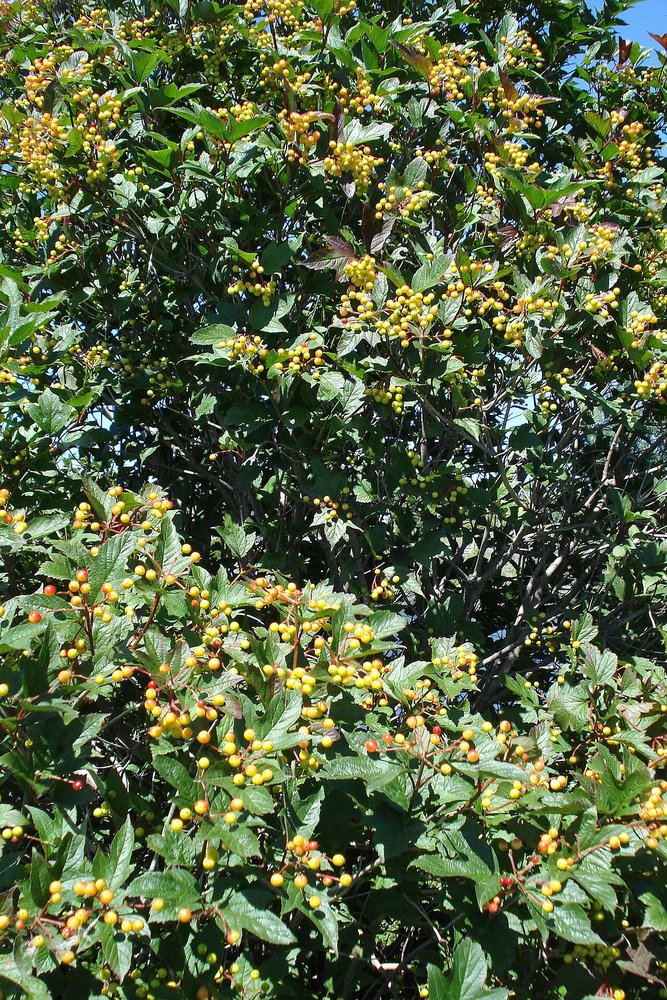
Highbush Cranberry (Viburnum opulus var. americanum, also listed as Viburnum trilobum) is a native shrub up to 4–5 m (13–16 ft) tall with opposite, maple-like, three-lobed leaves. In June and July it carries flat white flower clusters ringed by large showy sterile flowers around a center of tiny fertile ones, and by late summer the clusters turn to translucent red berries that hang on into winter. It is a shrub of wet woods, streamsides and moist wooded hillsides across Canada and the northern states, and in the Black Hills it grows in moist wooded ravines and birch-hazelnut thickets at about 1,300–1,500 m (4,200–4,950 ft), at the southwestern edge of its range.
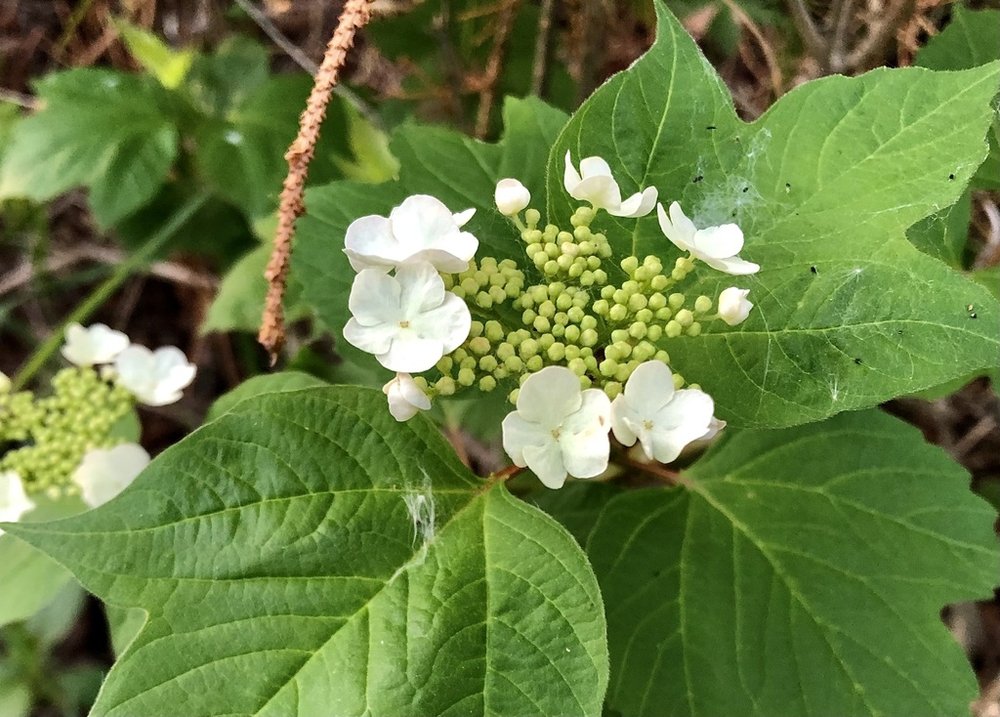
Free photos from other sources
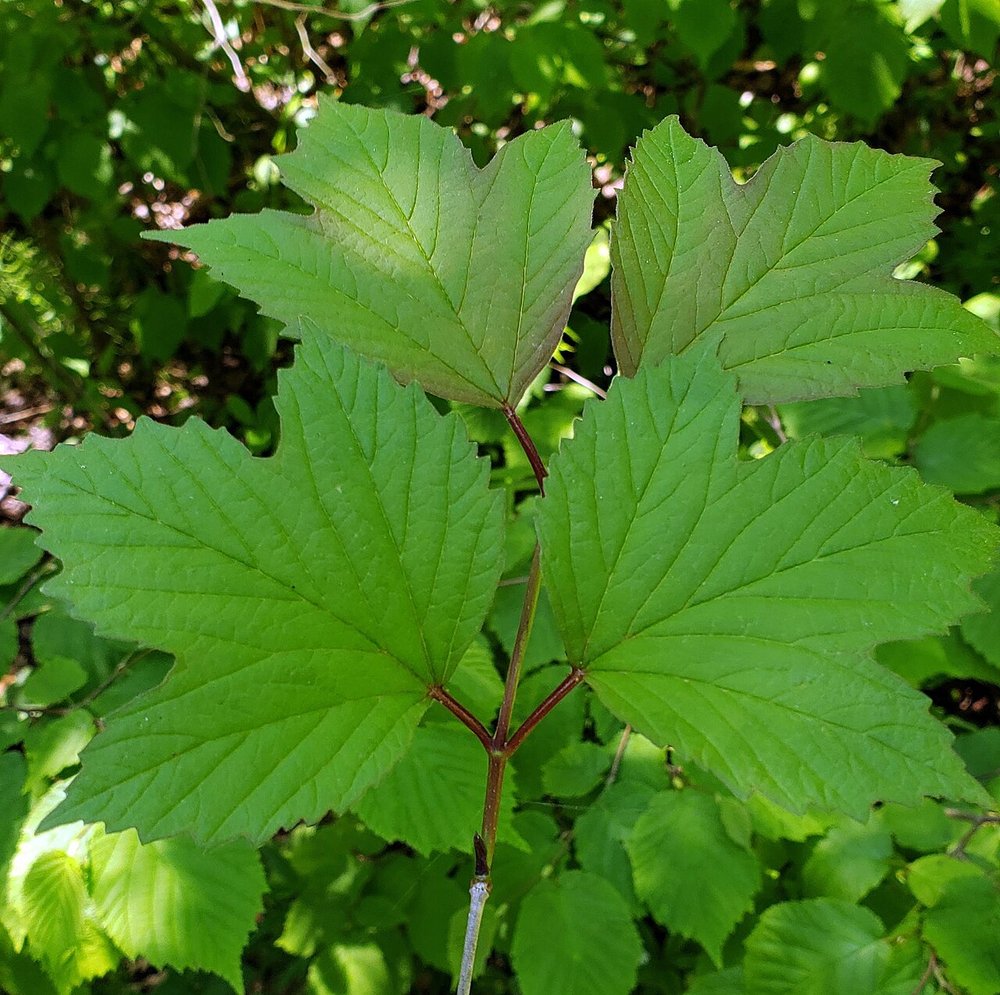
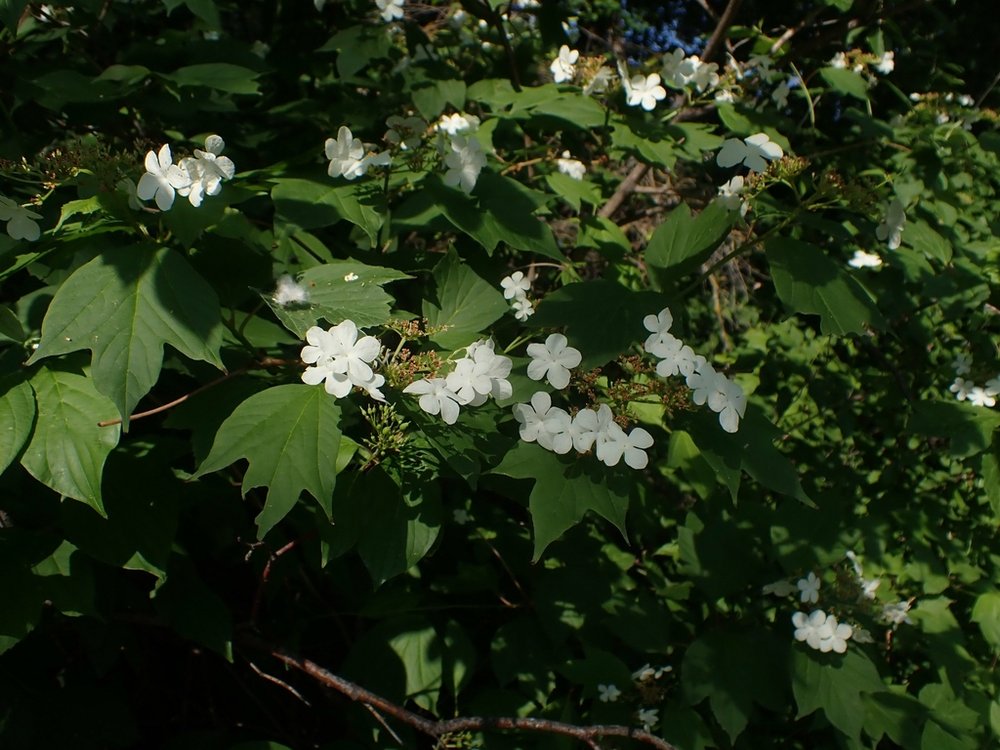
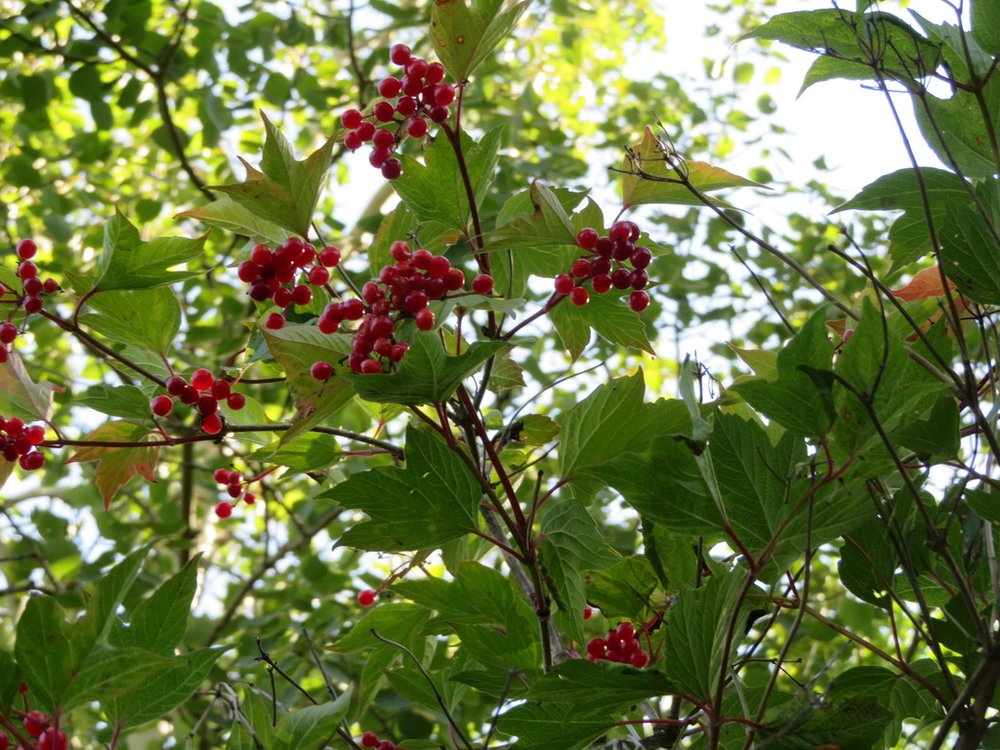
| Family | Adoxaceae · Moschatel |
|---|---|
| Status | Native deciduous shrub |
| Blooms | June and July; the red fruit ripens in August and September and hangs on through winter |
| Height | Up to 4–5 m (13–16 ft) |
| Where | Moist wooded ravines, birch-hazelnut thickets, wet woods and streamsides |
| Also called | American Cranberrybush, American Highbush Cranberry, Crampbark, Mooseberry |
| Synonym | Viburnum trilobum, Viburnum opulus subsp. trilobum |
| Food use | The USDA Plant Guide says the fruit of the native highbush cranberry is edible and is gathered from wild stands for sauces, jellies and juices, and that it has never become a commercial crop. |
| Traditional use | Moerman's ethnobotany database records that the Ojibwe took an infusion of the inner bark for stomach cramps (Smith 1932). It also records that the Chippewa used the fresh and dried fruit as an acid sauce (Gilmore 1933) and that the Iroquois mashed the fruit, made it into small cakes and dried them (Waugh 1916). |
| Note | The Forest Service named Highbush Cranberry a Region 2 sensitive plant in 2003 and listed it as one for the Black Hills in 2005. This page gives no locations. |
Traditional use: first drafted by Google AI, then checked against the sources on this page.
Roots, seeds & germination
Root: Several stems usually rise from the base. A stem sometimes arches over and roots where its tip touches the ground, and the shrub sometimes sends up suckers from its roots. Growers propagate it by cuttings, layering, crown division and seed.
Seed: The fruit is a berry-like drupe, round to oval, bright red to orange, 8–15 mm long and partly translucent, with a single strongly flattened stone. Deer, moose, foxes, grouse, robins, cedar waxwings and many other animals eat it, but birds usually take it only after it has frozen and thawed several times.
Germination: The seeds are hard to germinate. In the wild they do not sprout until the second spring after the fruit ripens. Seedlings do best in moderate shade on moist, nutrient-rich ground.
How do you identify Highbush Cranberry?
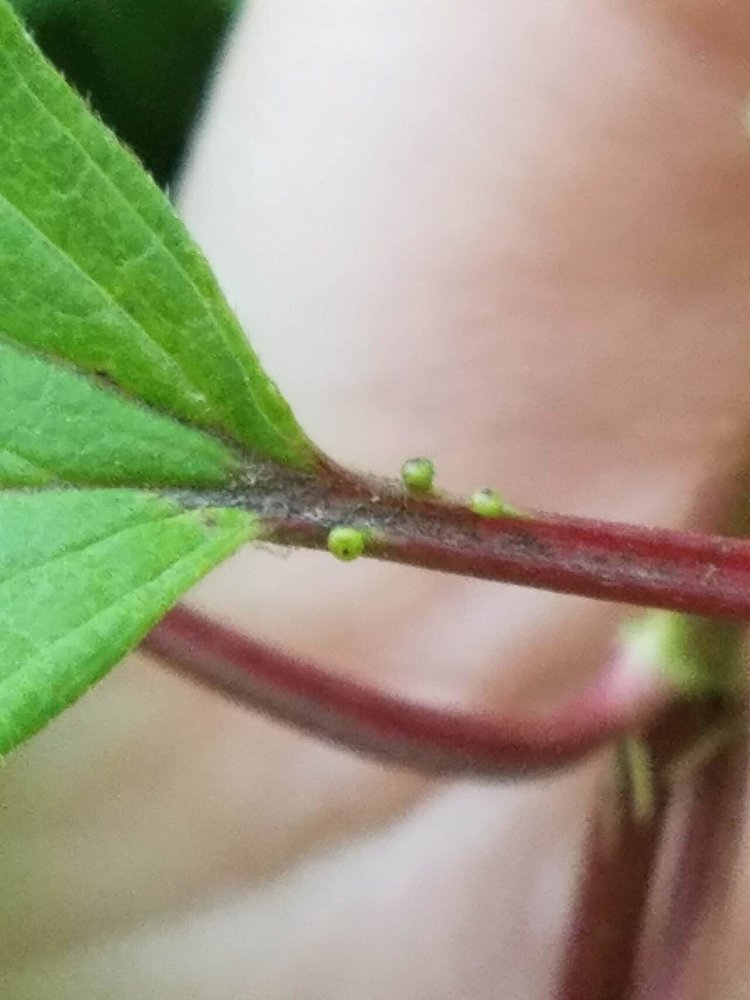
Look for opposite leaves 5–12 cm (2–5 in) long and nearly as wide, cut into three pointed lobes with coarse teeth, like a maple leaf on a shrub. At the top of the leaf stalk, where it meets the blade, sit one to six small stalked glands with rounded tops, and a pair of slender stipules grows at the stalk's base. The flat flower clusters, 5–15 cm (2–6 in) across, have two kinds of flowers: a ring of large sterile flowers 13–25 mm wide with five white petals, and a center packed with tiny fertile flowers 2–4 mm wide. The fruit is a shiny, translucent red berry 8–15 mm long with one flat stone, and the clusters stay on the bare shrub into winter. The Forest Service names Squashberry, a smaller viburnum, as the plant most likely to be confused with it in its Rocky Mountain Region: Squashberry's leaves are only shallowly lobed, all its flowers are fertile and the same medium size, it stands 1–2 m tall, it has no stipules, and its fruit is mostly round rather than oval. The European Guelder-rose, planted as an ornamental and sometimes escaping, is nearly identical, but its leaf-stalk glands are usually shorter than wide and cup-shaped with a distinct rim, where the native shrub's are taller than wide with flat or rounded tops.
When does it bloom?
June and July; the red fruit ripens in August and September and hangs on through winter.
Where does it grow?
Moist wooded ravines and deciduous thickets of birch and hazelnut, at about 1,300–1,500 m (4,200–4,950 ft). Across its range it grows in wet woods, along streams and on moist wooded hillsides. The Black Hills plants sit at the southwestern edge of the species' range, cut off from its main range to the east.
Sources: USDA PLANTS: Viburnum opulus var. americanum (VIOPA2); USDA NRCS Plant Guide: Highbush Cranberry, Viburnum opulus var. americanum; Viburnum opulus var. americanum: A Technical Conservation Assessment (Nellessen, 2006), USDA Forest Service (archived copy); Phase II Amendment Final Environmental Impact Statement, chapter 3-3.2 Flora (2005), USDA Forest Service; Minnesota Wildflowers: Viburnum opulus var. americanum (American Highbush Cranberry); Minnesota Wildflowers: Viburnum edule (Squashberry); Moerman, Native American Ethnobotany database (BRIT): Viburnum opulus var. americanum.