Common Juniper
Juniperus communis var. depressa
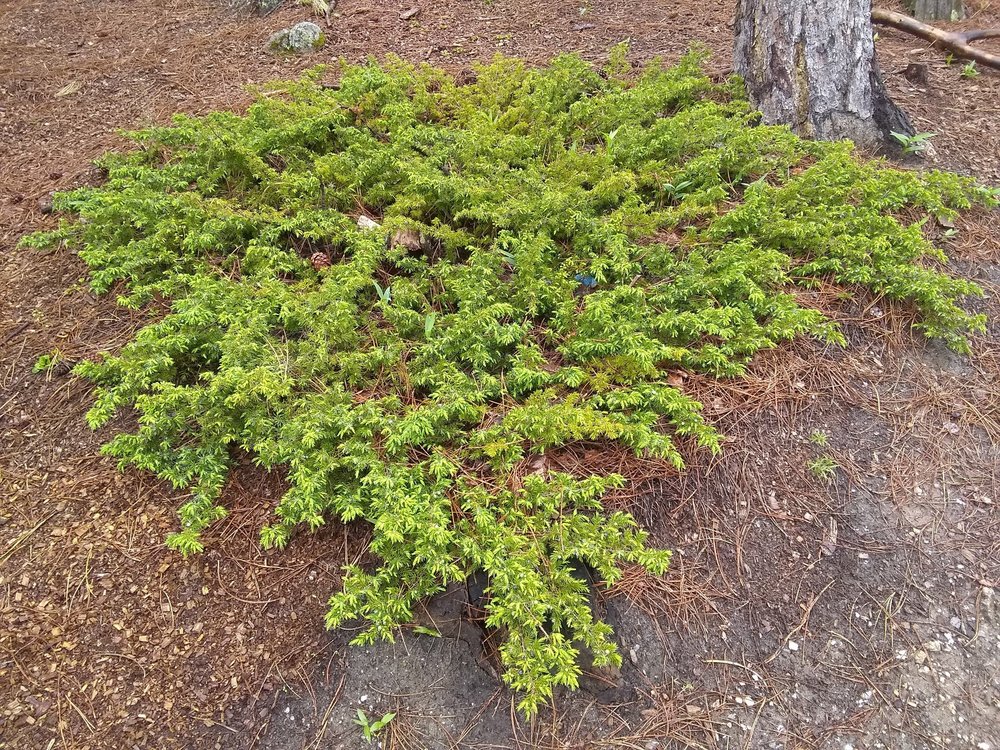
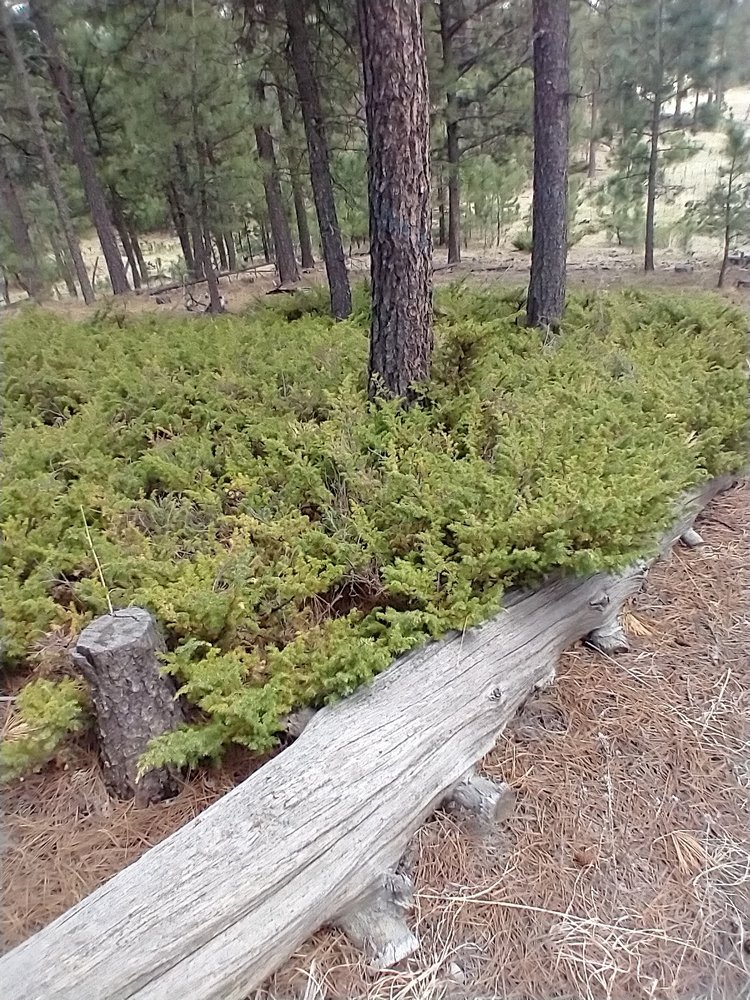
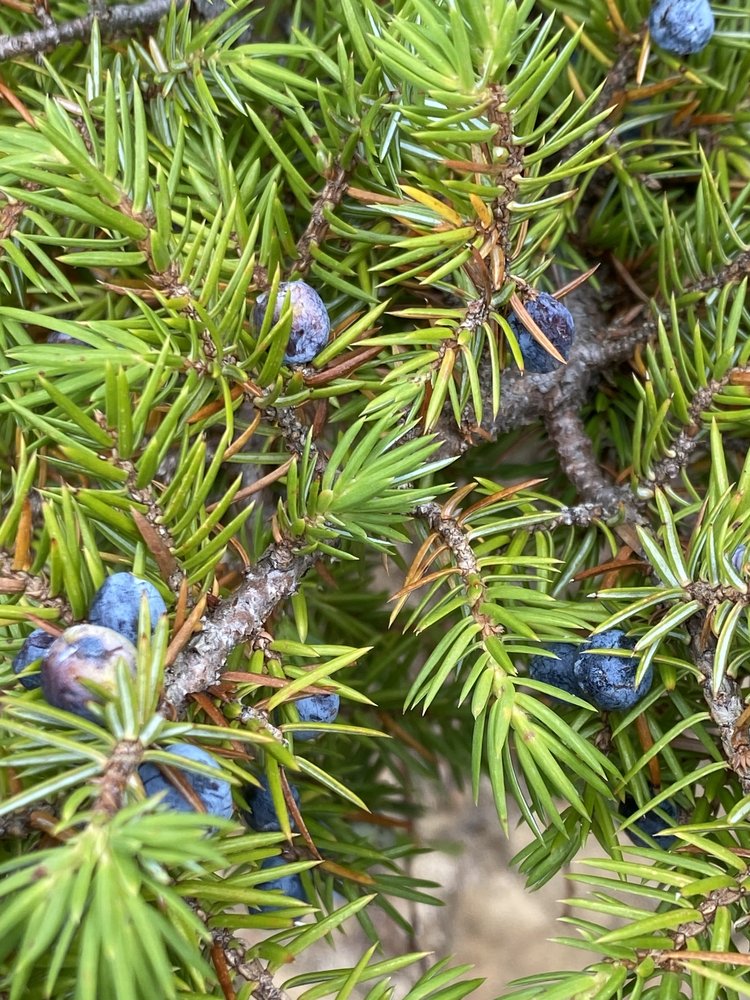
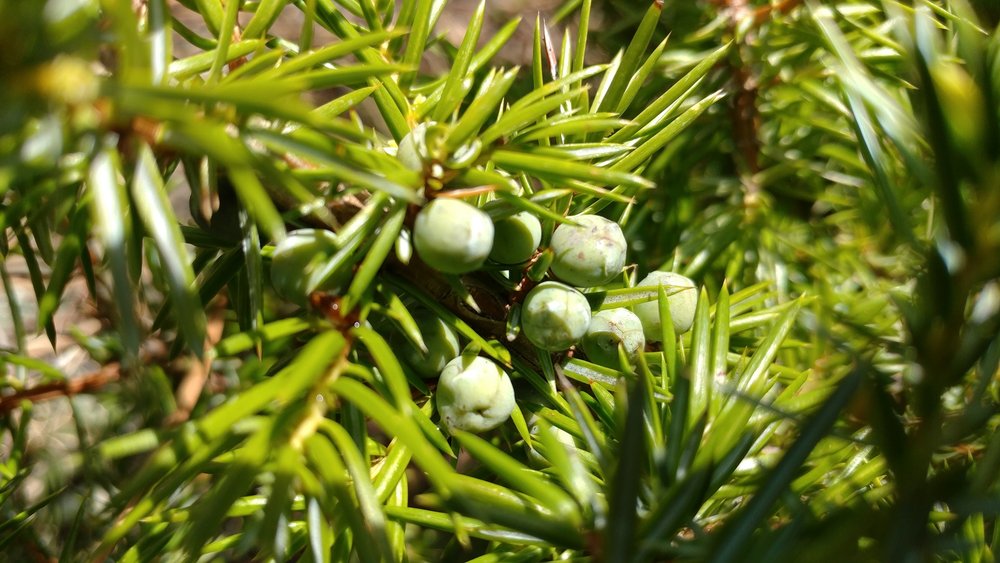
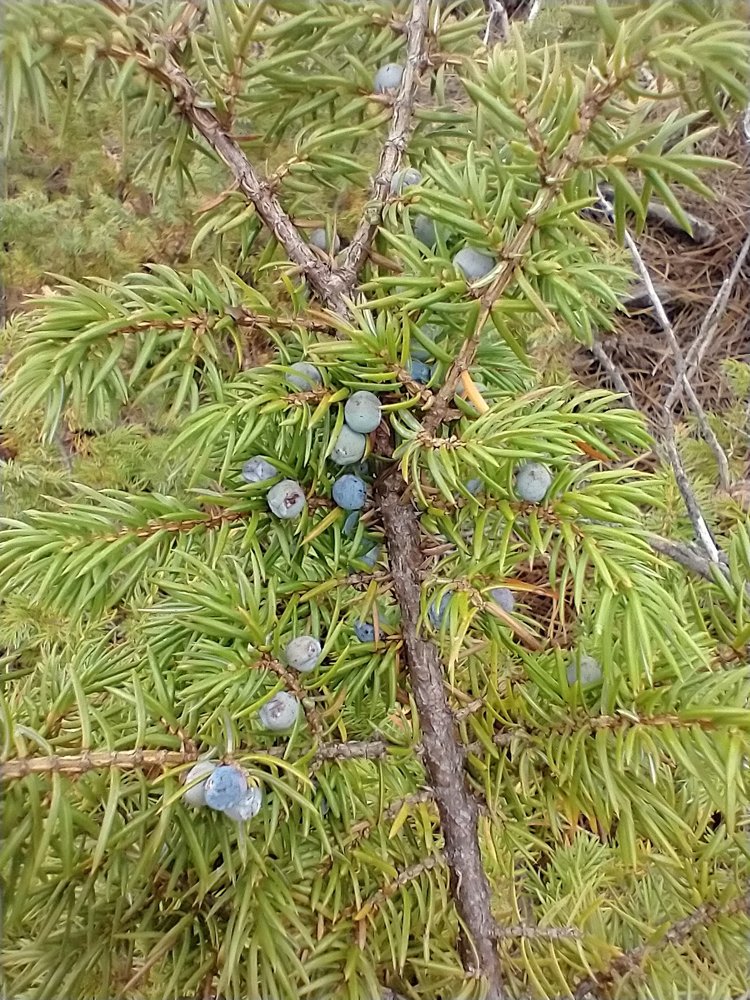
Common Juniper (Juniperus communis var. depressa) is a low, prickly, native evergreen shrub that spreads in wide, flat-topped mounds under the ponderosa pines across the Black Hills. It has no flowers: tiny cones shed pollen in spring, and the blue "berries" take two to three years to ripen, so one plant can carry green and blue berries at once.
Free photos from other sources
| Family | Cupressaceae · Cypress |
|---|---|
| Status | Native shrub |
| Blooms | Pollen about May into June; berries ripen in the second year |
| Height | 30–100 cm (1–3 ft) |
| Where | Under ponderosa pine and spruce, on rocky slopes, ridges and canyon sides |
| Also called | Dwarf Juniper, Ground Juniper, Prostrate Juniper, ȟaŋté šá (Lakota) |
| Synonym | Juniperus communis subsp. depressa, Juniperus depressa, Juniperus canadensis |
| Toxicity | The foliage may be poisonous to domestic goats. |
| Traditional use | Sitting Bull College's 1998 Culturally Important Plants of the Lakota gives one entry for red cedar and common juniper together: the leaves were burned in ceremony, especially against fear of thunder, smoke from burning twigs was breathed in for head congestion, and a tea of the berry-like cones and leaves was taken for coughs. |
Roots, seeds & germination
Root: A woody, branching root system; USDA gives a minimum rooting depth of about 36 cm (14 in). It doesn't sprout back from the roots once the top is killed, which is why fire wipes it out, but low branches buried in litter can root and widen the mat.
Seed: Each berry holds 1–3 hard brown seeds and stays on the plant for at least two years. Birds spread most of them, including robins, waxwings, chickadees and wild turkeys. Up to 60% of seeds can be empty.
Germination: Slow and difficult: the seed needs a warm, moist spell followed by a cold one, and without that only about 1% sprout. One protocol gives 60 days warm and 90 days cold stratification, and sowing fresh seed outdoors in fall gives it both naturally. Cuttings are easier to root.
How do you identify Common Juniper?
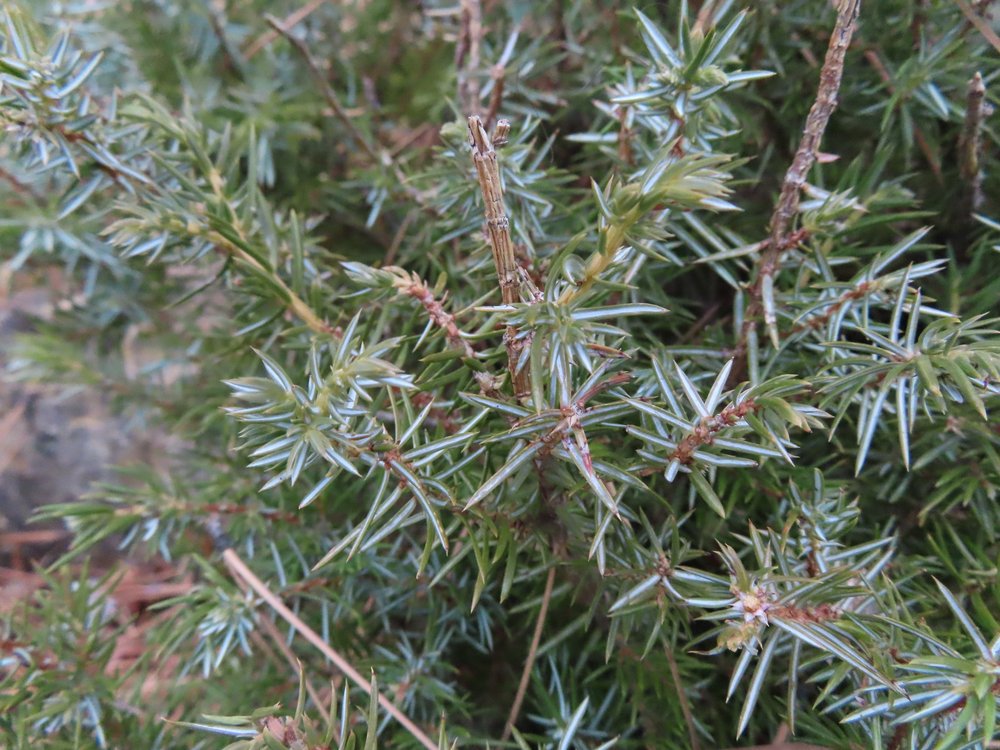
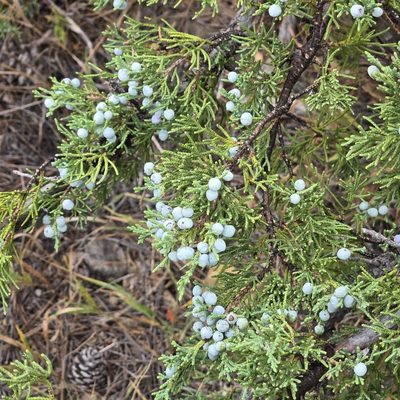
Look for a knee-high, many-stemmed mound with no trunk, often wider than a car. It has only needles, never scales: stiff, sharp and 0.6–1.5 cm (¼–⅝ in) long, sticking out from the twig in threes, each with one broad white stripe down its inner face. The round berries, 6–9 mm (¼–⅓ in), grow only on female plants, hard and green the first year and dusky blue-black with a whitish bloom when ripe. Rocky Mountain Juniper is an upright tree with tiny scale leaves pressed flat to the twig, and Creeping Juniper hugs bare rock in full sun with flat, overlapping scales.
When does it bloom?
Pollen about May into June; berries ripen in the second year.
Where does it grow?
Gentle to steep slopes, rocky ridges, cliff edges and canyon sides, from dry ponderosa pine country up into spruce stands, in sun or fairly heavy shade, at about 1,070–2,070 m (3,500–6,800 ft). The Forest Service's Black Hills classification names a ponderosa pine/common juniper habitat type, widespread on the Limestone Plateau of the western Hills. The 1986 Jewel Cave plant survey lists it, it is on the Wind Cave, Mount Rushmore and Devils Tower species lists, and about 115 herbarium specimens come from all seven Black Hills counties.
Other plants to compare
Sources: Hoffman, G.R. & R.R. Alexander. 1987. Forest Vegetation of the Black Hills National Forest of South Dakota and Wyoming: A Habitat Type Classification. USDA Forest Service Res. Pap. RM-276; Marriott, H. & R. Hartman. 1986. A Survey of the Vegetation of Jewel Cave National Monument; USDA Forest Service Fire Effects Information System (FEIS): Juniperus communis; USDA Forest Service FEIS: Juniperus horizontalis (creeping juniper); Flora of North America: Juniperus communis var. depressa; Kew Plants of the World Online: Juniperus communis var. depressa Pursh; USDA NRCS PLANTS Database: Juniperus communis (JUCO6) and var. depressa (JUCOD); Earle, C.J. The Gymnosperm Database: Juniperus communis; Minnesota Wildflowers: Juniperus communis (Common Juniper); Minnesota Wildflowers: Juniperus horizontalis (Creeping Juniper); Wyoming State Forestry Division, Native Tree ID: Common juniper; USDA NRCS Plant Guide: Rocky Mountain Juniper, Juniperus scopulorum (M. Stevens); Luna, T., J. Evans & J. Hosokawa. 2008. Propagation protocol for Juniperus communis, Glacier National Park. Native Plant Network; Tylkowski, T. 2009. Improving seed germination and seedling emergence in the Juniperus communis. Dendrobiology 61: 47-53; Black Elk, L.S. & W.D. Flying By. 1998. Culturally Important Plants of the Lakota. Sitting Bull College (no. 156); Gilmore, M.R. 1919. Uses of Plants by the Indians of the Missouri River Region. 33rd Annual Report, Bureau of American Ethnology; 21 CFR 182.20, Essential oils, oleoresins and natural extractives generally recognized as safe (lists Juniper (berries), Juniperus communis L.); Drugs.com Natural Products: Juniper (toxicology and cautions); NPS NPSpecies: common juniper at Wind Cave National Park; GBIF occurrence search: Juniperus communis, South Dakota; GBIF occurrence search: Juniperus horizontalis, South Dakota; iNaturalist: Juniperus communis observations within 80 km of the central Black Hills.