White Dapperling
Leucocoprinus leucothites
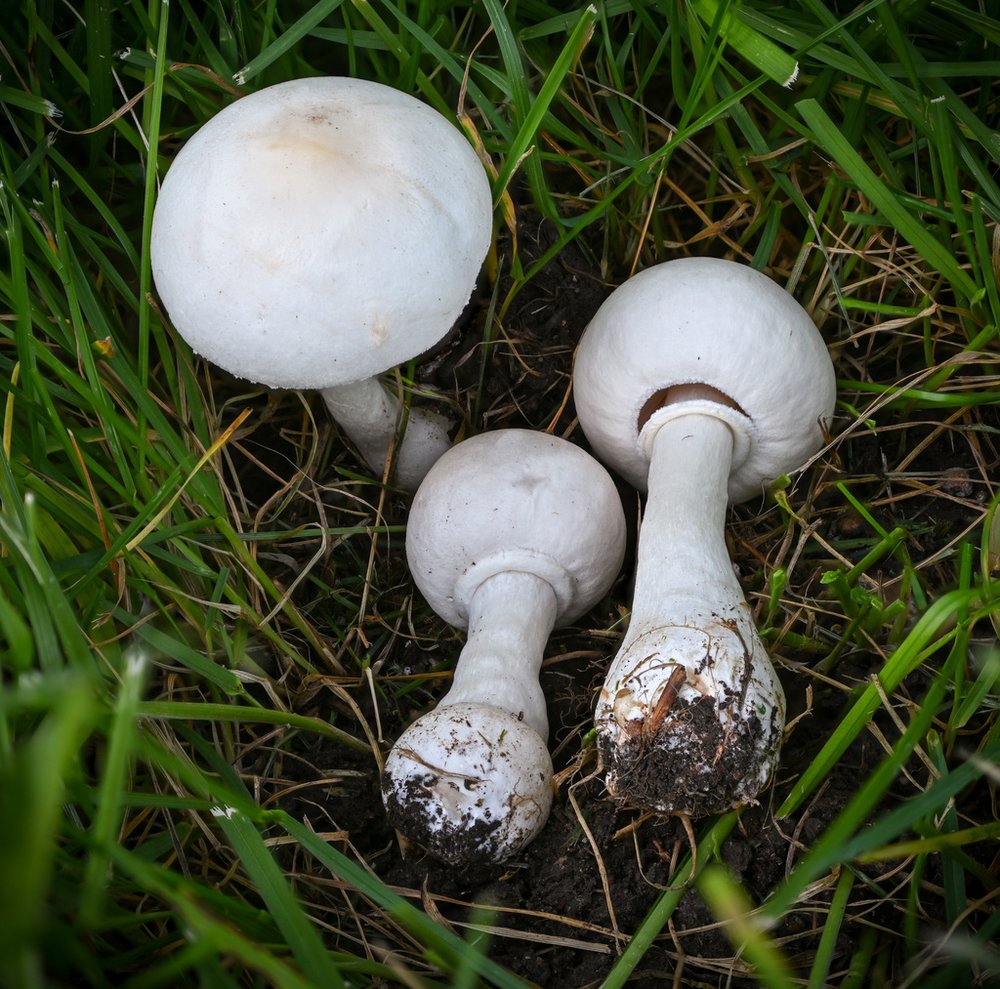
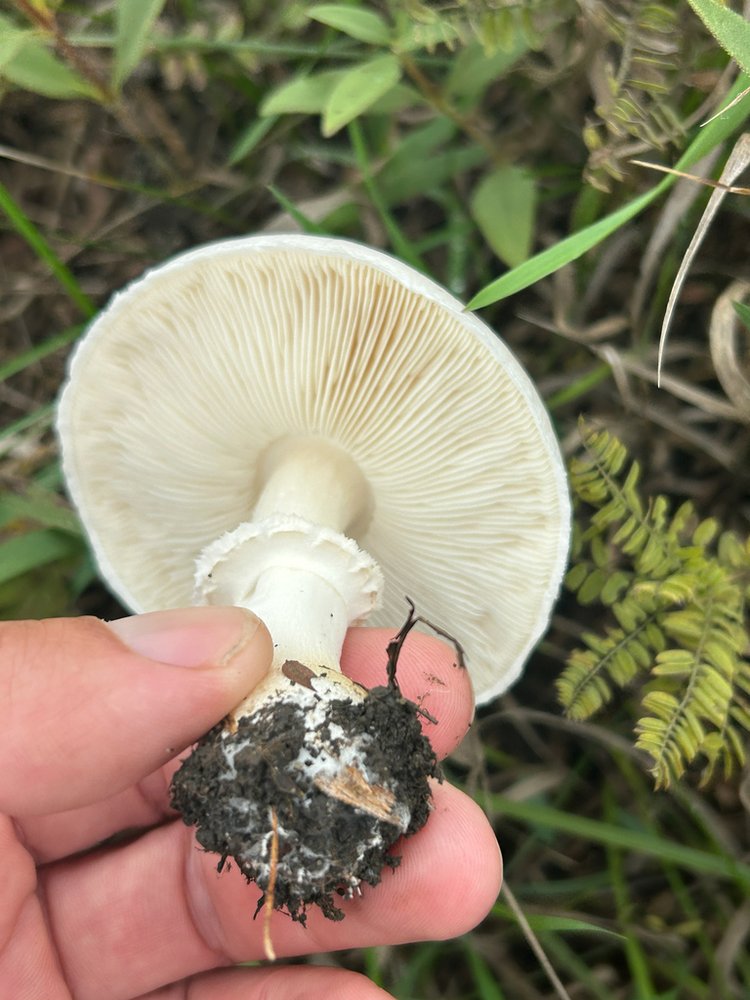
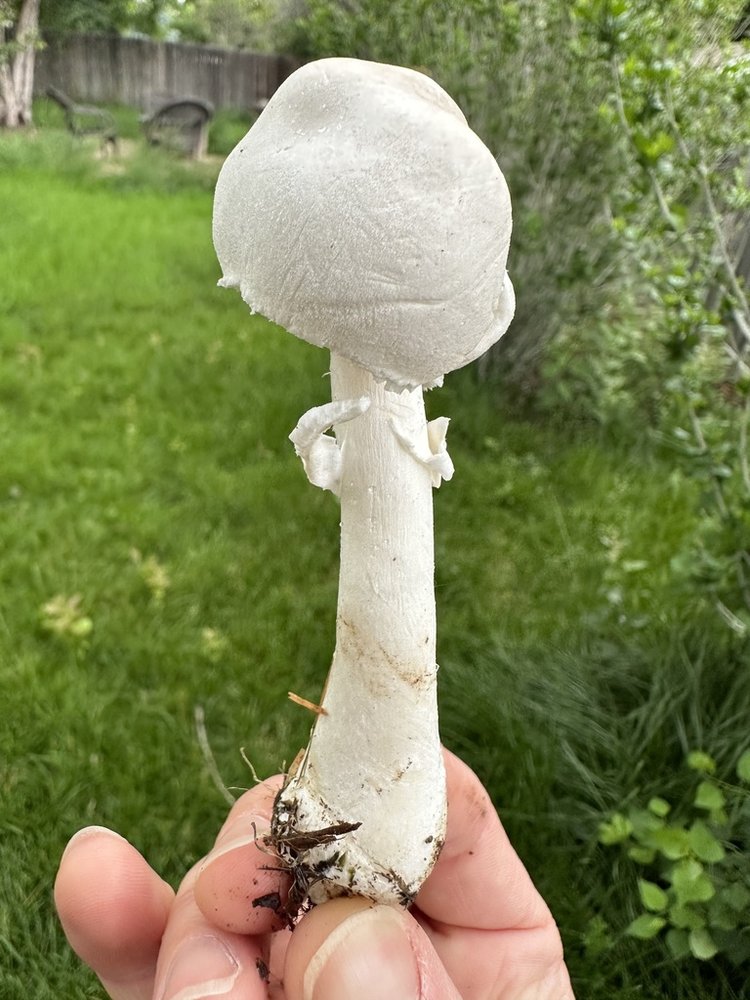
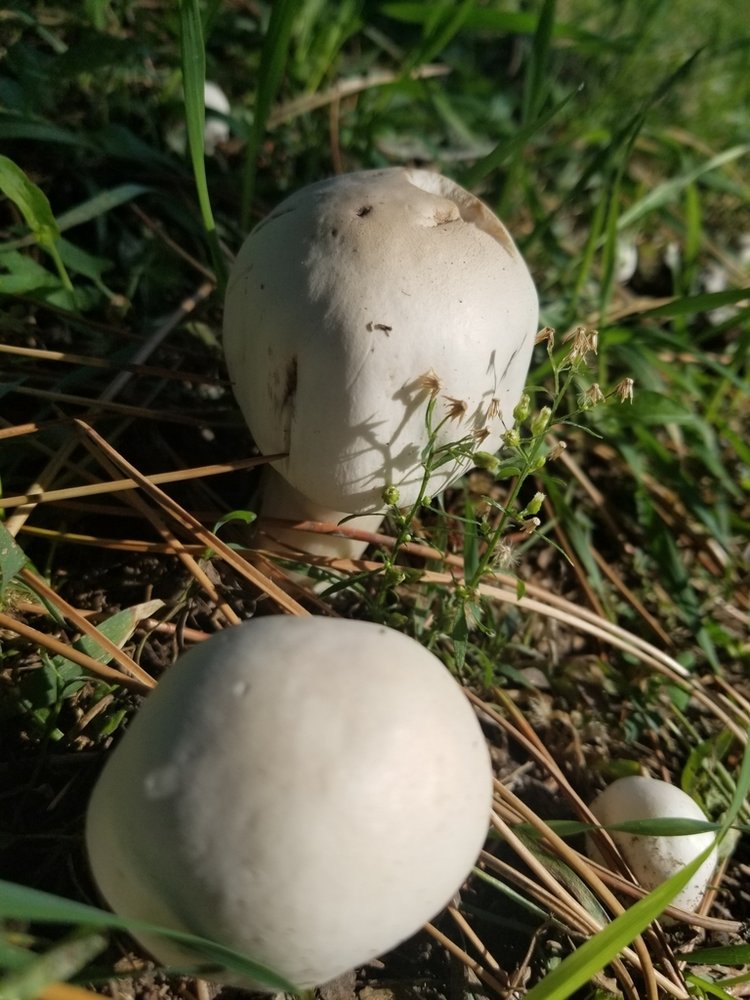
White Dapperling (Leucocoprinus leucothites) is an all-white lawn mushroom with a soft cap that is lumpy when young, white gills that don't touch the stem, a white ring and a stem, usually club-shaped, with no cup at the base. iNaturalist has 3 research-grade Black Hills records, from late August and September in Lawrence and Pennington counties, and 12 more awaiting confirmation from late May to early October.
Free photos from other sources
| Family | Agaricaceae · Agaricus |
|---|---|
| Type | Gilled mushroom |
| Season | Mostly late summer and fall: its research-grade Black Hills records on iNaturalist are from late August and September, and others awaiting confirmation run from late May to early October |
| Size | Cap 5–9 cm (2–3½ in) wide, stem 6–10 cm (2½–4 in) tall |
| Grows on | Soil in lawns, gardens, roadsides and other grassy or disturbed ground |
| Spore print | White |
| Also called | Smooth Parasol, Woman on a Motorcycle |
| Synonym | Leucoagaricus leucothites, Leucoagaricus naucinus, Lepiota naucina, Lepiota leucothites |
| Toxicity | It has made people and a dog sick: the North American Mycological Association's case registry lists three adults and six children with stomach upset, cramps, nausea, drooling, vomiting, irritability or acid reflux, one person with a rash on the face and neck and a swollen face and eyes, and a dog that was lethargic for a day or so. |
| Eating | This guide doesn't say which mushrooms are safe to eat. |
How it lives
A saprobe: it breaks down dead organic matter in the soil and doesn't partner with tree roots. It grows mostly in ground people have changed, such as lawns and roadsides; its spores sprout easily on many surfaces, which may be why it has spread so widely in towns.
How do you identify White Dapperling?
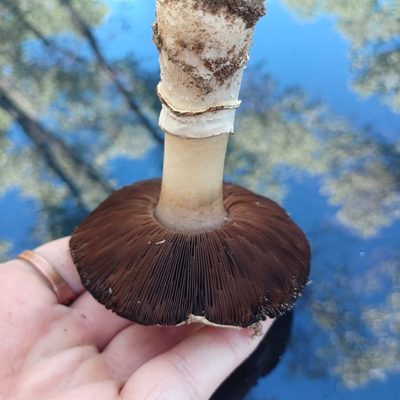
Look for a white mushroom in a lawn, garden or other grassy or disturbed ground. The cap is 5–9 cm (2–3½ in) wide, dry and soft, white or grayish white, rounded and lumpy when young, then broadly convex to nearly flat; it can be finely scaly when young and may stain yellowish or brownish, mostly at the edge. The gills are crowded, white and free from the stem, and may turn cream or pinkish with age. The stem is 6–10 cm (2½–4 in) long and usually club-shaped, swelling toward the base; it bruises yellowish to brownish and has a white ring high up that usually stays but can fall away. There is no cup (volva) at the base and no patches on the cap. The spore print (the dust the gills drop) is white. It can easily be mistaken for a white Amanita such as the deadly destroying angels, which have a white, sack-like cup around the base that may be underground or broken up, so dig the whole stem out to look; iNaturalist has no Black Hills records of destroying angels. From above it also looks like an Agaricus mushroom, such as the Pavement Mushroom, but its gills stay white as the cap opens and turn only cream or pinkish with age, while Agaricus gills turn dark purplish brown or chocolate brown as the cap reaches full size.
When can you find it?
Mostly late summer and fall: its research-grade Black Hills records on iNaturalist are from late August and September, and others awaiting confirmation run from late May to early October.
Where does it grow?
Lawns, gardens, roadsides and other grassy or disturbed ground, often near conifers and now and then in woods. iNaturalist has 15 Black Hills records: 3 research grade (Pennington County, August 2021; Lawrence County, September 2021 and September 2022) and 12 awaiting confirmation from Custer, Lawrence, Meade and Pennington counties, one of them in Custer State Park. No South Dakota herbarium specimen turned up in GBIF, and no published Black Hills source opened for this guide names it.
Other mushrooms to compare
Sources: Kuo, Leucoagaricus leucothites (2015) — MushroomExpert.com; Leucoagaricus leucothites, white dapperling, smooth parasol — Mushrooms Up!, Beaty Biodiversity Museum, University of British Columbia; Kuo, Amanita bisporigera, the eastern destroying angel (2013) — MushroomExpert.com; Kuo, Agaricus bitorquis (2017) — MushroomExpert.com; Beug, Shaw & Cochran, Thirty-Plus Years of Mushroom Poisoning: Summary of the Approximately 2,000 Reports in the NAMA Case Registry (McIlvainea 16, 2006) — North American Mycological Association; Beug, Summary of the Poisoning Reports in the NAMA Case Registry for 2006 through 2017 — North American Mycological Association; Species Fungorum: Leucocoprinus leucothites, species synonyms — Royal Botanic Gardens, Kew; iNaturalist: Leucocoprinus leucothites taxon page data (English names White Dapperling, Woman on a Motorcycle); iNaturalist: Leucocoprinus leucothites in the Black Hills places (Black Hills ecoregions, Black Hills National Forest, Wind Cave NP, Custer SP); iNaturalist: Amanita species recorded in the Black Hills places (no destroying angels); GBIF: Leucoagaricus leucothites records from South Dakota (no specimens).