Pavement Mushroom
Agaricus bitorquis
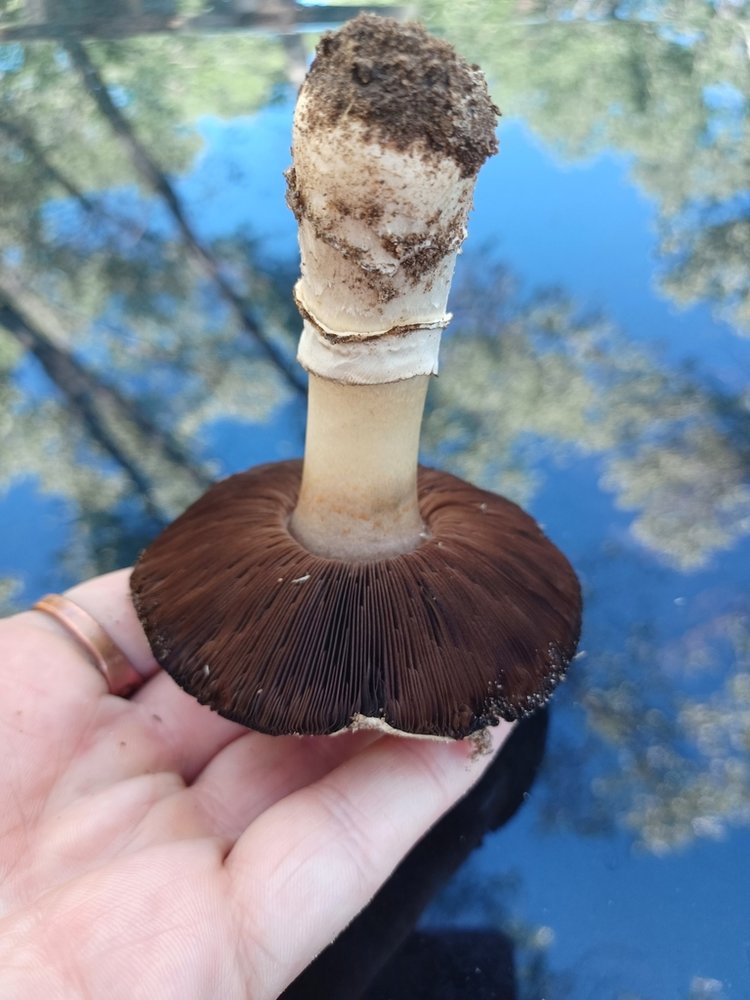
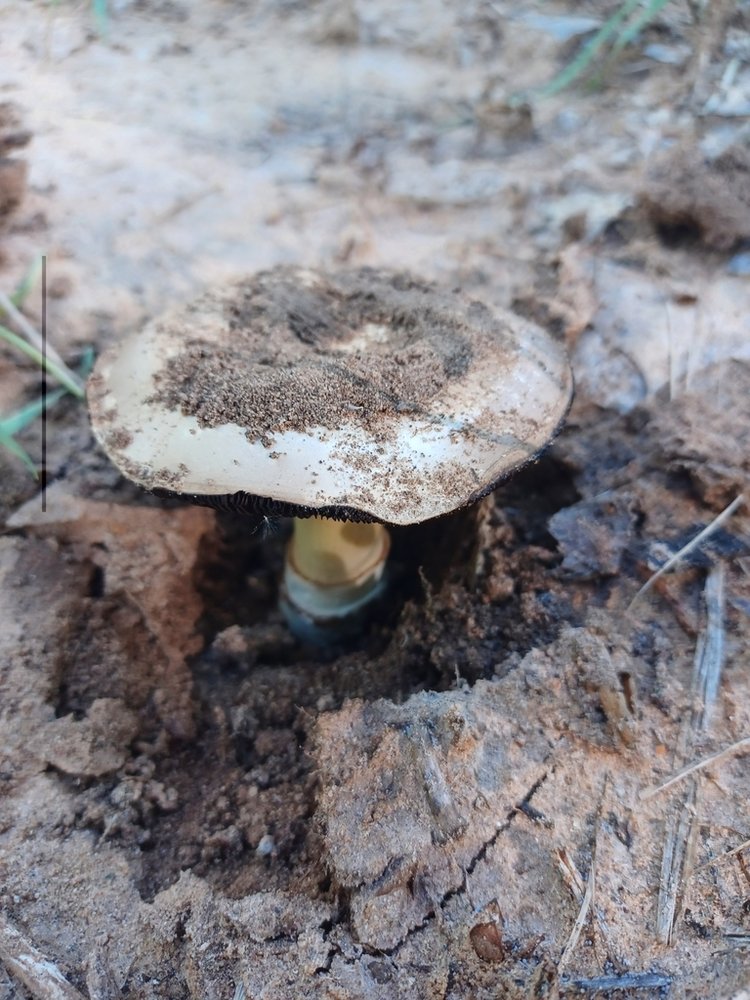
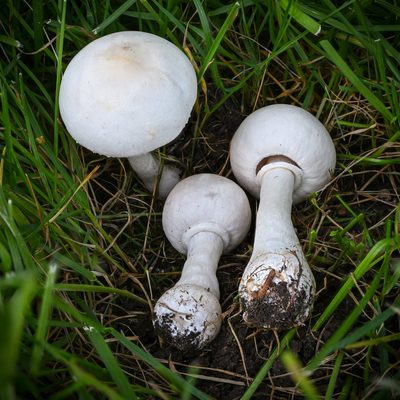
Pavement Mushroom (Agaricus bitorquis) is a stout white mushroom with a short, tough stem wrapped in a tight, sheathing ring, gills that darken to chocolate brown and a dark brown spore print. It pushes up through hard-packed soil, gravel and even pavement, often carrying dirt on its cap, and Jewel Cave National Monument lists it beside its trails and walkways from June to October.
Free photos from other sources
| Family | Agaricaceae · Agaricus |
|---|---|
| Type | Gilled mushroom |
| Season | June to October, as Jewel Cave National Monument lists it; one research-grade Black Hills record on iNaturalist is from late May |
| Size | Cap 4–11 cm (1½–4½ in) wide, stem 2–6 cm (¾–2½ in) tall |
| Grows on | Hard-packed soil and gravel beside paths, walkways and roads |
| Spore print | Dark brown |
| Also called | Spring Agaricus |
| Synonym | Agaricus rodmanii, Psalliota bitorquis, Psalliota rodmanii |
| Eating | This guide doesn't say which mushrooms are safe to eat. |
How it lives
A saprobe: it breaks down dead organic matter in the soil and doesn't partner with tree roots. It is at home in packed, disturbed ground, mostly in towns and along roads.
How do you identify Pavement Mushroom?
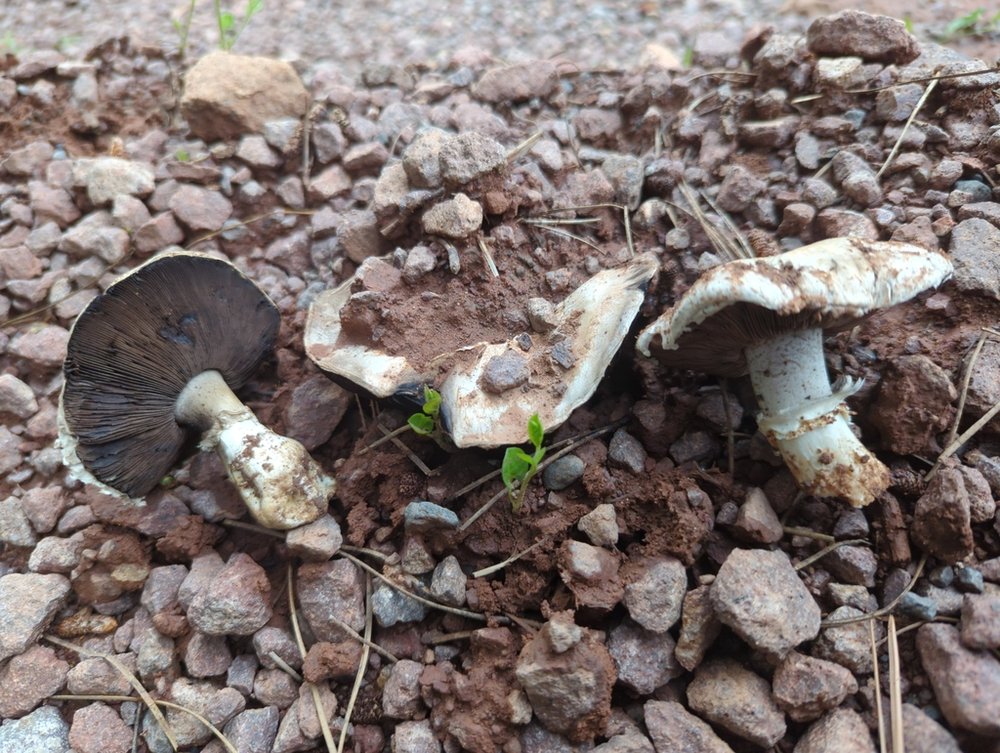
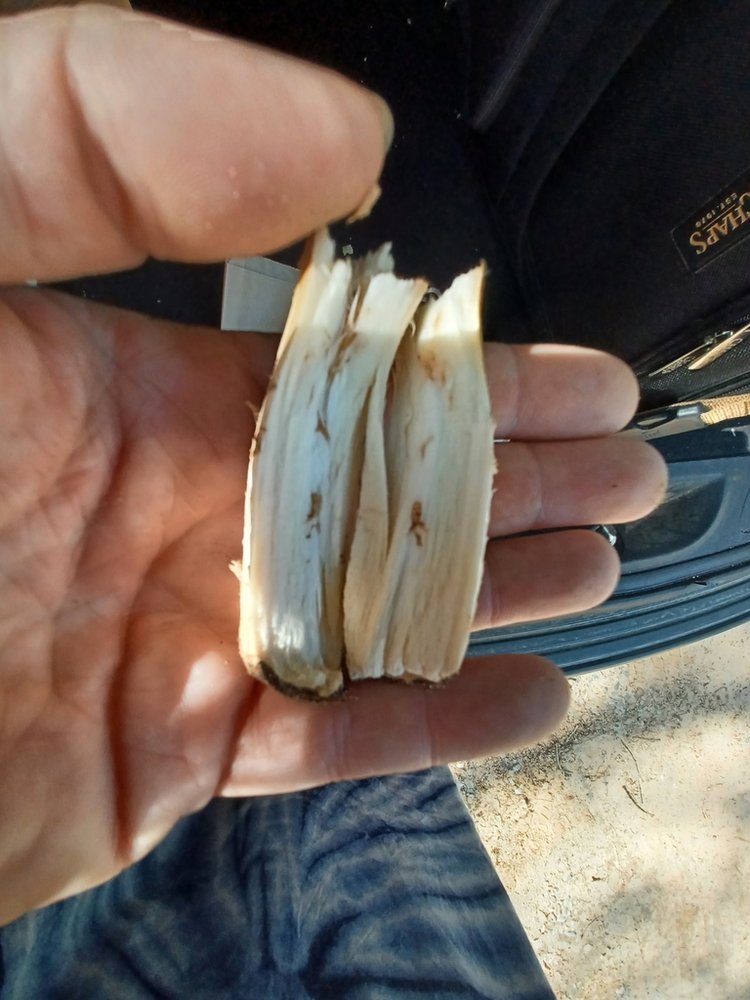
Look for stout white mushrooms pushing up through hard-packed soil or gravel beside paths and roads, often with soil or gravel still on the cap, and sometimes only the cap showing. The cap is 4–11 cm (1½–4½ in) wide, whitish, dry and bald, sometimes cracked or a little scaly, with an edge that isn't lined. The gills are free from the stem and crowded, pinkish to purplish brown at first, then brown, and finally dark chocolate brown to nearly black; a white veil covers them in the button. The stem is short, 2–6 cm (¾–2½ in) long, squat and very tough, with a tight white ring that sheathes it rather than hanging like a skirt; the ring often flares at its top edge and sometimes forms two bands, and some collections have an almost cup-like sheath. Neither the surfaces nor the firm white flesh change color much when bruised or cut (the flesh rarely turns slightly reddish), and the odor isn't distinctive. The spore print (the dust the gills drop) is dark brown. The poisonous Yellow Stainer (Agaricus xanthodermus), reported in the Black Hills from one unconfirmed iNaturalist record, usually grows in grassy, cultivated ground; rubbed near the cap edge or stem base it turns bright yellow, the flesh in the very base of its stem is bright yellow when sliced, and its large ring has a thick outer edge. Salt-loving Agaricus (Agaricus bernardii), reported from two unconfirmed Black Hills records, is similar, but its cut flesh readily turns pinkish or reddish, it smells of brine, and it grows in grass, often along roads salted in winter, while the Pavement Mushroom stains red only faintly, if at all, and prefers hard-packed soil. The White Dapperling looks like an Agaricus from above, but its gills stay white as the cap opens and turn only cream or pinkish with age, while Agaricus gills, the Pavement Mushroom's among them, turn dark purplish brown or chocolate brown.
When can you find it?
June to October, as Jewel Cave National Monument lists it; one research-grade Black Hills record on iNaturalist is from late May.
Where does it grow?
Hard-packed soil along roadsides, curbs, paths and ditches, and in parks; it can even push up through cracks in concrete and asphalt. Jewel Cave National Monument lists it among the mushrooms seen at the monument, bursting through gravel beside trails and walkways from June to October. iNaturalist has 4 Black Hills records: 2 research grade (Custer State Park, May 2018; Pennington County, August 2024) and 2 awaiting confirmation (Wind Cave National Park, June 2022; Pennington County, June 2023). GBIF holds no South Dakota specimen; Wyoming's two specimens are from the western mountains.
Other mushrooms to compare
Sources: Mushrooms and Other Fungi — Jewel Cave National Monument, National Park Service; Kuo, Agaricus bitorquis (2017) — MushroomExpert.com; Kuo, The Genus Agaricus, with a key to 100 North American species — MushroomExpert.com; Kuo, Agaricus xanthodermus — MushroomExpert.com; Kuo, Agaricus bernardi — MushroomExpert.com; Leucoagaricus leucothites, white dapperling, smooth parasol — Mushrooms Up!, Beaty Biodiversity Museum, University of British Columbia; Beug, Summary of the Poisoning Reports in the NAMA Case Registry for 2006 through 2017 — North American Mycological Association; Species Fungorum: Agaricus bitorquis, species synonyms — Royal Botanic Gardens, Kew; iNaturalist: Agaricus bitorquis taxon page data (English name Pavement Mushroom); iNaturalist: Agaricus bitorquis in the Black Hills places (Black Hills ecoregions, Black Hills National Forest, Wind Cave NP, Custer SP); iNaturalist: Agaricus species in the Black Hills places (Yellow Stainer 1, Salt-loving Agaricus 2, all needs ID); GBIF: Agaricus bitorquis records from Wyoming (2 specimens) and South Dakota (none); GBIF: Agaricus bitorquis records from South Dakota (iNaturalist only, no specimens).