Truncated Club
Clavariadelphus truncatus
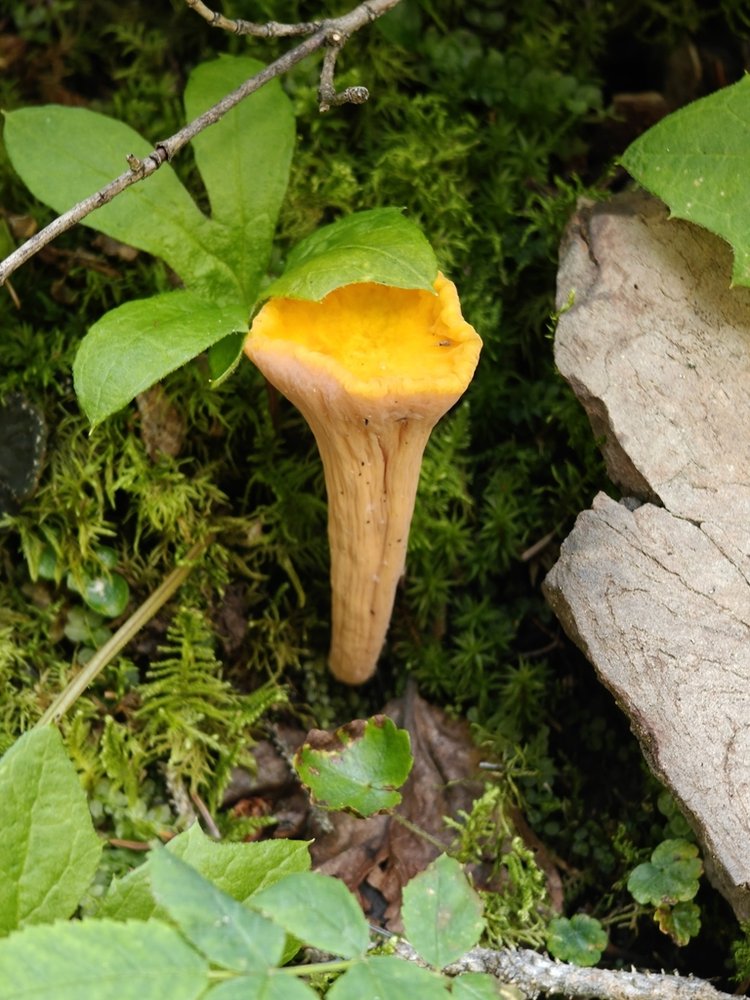
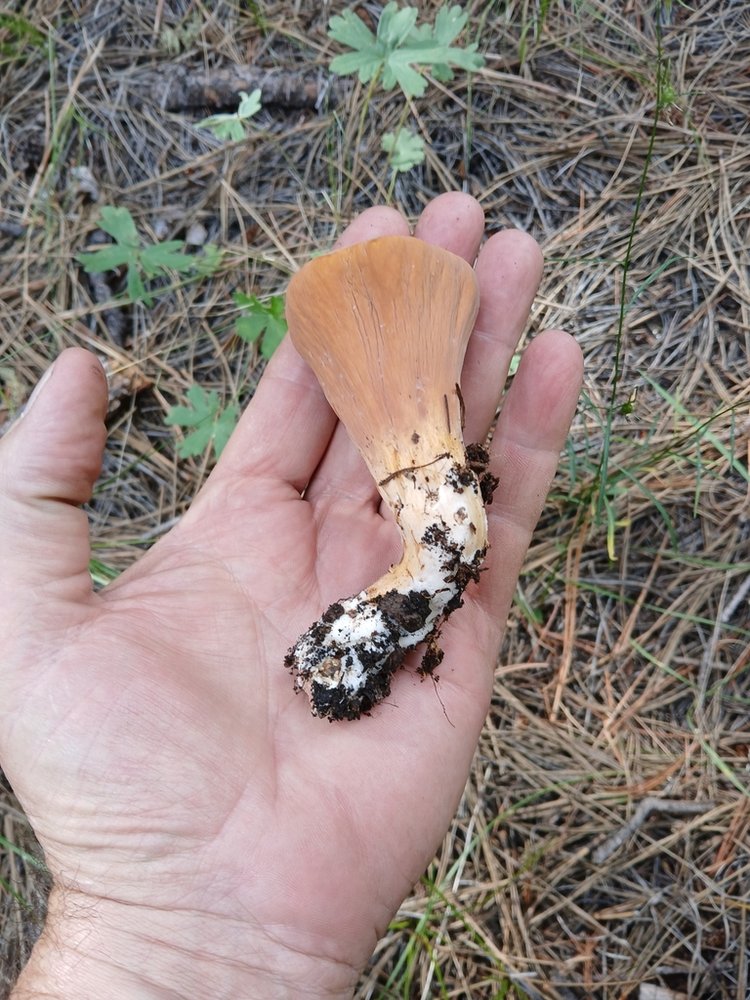
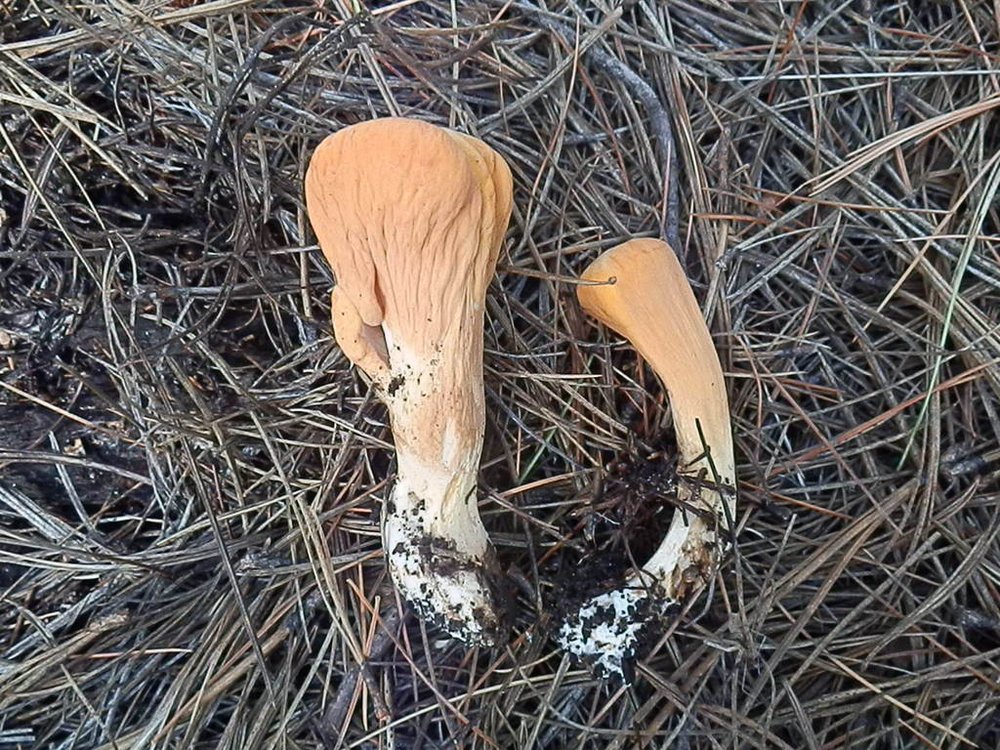
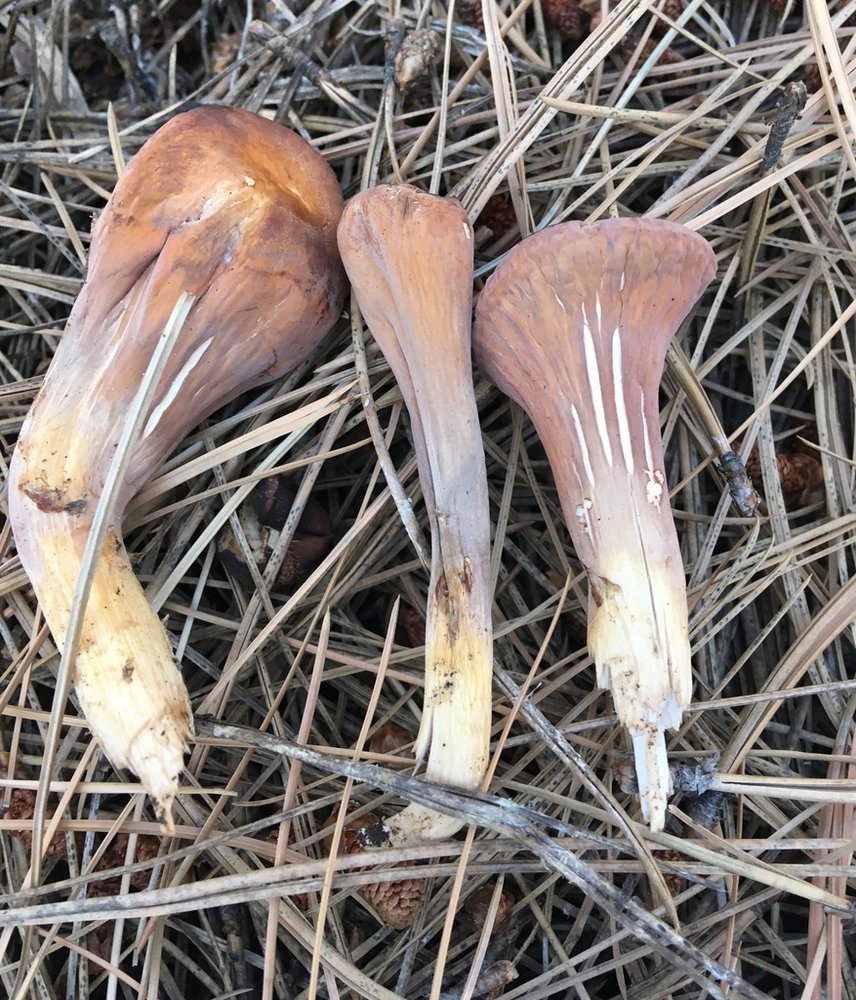
The Truncated Club (Clavariadelphus truncatus) is an unbranched club 4–15 cm (1½–6 in) tall that widens upward to a flat or slightly sunken top, yellowish orange on top, orange-brown to pinkish brown on the sides and whitish and hairy at the base. It grows on soil and duff (decaying needles) under conifers; iNaturalist has five Black Hills records, two of them research grade, all from July, in Pennington and Lawrence counties.
Free photos from other sources
| Family | Clavariadelphaceae · Club fungus |
|---|---|
| Type | Club fungus |
| Season | July into September; all five Black Hills iNaturalist records are from July |
| Size | 4–15 cm (1½–6 in) tall, up to 6 cm (2½ in) wide at the top |
| Grows on | Soil and duff under conifers |
| Spore print | White to pale yellowish buff |
| Also called | Club Coral |
| Synonym | Clavaria truncata, Clavariadelphus borealis, Clavariadelphus lovejoyae |
| Eating | This guide doesn't say which mushrooms are safe to eat. |
How it lives
A club fungus of the forest floor. It is distantly related to the chanterelles, and Species Fungorum places it in the family Clavariadelphaceae, in the order Gomphales. Its spores form on the outer surface of the club, which is smooth at first and wrinkles with age.
How do you identify Truncated Club?
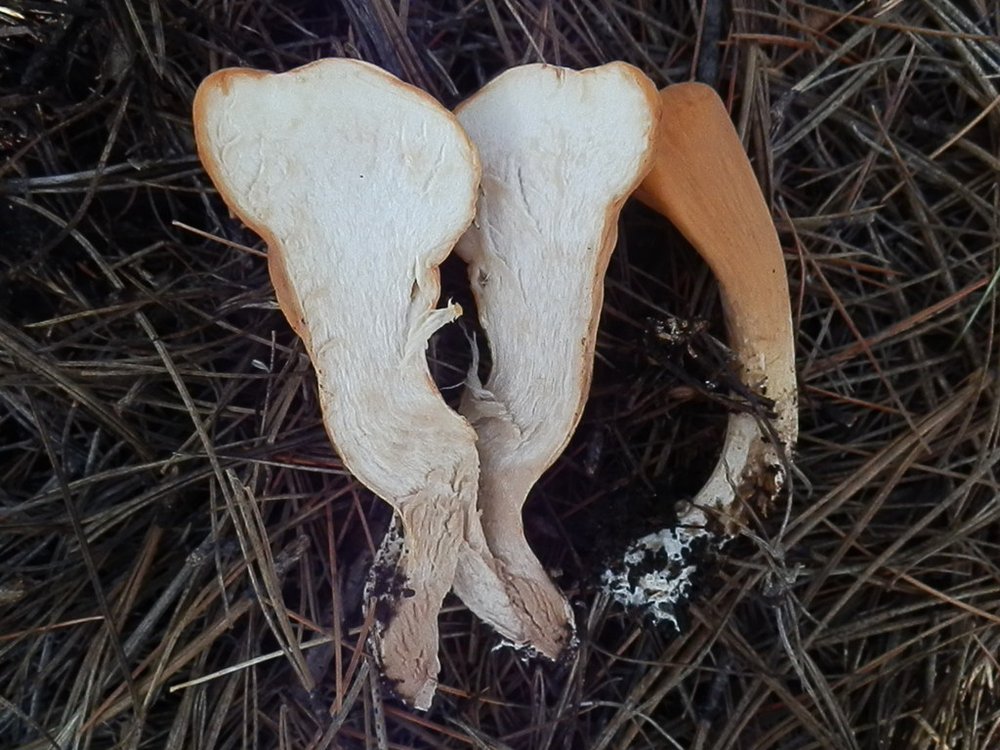
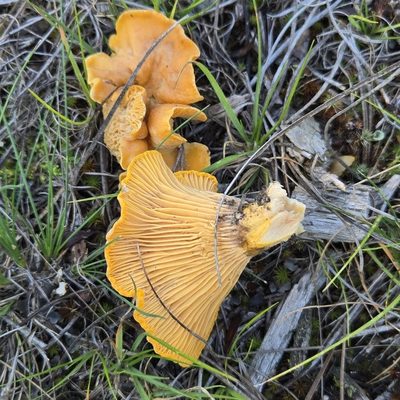
An unbranched club with no separate cap and stem, 4–15 cm (1½–6 in) tall, narrow at the base and widening upward to as much as 6 cm (2½ in) across. The top is flat or slightly sunken in the center, often with a raised, bumpy edge, and with age the whole club becomes top-shaped. The sides are smooth at first and become wrinkled or grooved lengthwise; they are pinkish brown to orange-brown, shading to yellowish orange at the top, and the base is whitish and hairy. The flesh is white, firm when young and soft with age, and slowly turns brownish to reddish brown where cut or bruised. Sources give the spore print as white or pale yellowish buff. Its shape can suggest a chanterelle, to which it is distantly related, but its sides have no ridges or cross-veins. In a Forest Service key it is told from the western Clavariadelphus occidentalis by its flattened top and a red reaction to KOH (a lye solution); C. occidentalis is club-shaped without a flat top and does not react. MushroomExpert says C. pistillaris and C. americanus have rounded rather than top-shaped tips; specimens collected in the Black Hills National Forest in 1918 were filed as Clavaria pistillaris.
When can you find it?
July into September; all five Black Hills iNaturalist records are from July.
Where does it grow?
On soil or duff under conifers, scattered or in groups: the Forest Service handbook describes it under mixed conifers in the Pacific Northwest, and MykoWeb in conifer woods in California. In Wyoming, herbarium specimens from Yellowstone and Grand Teton national parks were on soil or duff in conifer forest, including aspen-fir forest. In the Black Hills, iNaturalist has five records, all from July: two research grade from Pennington County (2019 and 2023) and three not yet confirmed from Pennington and Lawrence counties (2025). No Black Hills specimen of it turned up in GBIF.
Other mushrooms to compare
Sources: Clavariadelphus truncatus, in Handbook to Additional Fungal Species of Special Concern in the Northwest Forest Plan (Castellano, Cázares, Fondrick & Dreisbach 2003, PNW-GTR-572), pages K-19 and S3-49 — USDA Forest Service; Clavariadelphus truncatus (M. Wood & F. Stevens) — California Fungi, MykoWeb; Clavariadelphus americanus (M. Kuo, April 2007) — MushroomExpert.com; Clavariadelphus occidentalis (M. Kuo, September 2005) — MushroomExpert.com; Clavariadelphus truncatus: synonymy and classification — Species Fungorum (Royal Botanic Gardens, Kew); Clavariadelphus truncatus records in the Black Hills places (2 research grade, 3 needs ID) — iNaturalist API; Clavariadelphus truncatus, research-grade records in SD, WY, MT, NE, ND and CO by month — iNaturalist API; Clavariadelphus truncatus, names (truncated club) — iNaturalist API; Clavariadelphus truncatus records from Wyoming, incl. Yellowstone and Grand Teton specimens — GBIF; Clavariadelphus specimens from South Dakota, incl. 1918 Black Hills National Forest specimens filed as Clavaria pistillaris — GBIF.