Elytroderma Needle Cast
Elytroderma deformans
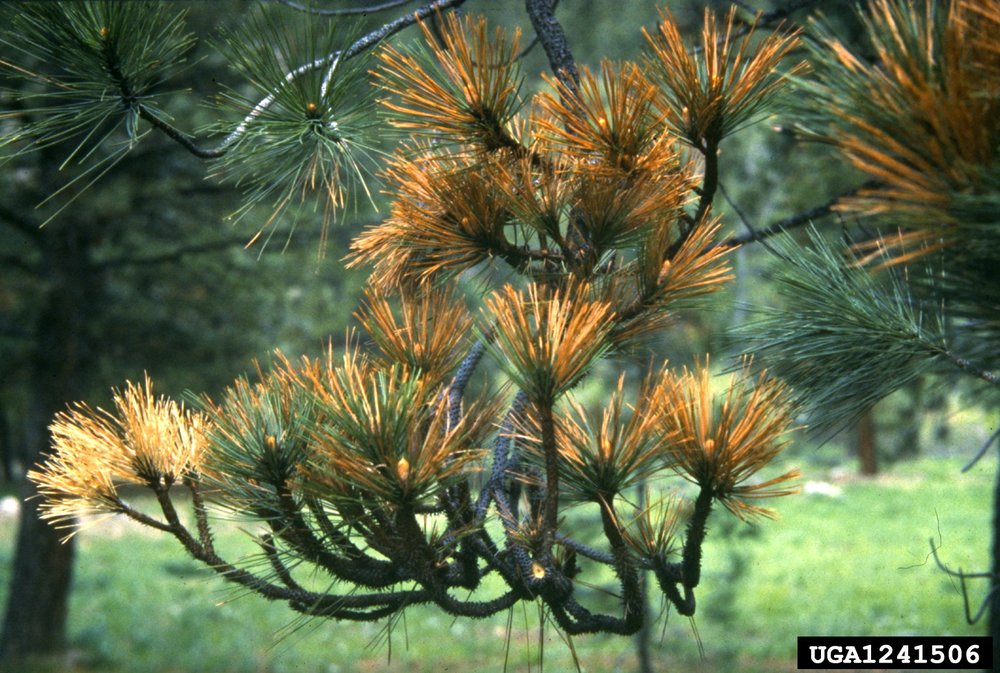
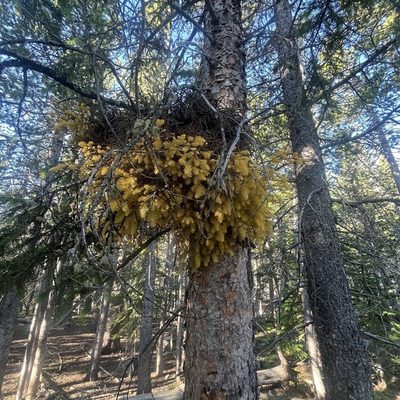
Elytroderma Needle Cast (Elytroderma deformans) is a fungus disease of ponderosa pine that kills needles and makes dense, round witches' brooms of short, upturned twigs in the crown. The brooms show all year, and needles on infected twigs turn red-brown in spring. Forest Service surveys have found it widespread in the Black Hills, and the 2014 South Dakota forest health report says it is being reported more often there.
Free photos from other sources
| Family | Rhytismataceae · Tar spot |
|---|---|
| Type | Needle cast |
| Season | All year; red-brown needles on infected twigs in spring and early summer |
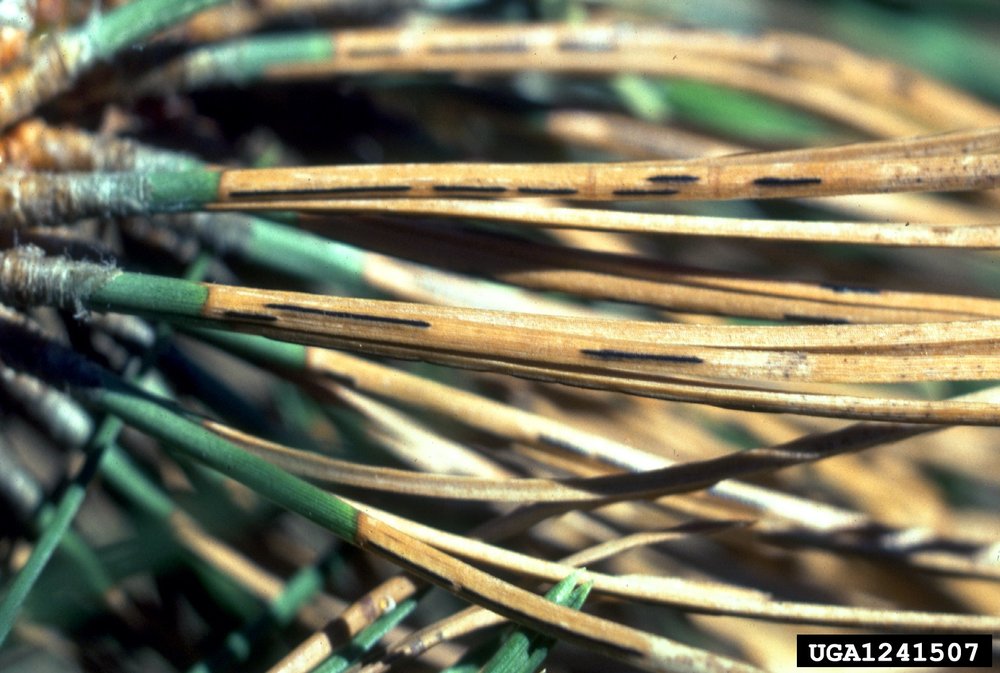
| Size | Black fruiting lines on dead needles about 13 mm (1/2 in) long; brooms from small to large |
| Grows on | Needles and twigs of live ponderosa pine |
| Also called | Elytroderma Disease |
| Synonym | Hypoderma deformans |
| Eating | This guide doesn't say which mushrooms are safe to eat. |
How it lives
A parasite of live pine needles and twigs. Spores from the black fruiting lines blow onto young needles in late summer and fall after rain; the fungus grows through the needle into the twig, and it is the only needle cast that then lives on in the twigs for years, spreading into each year's new shoots and needles. Infected needles turn red-brown the spring after infection and are shed, and brooms begin to form several years after a branch is infected. In the Black Hills it causes some needle loss but is usually not serious and is not usually a tree killer, though the loss of foliage can weaken a tree, and moderately infected trees lose vigor and are often attacked by bark beetles.
How do you identify Elytroderma Needle Cast?
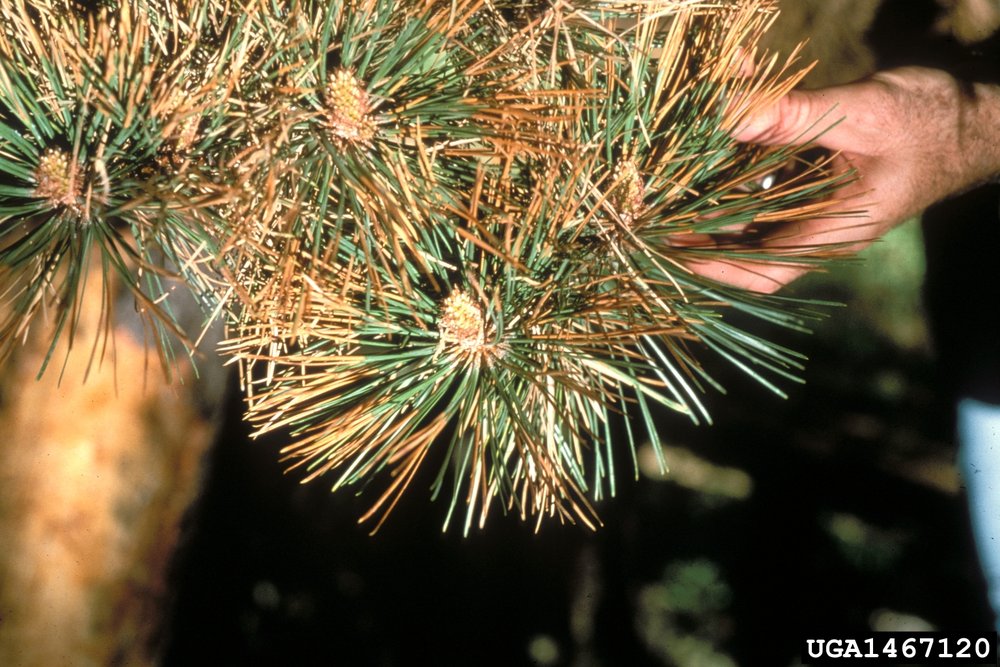
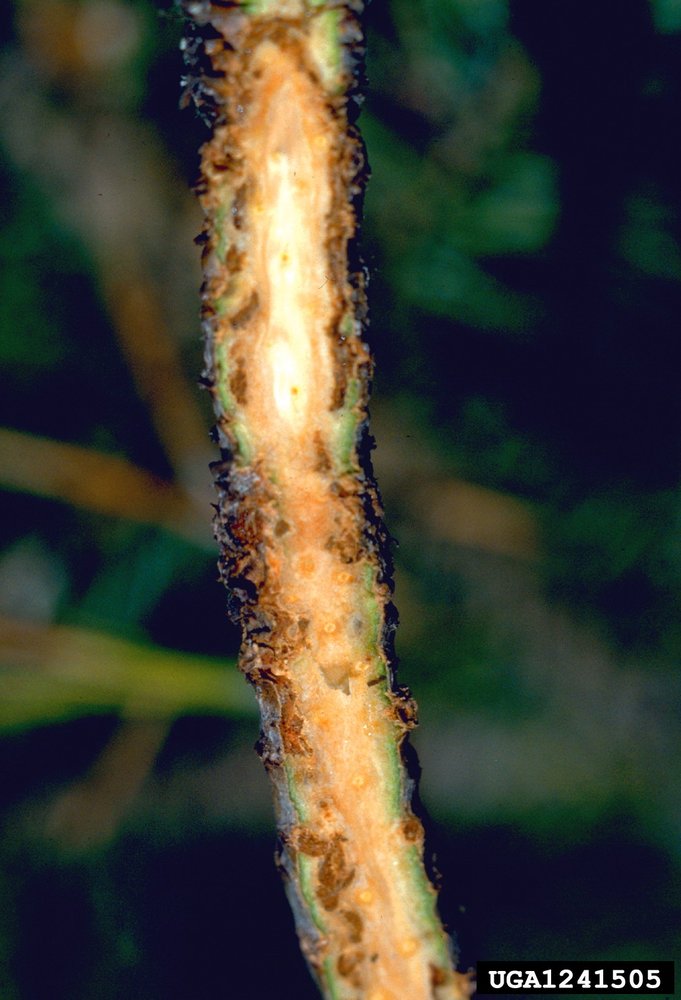
Look in a ponderosa pine crown for a witches' broom: a dense, compact, rounded clump of short twigs whose branch tips curve upward, holding many dead, straw-colored needles. Needles on infected twigs are red-brown in spring and early summer and fade over the summer, while the base of each needle stays green for 6–10 mm (¼–⅜ in). In spring, thin, dull black lines about 13 mm (½ in) long form near the base of dead and dying needles; these are the fruiting bodies, and they split open in wet weather. A shallow cut across an infected shoot shows brown to black resin spots in the inner bark. Dwarf mistletoe brooms can look similar, but they carry small mistletoe shoots or the cup-shaped bases left by them, and Elytroderma brooms are more compact and round. A 1974 Forest Service paper says dwarf mistletoe has never been found on Black Hills trees, and a 1991 Forest Service survey report says Elytroderma needle cast was behind several past reports of it here. Spruce broom rust, which also makes brooms in the Black Hills, grows on spruce: its brooms have short, pale yellow needles that carry bright orange spore pustules in summer and drop each fall.
When can you find it?
All year; red-brown needles on infected twigs in spring and early summer.
Where does it grow?
Live ponderosa pine of all ages. In the Black Hills it is found most often on trees in sheltered spots, such as bottoms and thickets of young pine, and in the lower and inner crowns of pole-size and larger trees; the Forest Service field guide says damage is worst where it is moist, such as drainages. A herbarium specimen on ponderosa pine was collected in Custer County in 1918, and Forest Service records list it from 1960 on. A 1990 Forest Service survey found it widespread, in ranger districts from the northern to the southern Hills and in the Bear Lodge Mountains, though only scattered trees were affected and overall incidence was low. The same field guide says its damage in the Rocky Mountain Region is greatest on ponderosa pine in the Black Hills, and the 2014 South Dakota forest health report says it is becoming more commonly reported here. iNaturalist has no Black Hills records.
Other mushrooms to compare
Sources: Lundquist 1991, Fungi Associated with Pines in the Black Hills, Technical Report R2-50 — USDA Forest Service; Lundquist 1991, Tree Disease Survey of Conifers in the Black Hills - 1990, Technical Report R2-51 — USDA Forest Service; Boldt & Van Deusen 1974, Silviculture of Ponderosa Pine in the Black Hills, Research Paper RM-124 — USDA Forest Service; South Dakota Forest Health Highlights 2014 — USDA Forest Service and South Dakota; Field Guide to Diseases & Insects of the Rocky Mountain Region, RMRS-GTR-241 (2010): Elytroderma Needle Cast; Broom Rusts of Spruce and Fir — USDA Forest Service; Elytroderma disease (B.E. Callan, rev. 2024) — Natural Resources Canada, Trees, insects, mites, and diseases of Canada's forests; Elytroderma Needle Disease, Insect and Disease No. 22 (2014) — Idaho Department of Lands; Childs 1968, Elytroderma Disease of Ponderosa Pine in the Pacific Northwest, Research Paper PNW-69 — USDA Forest Service; Elytroderma deformans, record 262895 — Species Fungorum; Elytroderma deformans specimens, South Dakota — GBIF; Black Hills observations of Elytroderma deformans (research) — iNaturalist.