Common Stinkhorn
Phallus impudicus
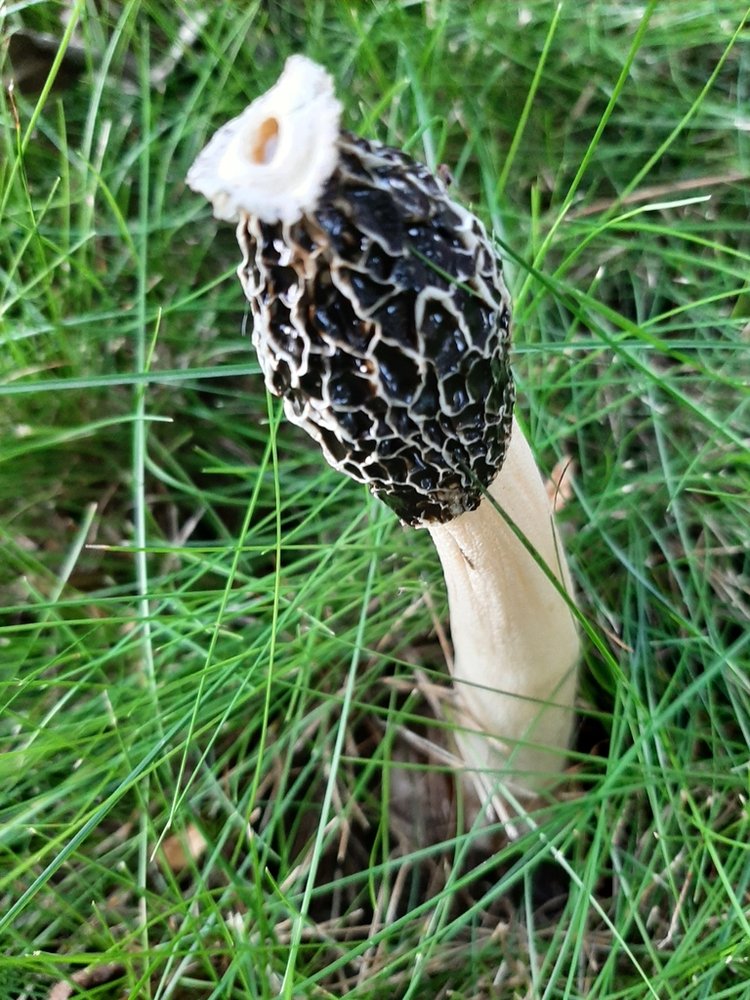
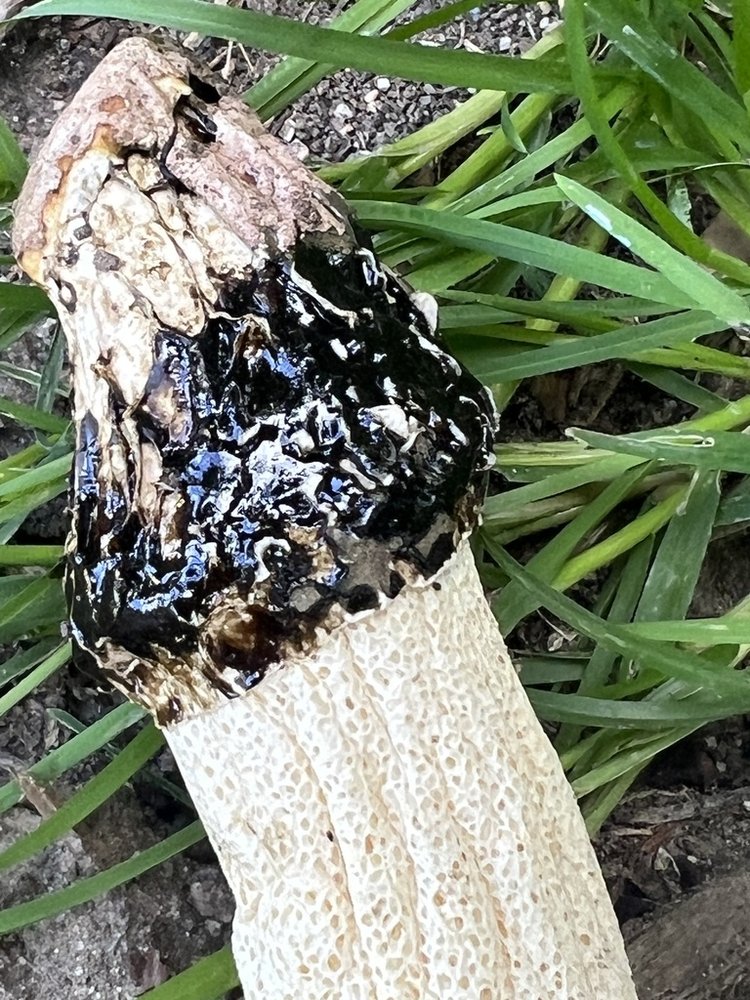
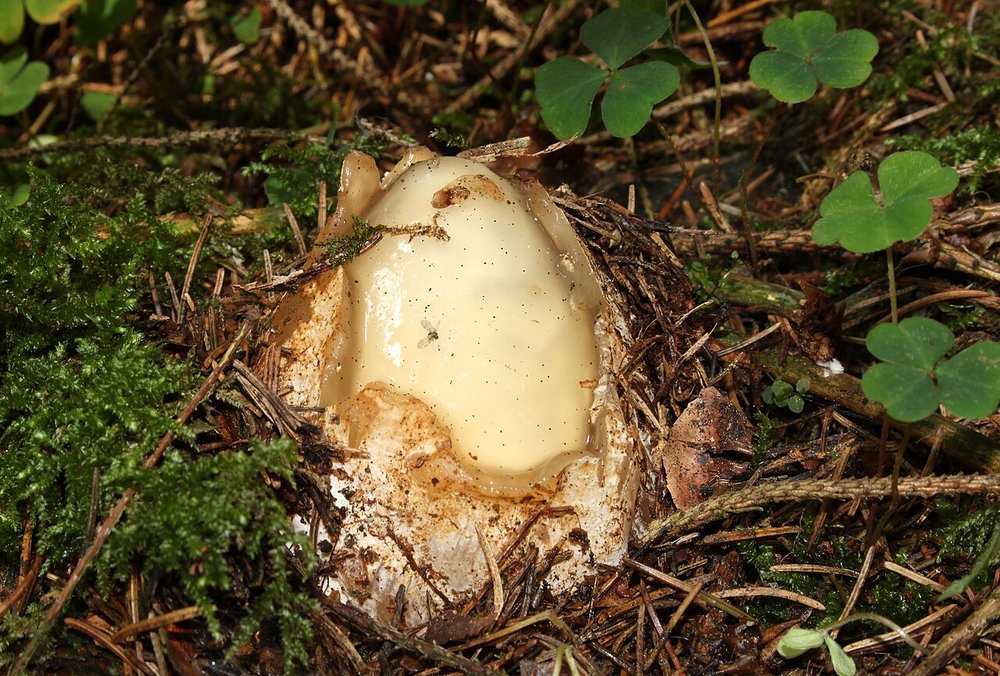
The Common Stinkhorn (Phallus impudicus) rises from a whitish to purplish "egg" in the ground as a white, hollow stalk topped by a pitted head coated in dark, foul-smelling slime that draws flies. iNaturalist has Black Hills records from June into September, counting those filed as Dune Stinkhorn, which MushroomExpert treats as the same fungus.
Free photos from other sources
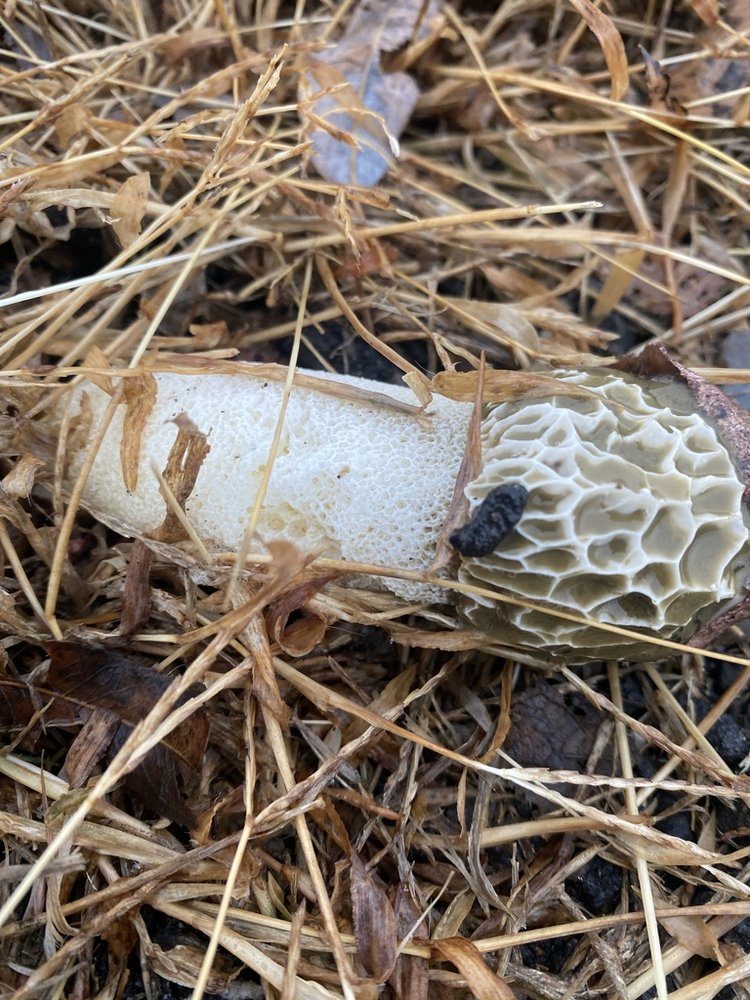
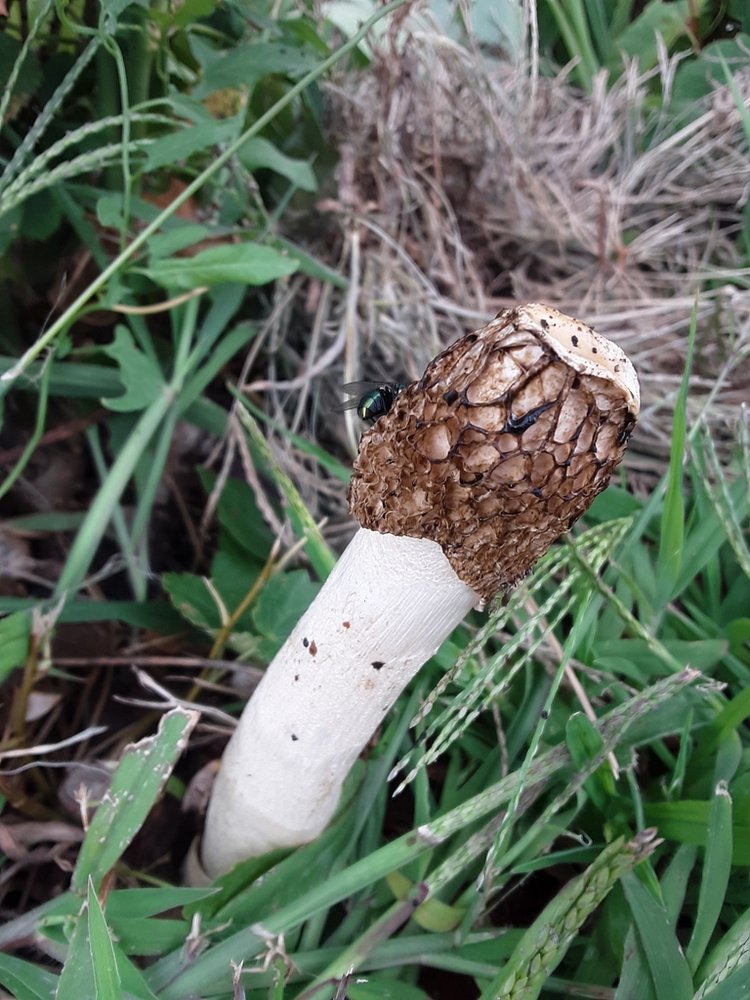
| Family | Phallaceae · Stinkhorn |
|---|---|
| Type | Stinkhorn |
| Season | June into September |
| Size | Stem 7–11 cm (2¾–4¼ in) tall, head 3–6 cm (1¼–2½ in) high; egg 3–6 cm (1¼–2½ in) |
| Grows on | Lawns, gardens, mulch and wood chips |
| Spore print | Spores in dark brown slime on the head |
| Synonym | Ithyphallus impudicus |
| Eating | This guide doesn't say which mushrooms are safe to eat. |
How it lives
It is saprobic, breaking down dead plant matter in soil, mulch and wood chips, and it does not harm garden plants. The spores sit in the slime: flies feed on it and carry the spores away on their feet and in their guts. Once the egg breaks, a stinkhorn can grow as fast as 10–15 cm (4–6 in) an hour.
How do you identify Common Stinkhorn?
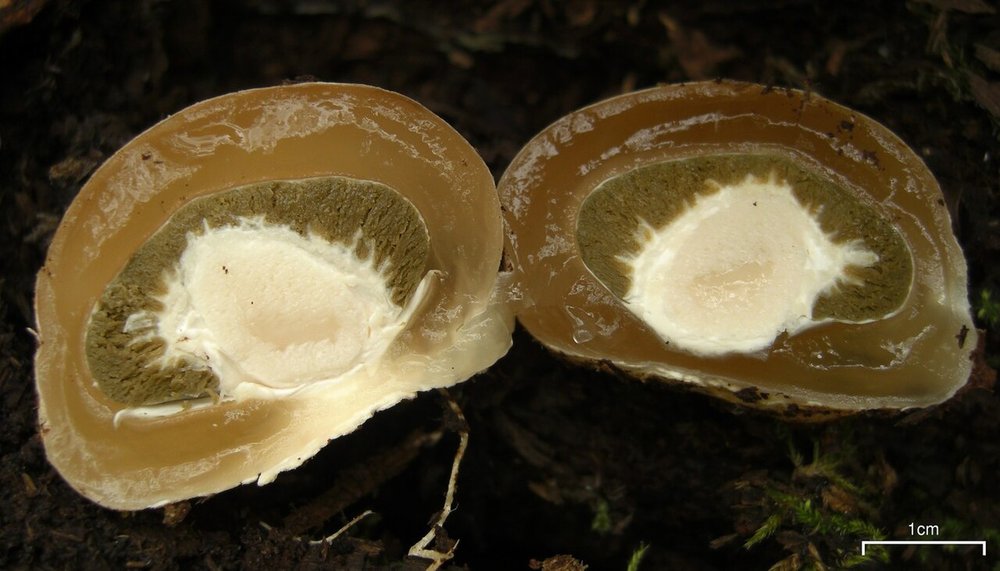
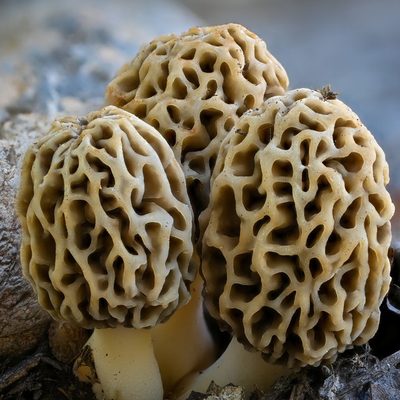
It starts as a whitish to purplish "egg" 3–6 cm (1¼–2½ in) high, in or just under the soil and tied to it by cords; cut open, it shows a white stalk packed inside a layer of brownish jelly. The stalk breaks out and grows fast, leaving a cup (volva) at its base. A grown one has a white, hollow, finely pitted stem 7–11 cm (2¾–4¼ in) tall and a cone-shaped head 3–6 cm (1¼–2½ in) high, covered with a net of pits and ridges under dark brown slime, with a white rim around a hole at the tip. The smell is strong and foul, like rotting flesh or dung, and flies crowd onto the slime. Once insects clean off the slime, the pitted head can pass for a morel, and like a morel it is hollow; but a stinkhorn rises from an egg, comes up in summer rather than spring, and usually keeps traces of slime. Devil's Dipstick (Mutinus elegans), reported on iNaturalist at Wind Cave, has an orange stem with slime on its tapered tip and no separate head. Some Black Hills iNaturalist records are filed as Dune Stinkhorn (Phallus hadriani), a name used in North America for stinkhorns with a pink to purple egg; MushroomExpert treats egg color as varying within the Common Stinkhorn.
When can you find it?
June into September.
Where does it grow?
Lawns, gardens, flowerbeds, mulch and wood chips, meadows and bare soil. In the Black Hills, iNaturalist has four research-grade records, all from June (10 to 30 June) in 2022 and 2023, from Lawrence, Meade and Custer counties. Three more research-grade records filed as Dune Stinkhorn come from Pennington County, Wind Cave National Park and Custer County (June, August and September), and three stinkhorns not named to species were seen in Lawrence and Pennington counties in July and September. No herbarium specimen from the Hills was found.
Other mushrooms to compare


Sources: Phallus impudicus (M. Kuo, March 2021) — MushroomExpert.com; Phallus hadriani (M. Kuo, March 2021) — MushroomExpert.com; The Stinkhorns (M. Kuo, August 2022) — MushroomExpert.com; Stinkhorns (M. Keller-Pearson, rev. 2024) — University of Wisconsin–Madison Extension, Wisconsin Horticulture; Phallus impudicus: synonymy and classification — Species Fungorum (Royal Botanic Gardens, Kew); Phallus impudicus records in the Black Hills places — iNaturalist API; Phallus hadriani (Dune Stinkhorn) records in the Black Hills places — iNaturalist API; Stinkhorn species recorded in the Black Hills places (Phallaceae) — iNaturalist API; Mutinus elegans (Devil's Dipstick) record at Wind Cave National Park — iNaturalist API; Phallus impudicus, research-grade records by month within 500 km of the Black Hills — iNaturalist API; GBIF occurrence search: Phallus specimens in South Dakota (one, Brookings County, 1937); GBIF occurrence search: Phallus specimens in Wyoming (three, Albany County, 1960).