Northern Cinnabar Polypore
Trametes cinnabarina
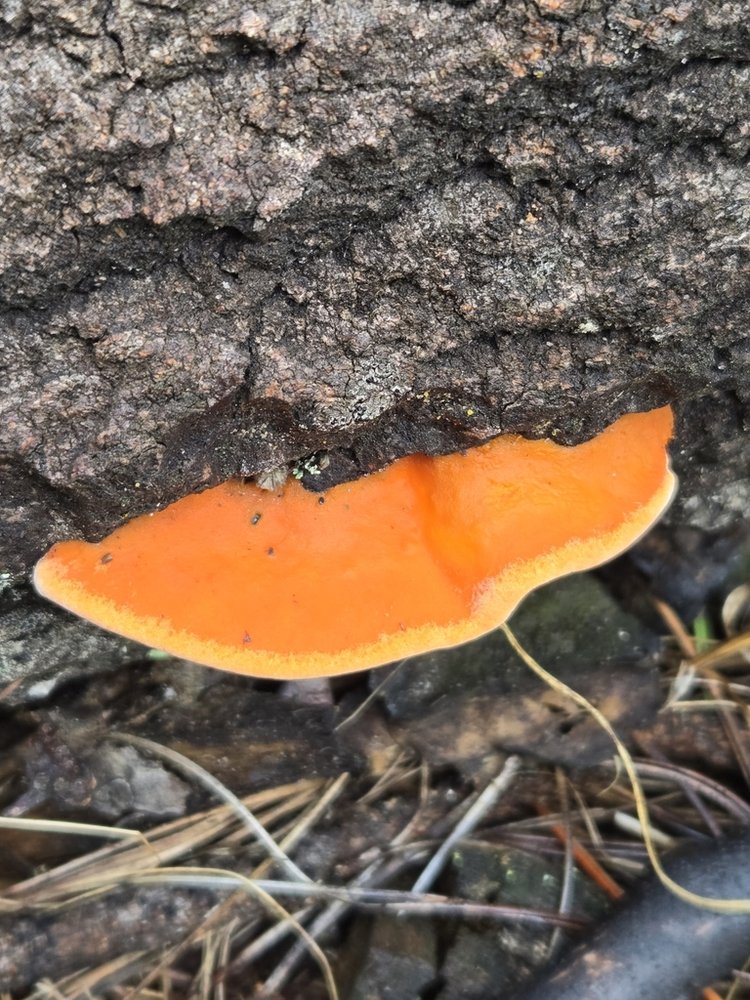
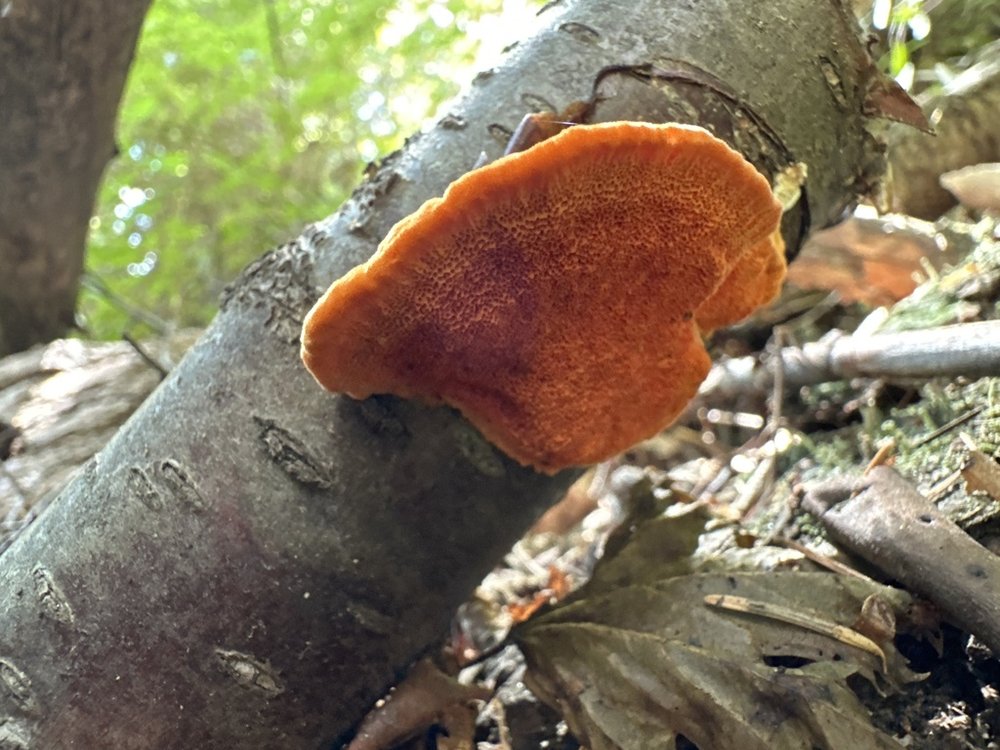
Northern Cinnabar Polypore (Trametes cinnabarina) is a small, tough shelf fungus that is bright orange-red on top and underneath. It grows on dead branches and logs, mostly of hardwoods such as oak and birch, and iNaturalist has research-grade records across the Black Hills, from Lawrence County to Custer State Park and Devils Tower.
Free photos from other sources
| Family | Polyporaceae · Polypore |
|---|---|
| Type | Shelf fungus |
| Season | Spring through fall; Black Hills iNaturalist records run from February to November |
| Size | Cap 2–13 cm (¾–5 in) across, up to 2 cm (¾ in) thick |
| Grows on | Dead branches and logs of hardwoods such as oak and birch; rarely conifer wood, including pine |
| Spore print | White |
| Synonym | Pycnoporus cinnabarinus, Polyporus cinnabarinus |
| Eating | This guide doesn't say which mushrooms are safe to eat. |
How it lives
A saprobe: it lives on dead wood. It causes a white rot, which breaks down all parts of the wood, lignin included, and leaves it pale and spongy or stringy. The brackets are annual.
How do you identify Northern Cinnabar Polypore?
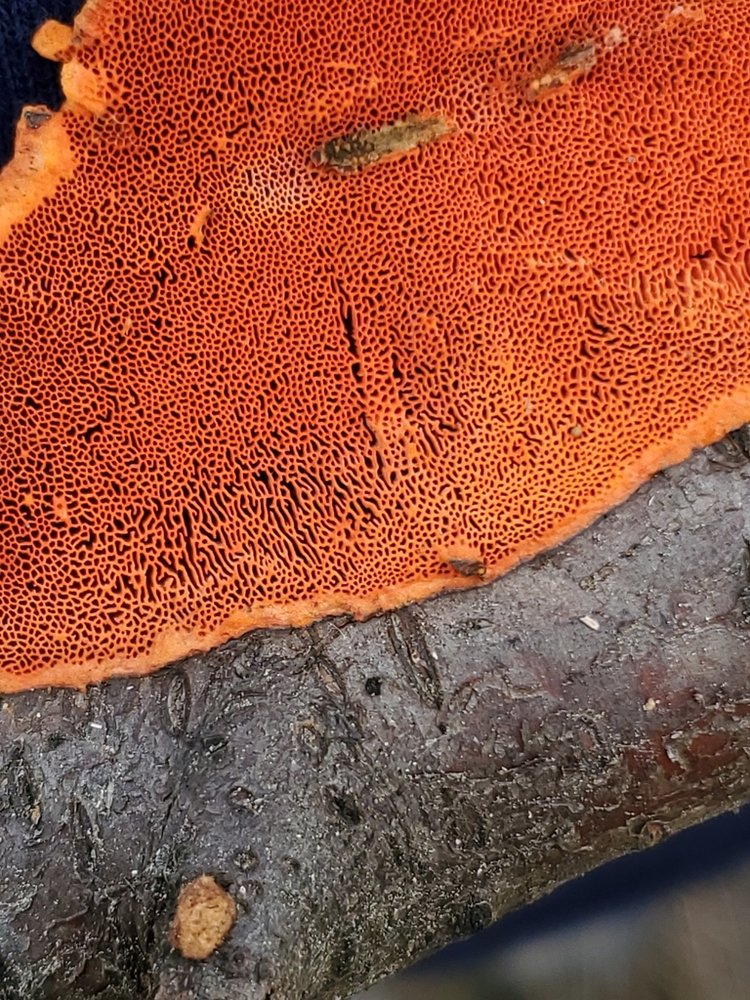
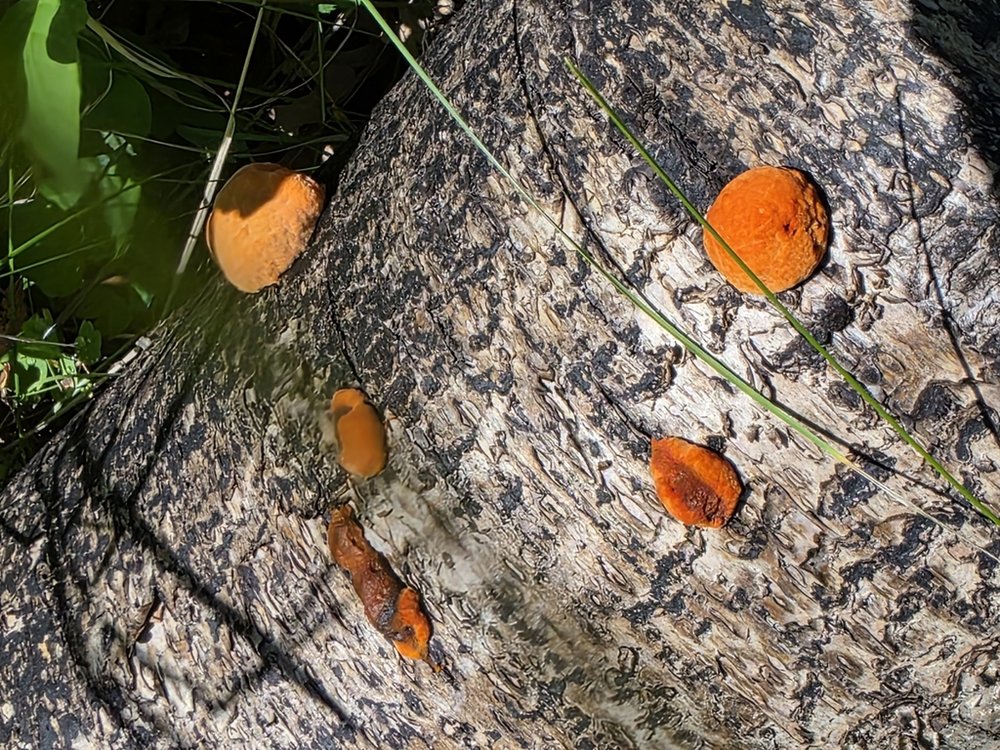
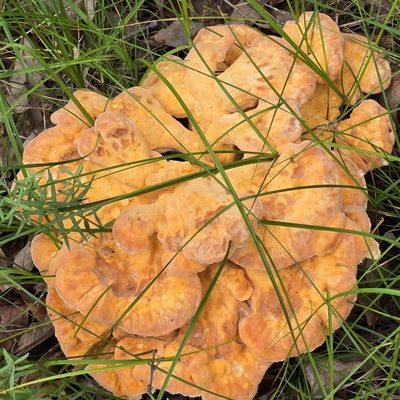
Look for a semicircular or kidney-shaped bracket 2–13 cm (¾–5 in) across and up to 2 cm thick, with no stem, bright reddish orange all over. The top is finely fuzzy to suede-like when fresh and turns rough, pitted and dull orange with age. Underneath are small round to angular pores, 2 to 4 per millimeter, the same orange-red as the cap, and the flesh is tough and pale orange to reddish. It grows on dead wood, usually with the bark still on. Few polypores are this bright orange. White-pored Chicken of the Woods is also orange, but it is much bigger and soft, grows as a rosette at the base of an oak, and has a whitish pore surface.
When can you find it?
Spring through fall; Black Hills iNaturalist records run from February to November.
Where does it grow?
Dead hardwood branches and logs, usually with the bark still on, and rarely conifer wood. Black Hills finds are on oak and birch, and two are on pine: a decaying ponderosa pine branch and the oldest Black Hills specimen, collected on a dead pine stub in Pennington County in 1926. iNaturalist has 20 research-grade Black Hills records, from Lawrence, Meade, Pennington and Custer counties, Custer State Park, Devils Tower and Crook County, Wyoming, including a 2025 collection on oak in Custer County whose DNA was sequenced.
Other mushrooms to compare
Sources: Pycnoporus cinnabarinus (M. Kuo, 2010) — MushroomExpert.com; Laetiporus cincinnatus (M. Kuo, 2017) — MushroomExpert.com; Field Guide to Diseases and Insects of the Rocky Mountain Region, RMRS-GTR-241 (2010), white and brown rot — USDA Forest Service; Name search: Pycnoporus cinnabarinus, current name Trametes cinnabarina — Index Fungorum; Name search: Polyporus cinnabarinus, current name Trametes cinnabarina — Index Fungorum; Trametes cinnabarina, common name (Northern Cinnabar Polypore) — iNaturalist; Trametes cinnabarina, research-grade records in the Black Hills — iNaturalist; Trametes cinnabarina on oak, Custer County, 2025, with ITS barcode (observation 305420155) — iNaturalist; Trametes cinnabarina in Black Hills counties, including BPI specimen 205782 (1926) — GBIF; Observations in the Black Hills, including 322253 (on a ponderosa pine branch) — Mushroom Observer.