Birch Polypore
Fomitopsis betulina
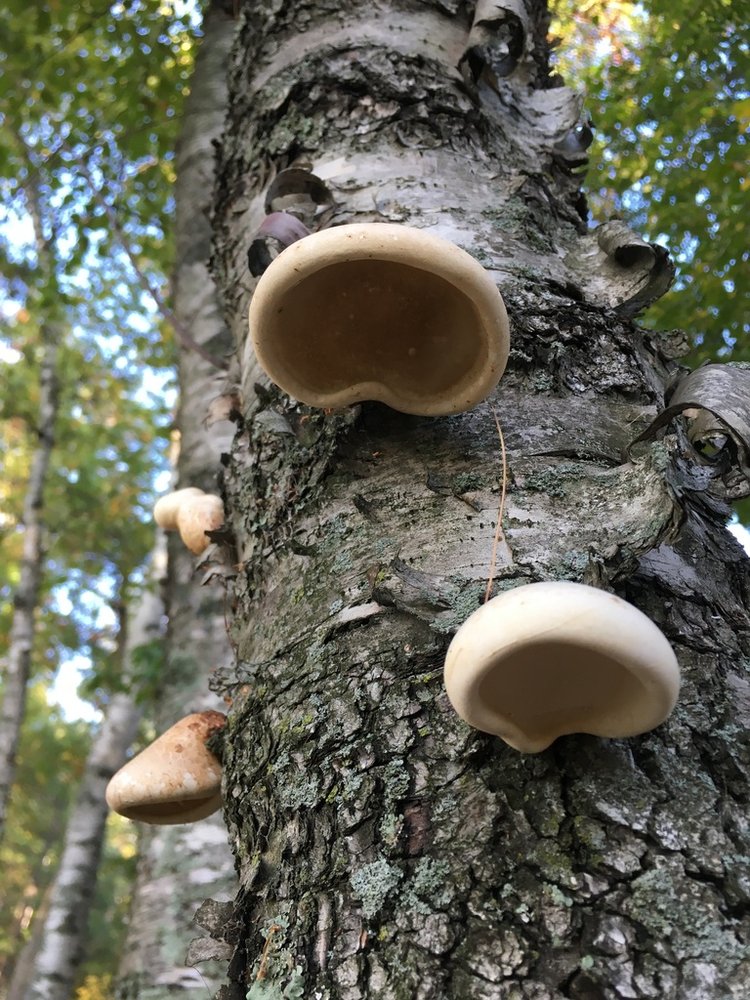
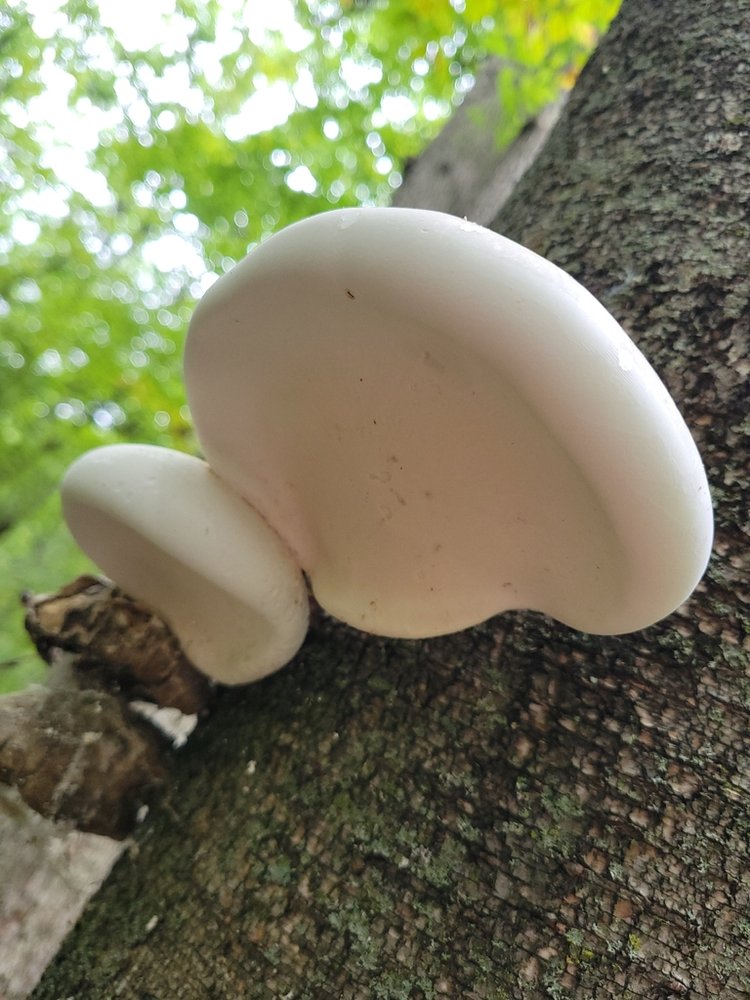
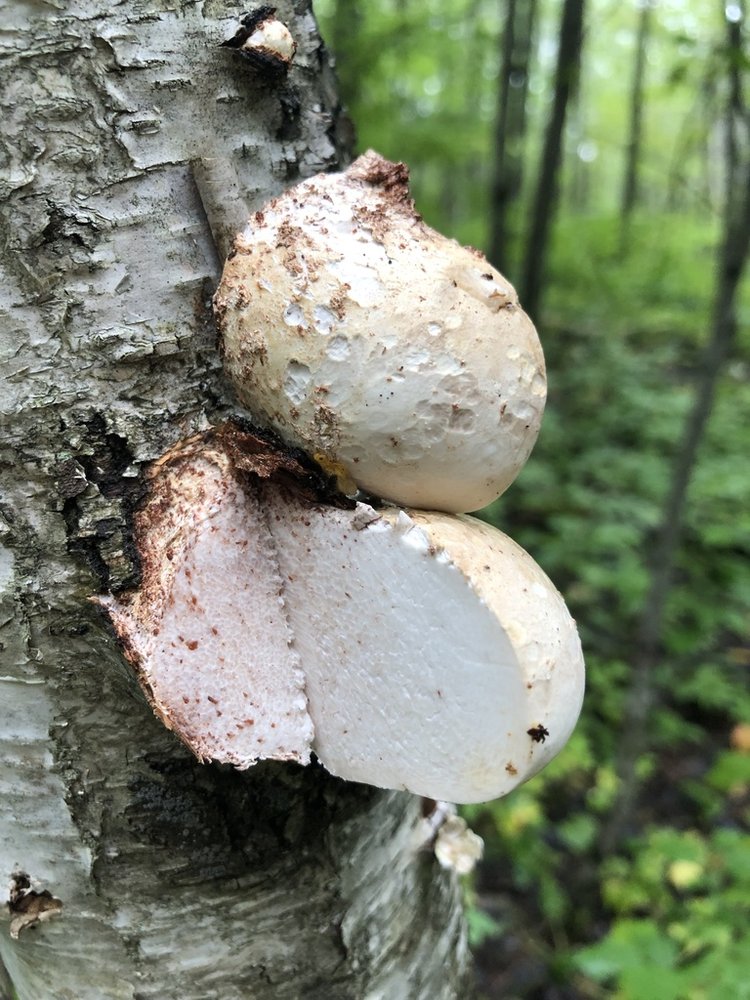
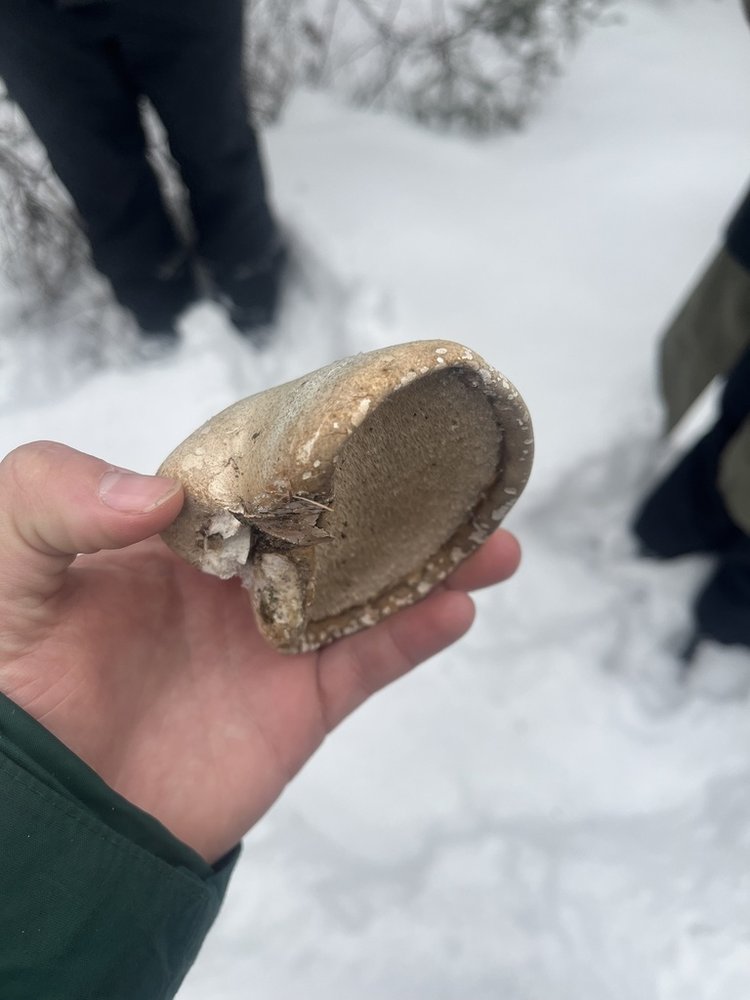
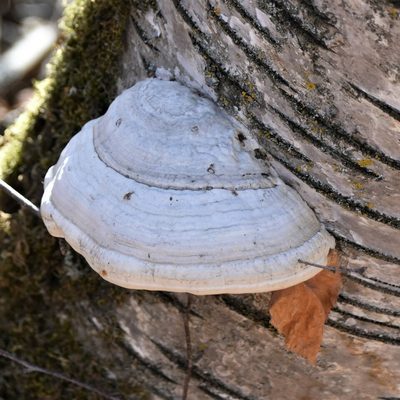
Birch Polypore (Fomitopsis betulina) is a smooth, kidney-shaped bracket, whitish when young and pale brown to gray with age, with a thick, rolled rim around a white pore surface. It grows only on birch, mostly on dead trees, and iNaturalist has 2 research-grade Black Hills records, from Custer State Park and Pennington County.
Free photos from other sources
| Family | Fomitopsidaceae · Fomitopsis |
|---|---|
| Type | Shelf fungus |
| Season | All year: each bracket grows and sheds its spores in one season, but old ones often hang on into the next year |
| Size | Cap 5–25 cm (2–10 in) across, usually about 15 cm (6 in), and 1–5 cm (½–2 in) thick |
| Grows on | Birch only, mostly dead standing trunks and fallen logs |
| Also called | Razor Strop Fungus, Brown Cubical Rot of Birch |
| Synonym | Piptoporus betulinus, Polyporus betulinus, Fomes betulinus |
| Eating | This guide doesn't say which mushrooms are safe to eat. |
| Note | Older guides call it Piptoporus betulinus. |
How it lives
A brown-rot fungus, one of the few that attack only hardwoods. It breaks down the cellulose and leaves the brittle brown lignin, so the sapwood turns yellowish brown and cracks, with thin white sheets of fungus in the cracks, and becomes light and easily crushed to powder; the rotting wood smells of apples. It gets in through broken bark, especially on trees killed by fire or by Armillaria root disease, and it decays wood fast: by the time brackets appear, little sound wood is left, and the trunk may snap in wind or snow. Each bracket grows, sheds its spores and dies in one growing season, and the next year beetles and other insects feed on the dead brackets until they fall apart. Cavity-nesting animals use the softened wood.
How do you identify Birch Polypore?
It starts as a nearly round, whitish lump on birch, then grows into a kidney-shaped or semicircular bracket 5–25 cm (2–10 in) across, usually about 15 cm (6 in), and 1–5 cm (½–2 in) thick, attached by a short, stout stalk or knob. The top is smooth and leathery, whitish at first, then pale brown to gray, sometimes cracking into small scales. The thick margin is rolled under, forming a smooth curb that stands below the level of the pore surface, so the pores look sunken. The pores are white to cream, aging grayish or yellowish brown, small, 2–5 per millimeter, and they don't bruise. The flesh is white, thick and corky. Old brackets, often blackened, can stay on the tree into the next year. Tinder Conk also grows on birch; it is a woody, shell- to hoof-shaped conk zoned in gray and brownish gray, with a brownish pore surface, and it lives for years.
When can you find it?
All year: each bracket grows and sheds its spores in one season, but old ones often hang on into the next year.
Where does it grow?
Only on birch, mostly on dead standing trunks and fallen logs, and now and then on living trees. In Canada its range roughly follows paper birch, and it also grows on water birch. Paper birch grows in scattered outlying stands in the Black Hills. iNaturalist has 2 research-grade Black Hills records: Pennington County in August 2025 and Custer State Park in February 2026.
Other mushrooms to compare
Sources: Fomitopsis betulina (M. Kuo, 2022) — MushroomExpert.com; Fomitopsis betulina — Fungi on Wood (Gary Emberger); Brown cubical rot of birch (B.E. Callan, 2024) — Natural Resources Canada, Trees, insects, mites, and diseases of Canada's forests; Fomes fomentarius (M. Kuo, 2010) — MushroomExpert.com; Fire Effects Information System: Betula papyrifera (distribution) — USDA Forest Service; Fomitopsis betulina, synonymy — Species Fungorum (Index Fungorum); Fomitopsis betulina, names (birch polypore, Brown Cubical Rot of Birch) — iNaturalist; Fomitopsis betulina, research-grade records in the six Black Hills places — iNaturalist.