Veiled Polypore
Cryptoporus volvatus
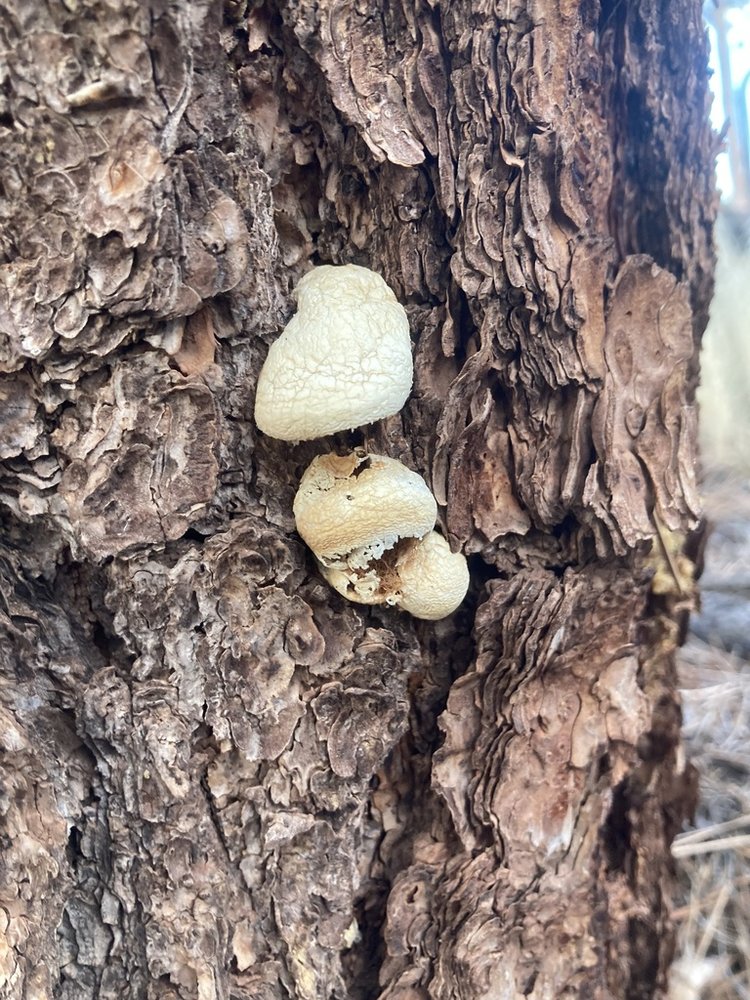
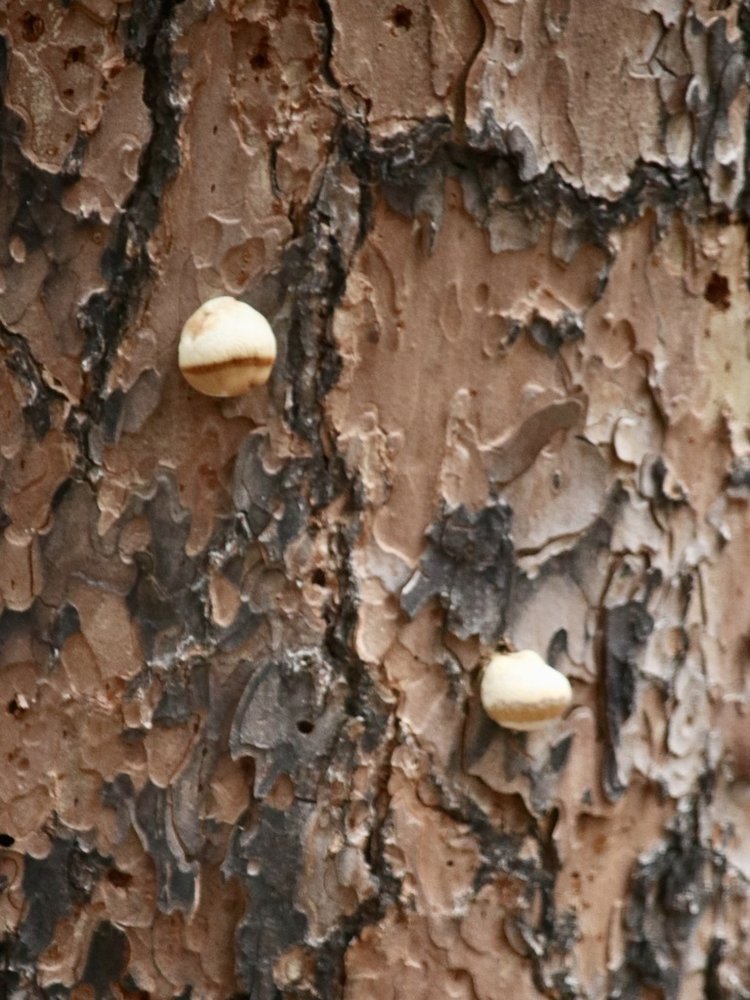
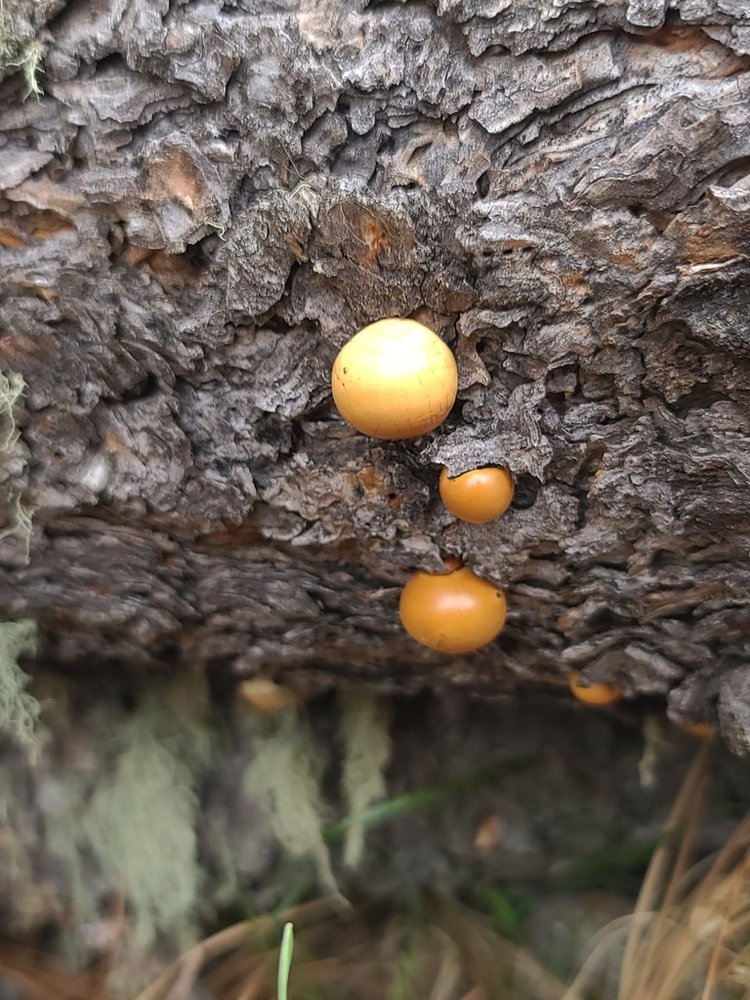
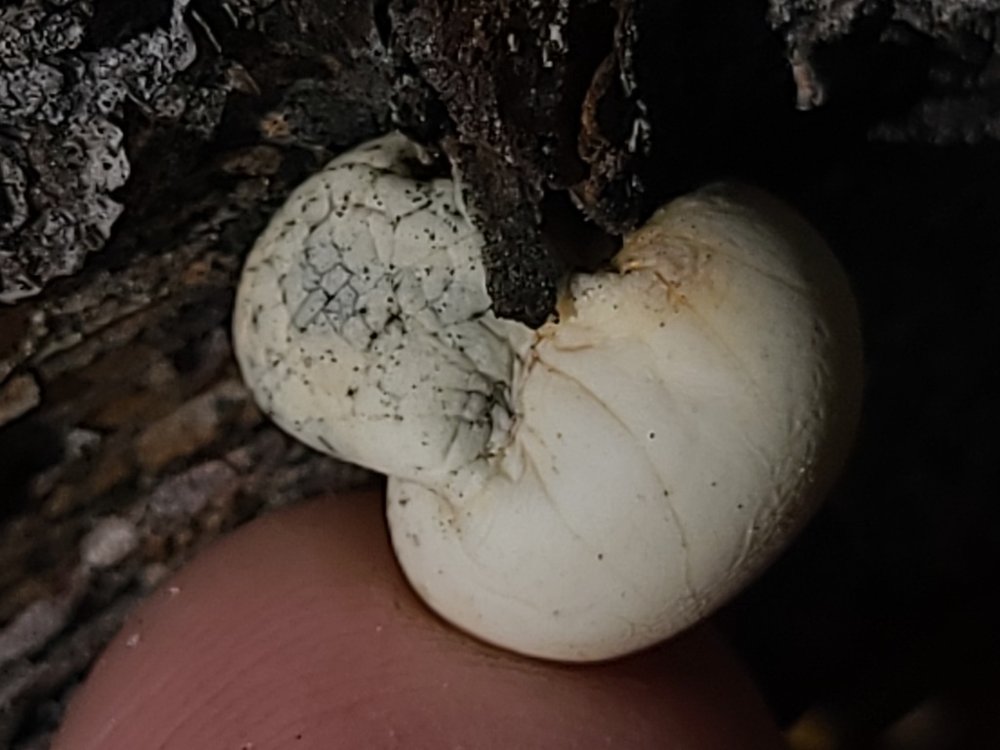
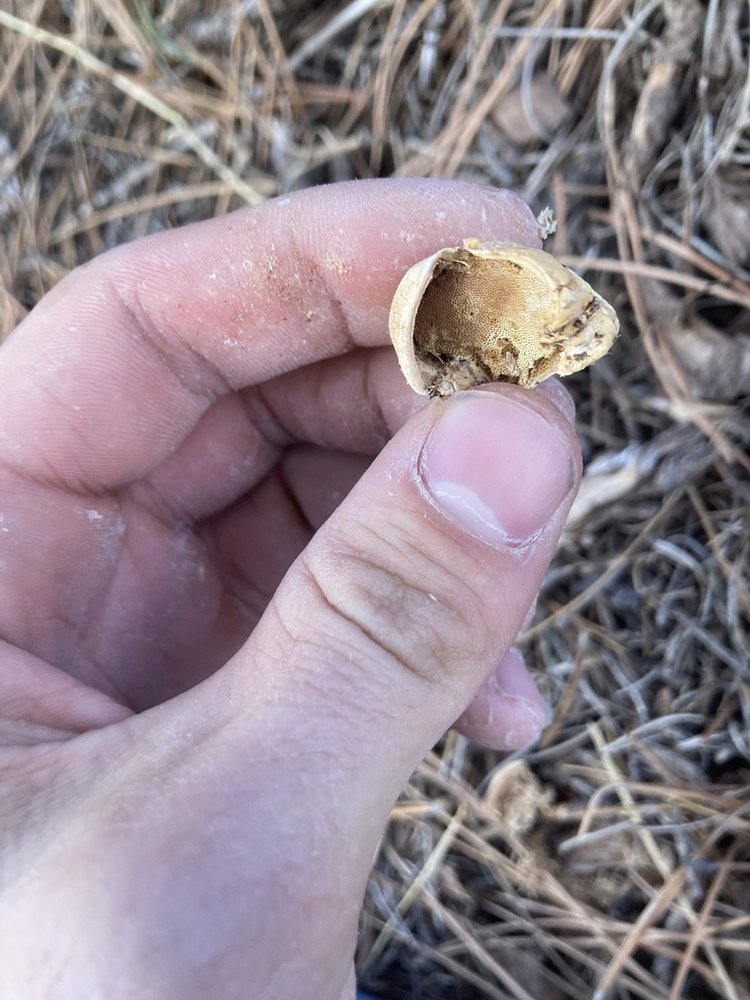
Veiled Polypore (Cryptoporus volvatus) is a small, round, cream to tan or golden fungus that sits on the bark of conifers, especially pines, killed in the last year or two by bark beetles or fire. Its pores are hidden inside, behind a skin on the underside. iNaturalist has Black Hills records from April into September, from Wind Cave, Custer State Park and Devils Tower, and Mount Rushmore lists it.
Free photos from other sources
| Family | Polyporaceae · Polypore |
|---|---|
| Type | Shelf fungus |
| Season | Summer and fall; Black Hills iNaturalist records run from April into September |
| Size | 1.5–6.5 cm (½–2½ in) across, 1–2.5 cm (½–1 in) thick |
| Grows on | Bark of conifers killed in the last year or two, especially pines |
| Spore print | Pinkish buff |
| Also called | Pouch Fungus, Cryptic Globe Fungus |
| Synonym | Polyporus volvatus |
| Eating | This guide doesn't say which mushrooms are safe to eat. |
How it lives
A saprobe and one of the first fungi to move into a newly dead tree. It causes a gray-brown white rot of the outer sapwood, the first few centimeters under the bark, and is rarely found more than a year or two after the tree dies. Fruiting starts within 1 to 3 years of death, each ball lasts one summer, and a tree can produce new ones for up to 3 years. Wood-boring beetles crawl into the chamber to feed on the spore layer and carry spores to other dead trees, and the Forest Service notes evidence that bark beetles may pick up spores on their bodies as they fly. The mountain pine beetle is native to the Black Hills, where its most common host is ponderosa pine, so recently beetle-killed pines are a good place to look.
How do you identify Veiled Polypore?
Look for smooth, rounded lumps 1.5–6.5 cm (½–2½ in) across scattered over the bark of a recently dead pine, often coming out of beetle holes. They are cream to yellowish or pale tan, sometimes glossy as if varnished, and chestnut to ochre brown in others, fading to buff with age. There is no stem. The underside is closed by a tough, whitish skin, the veil, that grows from the rim of the cap. As the spores ripen, a small hole opens in the veil. Break one open and you find a hollow chamber with a brown layer of tiny pores, 3 to 5 per millimeter, on its roof. The flesh is white and corky. It can look like a puffball growing on wood, but cutting it open shows the layer of pores.
When can you find it?
Summer and fall; Black Hills iNaturalist records run from April into September.
Where does it grow?
The bark of conifers that died within the last year or two, especially pines, and often trees killed by bark beetles or fire. The Forest Service says it is common on most recently killed conifers and frequent on dead ponderosa pine. iNaturalist has 14 research-grade Black Hills records, April to September, from Wind Cave, Custer State Park, Devils Tower and Lawrence, Meade, Pennington and Custer counties. The Park Service lists it at Mount Rushmore, and Black Hills specimens go back to 1917 in Pennington County, on ponderosa pine, and 1949 in Crook County, Wyoming.
Sources: Field Guide to Diseases and Insects of the Rocky Mountain Region, RMRS-GTR-241 (2010), Gray-brown saprot (pouch fungus) — USDA Forest Service; Cryptoporus volvatus (M. Kuo, 2023) — MushroomExpert.com; California Fungi: Cryptoporus volvatus (M. Wood and F. Stevens) — MykoWeb; Veiled polypore fungi growing on red pine bark (L. Williams, 2025) — Wisconsin DNR Forestry News; The Mountain Pine Beetle in the Black Hills — South Dakota Department of Agriculture and Natural Resources; NPSpecies checklist, Mount Rushmore National Memorial, fungi — National Park Service; Cryptoporus volvatus in Black Hills counties, including BPI 225781 (1917, on Pinus ponderosa) and RMS 1422 (1949) — GBIF; Cryptoporus volvatus, research-grade records in the Black Hills — iNaturalist; Cryptoporus volvatus, Black Hills research-grade records by month — iNaturalist; Name search: Cryptoporus volvatus — Index Fungorum.