Shaggy Parasol
Chlorophyllum rhacodes
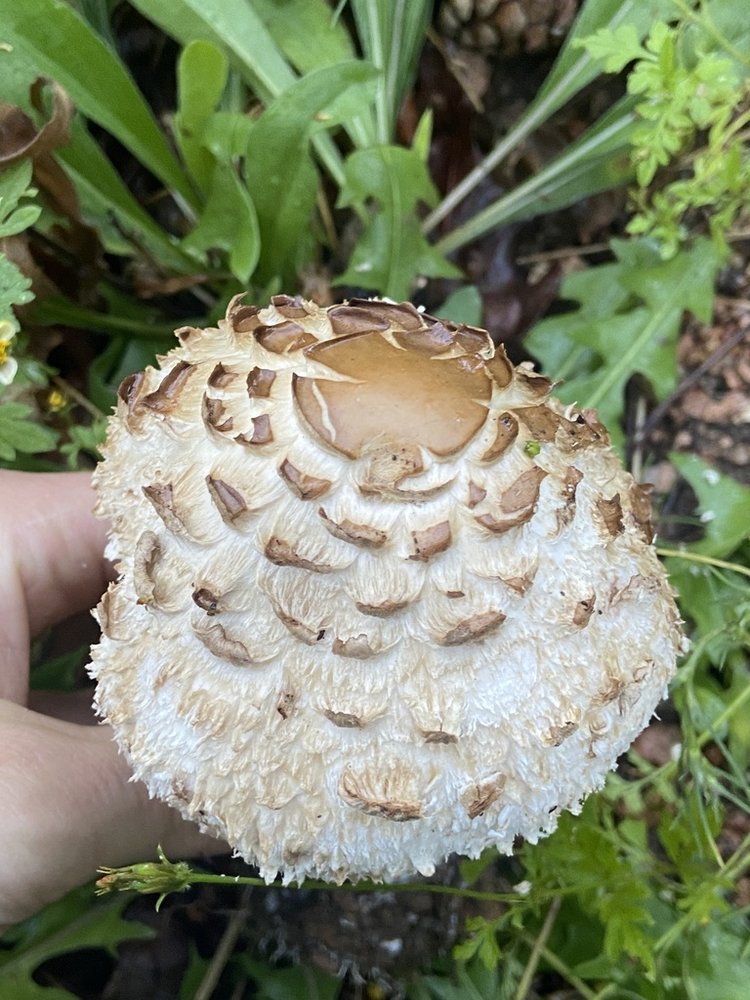
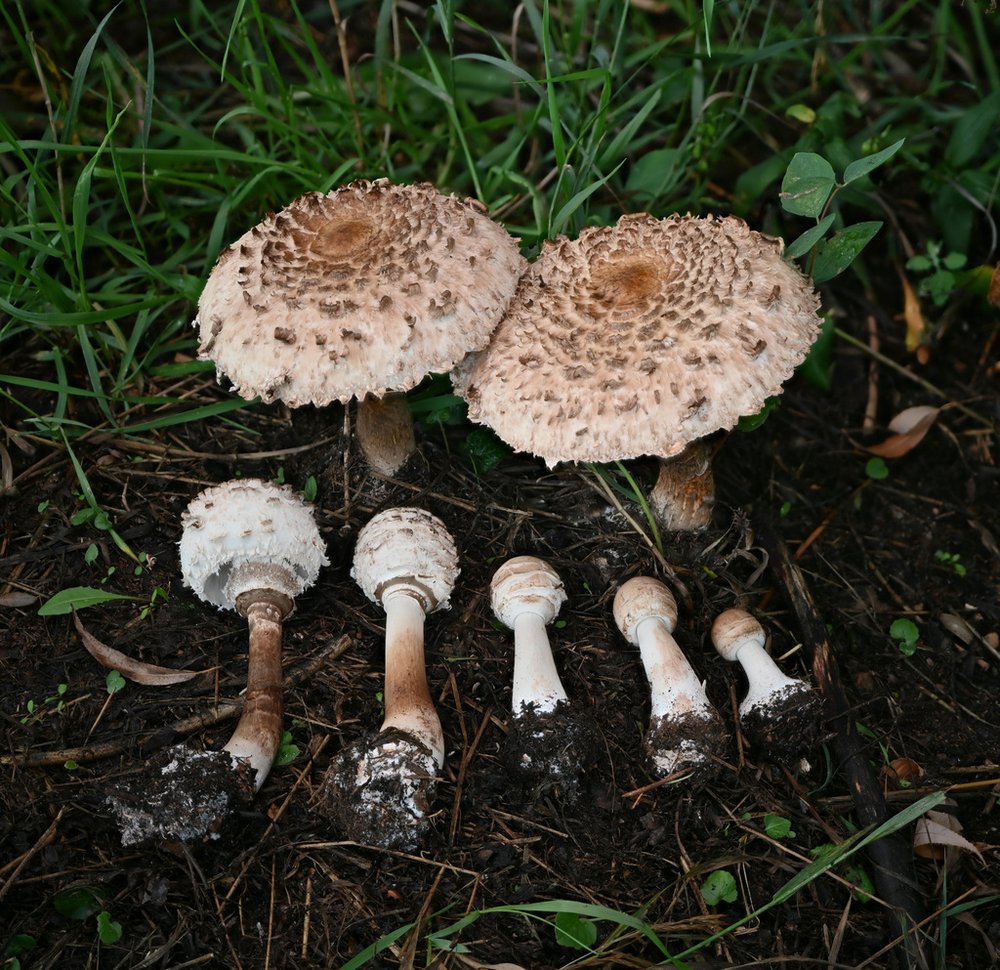
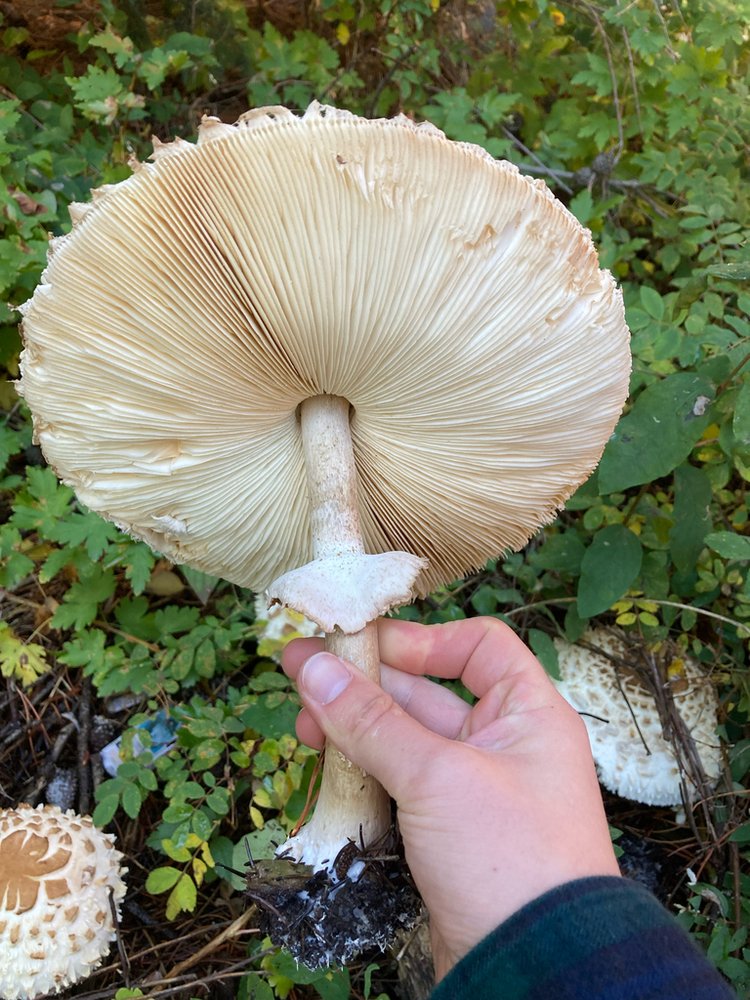
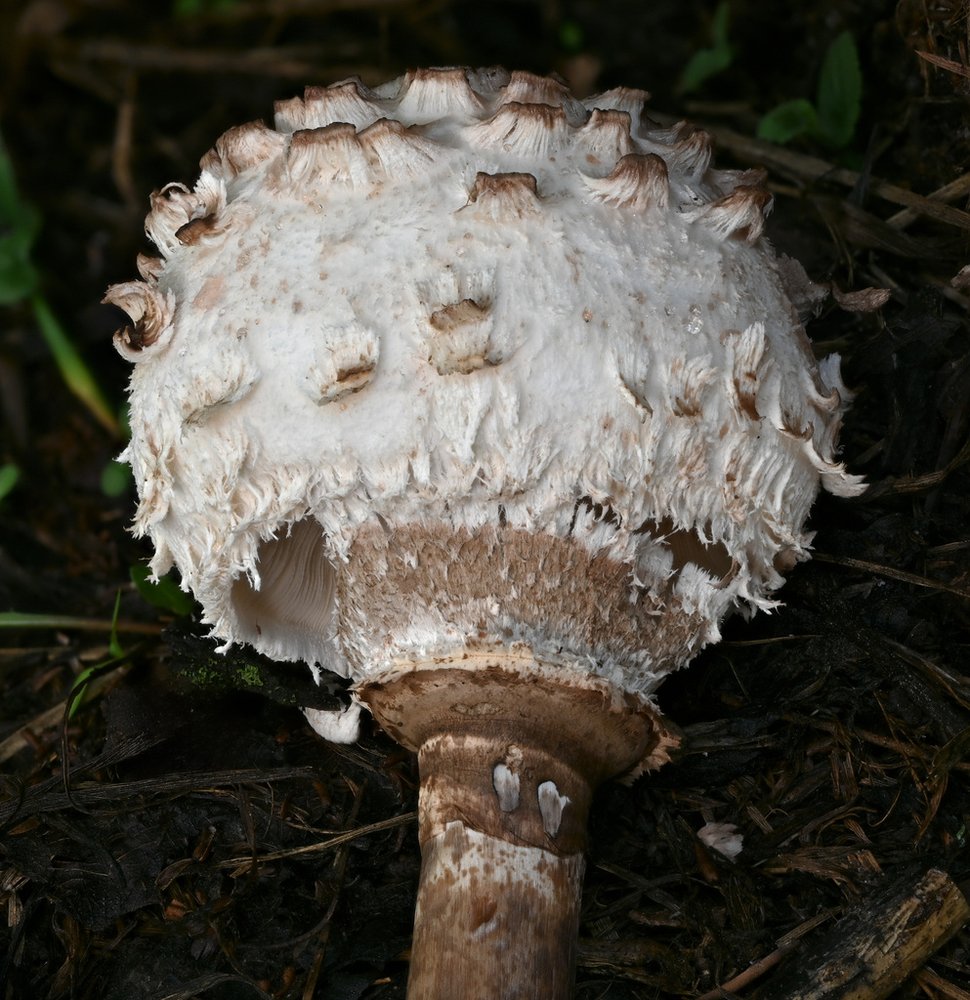
Shaggy Parasol (Chlorophyllum rhacodes) is a large mushroom with a round to flat cap that breaks into shaggy, brown-tipped scales around a smooth brown center, white gills, a double-edged ring that slides on the stem and flesh that turns pinkish orange when cut. In the Black Hills it is recorded on iNaturalist from June to early October in Lawrence and Pennington counties, though only one of the 7 records, from October, is confirmed.
Free photos from other sources
| Family | Agaricaceae · Agaricus |
|---|---|
| Type | Gilled mushroom |
| Season | June to early October on iNaturalist's Black Hills records; the one research-grade record is from October |
| Size | Cap 5–16 cm (2–6½ in) wide, stem 6–21 cm (2½–8 in) tall |
| Grows on | Soil in lawns, gardens, roadsides and field edges, often near conifers |
| Spore print | White |
| Synonym | Macrolepiota rhacodes, Lepiota rhacodes, Leucocoprinus rhacodes |
| Toxicity | It has made people sick: the North American Mycological Association's case registry lists 16 adults, seven of them in California and four in Colorado, with stomach upset or vomiting, and some with chills, cramps, nausea, drooling, sweating, drowsiness, weakness, a general sick feeling, disorientation, chest pain, a runny nose or convulsions. |
| Eating | This guide doesn't say which mushrooms are safe to eat. |
How it lives
A saprobe: it breaks down dead organic matter in the soil and doesn't partner with tree roots. It often comes up in troops or fairy rings, frequently near conifers.
How do you identify Shaggy Parasol?
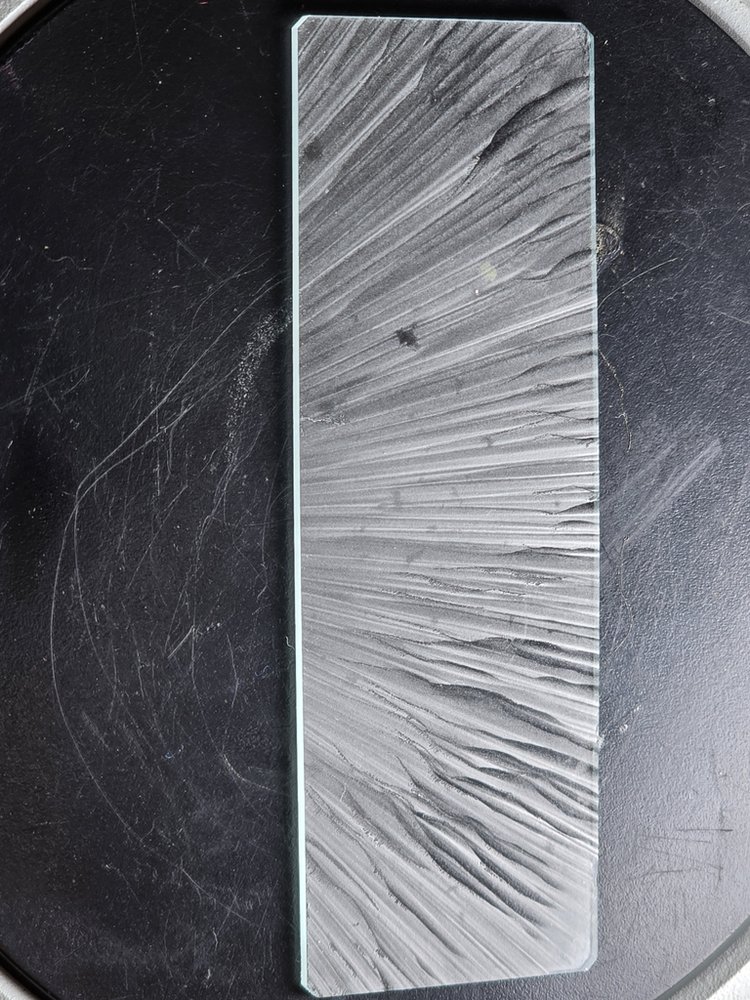
Look for a big mushroom in grass or disturbed ground, alone, scattered or in troops and rings. The cap is 5–16 cm (2–6½ in) wide, nearly round in the button stage and smooth and brown, then broadly convex to flat; as it opens, the brown skin breaks into shaggy scales with brownish tips over a whitish background, while the center stays smooth and brown. The gills are free from the stem, close and white, turning pale brownish with age and often brown at the edges. The stem is 6–21 cm (2½–8 in) long, club-shaped, swelling gradually into a bulb at the base, whitish above the ring and brownish below, and it bruises brown. It carries a high, whitish, double-edged ring that slides on the stem and is brownish on the underside. Cut flesh turns pinkish orange to reddish, then slowly brownish, most of all at the top of the stem. The spore print (the dust the gills drop) is white. The poisonous Green-spored Parasol (Chlorophyllum molybdites) can't be told from it in photos or at a glance; its mature gills turn greenish and its spore print is green, not white or cream. iNaturalist has no Black Hills records of it, but a University of Colorado mycologist has called it much more common than the Shaggy Parasol. In western North America the Shaggy Parasol also has a near twin, Chlorophyllum brunneum, whose stem ends in a bulb with a rim, and the two also differ under a microscope.
When can you find it?
June to early October on iNaturalist's Black Hills records; the one research-grade record is from October.
Where does it grow?
Lawns, gardens, roadsides, field edges and other disturbed ground, often near conifers, especially spruces. iNaturalist has 7 Black Hills records, from Lawrence and Pennington counties: one research grade (Pennington County, national forest, October 2023) and 6 awaiting confirmation, from June to early October. No herbarium specimen from South Dakota or Wyoming turned up in GBIF, and no published Black Hills source opened for this guide names it.
Sources: Kuo, Chlorophyllum rhacodes (2017) — MushroomExpert.com; Mitton, Can you eat this mushroom or not? (2023) — Colorado Arts and Sciences Magazine, University of Colorado Boulder; Mushroom Poisoning Syndromes — North American Mycological Association; Beug, Shaw & Cochran, Thirty-Plus Years of Mushroom Poisoning: Summary of the Approximately 2,000 Reports in the NAMA Case Registry (McIlvainea 16, 2006) — North American Mycological Association; Beug, Summary of the Poisoning Reports in the NAMA Case Registry for 2006 through 2017 — North American Mycological Association; Species Fungorum: Chlorophyllum rhacodes, species synonyms — Royal Botanic Gardens, Kew; iNaturalist: Chlorophyllum rhacodes in the Black Hills places (Black Hills ecoregions, Black Hills National Forest, Wind Cave NP, Custer SP); iNaturalist: Chlorophyllum species in the Black Hills places (only C. rhacodes); GBIF: Chlorophyllum rhacodes records from South Dakota (iNaturalist only, no specimens); GBIF: Chlorophyllum rhacodes records from Wyoming (iNaturalist only, no specimens).