Field Bird's Nest
Cyathus olla
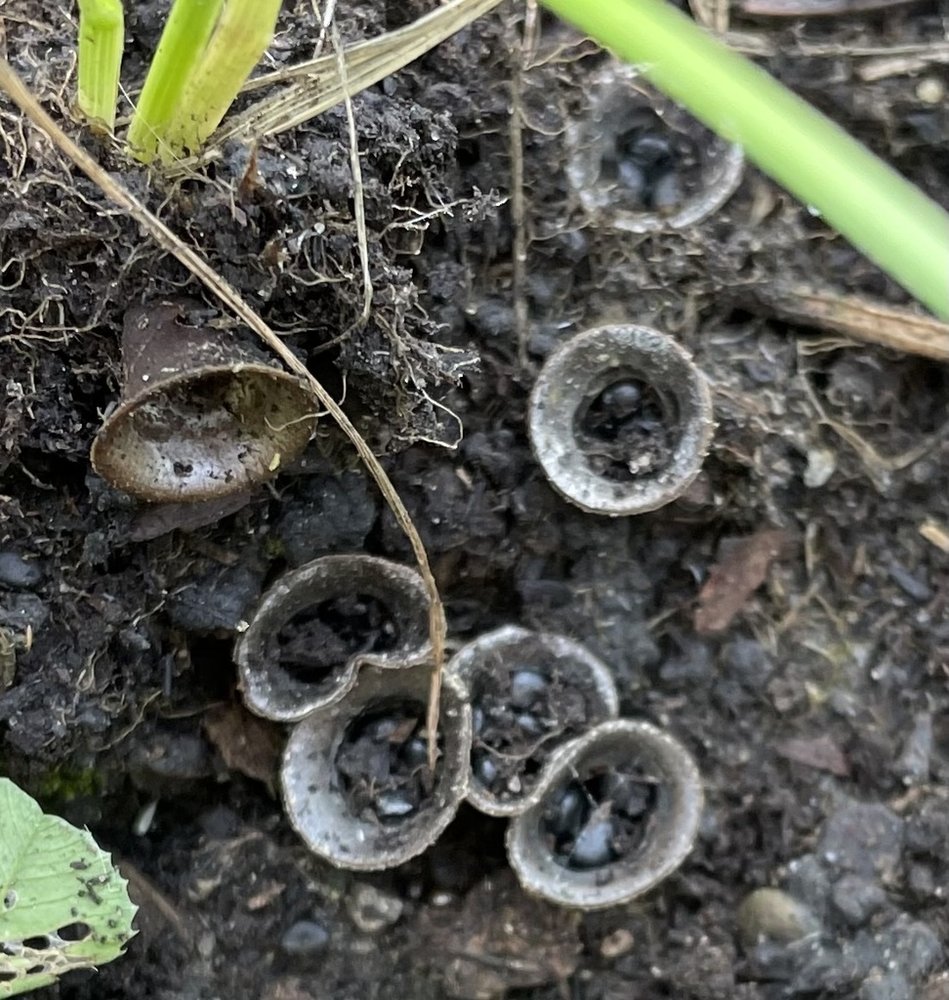
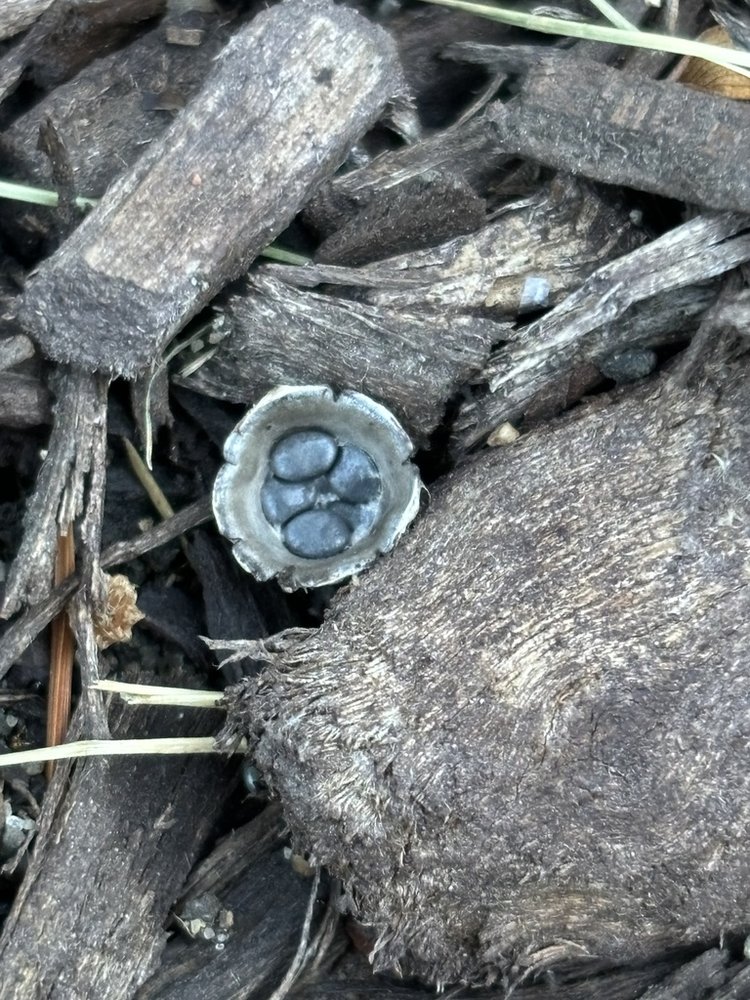
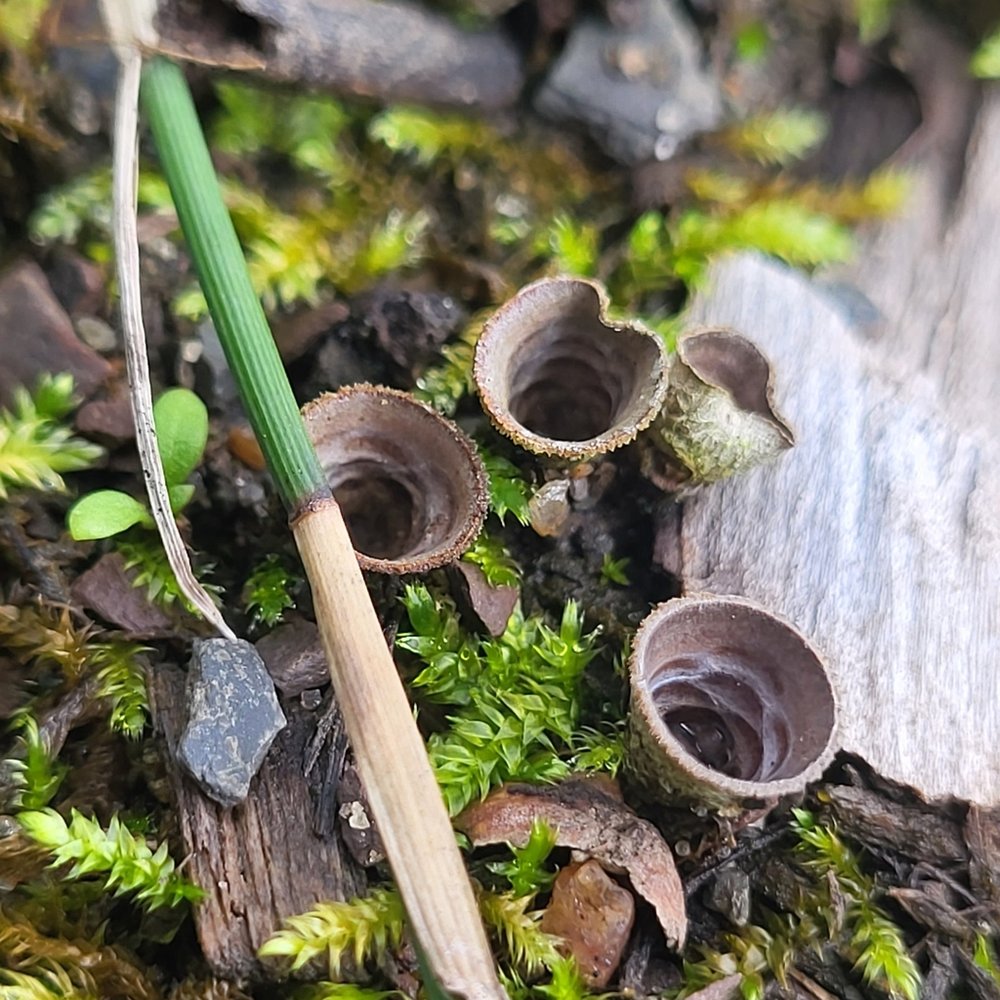
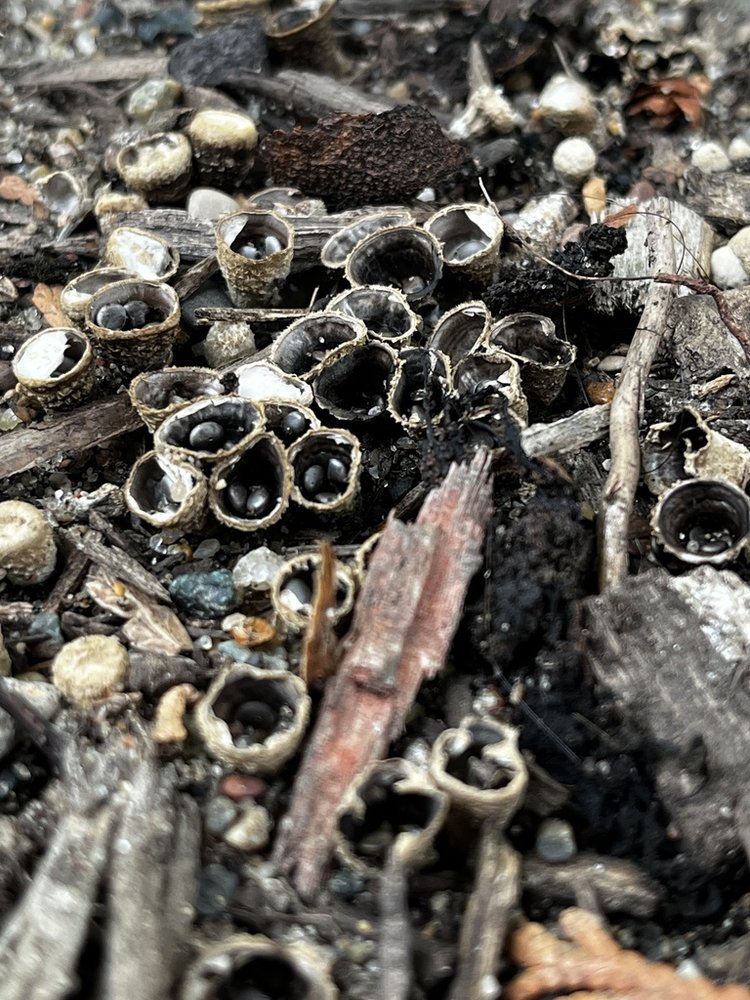
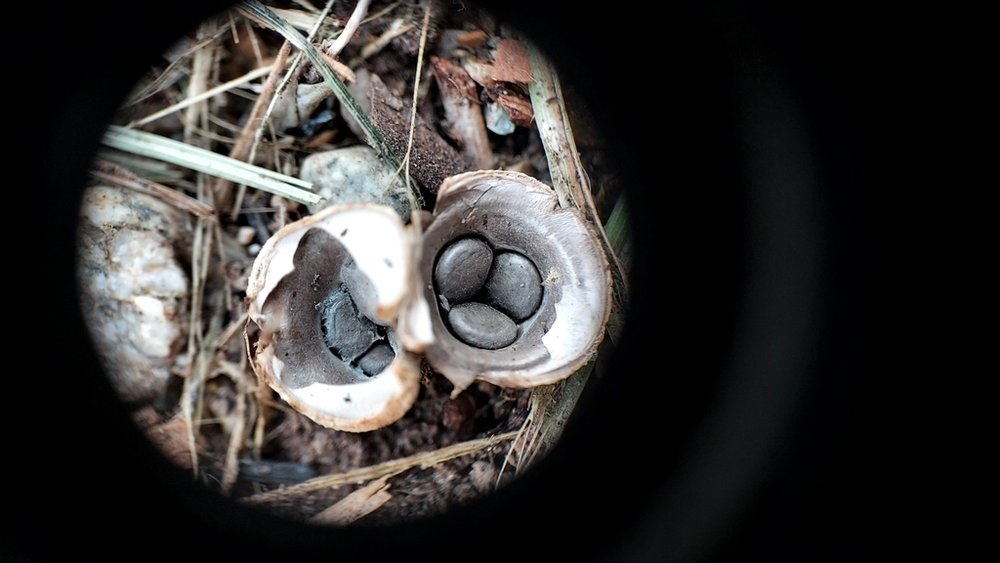
The Field Bird's Nest (Cyathus olla) is a tiny fungus shaped like a flaring cup, about 1 cm (⅜ in) tall, that holds a few flat gray "eggs" like a bird's nest. iNaturalist has two Black Hills records, from Lawrence and Meade counties in July and September.
Free photos from other sources
| Family | Nidulariaceae · Bird's nest fungus |
|---|---|
| Type | Bird's nest fungus |
| Season | June into October |
| Size | Cups 8–15 mm (⅓–⅝ in) tall and 6–10 mm (¼–⅜ in) wide; eggs 2–4 mm (about 1/8 in) |
| Grows on | Dead plant stems, crop debris and wood chips |
| Also called | Gray Bird's Nest, Field Bird's Nest Fungus |
| Synonym | Cyathus vernicosus |
| Eating | This guide doesn't say which mushrooms are safe to eat. |
How it lives
It is saprobic, breaking down dead plant stems, crop debris and wood. The "eggs" are packets of spores. A raindrop landing in the cup splashes them out, and a sticky cord on each one catches on nearby plants.
How do you identify Field Bird's Nest?
Look for tiny cups, 8–15 mm (⅓–⅝ in) tall, standing in groups on dead stems, plant debris, wood chips or bare soil, each holding a clutch of flat, gray to nearly black "eggs" 2–4 mm (about 1/8 in) wide. The cup flares open like a trumpet, often with a wavy rim. Outside it is brownish to gray and smooth or finely velvety, never shaggy; inside it is smooth, shiny and silvery gray to blackish. Young cups are closed by a whitish lid that soon falls away. The Fluted Bird's Nest (Cyathus striatus), reported on iNaturalist in the Black Hills, has a shaggy, woolly outside and a grooved inside, with smaller eggs, and grows on woody debris rather than soil. The Dung-loving Bird's Nest (Cyathus stercoreus), which iNaturalist records in Custer State Park, has shiny black eggs and grows on dung or manured soil. The Common Bird's Nest (Crucibulum laeve), reported on iNaturalist at Mount Rushmore, has a yellowish to yellow-brown nest.
When can you find it?
June into October.
Where does it grow?
Dead plant stems, corn husks and other crop debris, wood chips and woody debris, and sometimes bare soil, including in crop fields. In the Black Hills there are two research-grade iNaturalist records, from Lawrence County in September 2021 and Meade County in July 2024; no herbarium specimen was found. Other bird's nest fungi seen here on iNaturalist are the Fluted Bird's Nest (three unconfirmed reports), the Dung-loving Bird's Nest and the Common Bird's Nest.
Sources: Cyathus olla (M. Kuo, February 2014) — MushroomExpert.com; Cyathus olla, gray bird's nest (G. Emberger) — Fungi Growing on Wood, hosted by MushroomExpert.com; The Bird's Nest Fungi (M. Kuo, February 2014) — MushroomExpert.com; Cyathus striatus (M. Kuo, February 2014) — MushroomExpert.com; Cyathus olla: synonymy and classification — Species Fungorum (Royal Botanic Gardens, Kew); Nidulariaceae (bird's nest fungi), taxon record — iNaturalist API; Cyathus olla records in the Black Hills places — iNaturalist API; Bird's nest fungus records in the Black Hills places (Nidulariaceae) — iNaturalist API; Cyathus olla, research-grade records by month within 500 km of the Black Hills — iNaturalist API; Cyathus olla records from South Dakota (no specimens) — GBIF; GBIF occurrence search: Cyathus olla in Wyoming (one specimen, Albany County, 1973).