Fairy Ring Mushroom
Marasmius oreades
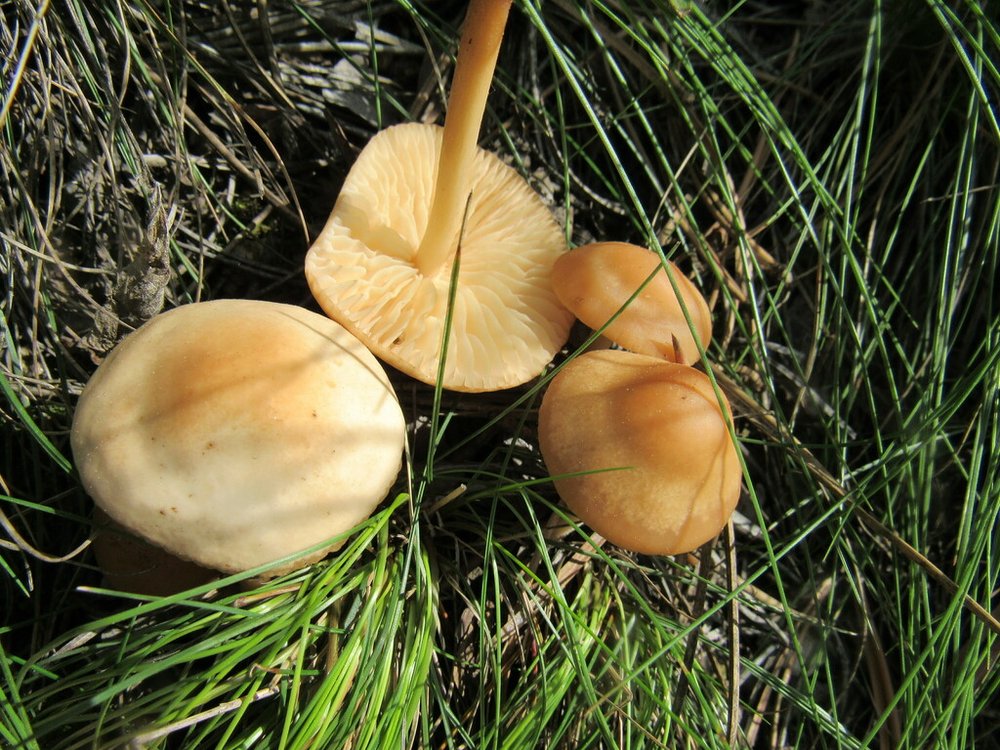
Fairy Ring Mushroom (Marasmius oreades) is a small buff to tan mushroom with a bell-shaped cap that keeps a low bump in the middle, widely spaced pale gills and a thin, tough stem, growing in troops, arcs or rings in grass. It was collected in Wind Cave National Park in June 1971 and in a Crook County, Wyoming, lawn in July 1961, and iNaturalist has Black Hills records from late May to September, two of them confirmed.
Free photos from other sources

| Family | Marasmiaceae · Marasmius |
|---|---|
| Type | Gilled mushroom |
| Season | Late May to September: Black Hills herbarium specimens are from June and July, research-grade iNaturalist records from June and August, and iNaturalist records awaiting confirmation from late May to late September |
| Size | Cap 1–5 cm (½–2 in) wide, stem 2–8 cm (¾–3 in) tall |
| Grows on | Grass in lawns, meadows and other grassy places, often in rings |
| Spore print | White |
| Also called | Fairy Ring Champignon, Scotch Bonnet |
| Synonym | Agaricus oreades, Collybia oreades |
| Toxicity | It has made people and dogs sick: the North American Mycological Association's case registry lists five people with stomach upset, among them an Oregon adult who vomited for several days and a young child in British Columbia with cramps and diarrhea, and two dogs with stomach upset, drooling, frothing and unsteadiness. |
| Eating | This guide doesn't say which mushrooms are safe to eat. |
How it lives
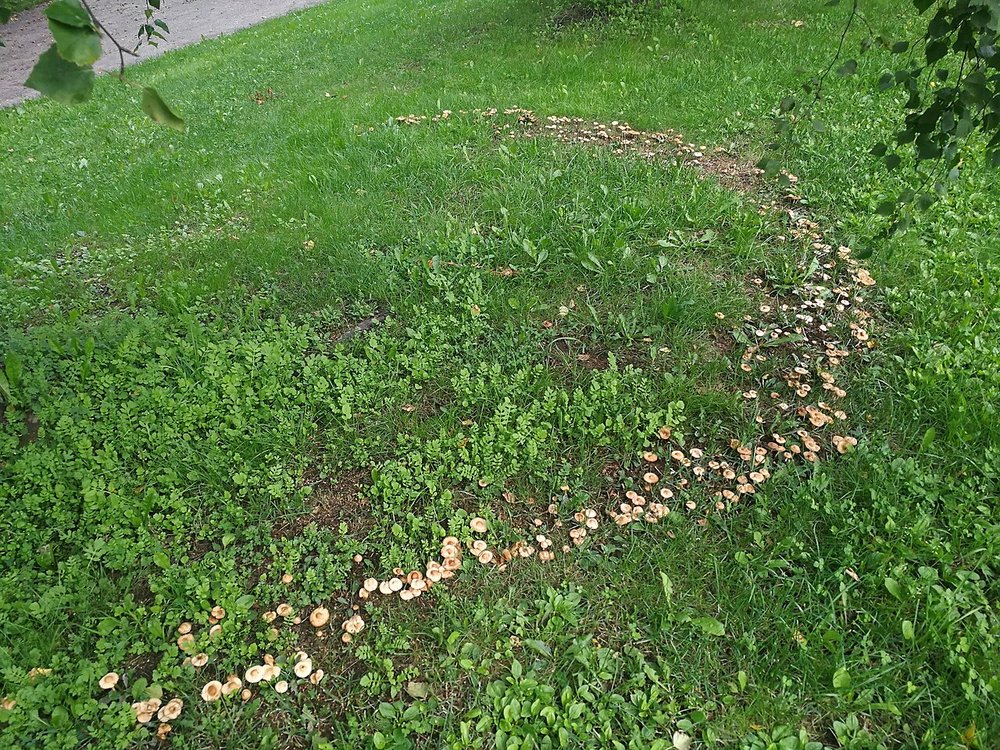
A saprobe: it lives in the soil under grass and breaks down dead organic matter. Its underground growth spreads outward from a center, so the mushrooms come up along the edge of a ring that gets wider each year, and nutrients it releases can make the grass there grow darker green. Its mushrooms can dry out and revive several times.
How do you identify Fairy Ring Mushroom?
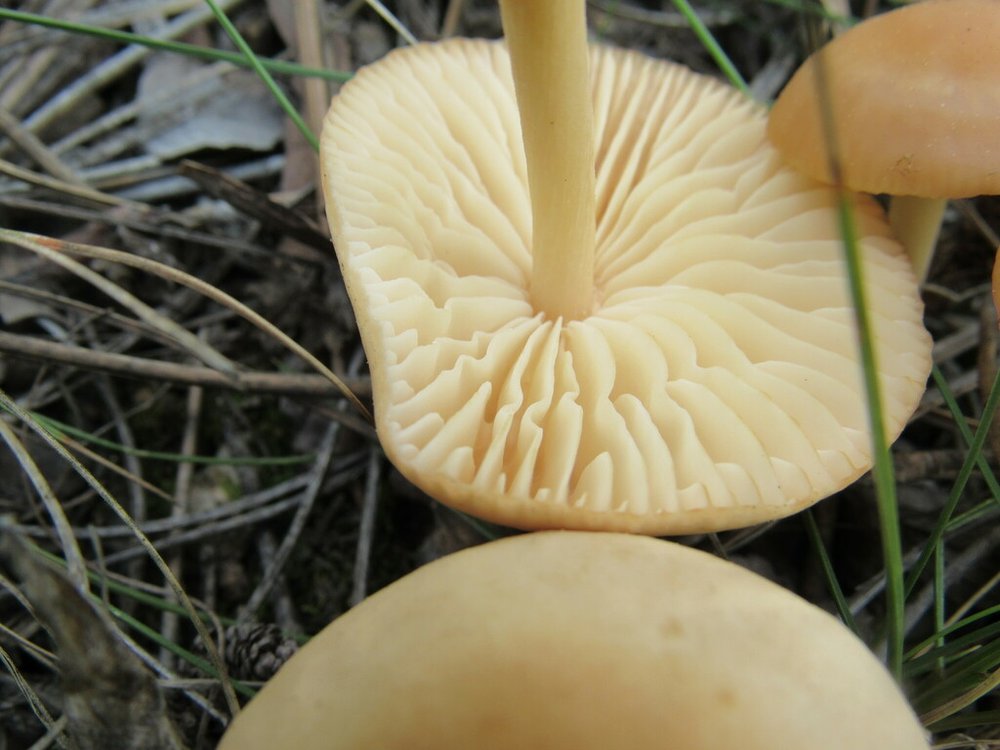
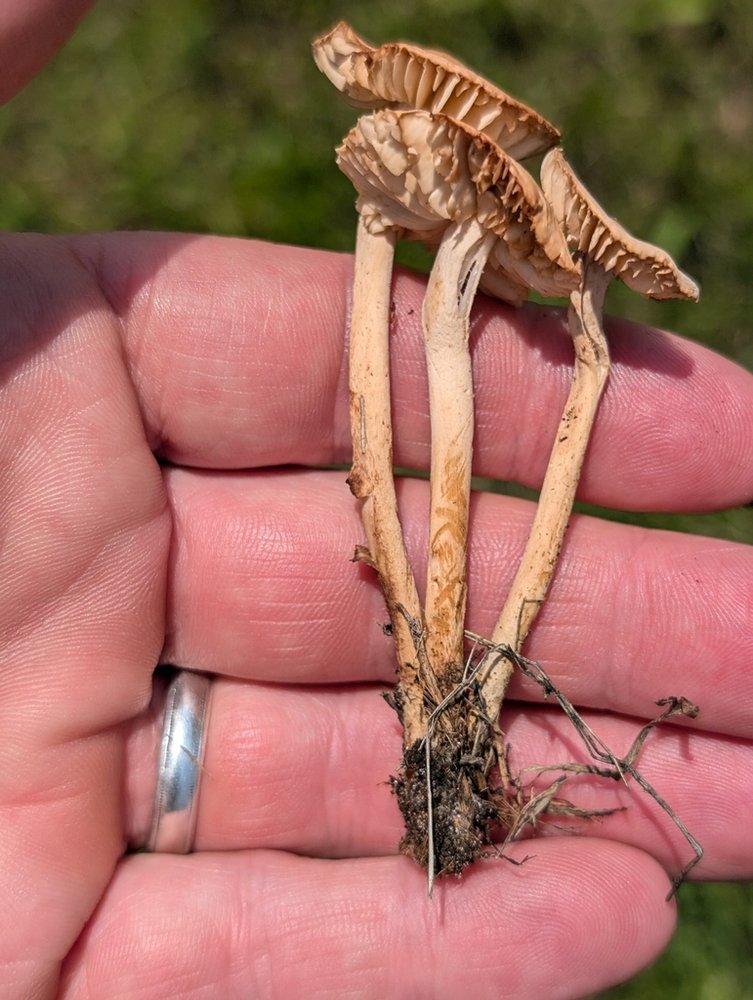
Look for troops, arcs or rings of small mushrooms in grass; the ring is often faint, and the grass along it may be darker green. The cap is 1–5 cm (½–2 in) wide, bell-shaped with an inrolled edge at first, then broadly convex or flat with a low bump in the center. It is dry, bald and pale tan or buff, sometimes whitish or reddish tan, and changes color a lot as it dries. The gills are white or pale tan and widely spaced, attached to the stem or free from it but not running down it. The stem is 2–8 cm (¾–3 in) long, thin, tough and bendable, whitish or the color of the cap. The spore print (the dust the gills drop) is white. Dried-out mushrooms can revive after rain. The poisonous sweating mushroom (Collybia rivulosa, long called Clitocybe dealbata or C. rivulosa) also grows in arcs and rings in grass and is about the same size, but its cap is whitish to ashy gray or grayish tan and often streaked or water-spotted, its gills run slightly down the stem, its stem isn't leathery or tough, and it doesn't revive after drying. iNaturalist has no Black Hills record of it, but herbarium specimens come from Wyoming's mountains, and the North American Mycological Association's registry lists a poisoning in Nebraska. Poisonous Inocybe mushrooms, which can also be confused with it, usually have gray-brown gills.
When can you find it?
Late May to September: Black Hills herbarium specimens are from June and July, research-grade iNaturalist records from June and August, and iNaturalist records awaiting confirmation from late May to late September.
Where does it grow?
Lawns, meadows and other grassy places; a Montana State University extension note says fairy rings in lawns are usually its work. A University of Michigan herbarium specimen was collected in Wind Cave National Park in June 1971, and another in a lawn in Crook County, Wyoming, in July 1961. iNaturalist has 12 Black Hills records: 2 research grade (Pennington County, June 2022; Custer County, in the national forest, August 2026) and 10 awaiting confirmation from Pennington, Lawrence and Custer counties (one in Custer State Park) and Crook County, Wyoming.
Sources: Kuo, Marasmius oreades (2013) — MushroomExpert.com; Fairy Ring Mushroom — Missouri Department of Conservation Field Guide; Volk, Marasmius oreades, the fairy ring mushroom: Fungus of the Month, March 2003 — University of Wisconsin-La Crosse; Noffsinger, Fairy Rings — Judith Basin County Extension, Montana State University; Wood & Stevens, Clitocybe rivulosa — California Fungi (MykoWeb); Mushroom Poisoning Syndromes — North American Mycological Association; Beug, Shaw & Cochran, Thirty-Plus Years of Mushroom Poisoning: Summary of the Approximately 2,000 Reports in the NAMA Case Registry (McIlvainea 16, 2006) — North American Mycological Association; Beug, Summary of the Poisoning Reports in the NAMA Case Registry for 2006 through 2017 — North American Mycological Association; Beug, Summary of the Poisoning Reports in the NAMA Mushroom Poisoning Case Registry: 2018 through 2020 — North American Mycological Association; Species Fungorum: Marasmius oreades, species synonyms — Royal Botanic Gardens, Kew; Species Fungorum: Clitocybe rivulosa (synonym of Collybia rivulosa) — Royal Botanic Gardens, Kew; GBIF occurrence: Marasmius oreades, Wind Cave National Park, Custer County, SD, 10 June 1971 (MICH 175875); GBIF occurrence: Marasmius oreades, in lawn, Crook County, WY, July 1961 (MICH 175847); iNaturalist: Marasmius oreades taxon page data (English names fairy ring mushroom, Fairy Ring Champignon, scotch bonnet); iNaturalist: Marasmius oreades in the Black Hills places (Black Hills ecoregions, Black Hills National Forest, Wind Cave NP, Custer SP); iNaturalist: Collybia rivulosa (sweating mushroom) in the Black Hills places (none); GBIF: Clitocybe rivulosa and C. dealbata specimens from Wyoming.