Ergot
Claviceps purpurea
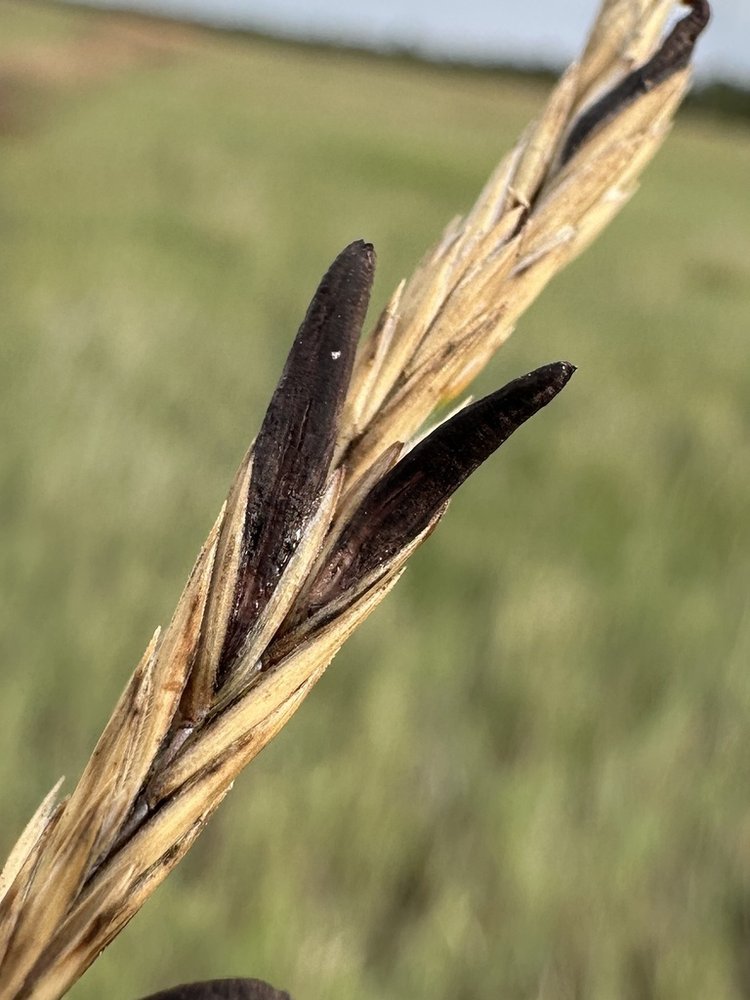
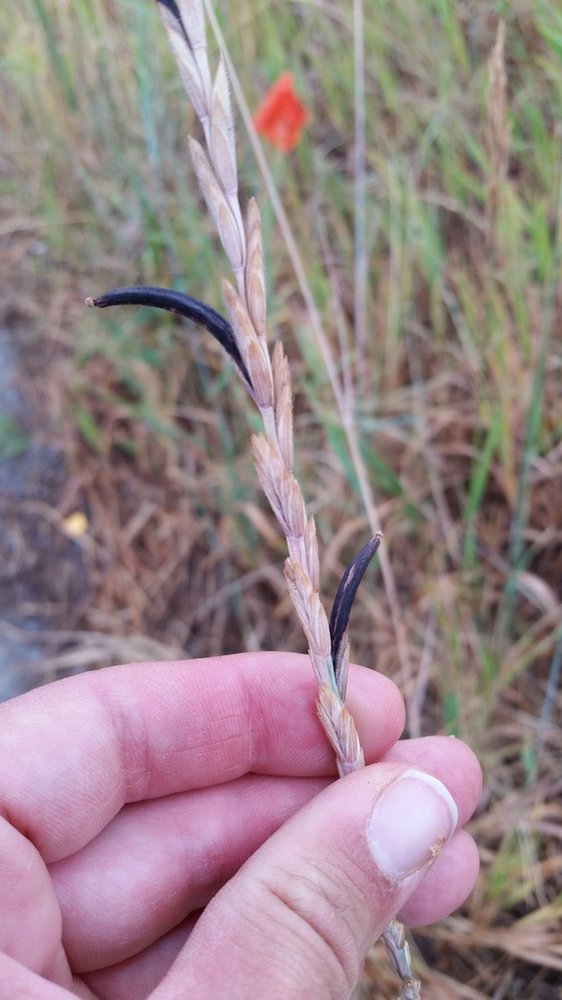
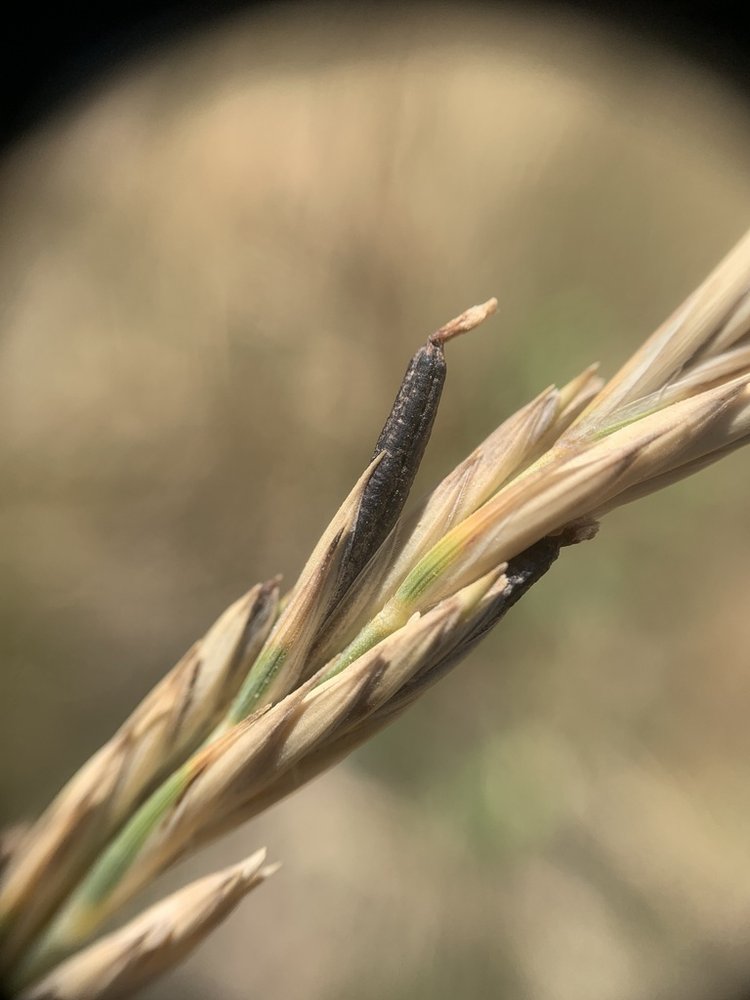
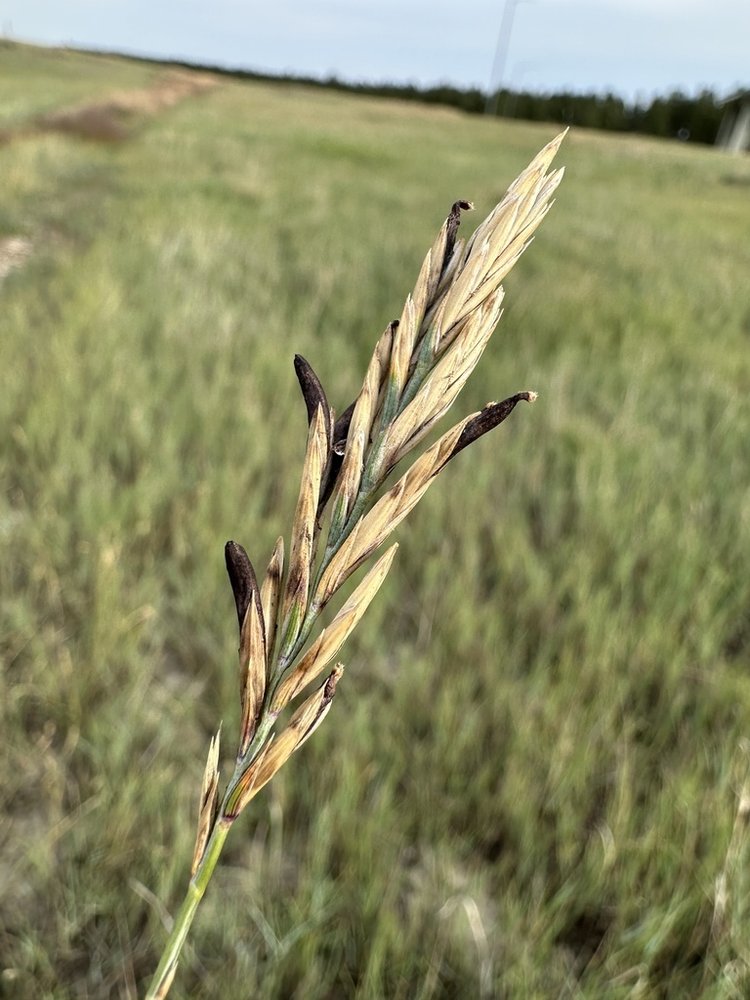
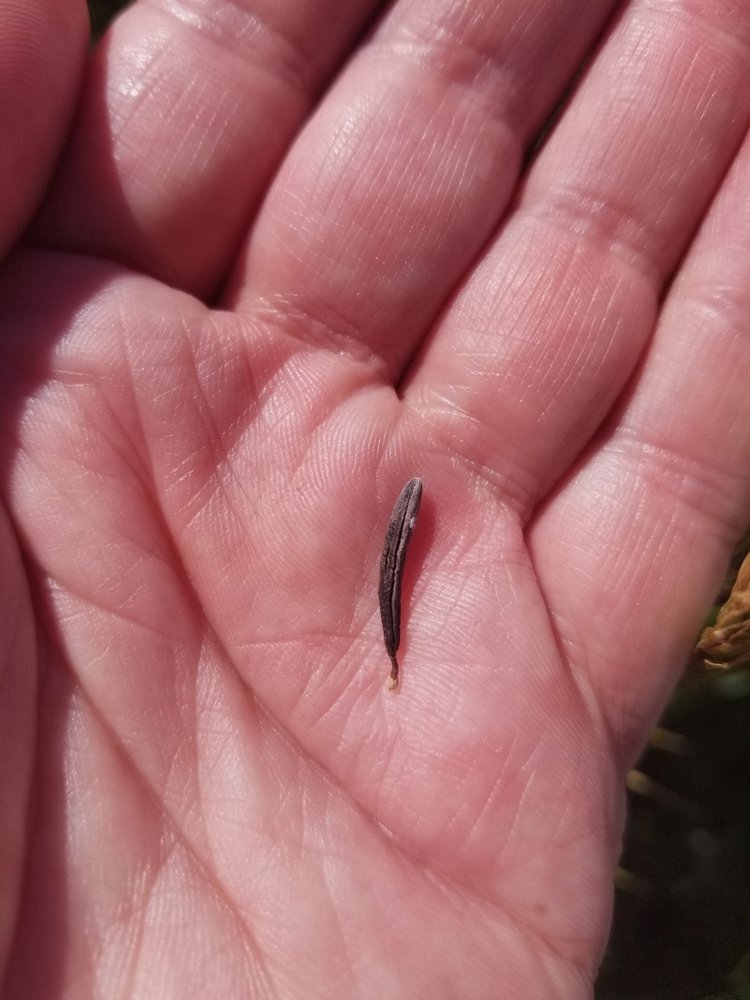
Ergot (Claviceps purpurea) is a fungus that replaces the seeds in grass heads with hard, dark purple-brown to black spurs about 2–19 mm (1/16–3/4 in) long. It grows on more than 200 kinds of wild grasses and grain crops, and its spurs are poisonous to livestock. iNaturalist has 1 research-grade Black Hills record, from Custer State Park in August 2018.
Free photos from other sources
| Family | Clavicipitaceae · Ergot |
|---|---|
| Type | Ergot |
| Season | July into September, in ripening grass heads |
| Size | Spurs 2–19 mm (1/16–3/4 in) long, two to four times the size of a grain |
| Grows on | Seed heads of wild grasses and grain crops |
| Toxicity | Poisonous to livestock and people: its ergot alkaloids narrow small blood vessels, causing lameness and gangrene of hooves, ears and tails in cattle, and in medieval Europe ergot in rye bread caused epidemics of ergotism that killed thousands of people. |
| Eating | This guide doesn't say which mushrooms are safe to eat. |
| Note | What was long called Claviceps purpurea is now known to be several closely related species: a 2021 study found at least seven lineages under this name in Canada and the western United States, with Claviceps purpurea in the strict sense the most common. The old Black Hills specimens haven't been sorted into them. |
How it lives
A parasite of grass flowers. Sclerotia that spent the winter on the ground need one to two months of cold; in spring they sprout small, mushroom-like stalks that release spores, which the wind carries to flowering grass heads. The fungus takes over the young seed and oozes honeydew full of a second kind of spore, which more than 40 kinds of insects carry to other flowers. About two weeks later the infected seed is replaced by the hard, dark sclerotium, which falls to the ground or is carried off with the grain and starts the cycle again. A cool, wet spring followed by early summer heat favors it.
How do you identify Ergot?
Look in grass heads from midsummer on for hard, dark purple-brown to black, spur-like bodies sticking out where seeds should be. They range from about 2 to 19 mm (1/16–3/4 in) long, often two to four times the size of a normal grain, and can look like seeds, rodent droppings or insect parts. These are sclerotia, the fungus's resting bodies. Earlier, when the grass is in flower, infected florets ooze sticky, pink to golden droplets called honeydew. Ergot grows on more than 200 kinds of grass, including wheatgrass and brome, and on rye, wheat, barley and oats; rye is especially prone to it.
When can you find it?
July into September, in ripening grass heads.
Where does it grow?
Seed heads of wild and cultivated grasses in pastures, hay and grain fields. iNaturalist has 1 research-grade Black Hills record, from Custer State Park in August 2018. Older herbarium specimens from counties in and around the Hills come from Custer County (1889) and Fall River County (1909), on quackgrass and other Agropyron grasses, and from Weston County, Wyoming (1950), on western wheatgrass. South Dakota specimens in GBIF were mostly collected from July to September. SDSU Extension says cool, damp spring weather followed by warmer temperatures favors ergot in the region's pasture grasses.
Sources: Ergot: A Potential Livestock Poisoning Problem (R. Daly) — South Dakota State University Extension; Ergot, fact sheet — University of Wisconsin-Madison Plant Disease Diagnostics Clinic; Forage-Related Cattle Disorders: Ergotism, VET-34 (M. Arnold, 2014) — University of Kentucky Cooperative Extension; Haarmann, Rolke, Giesbert & Tudzynski 2009, Ergot: from witchcraft to biotechnology, Molecular Plant Pathology 10(4): 563–577 — PubMed Central; Liu et al. 2021, Sympatric divergence of the ergot fungus, Claviceps purpurea, populations infecting agricultural and nonagricultural grasses in North America, Ecology and Evolution 11(1): 273 — PubMed Central; Claviceps purpurea, record 162059 — Species Fungorum; Claviceps purpurea specimens, South Dakota — GBIF; Claviceps purpurea specimens, Wyoming — GBIF; Black Hills observations of Claviceps purpurea (research) — iNaturalist.