Elm Oyster
Hypsizygus ulmarius
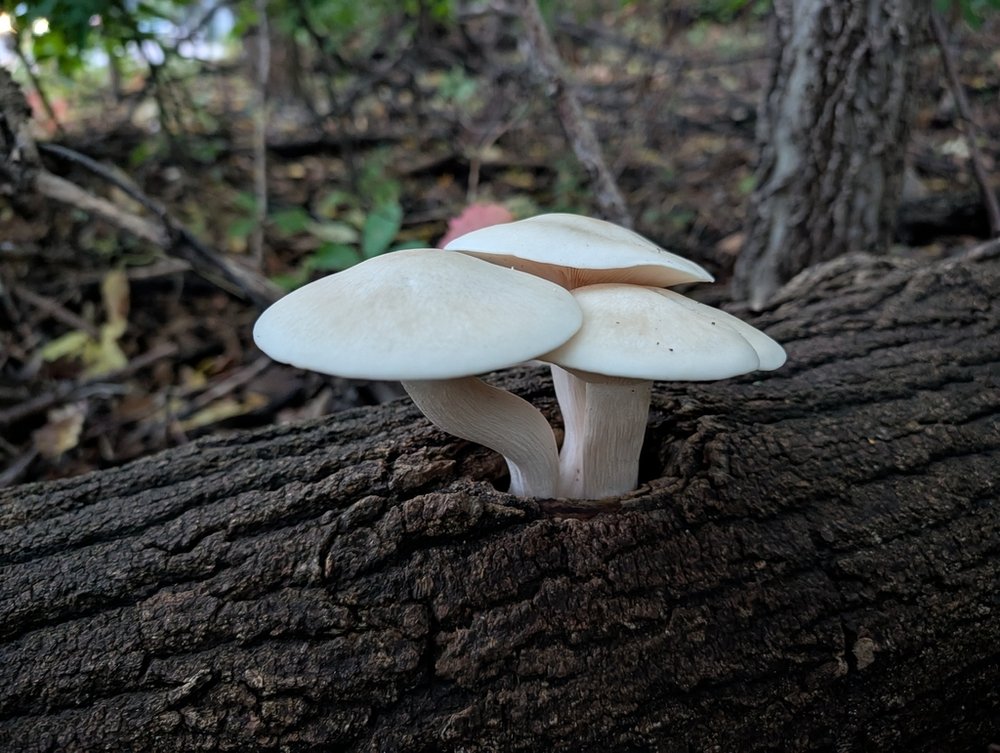
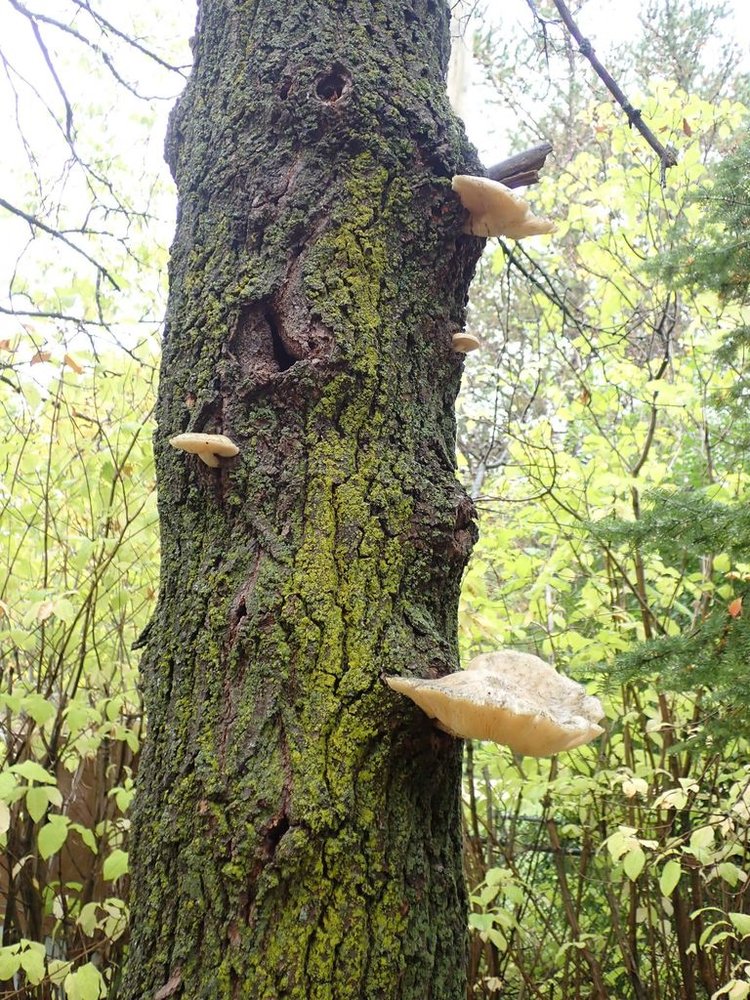
Elm Oyster (Hypsizygus ulmarius) is a white to tan mushroom with a stout stem that grows alone or in twos and threes from wounds and old branch scars on box elder and elm. iNaturalist's research-grade Black Hills records are from June and July, and a 1998 Lakota plant book from Sitting Bull College describes the elm cap mushroom growing on box elder, often from the holes left by tapping the trees for sap.
Free photos from other sources
| Family | Lyophyllaceae · Lyophyllum |
|---|---|
| Type | Gilled mushroom |
| Season | Late spring into fall; Black Hills iNaturalist records are from June and July |
| Size | Cap 5–15 cm (2–6 in) wide, stem 5–10 cm (2–4 in) long |
| Grows on | Wounds and branch scars of box elder and elm |
| Spore print | White to buff |
| Also called | Elm Cap, Elm Mushroom, čhaŋnákpa (Lakota) |
| Synonym | Pleurotus ulmarius, Lyophyllum ulmarium |
| Eating | This guide doesn't say which mushrooms are safe to eat. |
How it lives
It lives on dead wood and can also act as a parasite: it fruits from wounds and old branch scars on living box elder and elm, and from dead box elder too. It was once put in the oyster genus, as Pleurotus ulmarius, but belongs to a different family.
How do you identify Elm Oyster?
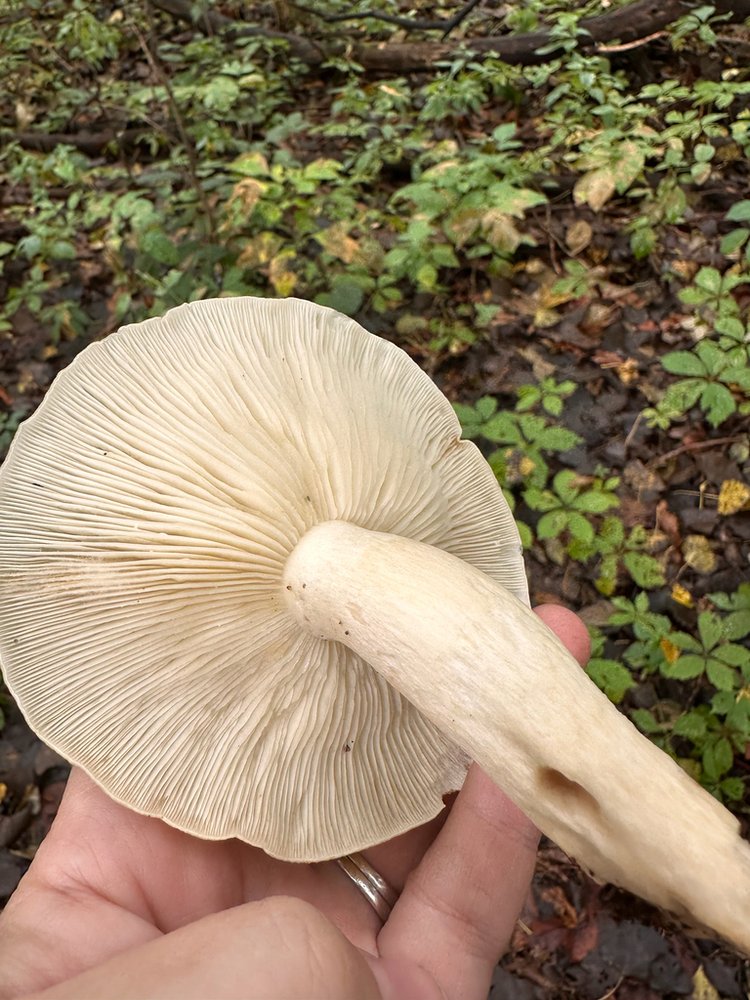
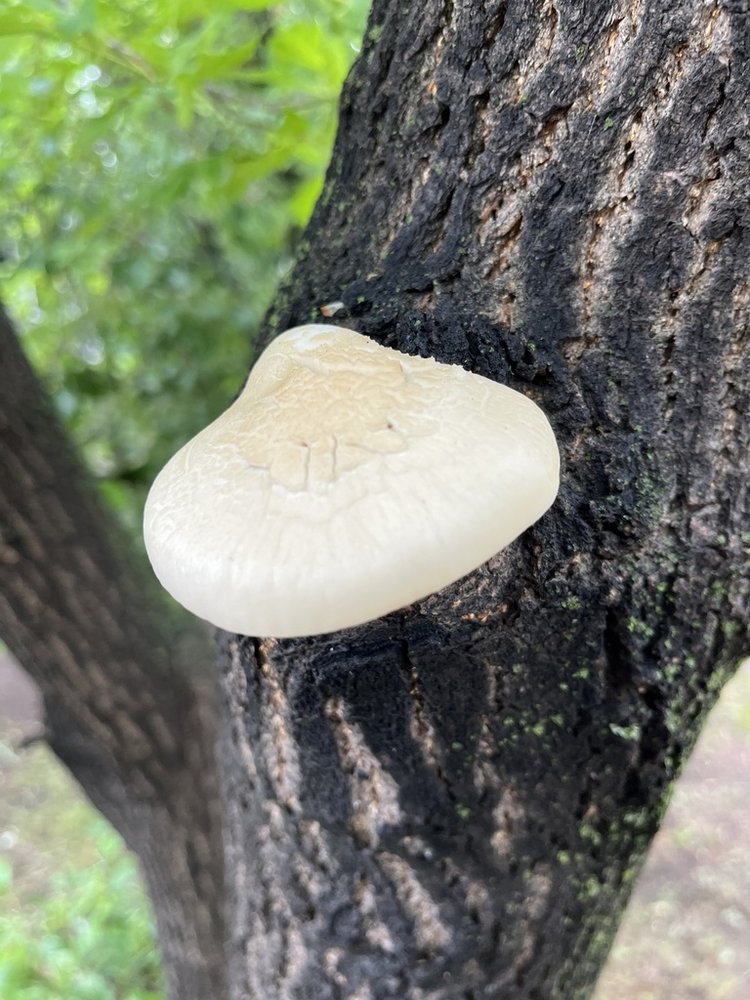
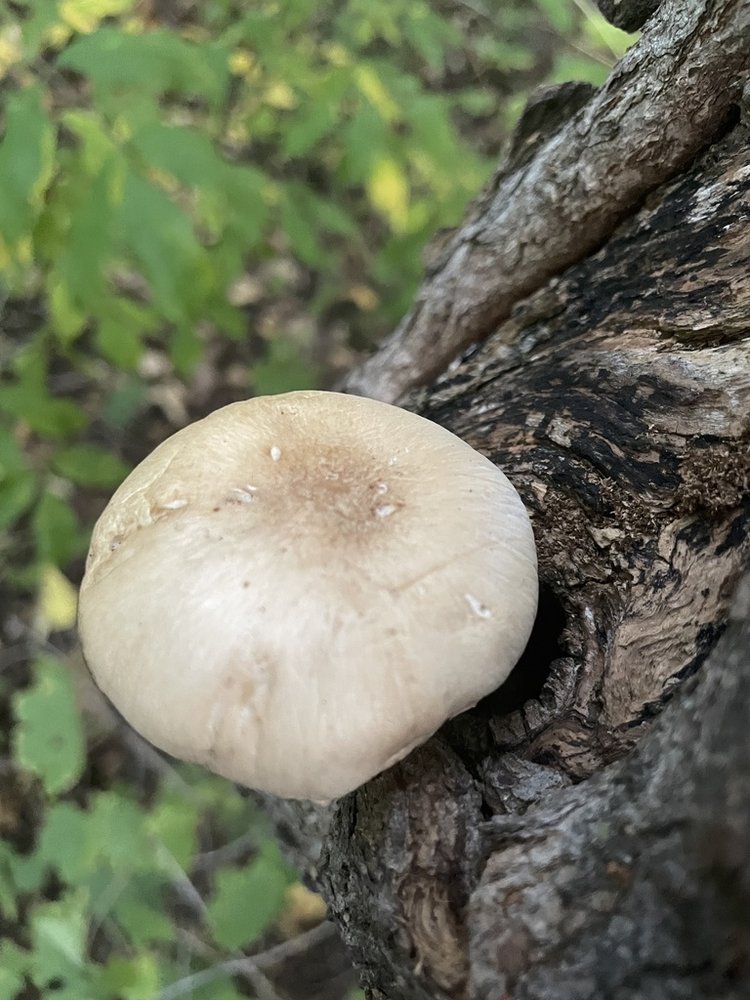
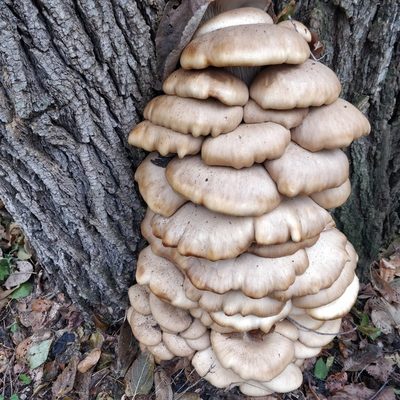
Look for one to a few mushrooms coming out of a wound, knot hole or old branch scar on a box elder or elm, living or dead. The cap is 5–15 cm (2–6 in) wide, white to buff or tan, and may crack into a pattern as it ages. The gills are whitish to cream and attach to the stem without running down it. The stem is stout, 5–10 cm (2–4 in) long and 1–2.5 cm (½–1 in) thick, whitish, and off-center to nearly central. There is no ring, and the spore print is white to buff. The Oyster Mushroom (Pleurotus ostreatus) grows in overlapping shelves, mostly on dead wood, with little or no stem, and its gills run down to where the cap meets the wood. Hypsizygus tessulatus, a close relative, grows in dense clusters, mostly on aspen, cottonwood and sugar maple, and its young caps often have round, watery spots.
When can you find it?
Late spring into fall; Black Hills iNaturalist records are from June and July.
Where does it grow?
Wounds, knot holes and old branch scars on box elder and elm, and sometimes other hardwoods. iNaturalist has 4 research-grade Black Hills records, from Lawrence, Meade and Pennington counties in June and July, and 2 more awaiting confirmation; research-grade records within 500 km run from May to July and from September to October. Black Elk and Flying By (1998) describe the elm cap mushroom growing on box elder in autumn, often from holes made when the trees were tapped for sap in spring.
Other mushrooms to compare
Sources: Emberger, Hypsizygus ulmarius (elm oyster) — Fungi Growing on Wood, archived at MushroomExpert.com; Kuo, Hypsizygus tessulatus (2018; compares H. ulmarius) — MushroomExpert.com; Volk, Pleurotus ostreatus, the Oyster Mushroom: Fungus of the Month, October 1998 — University of Wisconsin-La Crosse; Emberger, Pleurotus spp. (oyster mushrooms) — Fungi Growing on Wood, archived at MushroomExpert.com; Kuo, Pleurotus ostreatus (2017) — MushroomExpert.com; Black Elk & Flying By, Culturally Important Plants of the Lakota (Sitting Bull College, 1998), filed with the South Dakota PUC; Species Fungorum: Hypsizygus ulmarius — Royal Botanic Gardens, Kew; iNaturalist: Hypsizygus ulmarius in the Black Hills places (Black Hills ecoregions, Black Hills National Forest, Wind Cave NP, Custer SP); iNaturalist month histogram, Hypsizygus ulmarius, research grade within 500 km of the Black Hills; Species Fungorum: Lyophyllum ulmarium — Royal Botanic Gardens, Kew.