Crown-tipped Coral
Artomyces pyxidatus
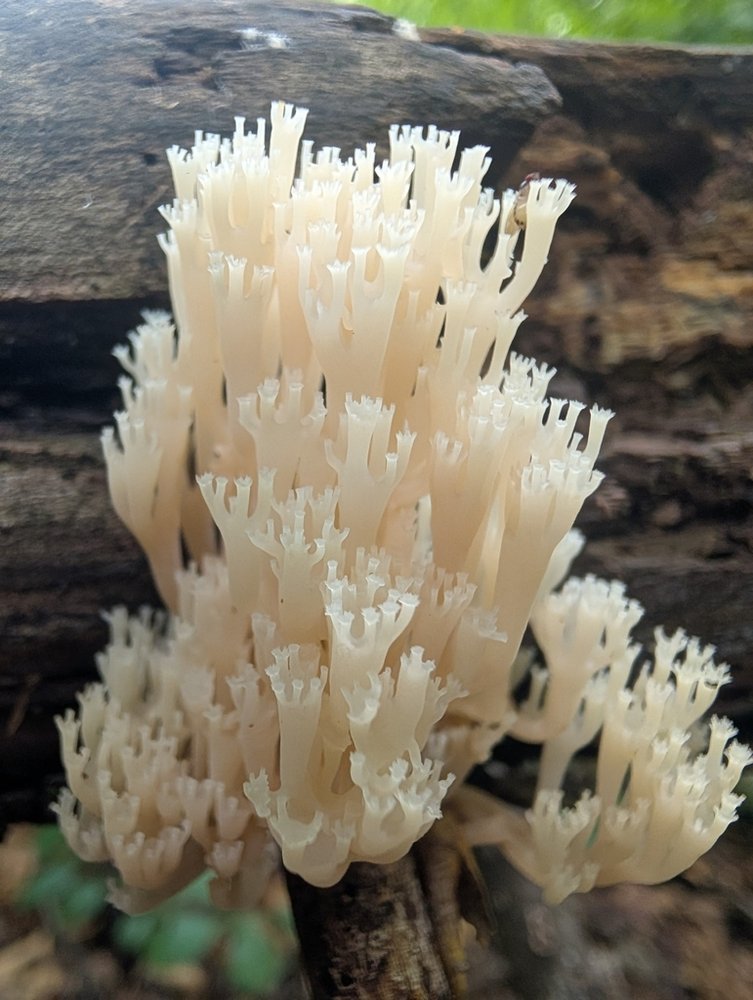
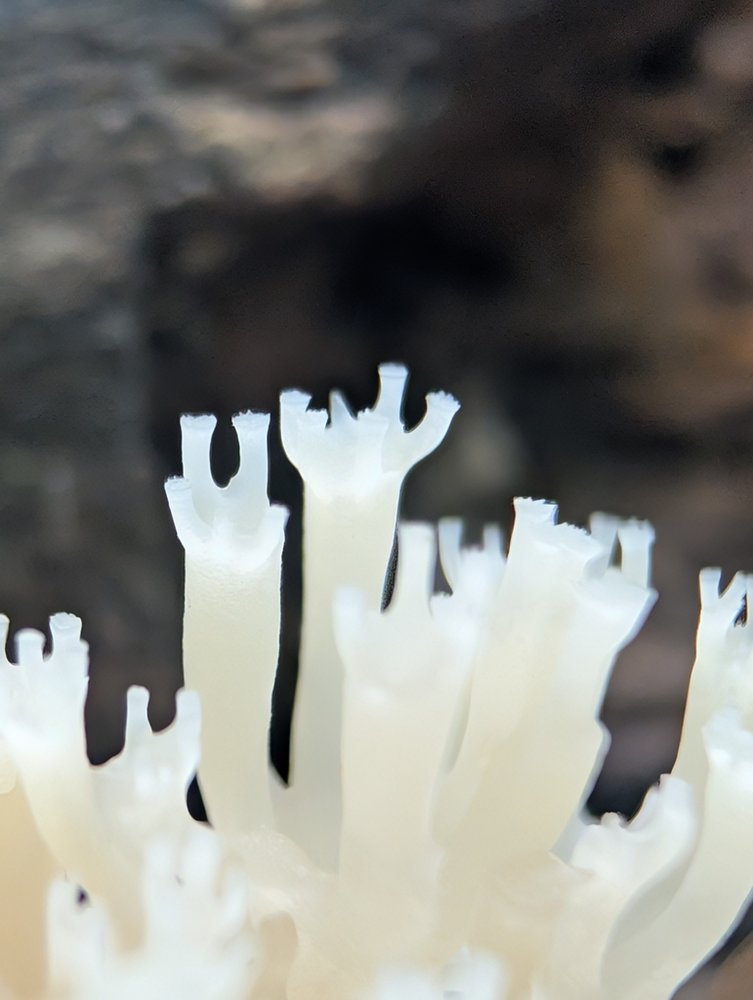
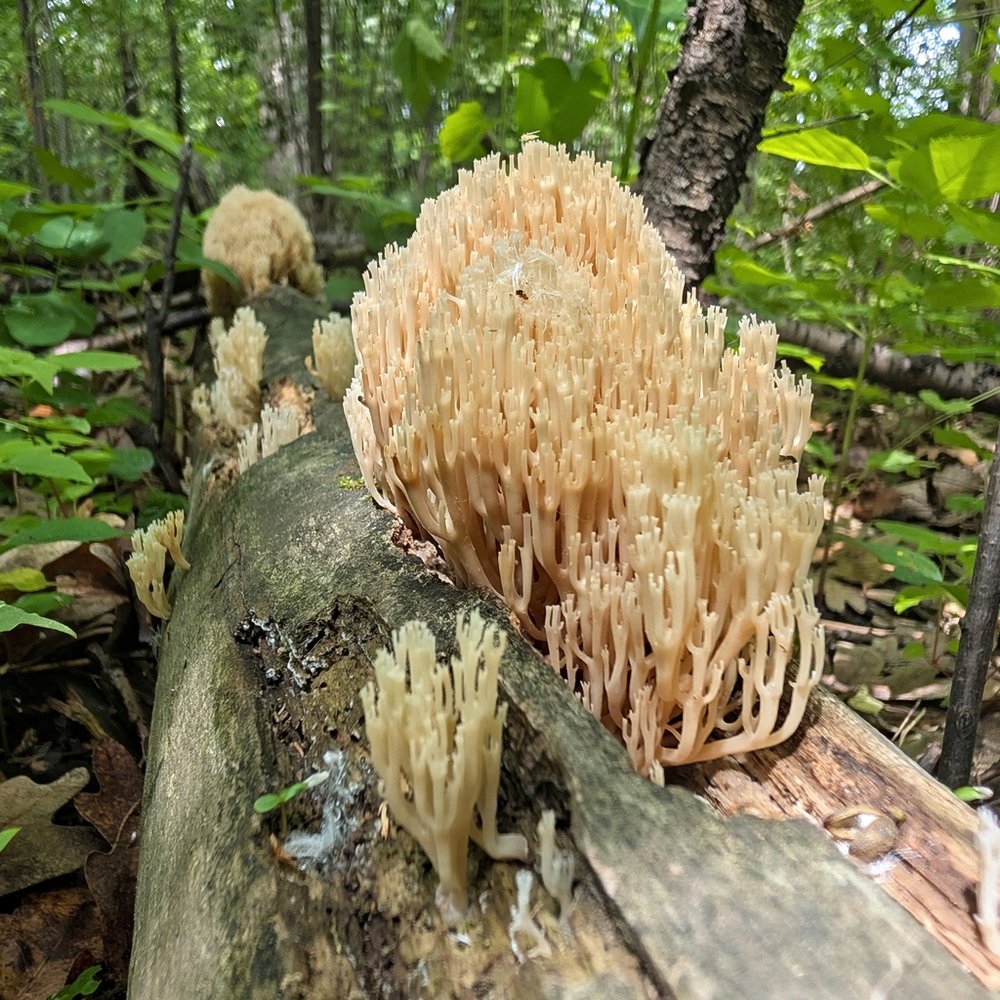
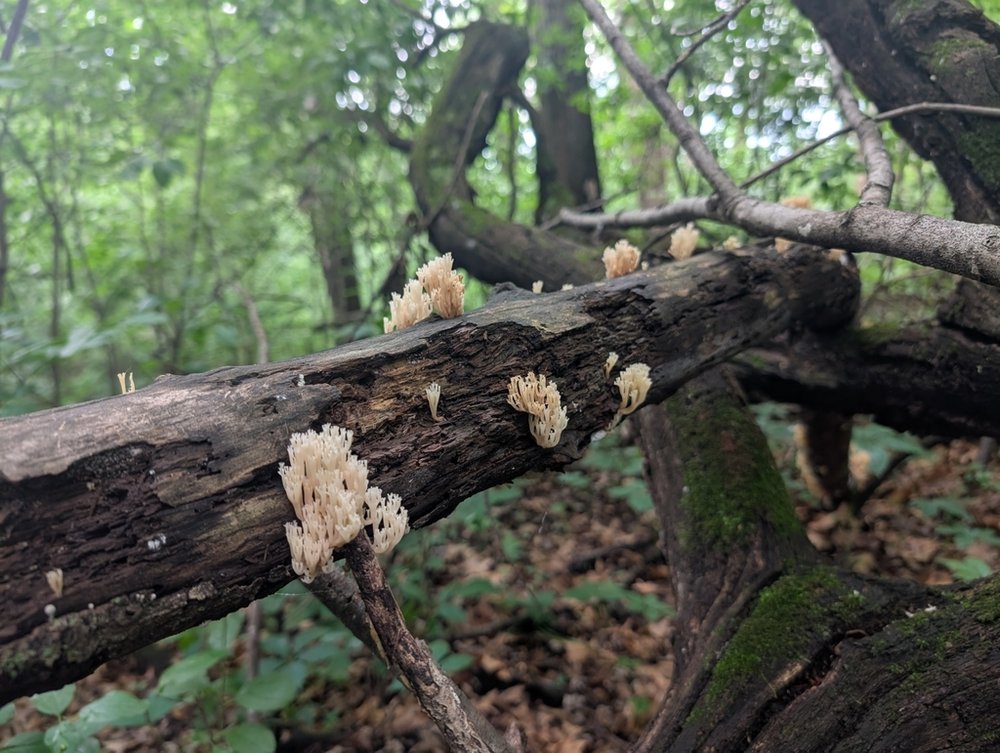
Crown-tipped Coral (Artomyces pyxidatus) is a whitish to pale tan coral fungus, a many-branched clump 4–13 cm (1½–5 in) tall in which every branch tip ends in a tiny crown of points. It grows on dead wood of broadleaf trees, especially aspen. iNaturalist has only 4 Black Hills records, 2 of them research grade, from June to August in the northern and central Hills.
Free photos from other sources
| Family | Auriscalpiaceae · Auriscalpium |
|---|---|
| Type | Coral fungus |
| Season | June into September in iNaturalist research-grade records within about 500 km of the Black Hills; the 4 Black Hills records are from June to August |
| Size | 4–13 cm (1½–5 in) tall, 2–10 cm (¾–4 in) wide |
| Grows on | Dead broadleaf wood, especially aspen |
| Spore print | White |
| Synonym | Clavicorona pyxidata, Clavaria pyxidata |
| Eating | This guide doesn't say which mushrooms are safe to eat. |
How it lives
It is a saprobe, meaning it feeds on dead wood, mostly of broadleaf trees. In spite of its coral shape, it belongs to the Auriscalpiaceae, a family in the russula order (Russulales). The branched clump is its fruiting body.
How do you identify Crown-tipped Coral?
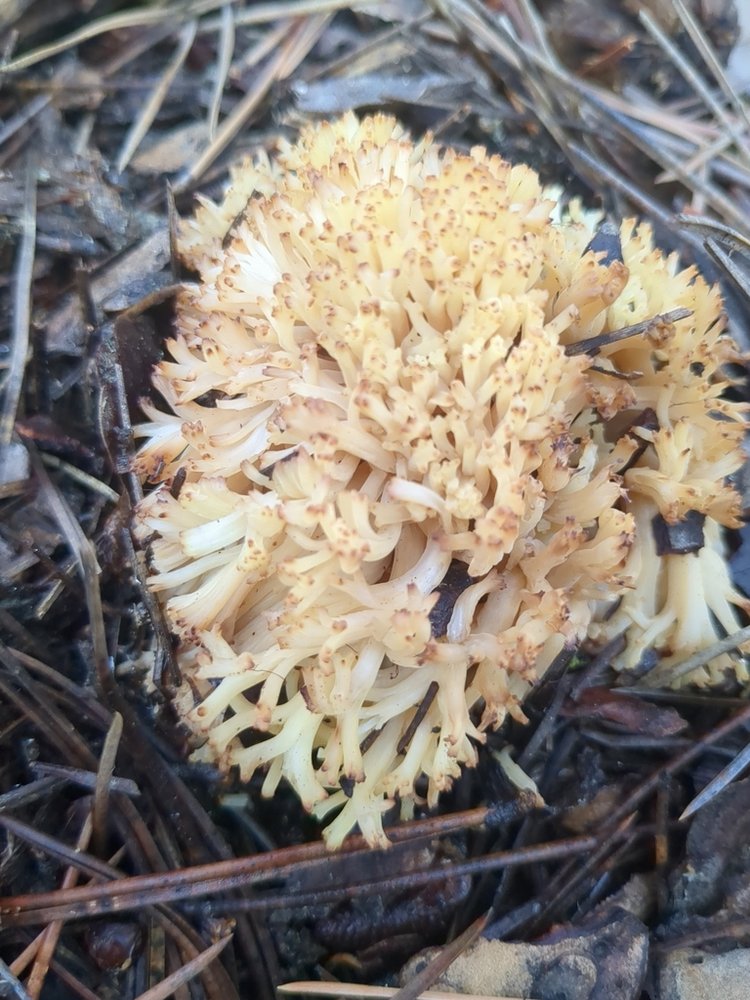
Look for a pale coral that branches again and again from a short base, always growing from wood. The key is the tips: each branch ends in a tiny cup ringed by 3 to 6 points, like a crown. Young clumps are whitish to pale yellow and can turn pale tan or pinkish with age. The short base is whitish, pinkish or brownish and finely fuzzy, the flesh is tough and bendable, and the spore print is white. Most coral fungi grow from the ground, and the crowned tips, pale color and wood together make this one hard to mistake. Ramaria stricta can grow from wood, often buried and mostly conifer, but its branches are dull yellowish buff with yellow young tips, it bruises purplish brown, and its spore print is rusty yellow.
When can you find it?
June into September in iNaturalist research-grade records within about 500 km of the Black Hills; the 4 Black Hills records are from June to August.
Where does it grow?
Dead wood of broadleaf trees, especially aspen, and also willow and maple elsewhere in its range. In Wyoming, a 1982 museum specimen from Grand Teton National Park was on a barkless Populus log (the aspen and cottonwood genus), and another there was on decaying wood under aspen. In the Black Hills, iNaturalist has 4 records, 2 of them research grade, from June to August 2023–2026 in Lawrence, Meade and Pennington counties. No Black Hills specimen or published source names it, and the wood it grows on here hasn't been recorded.
Sources: Artomyces pyxidatus (M. Kuo) — MushroomExpert.com; Artomyces pyxidatus (G. Emberger, Fungi Growing on Wood) — Messiah University, on MushroomExpert.com; Ramaria stricta (M. Kuo) — MushroomExpert.com; Key to Major Groups of Mushrooms (M. Kuo) — MushroomExpert.com; Artomyces pyxidatus, record 110490 — Index Fungorum; Name search: Clavicorona pyxidata, current name Artomyces pyxidatus — Index Fungorum; Artomyces pyxidatus specimens in Wyoming — GBIF; Artomyces pyxidatus records in South Dakota (all from iNaturalist, no specimens) — GBIF; Artomyces pyxidatus in the Black Hills — iNaturalist; Artomyces pyxidatus, research-grade records within 500 km of the Black Hills, by month — iNaturalist.