Collared Earthstar
Geastrum triplex
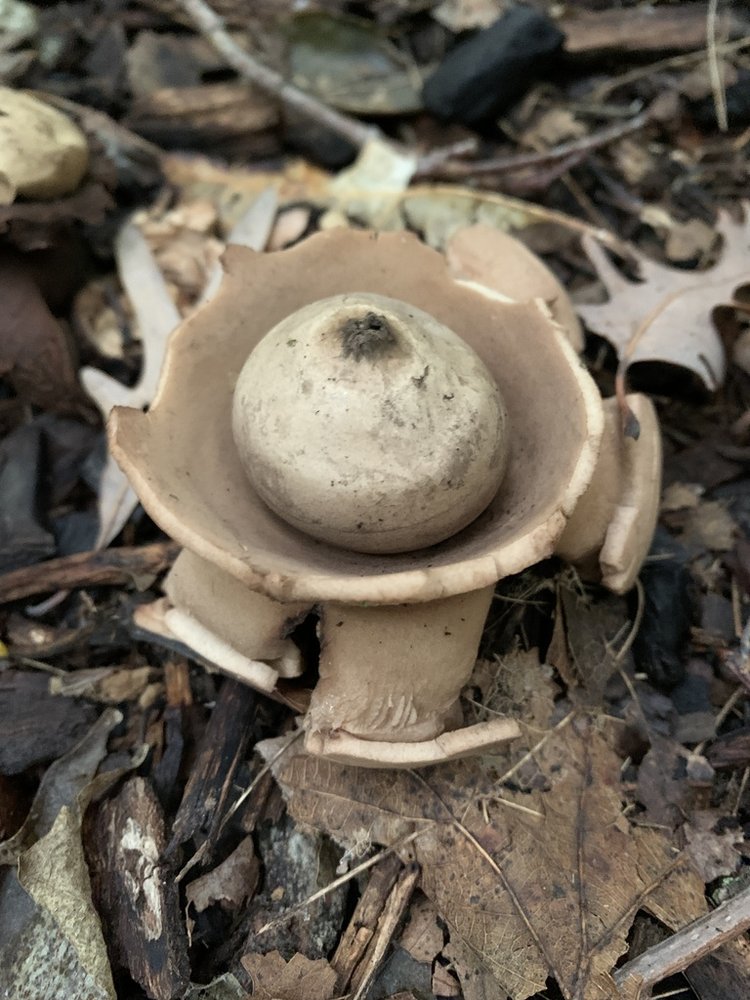
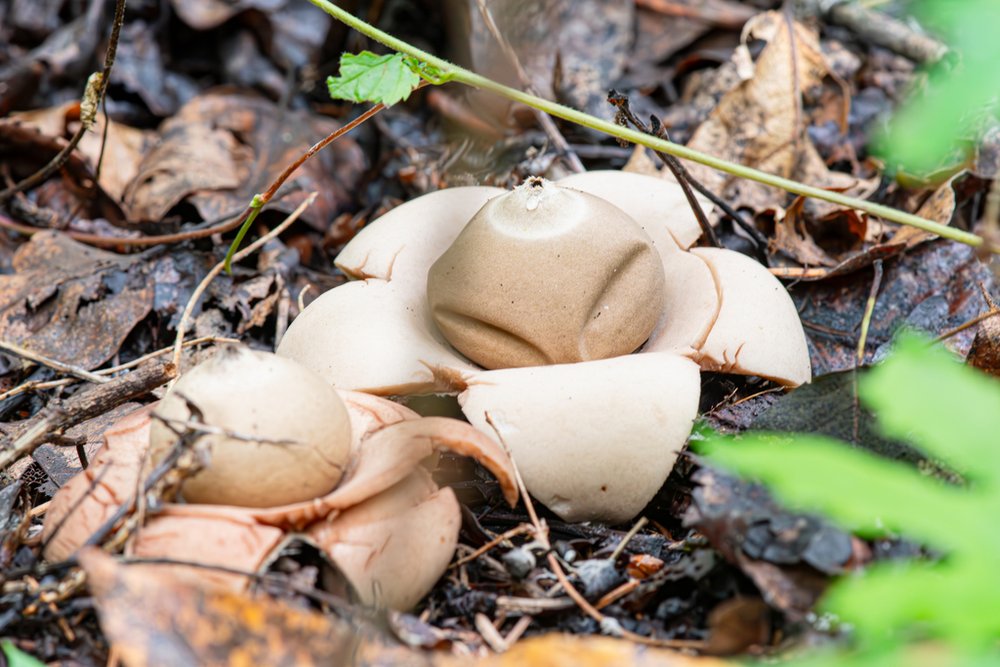
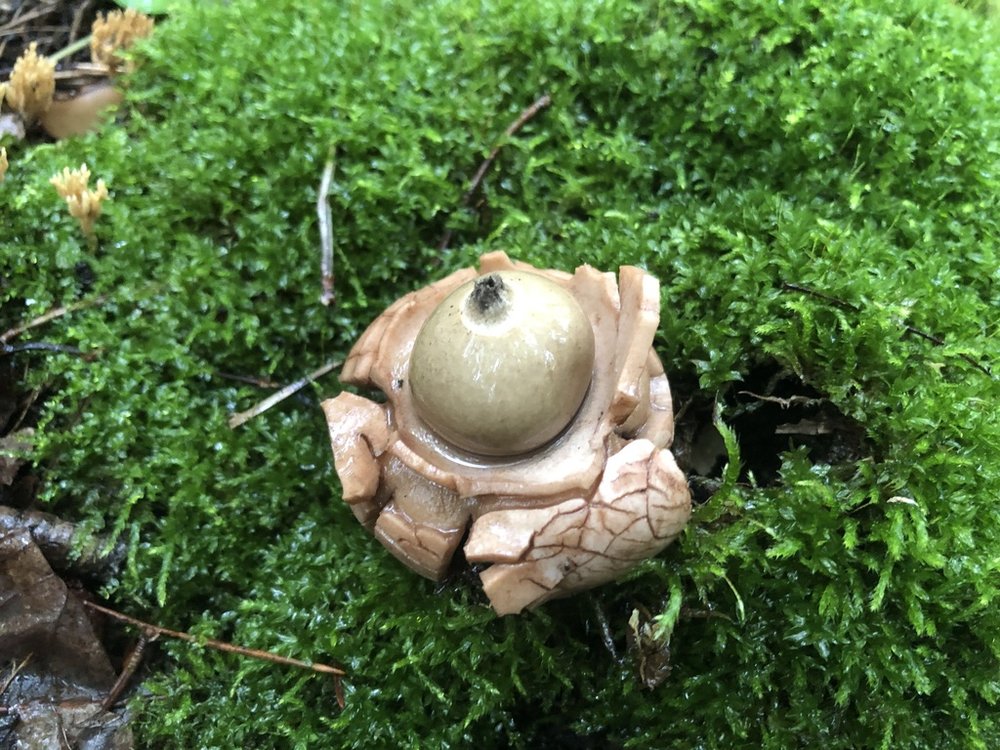
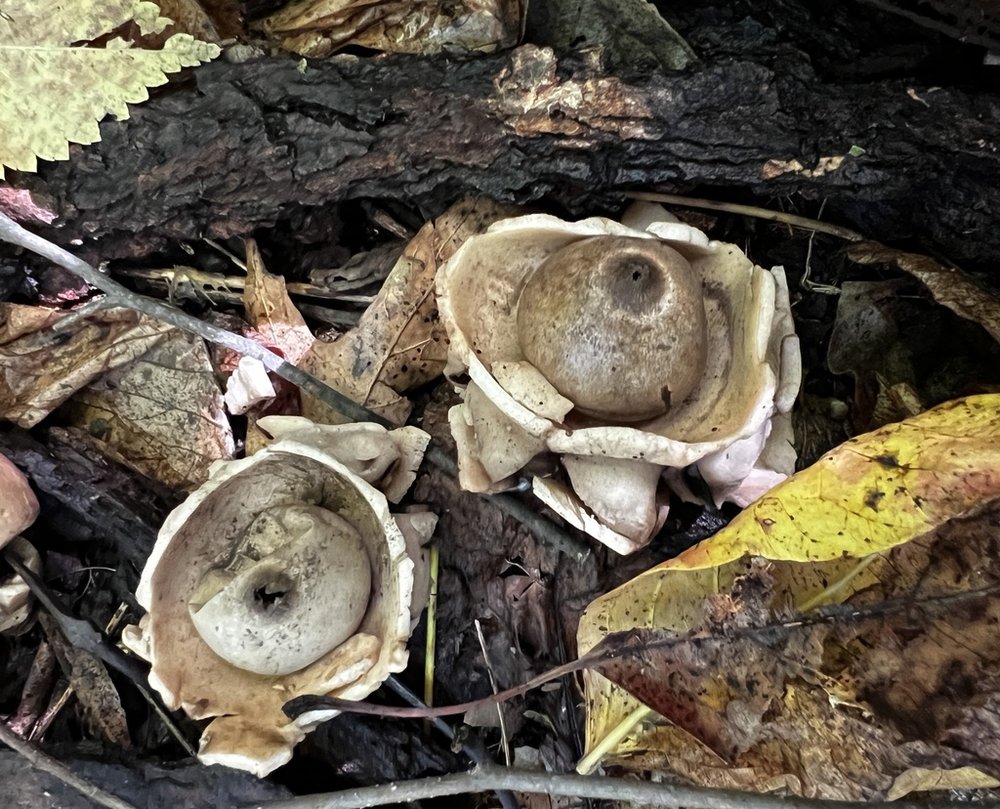
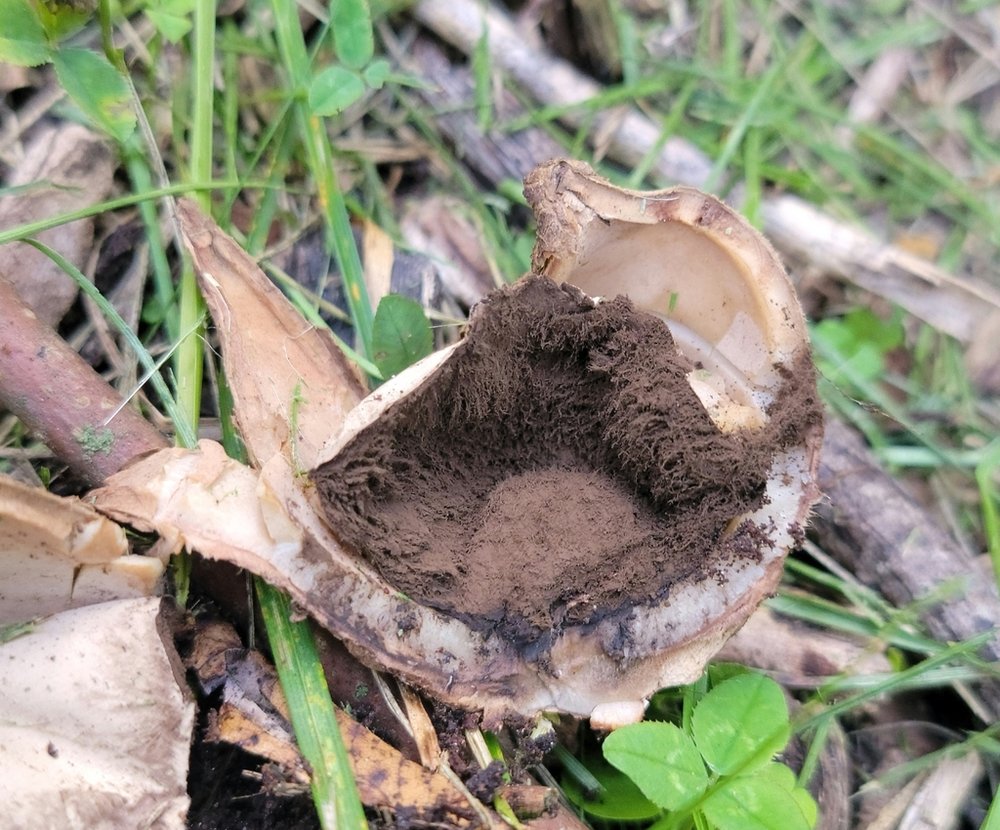
The Collared Earthstar (Geastrum triplex) is a large earthstar: a round, brownish to gray spore case with a fuzzy, cone-shaped opening on top, sitting on 4 to 8 thick, buff arms that spread 5–10 cm (2–4 in) across and often crack so the case rests in a saucer-like collar. The National Park Service lists it among the fungi seen at or near Jewel Cave National Monument, with a season of May to September.
Free photos from other sources
| Family | Geastraceae · Earthstar |
|---|---|
| Type | Earthstar |
| Season | May into September at Jewel Cave |
| Size | 5–10 cm (2–4 in) across with the arms open; young balls 1–5 cm (½–2 in) wide |
| Grows on | Under hardwoods |
| Spore print | Brown (spore powder) |
| Eating | This guide doesn't say which mushrooms are safe to eat. |
How it lives
It is saprobic: it lives on dead plant matter, not in partnership with tree roots. An earthstar is a kind of puffball that sits on a star of fleshy arms; the spores escape through the opening on top when raindrops strike the case or air moves it. Earthstars in the genus Geastrum are related to the stinkhorns.
How do you identify Collared Earthstar?
Young ones are smooth, egg-shaped balls 1–5 cm (½–2 in) wide with a prominent pointed beak, attached at a single point at the base. The outer skin then peels back into 4 to 8 roughly triangular, buff arms. The arms are thick and usually crack as they bend, often splitting so the spore case seems to sit on a saucer held up by the curled arms. The spore case is round, smooth and brownish, with a fuzzy, cone-shaped opening on top that is often ringed by a paler zone; inside it is solid and white at first, then brown spore powder. The saucer doesn't always form, and then MushroomExpert's other marks matter for telling it from other earthstars: its large size, the pronounced beak on young ones, the fuzzy opening with its paler ring, and attachment at the base only. The Hygroscopic Earthstar (Astraeus hygrometricus), which has one research-grade Black Hills record on iNaturalist, looks like an earthstar of this kind but is not closely related, and its arms are hygroscopic: they fold up over the spore case in dry weather and spread open when wet. The upper surface of its arms becomes finely cracked, and its spore case is matted and fibrous.
When can you find it?
May into September at Jewel Cave.
Where does it grow?
Alone or in groups under hardwoods, as MushroomExpert describes it. The National Park Service features it among the mushrooms and other fungi seen at Jewel Cave National Monument or nearby, with a season of May to September. A specimen in the University of Nebraska's Bessey Herbarium, labeled Geaster triplex and 'deep dark damp places' and dated 1891 on its second label, comes from Pennington County. iNaturalist has no Black Hills records of it, and no other Black Hills specimen turned up in GBIF.
Sources: Mushrooms and Other Fungi (Collared Earthstar) — National Park Service, Jewel Cave National Monument; Geastrum triplex (M. Kuo, November 2008) — MushroomExpert.com; Astraeus hygrometricus (M. Kuo, February 2024) — MushroomExpert.com; The Puffballs (M. Kuo) — MushroomExpert.com; Geastrum triplex: synonymy and classification — Species Fungorum (Royal Botanic Gardens, Kew); Geaster triplex, specimen NEB00053611 (labels: 'deep dark damp places', 1891) — University of Nebraska C. E. Bessey Herbarium, on MyCoPortal; Geastrum triplex records in and around the Black Hills (one specimen) — GBIF; Geastrum triplex records in the Black Hills places (none) — iNaturalist API; Hygroscopic Earthstar (Astraeus) records in the Black Hills places — iNaturalist API.