Cedar-apple Rust
Gymnosporangium juniperi-virginianae
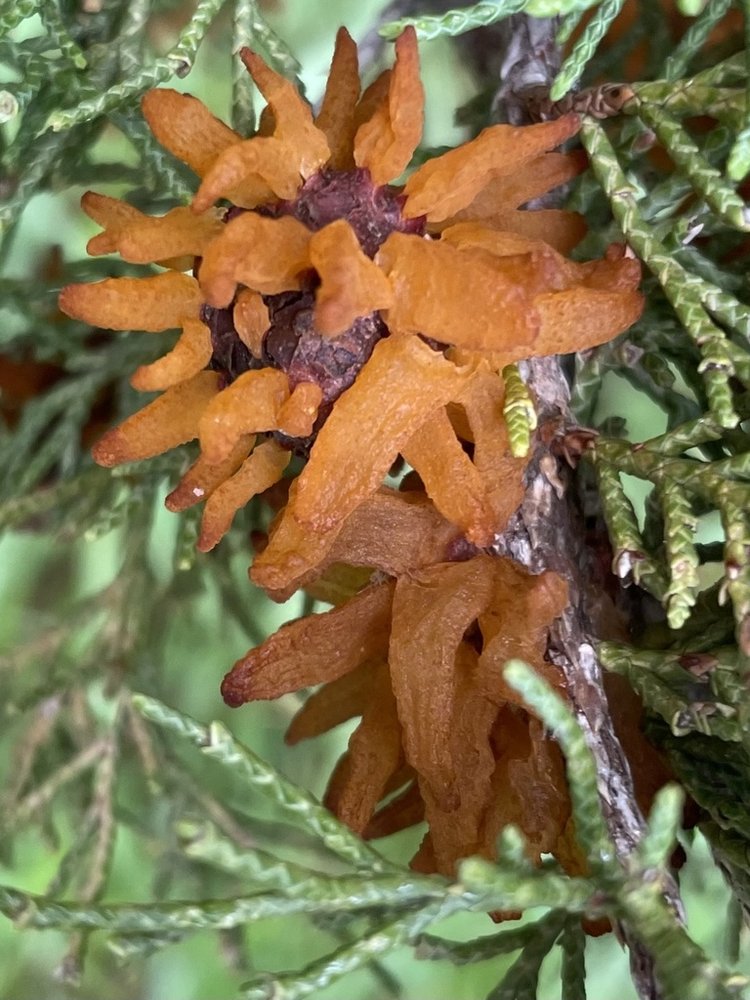
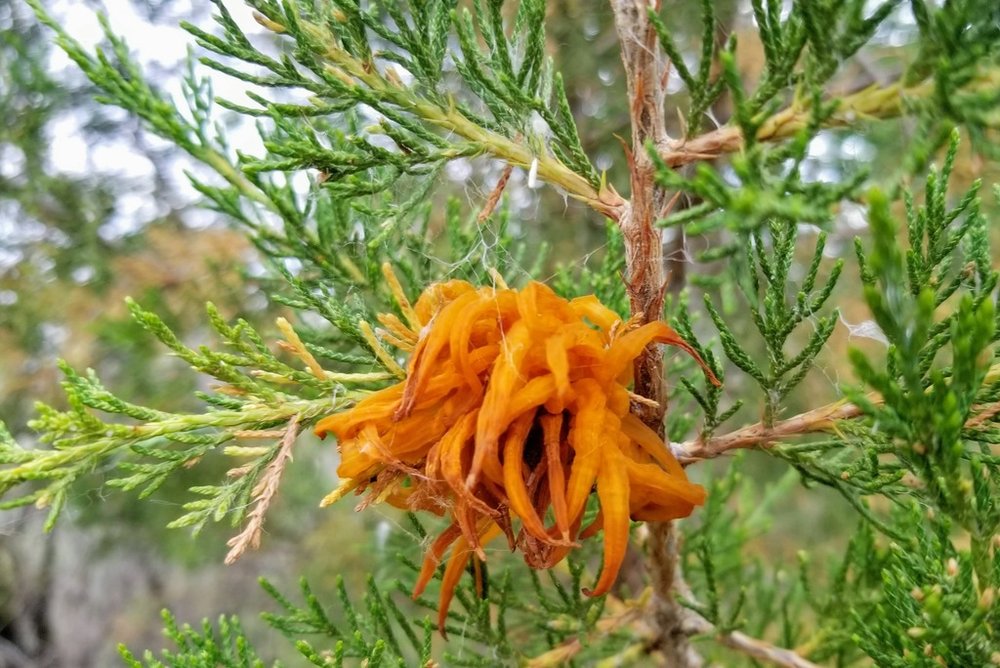
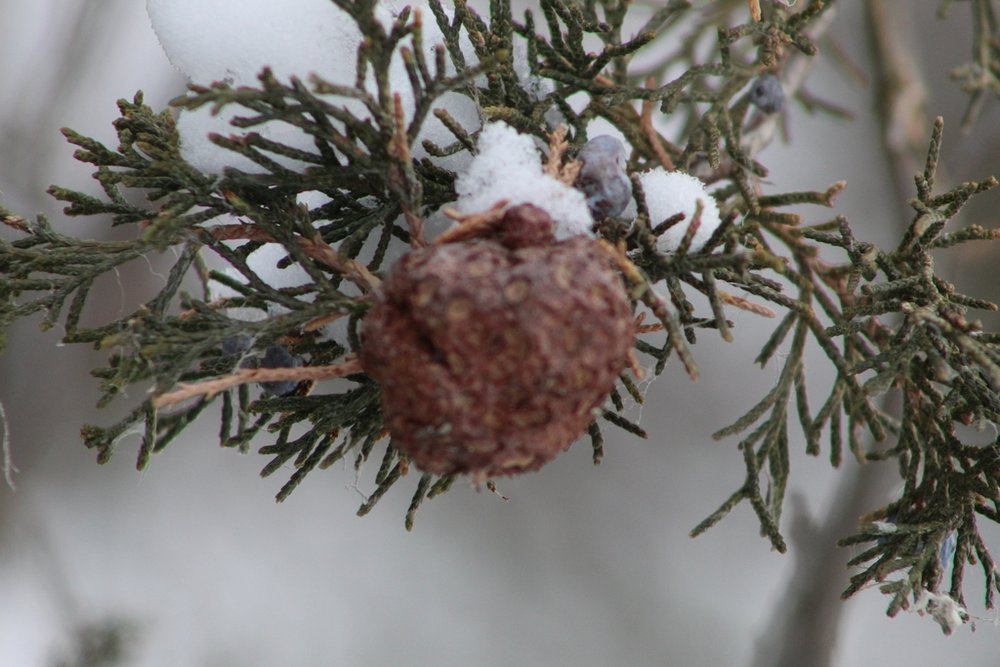
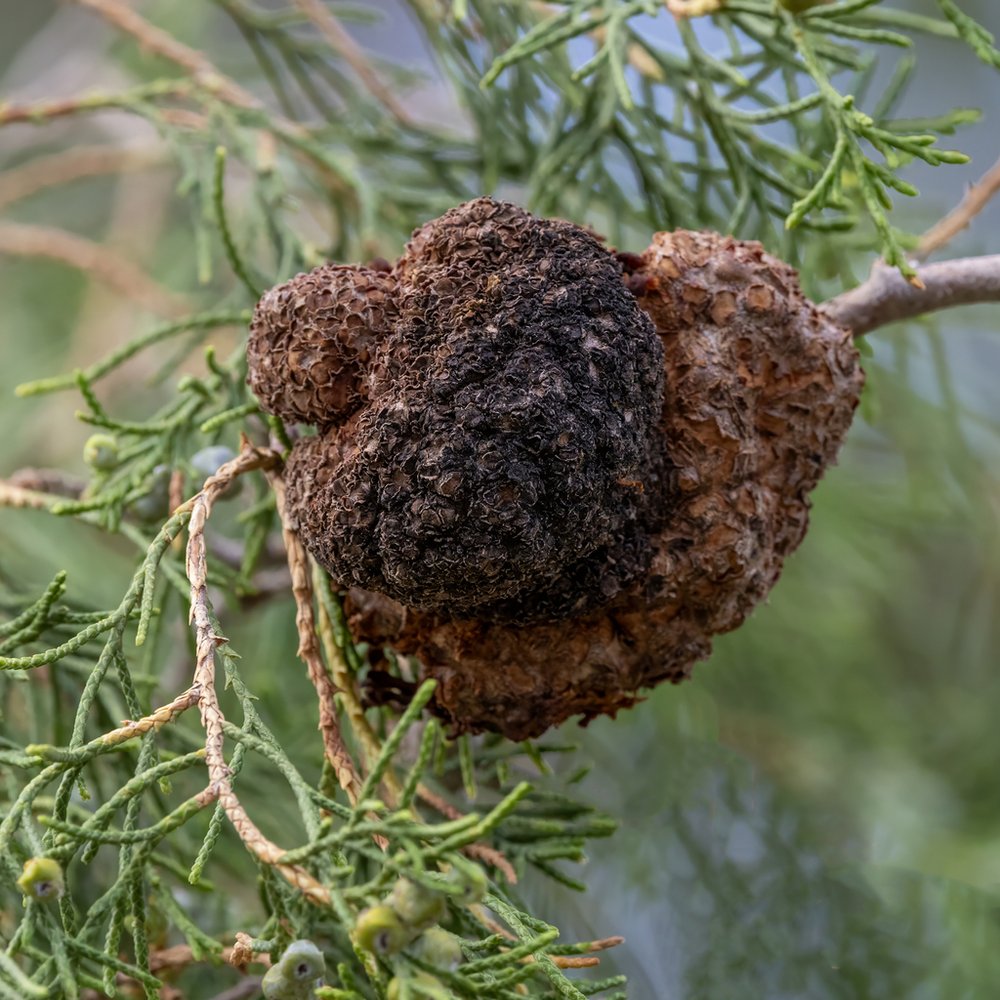
Cedar-apple Rust (Gymnosporangium juniperi-virginianae) is a rust fungus that makes round, brown, dimpled galls on juniper twigs, which push out bright orange, jelly-like horns after spring rains. It needs a second host, apple or crabapple, where it makes yellow-orange leaf spots. It is thinly recorded in the Black Hills: iNaturalist has 2 research-grade records, both on junipers at the edge of the Hills, and South Dakota lists it among confirmed tree diseases.
Free photos from other sources
| Family | Gymnosporangiaceae · Cedar rust |
|---|---|
| Type | Rust |
| Season | All year; orange horns after spring rains, April into June |
| Size | Galls usually 6–25 mm (¼–1 in) across, some over 5 cm (2 in) |
| Grows on | Twigs of Rocky Mountain juniper and eastern red cedar; leaves of apple and crabapple |
| Also called | Cedar-apple Gall Rust |
| Eating | This guide doesn't say which mushrooms are safe to eat. |
How it lives
A rust fungus with two hosts and a two-year cycle. In spring, the orange horns on juniper galls release spores that blow to young apple and crabapple leaves and fruit. The leaf spots then make a second kind of spore in mid to late summer, which blows back to juniper. A new gall shows on the juniper the next summer, grows through fall and sends out horns the following spring, 18 months to two years after infection, and each gall makes horns for one season. It rarely harms junipers beyond some twig dieback, but repeated leaf infections can make apples and crabapples drop their leaves early and weaken them.
How do you identify Cedar-apple Rust?
On juniper, look for a round, woody, red-brown gall on a twig, usually 6–25 mm (¼–1 in) across and sometimes as big as a golf ball, with a dimpled surface like a golf ball. After warm spring rains, bright orange, jelly-like horns, long and tentacle-shaped, push out of the dimples. They swell when wet and shrivel when dry, several times in a spring, then dry hard, and the spent gall can stay on the twig for years. On apple and crabapple leaves it makes yellow-orange spots, often edged in red, with tiny dark dots on top and tube-like growths about 6 mm (¼ in) long underneath. Cedar-hawthorn rust makes smaller galls, up to 12 mm (½ in), with short, thick horns that give the gall a star shape; its other hosts include hawthorn and serviceberry. Cedar-quince rust makes long, swollen areas with flaky bark on juniper branches, and its orange jelly comes out of blisters or cracks in the bark instead of forming horns. Juniper broom rust, collected many times in the Black Hills, makes witches' brooms, dense clumps of small branches, in the juniper.
When can you find it?
All year; orange horns after spring rains, April into June.
Where does it grow?
Twigs of junipers, mainly eastern red cedar and Rocky Mountain juniper, also creeping and common juniper; its other hosts are apple and crabapple, and sometimes hawthorn. Spores travel up to about 3 km (2 mi), so it is most common where junipers and apple trees grow within a few miles of each other. Black Hills records are few: iNaturalist has 6, 2 of them research grade, both on junipers at the edge of the Hills in Pennington and Fall River counties; the other 4, still awaiting ID, are from Wind Cave National Park and Crook County, Wyoming. GBIF holds no Black Hills specimens. The state's 2024 forest health report lists cedar-apple rust among diseases confirmed in South Dakota. The Forest Service field guide for this region says it is common only in the Great Plains part of the region and is often wrongly blamed for other juniper rusts.
Sources: Forest Pest Bulletin 16: Cedar-apple Gall Rust (rev. 2021) — South Dakota Department of Agriculture and Natural Resources; South Dakota Forest Health Highlights 2024 — SD DANR and USDA Forest Service; Field Guide to Diseases & Insects of the Rocky Mountain Region, RMRS-GTR-241 (2010): Gymnosporangium Rusts — USDA Forest Service; Cedar-apple and Related Rusts of Apple and Ornamentals, NebGuide G1907 (A.D. Ziems) — University of Nebraska-Lincoln Extension; What's wrong with my plant? Juniper: growths on branches — University of Minnesota Extension; Cedar-Apple Rust, field guide — Missouri Department of Conservation; Cedar-Apple Rust (L.M. Rodriguez Salamanca) — Iowa State University Extension, Yard and Garden; Gymnosporangium juniperi-virginianae, record 140481 — Index Fungorum; Black Hills observations of Gymnosporangium juniperi-virginianae — iNaturalist; Gymnosporangium juniperi-virginianae records, South Dakota (none from the Black Hills) — GBIF; Gymnosporangium nidus-avis (juniper broom rust) records, South Dakota — GBIF.